admin
admin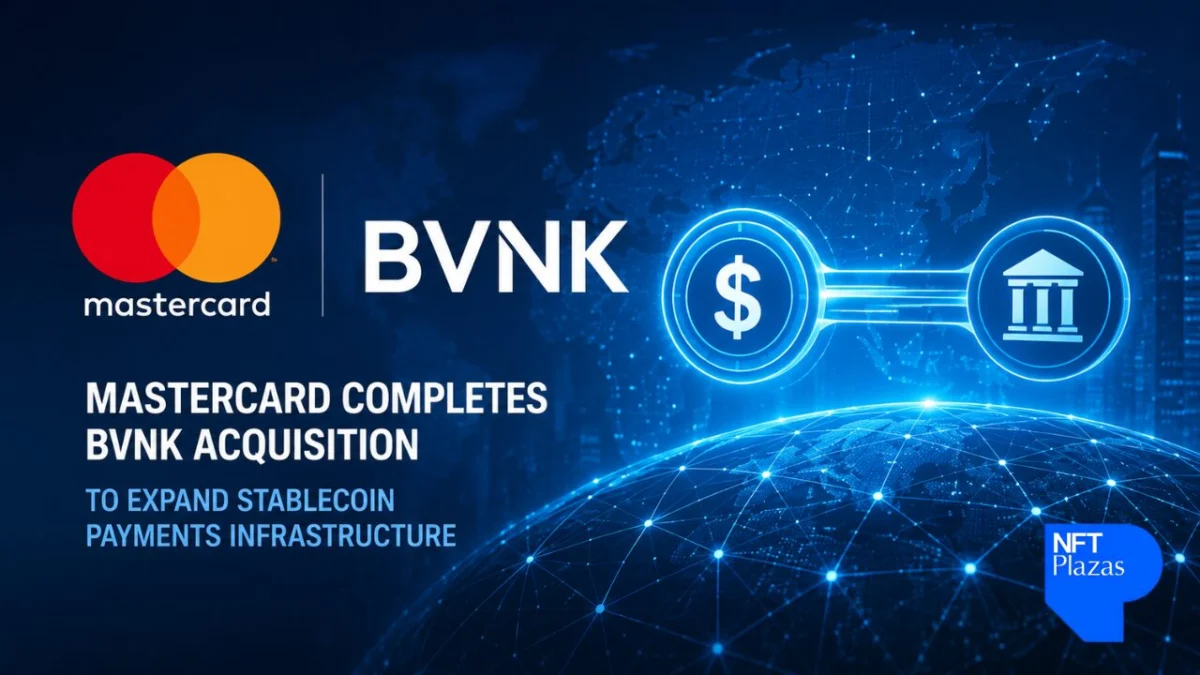
Mastercard has officially completed its pivotal acquisition of London-based stablecoin infrastructure provider BVNK, a strategic move valued at up to $1.8 billion, including a $300 million earnout. This landmark transaction signifies a major advancement in the global payments giant’s ambition to seamlessly integrate traditional financial systems with the burgeoning world of blockchain-based digital assets. The acquisition dramatically enhances Mastercard’s inherent capabilities to facilitate fluid value transfers between fiat currencies and stablecoins, concurrently expanding its enterprise-grade infrastructure to underpin the next generation of global payments. By bringing BVNK’s specialized technology in-house, Mastercard transitions from relying on third-party providers to directly owning one of the industry’s leading stablecoin payment platforms, a clear reflection of growing confidence among established financial institutions in stablecoins’ evolution from niche crypto products into foundational payment infrastructure.
A Strategic Leap into the Multi-Money World
This acquisition underscores Mastercard’s intensified commitment to digital asset payments, expanding its existing strategy to offer customers unparalleled flexibility in how money moves across both traditional and blockchain-based payment networks. The company’s vision is to foster greater interoperability, creating a frictionless environment where fiat currencies, stablecoins, tokenized deposits, and other forms of digital value can transact across multiple payment rails. This approach aims to dismantle existing barriers, enabling businesses and financial institutions to manage and move capital with unprecedented efficiency and speed.
Jorn Lambert, Mastercard’s Chief Product Officer, articulated the strategic imperative behind this move, stating, "Digital currencies – particularly stablecoins – are increasingly addressing real-world needs in areas like cross-border B2B payments, remittances, payouts, settlement, and treasury flows." He further emphasized the evolving landscape: "In a multi-money world where fiat, stablecoins, and tokenized deposits and other forms of value coexist, the next payments paradigm will be defined by how effectively each rail, network, or form of money connects and works together." Lambert highlighted that the synergy between Mastercard’s expansive global payment network and BVNK’s native blockchain infrastructure is poised to deliver faster, more trusted, and significantly more efficient payment experiences for businesses worldwide.
BVNK: The Backbone of Enterprise Stablecoin Payments
Founded in 2021, BVNK rapidly emerged as a leading provider of enterprise-grade stablecoin infrastructure. Unlike consumer-facing crypto platforms, BVNK specializes in building the complex backend technology that empowers companies to hold, send, receive, convert, and manage both fiat currencies and stablecoins through a unified infrastructure layer. Its sophisticated platform supports payments across major blockchain networks, meticulously adhering to the stringent compliance, security, and interoperability requirements demanded by regulated financial institutions. Prior to the acquisition announcement, BVNK had established a significant global footprint, operating across more than 130 countries and serving a diverse client base including payment providers, fintech companies, and multinational corporations.
The integration of BVNK’s technology is expected to unlock a myriad of stablecoin-powered use cases for financial institutions, fintech firms, and multinational enterprises. These applications range from streamlining cross-border business payments and optimizing supplier settlements to enhancing treasury management and facilitating corporate payouts, all at scale. This comprehensive suite of capabilities positions Mastercard to cater to a growing demand for digital asset solutions that seamlessly integrate with existing financial operations.
Chronology of a Strategic Pivot
Mastercard’s journey towards embracing digital assets has been a deliberate and progressive one, culminating in this significant acquisition.

- 2020-2021: Mastercard begins actively exploring blockchain and digital assets, announcing various partnerships and pilot programs, including a focus on central bank digital currencies (CBDCs) and outlining its "multi-rail" strategy.
- 2021: BVNK is founded, quickly developing its enterprise stablecoin infrastructure and expanding its global reach, attracting attention for its robust and compliant offerings. Mastercard also launches its Crypto Partner Program, designed to make it easier for partners to bring compliant crypto solutions to market.
- 2022: Mastercard expands its digital asset strategy, including initiatives around tokenization services and deeper support for blockchain-based payment solutions, signaling a shift towards more direct involvement.
- Early 2023: Reports surface about BVNK attracting acquisition interest from several major industry players, highlighting the strategic value of its technology.
- [Specific Announcement Date – Inferred]: Mastercard officially announces its intent to acquire BVNK for up to $1.8 billion, a clear signal of its long-term vision for digital assets. The announcement is met with significant industry attention, seen as a definitive move by a traditional payments giant into the core of blockchain infrastructure.
- [Completion Date – Current Event]: Mastercard formally completes the acquisition of BVNK, integrating its stablecoin infrastructure into Mastercard’s global network.
This timeline illustrates a clear evolution in Mastercard’s strategy: from exploratory partnerships and pilot programs to a definitive move towards ownership of critical blockchain infrastructure.
From Partnership to Direct Ownership: A New Era
The completion of the BVNK acquisition signifies a profound strategic shift among global payment companies. For years, traditional payment networks predominantly engaged with blockchain infrastructure through external providers and API partnerships. While effective for initial exploration, this model often presented limitations in terms of control over product development, regulatory compliance, and seamless integration with existing payment ecosystems.
Owning the underlying technology, as Mastercard now does with BVNK, grants the company greater autonomy and agility. This direct control allows Mastercard to accelerate the development of new products and services, ensure tighter adherence to evolving regulatory standards, and achieve deeper integration with its expansive global payment network. Industry observers have widely interpreted this transaction as a definitive indication that stablecoin infrastructure is no longer experimental but has become a strategic imperative for mainstream financial players. Prior reports surrounding the deal had indicated intense competition for BVNK, further validating the critical nature of its technology. Mastercard’s move is not merely about enabling customers to access stablecoins; it’s about owning the foundational infrastructure that connects blockchain settlement directly with its global payments network, positioning it as a pivotal bridge builder in the digital economy.
The Accelerating Momentum of Stablecoins in Finance
The acquisition comes at a time when stablecoins are increasingly permeating mainstream financial services. Unlike volatile cryptocurrencies such as Bitcoin, stablecoins are designed to maintain a stable value, typically pegged to fiat currencies like the U.S. dollar. This inherent stability makes them eminently suitable for commercial payments, remittances, and settlements, where price predictability is paramount.
Financial institutions globally are recognizing the transformative potential of stablecoins, particularly their ability to leverage blockchain networks for continuous, 24/7 operation. This enables near-instant settlement across international borders, a stark contrast to traditional systems that often involve multi-day clearing processes. Such efficiency can significantly reduce operational costs, mitigate counterparty risk, and dramatically improve liquidity management for businesses engaged in global trade and finance.
Key Stablecoin Market Data (Source: DefiLlama, as of recent periods):
- Total Stablecoin Market Cap: Frequently fluctuating, but typically hovers around $120-$130 billion, demonstrating a substantial and consistent presence in the digital asset ecosystem.
- Daily Transaction Volume: Often exceeds tens of billions of dollars, surpassing many traditional payment rails in certain segments, particularly for on-chain transfers and inter-exchange liquidity.
- Dominant Stablecoins: Tether (USDT) and USD Coin (USDC) collectively account for the vast majority of market capitalization and transaction volume, indicating market maturity and institutional preference for these established assets.
Mastercard has been steadily expanding its digital asset strategy over recent years. Its Crypto Partner Program offers a framework for fintechs and crypto companies to connect to its network, while its tokenization services aim to bring traditional assets onto blockchain. The addition of BVNK significantly strengthens these efforts by adding native on-chain payment capabilities directly into Mastercard’s existing global infrastructure, providing a holistic offering.

The Competitive Landscape and Mastercard’s Edge
The move also highlights the intensifying competition among global payment giants to establish leadership in blockchain-enabled finance. Rival Visa has pursued its own set of strategic partnerships and stablecoin settlement initiatives, famously piloting USDC settlement with merchants and acquirers like Worldpay and Nuvei. Fintech innovators such as Stripe have also invested heavily in digital asset payment infrastructure, supporting USDC payments for businesses and exploring other crypto-related services.
By acquiring BVNK, Mastercard differentiates itself by bringing a core piece of the stablecoin payment infrastructure in-house, rather than solely relying on external partnerships. This provides a strategic advantage in terms of controlling the technology stack, ensuring seamless integration, and accelerating product innovation. It also positions Mastercard to potentially set industry standards for security, compliance, and interoperability in the stablecoin payment space, a critical factor for attracting regulated financial institutions. This direct ownership model allows Mastercard to exert greater influence over the development roadmap and offer a more integrated, branded solution to its enterprise clients.
Building a Multi-Rail Payments Future
Mastercard frames the BVNK acquisition as an integral component of its broader vision for what it terms a "multi-money" ecosystem. In this future, traditional bank deposits, conventional card payments, stablecoins, and tokenized assets are envisioned to coexist and complement each other, rather than competing for market dominance. The fundamental premise is that blockchain infrastructure will not replace existing payment systems but will rather enhance and expand them, enabling entirely new forms of programmable and cross-border transactions that are currently cumbersome or impossible.
With BVNK now fully integrated into the company, Mastercard believes it can offer its customers a unified infrastructure that intelligently connects conventional financial rails with cutting-edge blockchain networks. This unified approach is designed to maintain the paramount standards of security, compliance, and trust that global payment providers like Mastercard are expected to deliver. The goal is to provide a single, robust platform that can handle diverse forms of value, offering businesses unparalleled flexibility and efficiency.
As enterprise adoption of digital assets continues to accelerate globally, this acquisition strategically positions Mastercard to play a much larger and more central role in shaping how money moves between traditional finance and decentralized networks. The company’s betting that the future of payments hinges on making every form of value truly interoperable—whether it originates from a bank account, a payment card, or a blockchain. This forward-looking strategy not only secures Mastercard’s relevance in a rapidly evolving financial landscape but also aims to define the very architecture of global commerce for decades to come, by building the essential bridges between established financial mechanisms and the innovative potential of distributed ledger technology.