admin
admin
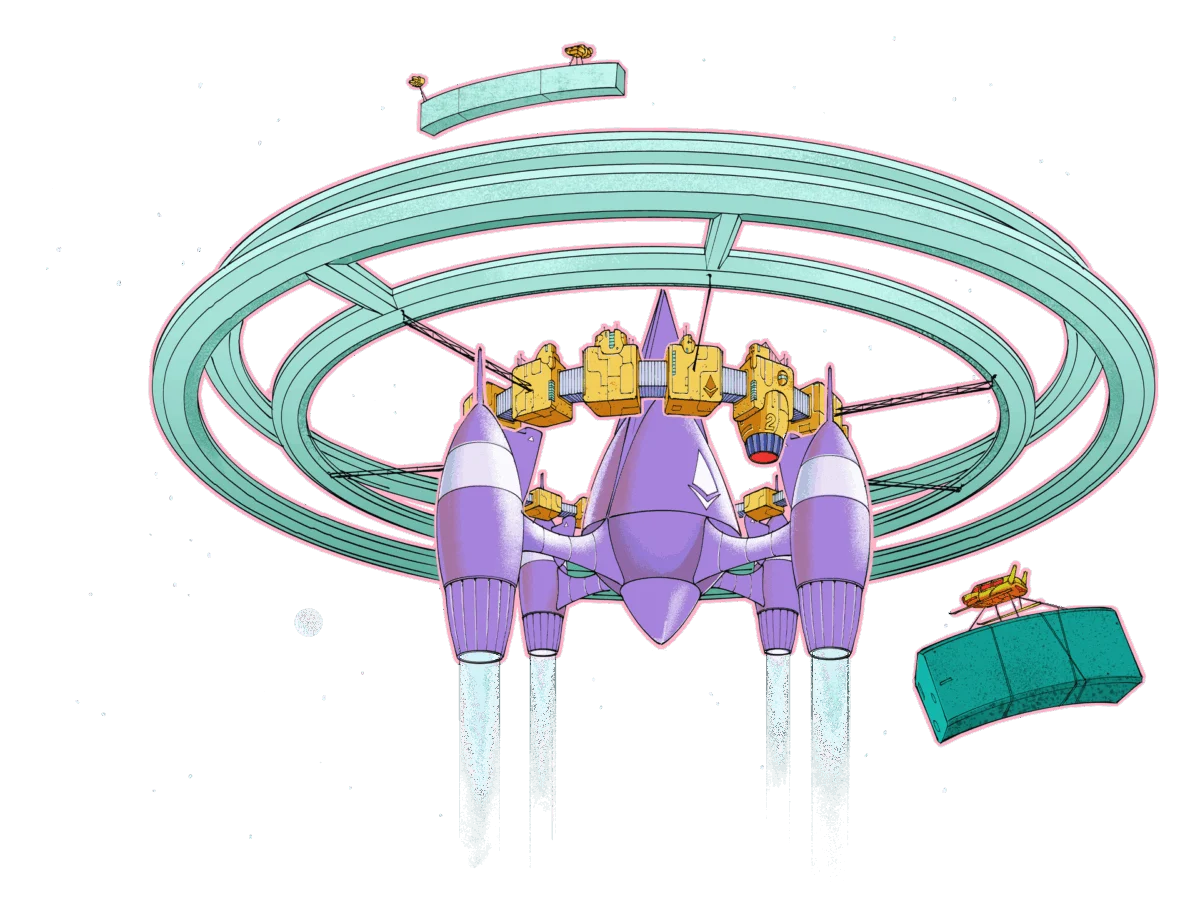
The Ethereum network, currently the world’s most significant blockchain by economic activity and the second-largest by market capitalization, is approaching a pivotal moment in its history. Around the middle of 2022, the network is scheduled to undergo "The Merge," a monumental shift from its original Proof-of-Work (PoW) consensus mechanism to a Proof-of-Stake (PoS) model. This transition is frequently compared to "changing the engine of a jet while it is mid-flight," a metaphor that underscores the complexity and high stakes involved. With hundreds of billions of dollars in assets, decentralized finance (DeFi) protocols, and non-fungible token (NFT) ecosystems relying on its continuous operation, Ethereum cannot afford any downtime or failures in block production.

Unlike the Bitcoin network, which relies almost exclusively on a single software implementation known as Bitcoin Core, the Ethereum community has intentionally fostered a multi-client ecosystem. Encouraged by the Ethereum Foundation (EF), developers have created several distinct versions of the software required to run the protocol. These clients are developed by independent teams using different programming languages, such as Go, Rust, Java, and Nim. This strategy is designed to ensure that a bug in one piece of software does not bring down the entire network. However, as the date of The Merge approaches, a significant challenge has emerged: a lack of diversity in the distribution of these clients, particularly among large-scale institutional stakers.
The Architecture of The Merge: Execution and Consensus
To understand the risks associated with client diversity, it is first necessary to understand how The Merge changes the structure of an Ethereum node. Currently, a single node handles both the execution of smart contracts and the validation of transactions via mining. After The Merge, these duties will be formally separated into two distinct layers.
The first is the Execution Layer, which utilizes the Ethereum Virtual Machine (EVM). This layer is responsible for processing transactions and executing smart contract code. It is essentially an updated version of the current Ethereum mainnet software. The second is the Consensus Layer, which is managed by the Beacon Chain—a PoS blockchain that has been running in parallel to the mainnet since December 2020. Post-merge, nodes will run an execution client and a consensus client simultaneously. The execution client prepares the blocks, while the consensus client provides the security by validating those blocks through a network of stakers rather than miners.
This separation is a classic architectural approach to enhancing system robustness. By isolating the logic of transaction execution from the logic of network agreement (consensus), the network becomes more modular. However, this modularity only provides safety if the consensus layer is distributed across many different software implementations.
The Mathematical Risks of Client Monoculture
The primary motivation for having multiple client implementations is to prevent a "single point of failure." In a complex system like Ethereum, software bugs are inevitable. If every validator on the network runs the same software, a single critical bug could halt the entire blockchain or, worse, lead to the finalization of incorrect data.
The Ethereum protocol has built-in thresholds that determine how the network reacts to such failures. The level of danger is directly proportional to the "market share" of the buggy client:
- Less than 33% Market Share: If a client used by less than a third of the network’s staking power experiences a bug, the network remains stable. The remaining two-thirds of validators can continue to reach consensus and finalize blocks. The affected nodes may go offline or lose some funds via "leakage," but the network at large continues to function.
- Between 33% and 50% Market Share: If a bug hits a client used by more than a third but less than half of the network, the blockchain can no longer "finalize" new blocks. While the chain continues to grow, it lacks the cryptographic certainty of finality. This would cause significant disruption to exchanges and decentralized applications, though automatic mechanisms would eventually penalize the faulty nodes until their share of the network drops below the critical threshold, allowing the remaining healthy nodes to resume finalization.
- Between 50% and 66% Market Share: This scenario is highly dangerous. A bug in a majority client could lead to a split in the network, where the buggy nodes and the healthy nodes follow different versions of the blockchain. This would require manual intervention from the community and developers to resolve, likely resulting in significant financial losses for those on the "wrong" side of the split.
- Above 66% (Supermajority) Market Share: This is the "game over" scenario. If a client with more than two-thirds of the staking power has a consensus-breaking bug, it has the power to finalize an invalid chain. Because the buggy client holds a supermajority, the protocol views its version of the truth as final. In this event, the only options are to accept the corrupted chain or to perform a hard fork that permanently splits Ethereum into two separate networks.
The Dominance of Prysm and the Role of Institutional Stakers
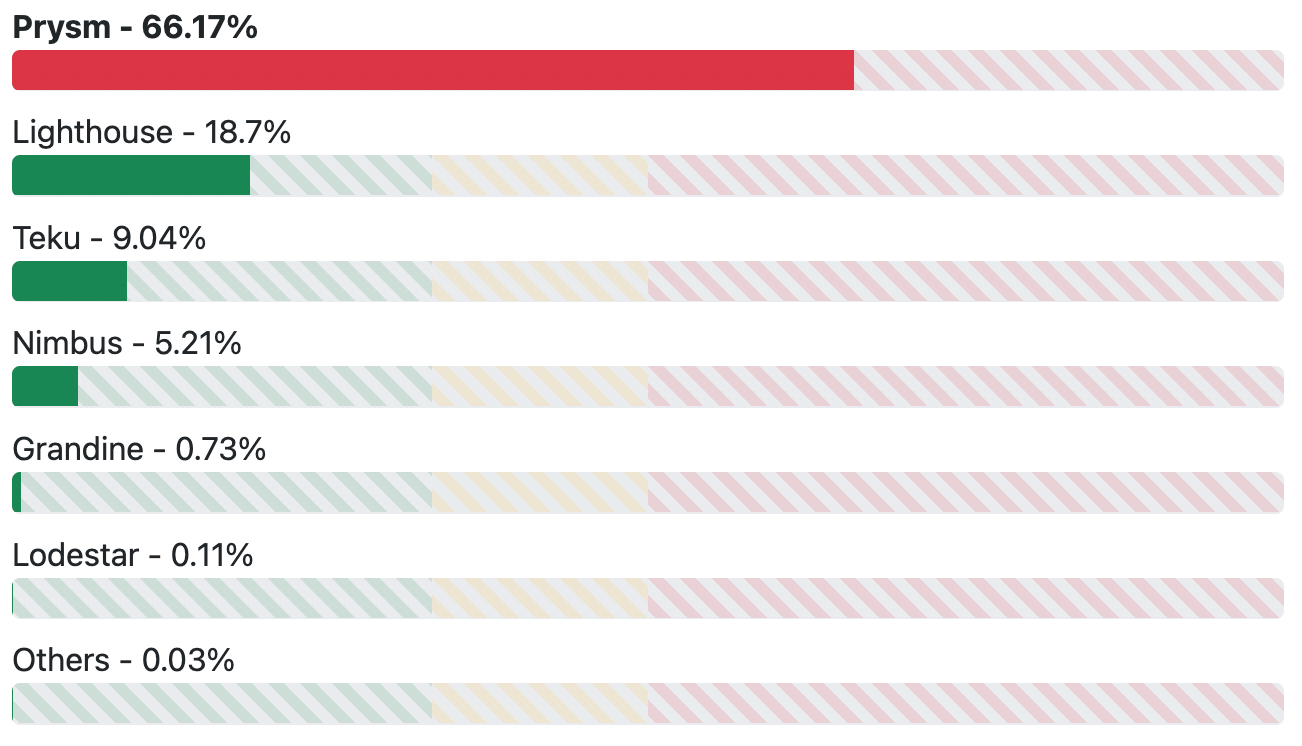
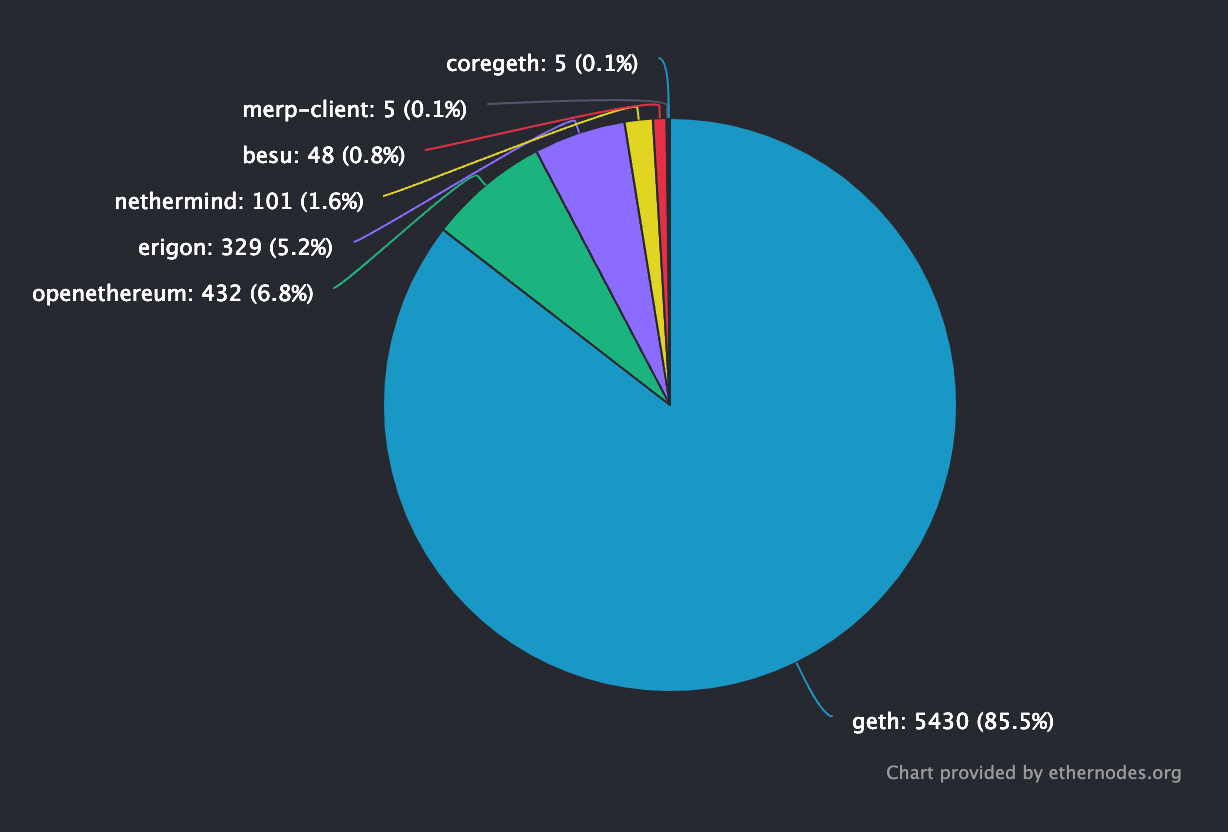
As of the lead-up to The Merge, the consensus layer is facing a significant diversity crisis. A single client implementation, Prysm, developed by Prysmatic Labs, currently commands a near-supermajority of the network’s staking power. At various points in early 2022, Prysm’s market share hovered around the 66% mark, placing the network in a precarious position.
Other available consensus clients include Lighthouse (written in Rust), Teku (Java), Nimbus (Nim), and newer entries like Grandine and Lodestar. Despite the availability of these alternatives, Prysm’s dominance remains high. This is largely attributed to its "first-mover advantage." Prysm was the first client to offer a stable prototype for the Beacon Chain, providing it with more time to refine its documentation, user interface, and developer tools. Additionally, Prysm is written in Go (Golang), the same language as Geth, the dominant execution client. This familiarity makes it the natural choice for developers already comfortable with the Ethereum ecosystem.
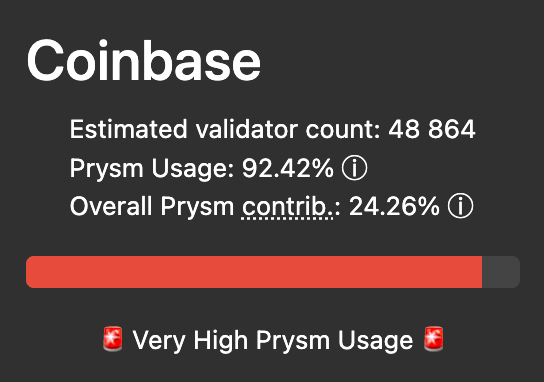
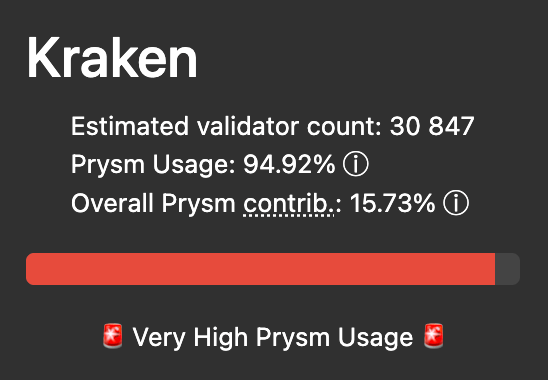
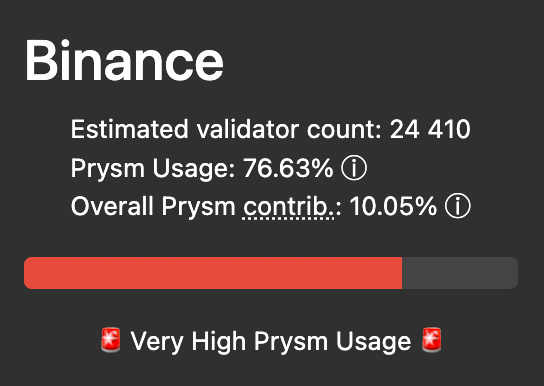
The concentration of power is further exacerbated by large-scale staking services. Because many individuals do not have the 32 ETH required to run their own validator, they turn to centralized exchanges and staking pools. These entities—Coinbase, Kraken, Binance, and Lido—manage thousands of validators and have historically leaned heavily on Prysm.
For instance, data from early 2022 indicated that Coinbase alone managed nearly 18% of the validators on the Beacon Chain, with over 92% of those running Prysm. Kraken and Binance showed similar trends, with Prysm usage exceeding 75% to 90%. When questioned about this reliance, institutional providers often cited security and stability. Coinbase Cloud noted that Prysm was initially the only client that supported "remote signers"—a security feature that allows validator keys to be stored in isolated environments rather than on the validator server itself.
Chronology of the Transition to Proof-of-Stake
The journey to The Merge has been a multi-year effort, marked by several key milestones:
- July 2015: Ethereum launches with a Proof-of-Work consensus, but with the long-term intention of moving to Proof-of-Stake.
- 2018–2019: Research shifts from a complex "sharding" first approach to a "Beacon Chain" first approach to provide a foundation for PoS.
- December 1, 2020: The Beacon Chain is officially launched. Users begin staking ETH, but the chain does not yet process mainnet transactions.
- August 2021: The London Hard Fork introduces EIP-1559, changing the fee structure and preparing the execution layer for the transition.
- March 2022: The Kiln testnet successfully simulates The Merge, providing a dress rehearsal for the mainnet event.
- Mid-2022 (Target): The Merge is scheduled to occur when the network reaches a specific Total Terminal Difficulty (TTD), triggering the handover from miners to validators.
Developer Responses and the Path to Decentralization
Ethereum core developers are acutely aware of the risks posed by client monoculture. Marius van der Wijden, a prominent developer working on the Geth client, has emphasized that while the risk of a consensus failure is statistically small due to rigorous testing and "fuzzing" (automated bug-finding), the community must remain vigilant.
"We have strong consensus that we will not bail out stakers that run a majority client if their clients misbehave," van der Wijden stated. This serves as a stern warning to institutional stakers: if they continue to run a supermajority client and that client fails, the protocol will automatically penalize them, potentially resulting in the loss of their staked assets. This "social consensus" is a powerful tool designed to incentivize diversity through financial risk.
Fortunately, there are signs of progress. In response to community pressure, major staking providers have begun to diversify. Kraken and its subsidiary Staked have started migrating validators to the Teku client. Coinbase has worked with the Lighthouse team to implement the remote signing features they require. Meanwhile, decentralized staking protocols like Rocket Pool have led the way in diversity, with only a small fraction of their node operators using the majority client.
Broader Implications and Analysis
The success of The Merge is about more than just a technical upgrade; it is a test of Ethereum’s governance and its commitment to decentralization. A successful transition will reduce Ethereum’s energy consumption by more than 99.9%, making it a more attractive platform for ESG-conscious institutional investors. It also sets the stage for future "sharding" upgrades that will improve the network’s scalability.
However, the client diversity issue highlights a recurring tension in blockchain development: the trade-off between individual convenience and collective security. For a single node operator, using the most popular software (Prysm) is the path of least resistance. But for the network as a whole, that choice creates a systemic vulnerability.
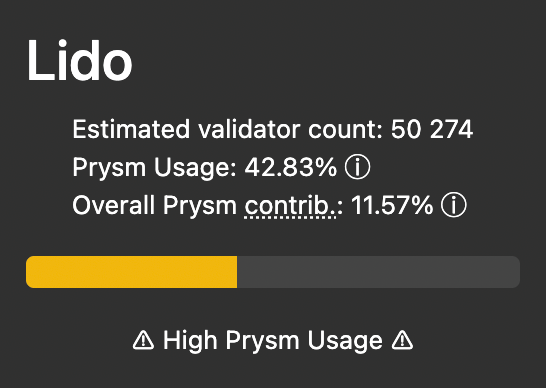
The "Game Over" scenario is not merely a theoretical exercise; it represents a potential existential threat to the Ethereum ecosystem. If the network were to finalize a buggy chain, the trust that underpins billions of dollars in value could evaporate overnight. The current efforts by the Ethereum Foundation and core developers to push for a "33% maximum" for any single client are essential to ensuring that Ethereum remains a robust, permissionless, and resilient global infrastructure.
As The Merge draws closer, the focus shifts from the code itself to the behavior of the people and institutions running it. The resilience of the "airplane" depends not just on the new engine, but on the diversity of the systems keeping it in the air. For Ethereum, the message is clear: diversity is not just a preference; it is a security requirement.