admin
admin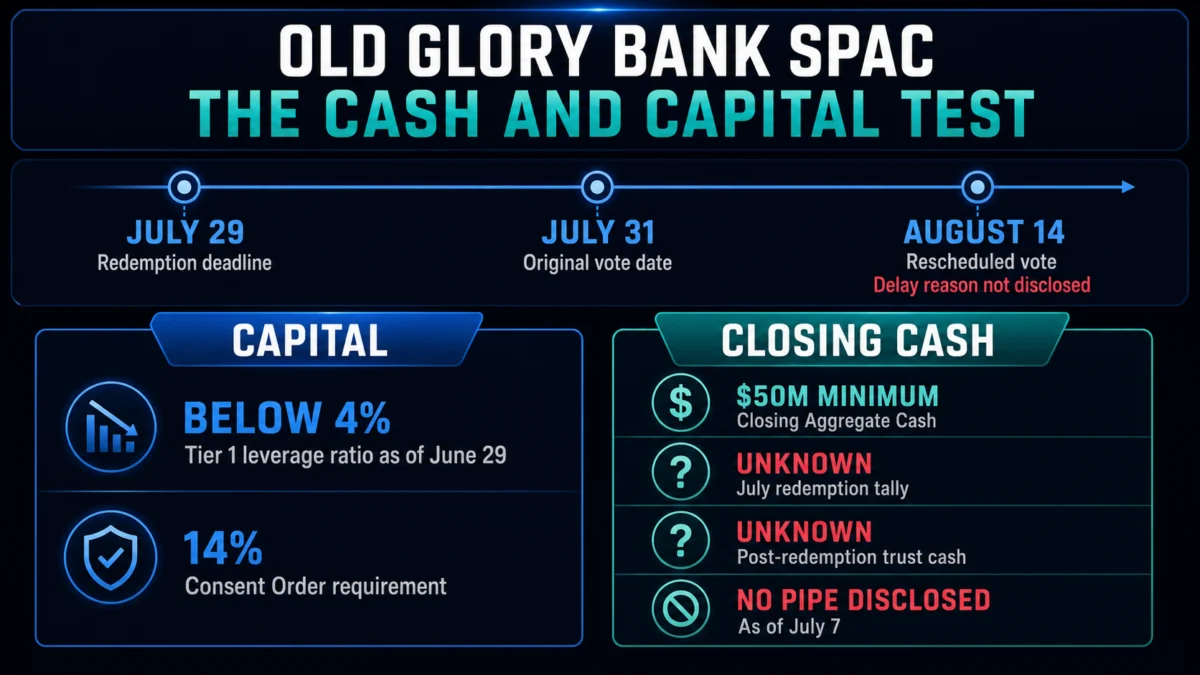
Digital Asset Acquisition Corp. (DAAQ), the special purpose acquisition company (SPAC) aiming to merge with the parent company of regulated bank Old Glory Bank, has unexpectedly postponed its crucial shareholder vote. The decision pushes the decision date from July 31 to August 14, a move that leaves Old Glory Bank in a precarious financial position, awaiting a critical $50 million cash infusion. This delay, announced on July 31, comes without any disclosed reason from DAAQ and offers no clarity on the number of shares redeemed, a key metric for determining the viability of the merger.
The original vote date of July 31 fell just two days after the stated redemption deadline of July 29. In a filing with the U.S. Securities and Exchange Commission (SEC), DAAQ indicated it would continue soliciting proxies but remained silent on the underlying causes for the postponement. Importantly, the delay does not automatically reinstate the right for investors to redeem their shares. According to DAAQ’s final prospectus, shareholders could only withdraw their redemption requests up until the July 29 deadline. Post-deadline withdrawals would require explicit consent from DAAQ before the closing of the merger, a consent that has not been publicly confirmed.
The Looming Capital Gap and the Unresolved Cash Test
The financial health of Old Glory Holding Company, the parent entity of Old Glory Bank, has been a significant concern leading up to this merger vote. The bank was reportedly operating below two critical capital thresholds as the voting period commenced. The final prospectus revealed that as of June 29, Old Glory Bank’s Tier 1 leverage ratio remained below the ordinary “adequately capitalized” threshold of 4%. This placed the bank in technical noncompliance with a covenant stipulated in the merger agreement. While Old Glory considered this noncompliance to be immaterial, regulatory scrutiny paints a more serious picture.
A May 2024 consent order issued by the Federal Deposit Insurance Corp. (FDIC) and the Oklahoma State Banking Department imposes substantially higher capital requirements. This order mandates a Tier 1 leverage ratio of 14% for the duration of the order, alongside the necessity of regulator-reviewed capital and business plans. Furthermore, the order requires prior consent for any dividend payouts or bonus distributions. In parallel, prompt corrective action rules impose stringent restrictions on growth, capital distributions, acquisitions, branch expansions, and the introduction of new business lines for banks operating below adequate capitalization levels.
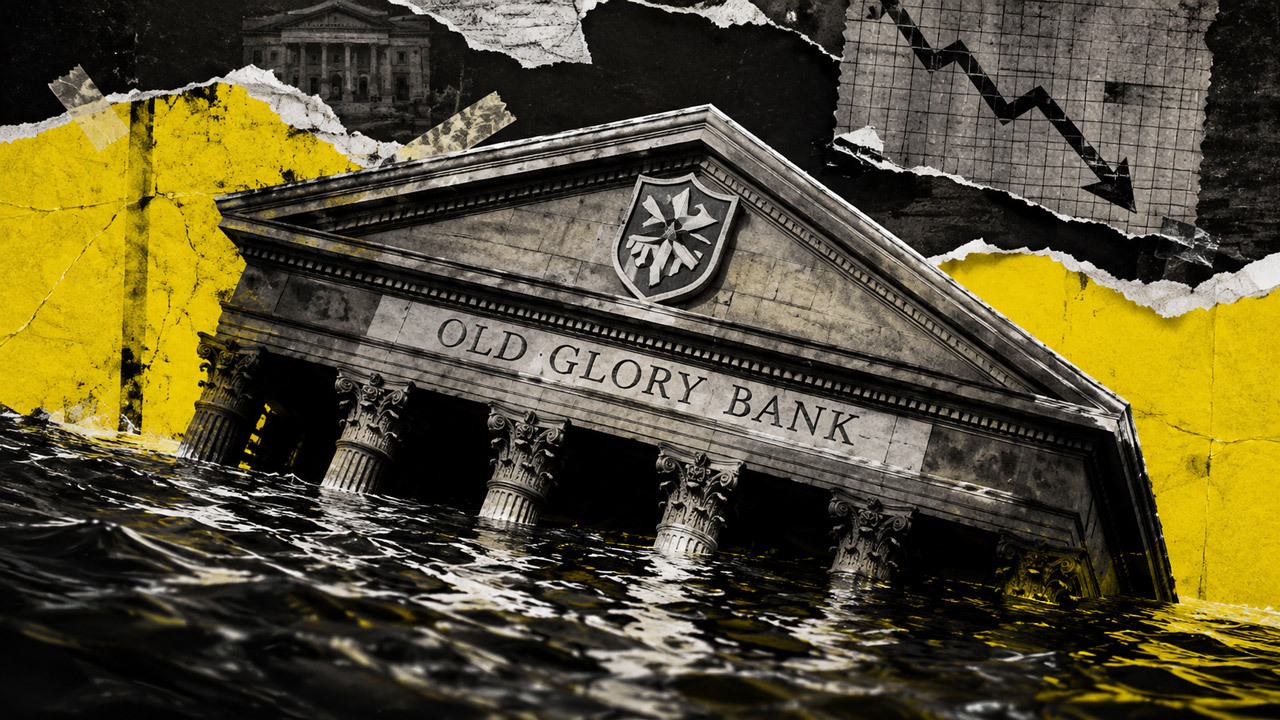
The consolidated financial disclosures from Old Glory Holding Company present a stark warning: its capital is not projected to cover anticipated operating losses and minimum regulatory capital needs over the next twelve months. This outlook generates substantial doubt regarding the company’s ability to continue as a going concern. Management has identified the cash infusion from the DAAQ merger as a crucial mitigating factor. However, they acknowledge that the successful closing of the deal is contingent upon the actions of other parties and prevailing market conditions, and therefore, is not guaranteed. It is important to note that this warning does not constitute a formal declaration of insolvency or an imminent closure of the bank.
The $50 Million Merger Agreement Hurdle
A key condition for the merger agreement, as outlined in the filings, is the requirement for at least $50 million in aggregate closing cash. This sum is calculated based on the cash remaining in the SPAC’s trust account after redemptions, any Private Investment in Public Equity (PIPE) proceeds that are actually received, and any additional proceeds secured through other transaction financing. The party benefiting from this condition, which is DAAQ, retains the option to waive it through a signed written agreement, provided it is lawful to do so.
As of March 31, DAAQ reported having $178.58 million in its trust account, alongside 17.25 million redeemable public shares. However, this historical balance does not reflect the amount of cash that will be available at the actual closing of the merger, especially considering potential redemptions. The postponement filing failed to provide an update on the July redemption figures or the current cash balance in the trust.

Further complicating the financial landscape, the July 7 prospectus indicated that no PIPE financing or other transaction financing had been secured or entered into. A separate filing in June had mentioned DAAQ’s intention to negotiate non-redemption agreements with investors. However, the attached form did not identify any executed agreements with investors or any committed share amounts from such negotiations.
Navigating Regulatory Approvals and Market Uncertainty
Beyond the financial hurdles, the timeline for securing necessary regulatory approvals also remains uncertain. At the time of the final prospectus, a pending application with the Federal Reserve was a significant closing condition. Additionally, Nasdaq approval for the combined entity’s initial listing was also a prerequisite for the merger to proceed. The July 31 filing did not provide any updates on the status of these approvals, and their silence does not definitively indicate their current standing.
The extended two-week period now provides DAAQ with additional time to solicit shareholder votes and potentially secure necessary commitments. However, the fundamental issue of the deal’s cash viability remains opaque. Investors are keenly awaiting the final redemption tally and confirmed funding commitments to assess whether the crucial $50 million closing cash test can be met. Simultaneously, a clear and current capital ratio for Old Glory Bank is needed to accurately gauge the extent of its financial shortfall and the potential risks associated with this merger. The lack of transparency surrounding these critical financial metrics fuels ongoing speculation and concern among stakeholders, underscoring the delicate balance DAAQ and Old Glory Bank are currently navigating. The coming weeks will be decisive in determining the future of this proposed union and the stability of Old Glory Bank.