admin
admin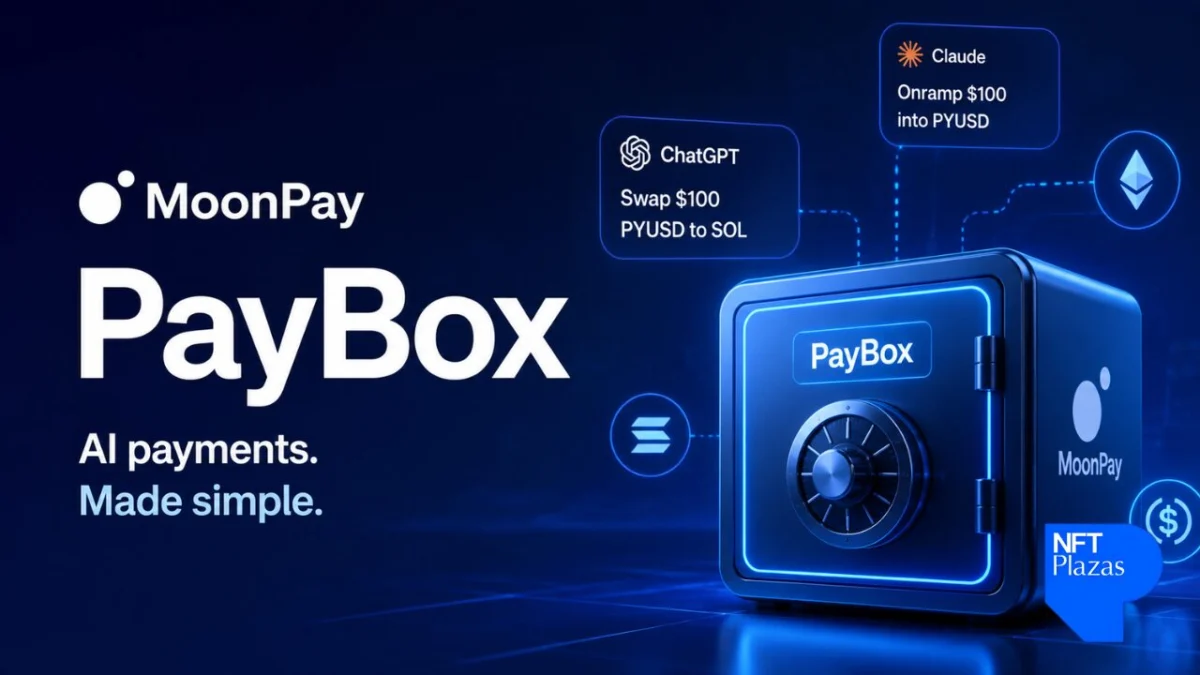
MoonPay, a leading cryptocurrency payments infrastructure provider, has announced the launch of PayBox, an innovative AI-native payment vault designed to integrate secure cryptocurrency transactions and real-world purchases directly into conversational AI platforms like ChatGPT and Claude. This groundbreaking development positions AI assistants not merely as informational tools but as proactive agents capable of executing complex financial actions, all while ensuring users maintain stringent control over their digital assets and funds. The introduction of PayBox marks a significant leap in the burgeoning "agentic commerce" movement, where artificial intelligence transitions from answering questions to autonomously completing tasks on behalf of users.
The Dawn of Agentic Commerce: Bridging AI and Financial Execution
Until now, the capabilities of conversational AI in the financial realm were largely confined to analysis, recommendations, and information retrieval. Users could leverage ChatGPT or Claude to research market trends, compare investment opportunities, or understand intricate blockchain protocols. However, the critical step of executing a transaction—be it swapping cryptocurrencies, interacting with a DeFi protocol, or making an online purchase—always necessitated a manual switch to a separate exchange, wallet, or payment application. This fragmented user experience introduced friction and acted as a barrier to seamless digital finance.
PayBox fundamentally reconfigures this interaction by embedding robust payment functionality directly within the AI interface. By connecting PayBox via a custom connector to platforms like ChatGPT or Claude, users can issue natural language commands such as "Onramp $100 into PYUSD," "Swap $100 of PYUSD to SOL," "Bridge funds to Robinhood Chain," or "Maximize yield using Aave." The AI then processes these commands, prepares the corresponding transaction, and presents it to the user for final authorization. This authorization, secured by a passkey, ensures that while the AI acts as an intelligent assistant, the user retains ultimate oversight and approval before any funds are transferred. This paradigm shift from AI as a mere recommender to an actionable agent represents a pivotal moment in the evolution of digital commerce and finance.
Beyond Crypto: Expanding Reach with x402 and Traditional Payments
The utility of PayBox extends beyond the cryptocurrency ecosystem. Leveraging integrations built on x402, an open standard specifically designed for agent-initiated internet payments, PayBox empowers AI assistants to facilitate traditional online commerce. This includes functionalities such as booking flights, reserving restaurant tables, and shopping on e-commerce platforms. The x402 standard aims to create a universal framework for AI-driven payments, fostering interoperability and broad adoption across various merchants and service providers. MoonPay has indicated that a continuous rollout of additional merchant and service integrations is planned, signaling a broader ambition to weave agentic payment capabilities into the fabric of everyday online activities. This move highlights MoonPay’s strategy to bridge the gap between emerging web3 finance and established web2 commerce, using AI as the conduit.
The initial launch supports a robust array of blockchain networks, including Solana and several Ethereum Virtual Machine (EVM)-compatible networks such as Ethereum, Base, Arbitrum, Polygon, Hyperliquid, Robinhood Chain, and Tempo. This broad compatibility ensures that users can interact with a significant portion of the decentralized finance landscape directly from their AI conversations. Future releases are slated to expand support to even more blockchains, further enhancing PayBox’s utility and reach within the multi-chain crypto environment.
Fortifying Trust: Security Architecture Built Around User Control

Recognizing the paramount importance of security in financial transactions, especially those involving AI and digital assets, MoonPay engineered PayBox with a multi-layered security framework centered on user control. A core principle of PayBox is the avoidance of storing private keys in a single, vulnerable location. Instead, the platform leverages advanced cryptographic techniques, specifically multi-party computation (MPC) and trusted execution environments (TEEs).
Multi-party computation (MPC) technology ensures that cryptographic keys are never fully assembled in one place. Instead, they are split into multiple "shards" and distributed across various secure environments. For a transaction to be authorized, a predefined number of these shards must cooperate, meaning no single party—neither MoonPay nor the AI assistant—can independently access a user’s wallet or authorize a transaction. This distributed trust model significantly mitigates the risk of single points of failure and unauthorized access.
Trusted execution environments (TEEs) provide isolated, hardware-protected areas within a processor where code and data can run securely, shielded from the rest of the system. This ensures that sensitive operations, such as cryptographic computations involving key shards, are performed in an environment impenetrable even to the operating system or hypervisor. The combination of MPC and TEEs creates a formidable security perimeter, ensuring that user funds are protected with state-of-the-art cryptographic and hardware-level safeguards.
The robust infrastructure underpinning PayBox’s security is powered by Sodot, an Israeli key management company that MoonPay strategically acquired earlier this year. Sodot boasts an impressive track record, securing over $50 billion in digital assets across more than 10 million crypto wallets. The integration of Sodot’s proven technology into every PayBox vault provides a foundation of enterprise-grade security, instilling confidence in users interacting with this novel payment solution.
For card-based payments, PayBox integrates Visa’s agentic commerce protocol. This integration allows AI assistants to complete purchases using traditional payment methods without ever exposing or storing raw card details, further enhancing security and privacy for users. Furthermore, every passkey authorization within PayBox is designed to be single-use and transaction-specific. This critical feature prevents approvals from being reused or "replayed" if compromised, adding another layer of protection against fraudulent activities.
Balancing Automation with Human Oversight: Flexible Permission Models
MoonPay understands that different users have varying comfort levels with automation, especially concerning financial activities. To address this, PayBox offers two distinct permission models, allowing users to tailor their experience to their preferred level of control:
-
Always Ask: This default mode prioritizes explicit user consent. Every transaction, whether it’s a crypto transfer or a payment, requires a manual passkey approval from the user. This ensures that users maintain absolute, real-time oversight and personally authorize every single financial action initiated by the AI. This model is ideal for users who prefer maximum security and direct involvement in all financial decisions.
-
Autonomous: For users seeking greater convenience and efficiency, the Autonomous mode allows the AI to execute transactions automatically within predefined limits. These limits can be customized by the user and may include spending caps (e.g., "AI can spend up to $50 per transaction"), approved transaction types (e.g., "AI can swap PYUSD to SOL but cannot bridge funds"), or specific white-listed addresses. While offering automation, this mode still operates within boundaries set by the user, preventing unintended or excessive spending.

Crucially, MoonPay emphasizes that users retain the ability to modify or revoke permissions at any time. However, any changes to these permission settings necessitate a fresh human authentication, typically via a passkey. This design prevents malicious actors from altering settings without the user’s explicit consent. MoonPay argues that this nuanced approach eliminates a common trade-off found in many AI payment solutions, where users often have to surrender custody of their assets to a centralized platform to enable automation. With PayBox, users retain self-custody and control while benefiting from the power of AI-driven automation.
MoonPay’s Expanding AI Ambitions: A Strategic Vision for the Future
The launch of PayBox is not an isolated event but a strategic culmination of MoonPay’s growing commitment to integrating artificial intelligence into the digital finance landscape. Earlier this year, MoonPay spearheaded the introduction of an open AI wallet standard, a significant initiative that garnered support from influential organizations including PayPal, the Ethereum Foundation, and the Solana Foundation. This standard laid the groundwork for secure and interoperable AI-driven wallet interactions. Following this, MoonPay released tools that enabled basic cryptocurrency purchases and wallet interactions directly through AI assistants. PayBox represents the natural evolution of these capabilities, allowing the entire payment workflow—from intent to execution—to occur seamlessly within the conversational interface.
To further accelerate adoption and foster innovation, MoonPay has also released a comprehensive Software Development Kit (SDK). This SDK empowers developers to integrate PayBox’s powerful capabilities into their own AI applications, opening the door for a new generation of AI-powered financial tools and services across various platforms. Looking ahead, MoonPay plans to expand support to additional AI platforms, ensuring broader accessibility. Furthermore, the company intends to add more advanced DeFi features to PayBox, including complex functionalities like perpetual futures trading and sophisticated liquidity management, catering to more experienced crypto users and institutional clients.
Ivan Soto-Wright, CEO of MoonPay, articulated a visionary perspective on conversational payments, describing them as the inevitable next evolution of digital finance. "The card hid the cash. The phone hid the card. This is the era where money disappears into conversation," Soto-Wright stated, encapsulating the profound shift PayBox represents. He further emphasized the necessity of secure infrastructure to manage the billions of AI agents that will soon require the ability to hold, move, and spend money safely, positioning PayBox as a foundational component of this future financial ecosystem.
To incentivize early adoption and engagement, MoonPay is offering a USDC airdrop for eligible early users. Rewards of up to 500 USDC per account are available, contingent upon specific campaign requirements and account eligibility. This initiative aims to stimulate user participation and gather valuable feedback as PayBox enters the market.
Broader Implications and Future Outlook
The introduction of PayBox carries significant implications for several sectors:
- For AI Development: It pushes the boundaries of what conversational AI can do, moving it beyond informational retrieval to active, value-transferring agents. This will likely spur further innovation in agentic AI capabilities and multimodal interactions.
- For Cryptocurrency Adoption: By simplifying access to crypto transactions and DeFi protocols within familiar AI interfaces, PayBox could significantly lower the barrier to entry for mainstream users, accelerating cryptocurrency adoption and utility.
- For Digital Payments: The model of AI-initiated, user-authorized payments could redefine online commerce, making transactions more intuitive and seamlessly integrated into daily digital interactions, potentially challenging traditional payment gateways.
- Security and Trust: The emphasis on MPC, TEEs, and user-centric permission models sets a new standard for security in AI-driven financial applications, addressing common concerns about AI autonomy and asset control.
- Regulatory Landscape: As agentic commerce gains traction, regulators will face new challenges in defining oversight, consumer protection, and liability for AI-driven financial transactions, potentially leading to evolving frameworks for digital assets and AI.
As AI assistants continue their rapid evolution from simple chatbots to sophisticated, autonomous digital agents, MoonPay’s PayBox highlights a compelling future where conversational interfaces become the primary gateway for cryptocurrency trading, decentralized finance, and everyday online commerce. This convergence of AI and secure digital payments promises to usher in an era of unprecedented convenience and efficiency, reshaping how individuals and businesses interact with their finances in the digital age. The success of PayBox will not only be measured by its technical prowess but by its ability to foster trust and demonstrate practical value in this nascent, yet incredibly promising, frontier of agentic finance.