admin
admin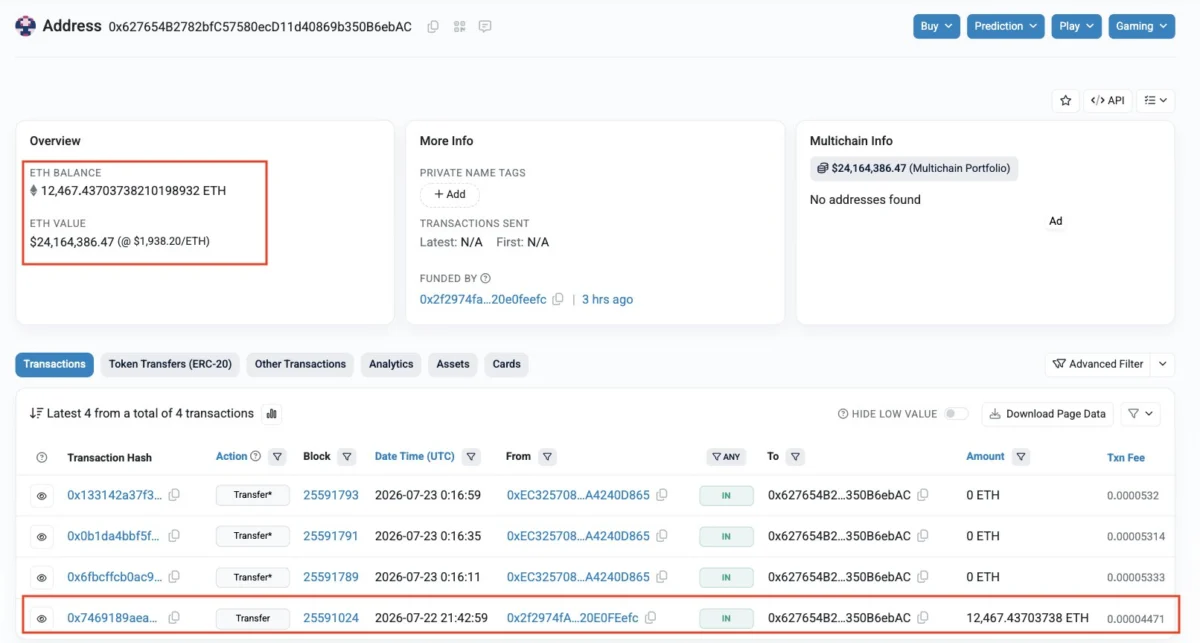
AFX Trade, a significant player in the decentralized finance (DeFi) ecosystem, has announced the immediate suspension of its Arbitrum-operated USDC custody bridge after an estimated $24.15 million in USDC was illicitly drained on July 22, 2026. The incident, detected at approximately 21:30 UTC, specifically targeted AFX’s proprietary bridge infrastructure, a crucial component for handling USDC deposits and withdrawals within its trading ecosystem, rather than Arbitrum’s native bridge or underlying network. The exact vector of the exploit remains the subject of an intensive investigation by AFX Trade’s internal teams and collaborating blockchain security firms, while a collective effort is underway to monitor the flow of the stolen funds and facilitate potential recovery.
The Incident Unfolds: A Timeline of the Drain
The alarm was first raised by blockchain security firm Blockaid, which issued an alert detailing the substantial outflow of funds from the AFX-operated bridge. The incident’s detection at 21:30 UTC on July 22, 2026, prompted an immediate and decisive response from AFX Trade. Upon identifying the compromise, the project swiftly paused all bridge operations, effectively preventing further unauthorized withdrawals, and activated its comprehensive incident response procedures. This rapid action underscores the critical need for robust monitoring and quick-trigger response mechanisms in the high-stakes world of cross-chain asset transfers. The speed and scale of the drain were particularly alarming, as the $24.15 million figure almost precisely matched the bridge’s Total Value Locked (TVL) prior to the exploit. According to DefiLlama data, AFX Bridge held approximately $24.18 million in TVL, all exclusively on Arbitrum, indicating that nearly the entirety of the locked assets in the bridge were compromised in the attack.
AFX Bridge, Not Arbitrum’s Core, Targeted
Crucially, both AFX Trade and Offchain Labs, the primary developer of Arbitrum, have moved to clarify that the exploit was isolated to AFX’s specific custody bridge and did not compromise the integrity of the Arbitrum network itself or its native bridging mechanisms. Steven Goldfeder, co-founder and CEO of Offchain Labs, explicitly stated that the relevant transaction originated from a third-party protocol, reinforcing that Arbitrum’s native bridge was neither hacked nor exploited. This distinction is vital for maintaining user confidence in the underlying Layer 2 scaling solution. While a significant blow to AFX Trade and its users, the confirmation that Arbitrum’s core infrastructure remains secure helps to prevent broader market panic and underscores the difference between the security of a Layer 2 network and the various decentralized applications (dApps) and third-party bridges built upon it. These third-party bridges, while essential for interoperability, often introduce additional layers of smart contract or operational risk that are distinct from the security model of the underlying blockchain.
A Significant Blow: $24.15 Million Drained
The financial impact of the incident is profound for AFX Trade. The loss of approximately $24.15 million in USDC represents a near-total depletion of the assets held within its Arbitrum custody bridge. Total Value Locked (TVL) is a key metric in DeFi, representing the total amount of assets currently staked or locked in a protocol. For a bridge, TVL indicates the volume of assets it is responsible for managing as users transfer funds between different blockchain networks. The fact that the drained amount closely mirrored the bridge’s entire TVL suggests a comprehensive breach, leaving the bridge effectively empty of its custodial assets. This massive financial setback undoubtedly impacts AFX Trade’s operational capacity and user trust, particularly given the bridge’s central role in facilitating USDC deposits and withdrawals for its trading ecosystem. The incident highlights the inherent risks associated with centralizing large volumes of assets in any single point of failure within the DeFi landscape.
The Attacker’s Trail: Funds Swapped and Moved to Ethereum
Following the successful drain, the attacker swiftly moved to obscure the trail and convert the stolen assets. Blockchain analysis firm PeckShield tracked the flow of funds, revealing a strategic maneuver by the perpetrator. The stolen USDC was first transferred from Arbitrum, the Layer 2 network where the exploit occurred, to the Ethereum mainnet. Once on Ethereum, the USDC was rapidly swapped into approximately 12,467.5 ETH. This conversion is a critical step for attackers, as it removes the possibility of the stablecoin issuer, Circle, freezing the assets. USDC, as a centralized stablecoin, can be frozen at the token contract level under specific circumstances, typically involving law enforcement requests. By converting to ETH, a decentralized cryptocurrency, the attacker effectively removes this potential recovery vector. The consolidated ETH was then traced to a specific wallet address: 0x6276…ebAC. This move makes the recovery process significantly more challenging, as ETH lacks the same centralized control mechanism as USDC, requiring extensive on-chain monitoring, coordination with cryptocurrency exchanges to flag and freeze deposits, and potentially legal action to reclaim the assets.
AFX Mobilizes: Investigation, Security Partners, and a White-Hat Offer
In the wake of the devastating exploit, AFX Trade has initiated a multi-pronged response aimed at understanding the breach, recovering funds, and protecting its community. The project’s engineering and security teams are actively conducting an internal investigation, seeking to pinpoint the precise vulnerability exploited. Simultaneously, AFX is collaborating with several prominent blockchain security partners, including SlowMist, which has been instrumental in tracking the movement of stolen funds. The attacker’s address, 0x6276…ebAC, has been reported to the Crypto Defense Alliance (CDA), a collaborative network comprising various exchanges and ecosystem partners dedicated to combating crypto crime. This alliance facilitates information sharing and coordinated action, such as freezing funds if they attempt to move through compliant exchanges.
Adding another layer to the investigation, Zellic, the firm responsible for previously auditing the bridge’s code, has been invited to assist in the forensic analysis. Their familiarity with the codebase is expected to expedite the process of identifying any potential code vulnerabilities. The ultimate goal of this collaborative investigation is to produce a detailed technical postmortem report that will definitively determine whether the incident stemmed from smart contract flaws, compromised validator setups, inadequate key management practices, or weaknesses in backend signing flows.
In a proactive effort to recover the stolen assets, AFX Trade, through Ken / Supercube, its Head of Growth, extended a public white-hat settlement offer to the party responsible for the incident. The offer requests the return of 70% of the stolen assets to a specified address (0x222B…9f1B), allowing the attacker to retain the remaining 30% as a “white-hat bounty.” This strategy is not uncommon in the crypto space, where the promise of a substantial reward often incentivizes ethical hackers or even malicious actors to return the bulk of stolen funds, preventing protracted legal battles and preserving some value for the victims. AFX’s recovery messaging emphasizes two primary objectives: safeguarding the community and maximizing the potential recovery of user assets. However, as of the time of writing, there has been no public confirmation of any portion of the stolen funds being returned in response to this offer.

The Quest for Answers: Unpacking the Attack Vector
While AFX Trade maintains that the final attack vector is still under official investigation, with further details to be released as verified data becomes available, preliminary assessments from several security firms and DeFi data aggregators offer strong indications of the likely cause. The project has stated only that the investigation is ongoing, reserving definitive conclusions until their analysis is complete. Therefore, a definitive verdict on whether this was a sophisticated smart contract exploit or a compromise of operational security, such as validator keys, remains pending AFX’s official announcement.
Nevertheless, the consensus among various security sources points towards an "infrastructure incident." SlowMist, a renowned blockchain security firm, described the event as an exploit targeting AFX’s cross-chain USDC custody bridge on Arbitrum, specifically suggesting that the attacker utilized "compromised validator hot keys to achieve a payout quorum." This implies that the security of the operational keys responsible for authorizing transactions on the bridge was breached, allowing the attacker to sign off on unauthorized withdrawals. Echoing this assessment, the DefiLlama Hacks database, a comprehensive record of DeFi exploits, has also logged the $24.15 million loss for AFX Bridge, classifying it under the "Infrastructure" category with the technique labeled as "Private Key Compromised."
If the forthcoming postmortem confirms this classification, the AFX incident will stand as another stark reminder of the significant operational risks inherent at the bridge layer within the DeFi ecosystem. These risks encompass critical components such as the management of signing keys, the setup and security of validator nodes, secure custody processes for locked assets, and robust withdrawal verification mechanisms. Bridges, by their very nature, often hold vast volumes of assets in their smart contracts or custody layers, making them prime targets. Procedural flaws or security lapses in these verification and authorization processes can lead to highly concentrated and devastating losses.
Broader Implications for Bridge Security: A Wake-Up Call
The AFX Trade incident serves as a critical case study and a potent reminder of the persistent and evolving security challenges facing cross-chain bridges in the decentralized finance landscape. Bridges are foundational to the interoperability of the multi-chain future, allowing assets and data to flow between disparate blockchain networks. However, their critical role also makes them exceptionally high-value targets for malicious actors. The operational risks highlighted by this exploit—specifically the suspected compromise of validator keys—are distinct from smart contract vulnerabilities, though both can lead to catastrophic outcomes.
Validator setups and key management are complex facets of bridge security. Many bridges rely on a multi-signature scheme or a set of validators to approve transactions, requiring a quorum of signatures for any funds to be moved. A compromise of a sufficient number of these "hot keys"—keys that are often kept online or readily accessible for transaction signing—can grant attackers complete control over the bridge’s assets. This incident, if confirmed as a private key compromise, underscores the paramount importance of stringent key generation, storage, rotation, and access control protocols for all bridge operators.
The DeFi space has witnessed numerous high-profile bridge exploits, collectively amounting to billions of dollars in losses. From Ronin Bridge to Wormhole and now potentially AFX Trade, these incidents consistently highlight that the security of bridges often represents the weakest link in the broader blockchain ecosystem. They are centralized points of trust within a decentralized network, making their operational security absolutely paramount. The industry must continually learn from these events, investing heavily in advanced cryptographic security, robust operational procedures, independent audits, bug bounties, and continuous real-time monitoring to mitigate these risks. The incident reinforces the argument for more decentralized, trustless bridge designs, although even these can have their own set of vulnerabilities.
Impact and Forward Steps: Community Protection and Reimbursement Concerns
For the AFX Trade community, the immediate aftermath of the incident is characterized by uncertainty and concern. While AFX has stated its primary objectives are protecting the community and maximizing asset recovery, critical questions regarding user reimbursement plans remain unanswered. The project has not yet disclosed details such as the number of affected keys or validators, the specific role (if any) of the bridge code in facilitating the exploit, or how it plans to compensate users who lost funds. This lack of concrete information regarding reimbursement is a major source of anxiety for affected users, as full recovery is often a lengthy and uncertain process in crypto exploits.
The reputational damage to AFX Trade is also considerable. Trust is the most valuable currency in DeFi, and a breach of this magnitude can significantly erode user confidence, impacting future adoption and liquidity for the platform. Transparency in post-incident communication is vital, and the community will be closely watching for comprehensive updates, particularly the technical postmortem report and any announcements regarding user restitution. The project’s ability to navigate this crisis, learn from the exploit, and implement enhanced security measures will be crucial for its long-term viability and for rebuilding trust within its ecosystem.
The Path Ahead: Awaiting Resolution and Enhanced Security Measures
As the investigation into the AFX Trade bridge drain continues, the crypto community awaits further official updates and a comprehensive technical postmortem. The nearly $24.15 million in stolen USDC, now largely converted to ETH, remains in the attacker’s wallet, challenging the efforts of AFX and its security partners to recover the funds. This incident serves as a stark reminder of the persistent security challenges within the DeFi sector, particularly concerning critical infrastructure like cross-chain bridges.
The lessons learned from the AFX Trade exploit will undoubtedly contribute to the ongoing discourse on best practices for bridge security, emphasizing the need for multi-layered defenses, rigorous operational security, and continuous vigilance. For users, it underscores the importance of understanding the risks associated with various DeFi protocols and exercising caution when interacting with third-party bridges. The path ahead for AFX Trade involves not only recovering assets but also meticulously reinforcing its security architecture to prevent future compromises, a challenge that many in the rapidly evolving decentralized finance space continue to face.