admin
admin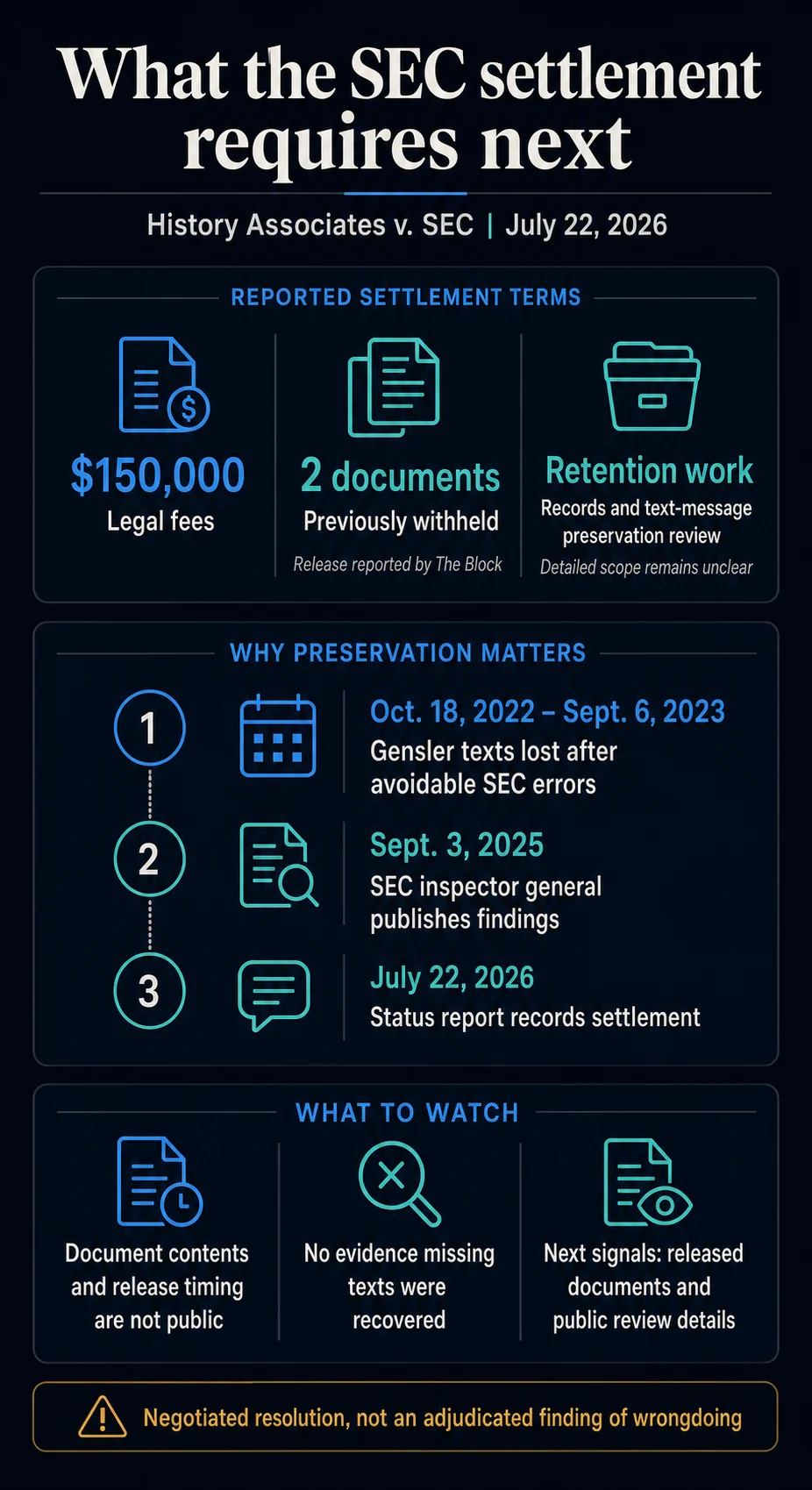
The U.S. Securities and Exchange Commission (SEC) has agreed to pay $150,000 in legal fees and implement significant reforms to its record-keeping and document preservation practices as part of a settlement that resolves a public records lawsuit filed by History Associates, a company backed by cryptocurrency exchange Coinbase. The settlement, finalized on July 22, 2026, brings an end to a legal dispute initiated on June 27, 2024, without the SEC admitting any wrongdoing. This development marks a crucial moment for transparency in regulatory agencies and highlights ongoing challenges in managing digital communications.
Background of the Lawsuit and Settlement
The lawsuit originated from a Freedom of Information Act (FOIA) request filed by History Associates, seeking specific documents from the SEC. While the exact nature of the initial request remains undisclosed, the subsequent legal action and settlement indicate a dispute over the SEC’s responsiveness and its practices concerning the retention and disclosure of federal records. The settlement, reached before a judicial decision on the merits of the SEC’s conduct, underscores the agency’s commitment to resolving the matter without protracted litigation.
Paul Grewal, Chief Legal Officer at Coinbase, hailed the outcome as a victory for transparency, emphasizing the importance of public access to regulatory information. The settlement mandates the release of two documents that the SEC had previously withheld, though details regarding their content and the timeline for their disclosure are yet to be publicly established. Furthermore, the SEC has committed to a thorough review of its records and text-message preservation policies, a move directly prompted by findings of lost communications involving a former SEC Chair.
The Significance of Records Preservation Review
The mandate for the SEC to review its records and text-message preservation policies is a direct response to a critical report issued by the SEC’s Office of Inspector General (OIG) in September 2025. This OIG report detailed "avoidable device-management errors" that led to the loss of text messages sent and received by former SEC Chair Gary Gensler between October 18, 2022, and September 6, 2023. The OIG concluded that these missing messages likely constituted federal records, raising serious concerns about the agency’s ability to comply with FOIA and maintain accurate historical accounts of its decision-making processes.
The practical implications of inadequate record-keeping for FOIA requesters are substantial. Agencies can only search and disclose records that are effectively captured and preserved. The loss of communications, particularly those from high-ranking officials, can hinder legitimate requests for information, impede oversight, and complicate efforts to reconstruct policy decisions or enforcement actions years later. The SEC’s commitment to reviewing its controls aims to prevent such losses in the future, ensuring that vital information remains accessible for public scrutiny and historical record.
Timeline of Events Leading to the Settlement
- June 27, 2024: History Associates, with backing from Coinbase, files a lawsuit against the SEC over its handling of a FOIA request.
- September 2025: The SEC’s Office of Inspector General releases a report detailing the loss of former Chair Gary Gensler’s text messages due to device-management errors.
- July 22, 2026: The SEC and History Associates reach a settlement agreement, concluding the lawsuit. The terms include a $150,000 payment for legal fees, the release of two previously withheld documents, and a review of the SEC’s record and text-message preservation policies.
Details of the Settlement Agreement
The settlement agreement encompasses several key provisions:
- Financial Compensation: The SEC will pay $150,000 to cover the legal fees incurred by History Associates in pursuing the FOIA lawsuit.
- Document Release: The agency is obligated to release two specific documents that were previously withheld. The content and release date of these documents are currently unspecified in public reports.
- Records Preservation Review: The SEC has committed to undertaking a comprehensive review of its records and text-message preservation policies. This review is intended to identify and rectify any weaknesses in its current systems that could lead to the loss or inaccessibility of federal records. The precise scope and methodology of this review are not yet fully detailed, but it is understood to involve improving how digital communications are managed and retained.
- No Admission of Wrongdoing: A critical aspect of the settlement is that it contains no admission of fault or wrongdoing on the part of the SEC. This allows the agency to resolve the legal challenge while maintaining its position on its operational conduct.
Broader Implications for Regulatory Transparency and Digital Records
This settlement is not an isolated incident but reflects a broader trend of increased scrutiny on how government agencies manage and preserve digital communications. The proliferation of text messages, emails, and other electronic forms of communication has presented significant challenges for FOIA compliance and record-keeping. Agencies are increasingly facing legal pressure to demonstrate robust systems for capturing and retaining these records, especially in light of past instances of lost data.
The SEC’s settlement with History Associates, particularly its focus on text-message preservation, underscores the evolving nature of FOIA requests and the digital landscape. The findings regarding former Chair Gensler’s lost texts likely served as a catalyst for the more stringent requirements in this settlement. The success of this review will be measured by the SEC’s ability to implement lasting changes that enhance its data management practices and ensure future compliance with transparency laws.
The implications extend beyond the SEC. Other regulatory bodies and federal agencies may face similar pressures to upgrade their digital record-keeping systems. The settlement could serve as a precedent, encouraging more proactive approaches to data preservation and potentially leading to more stringent FOIA compliance standards across the government.

Previous Coinbase-Backed Legal Actions
This FOIA settlement is not the first instance where Coinbase has actively pursued greater transparency from regulatory bodies through legal means. In a separate, but related, action, Coinbase also backed a records fight that shed light on the Federal Deposit Insurance Corporation’s (FDIC) handling of banks involved in the cryptocurrency sector. That case led to the release of documents pertaining to "pause letters" issued by the FDIC concerning crypto business activities, offering crucial insights into the regulatory landscape for digital assets. Such actions by Coinbase demonstrate a strategic approach to engaging with regulators and seeking information that can inform the cryptocurrency industry and the public.
Future Outlook and Next Steps
The true impact of this settlement will become clearer in the coming months as the SEC proceeds with its obligations. The release of the two withheld documents will be a key indicator of the immediate tangible outcome. More significantly, the SEC’s commitment to reviewing and potentially overhauling its records preservation policies will determine the long-term effectiveness of this resolution.
Transparency advocates and industry stakeholders will be watching closely to see if these changes translate into demonstrable improvements in the SEC’s ability to manage and disclose information. The agency’s adherence to its commitments will be a critical factor in assessing whether this settlement fosters a more open and accountable regulatory environment, particularly concerning the complex and rapidly evolving world of digital assets. The effectiveness of the SEC’s renewed focus on record-keeping could set a new benchmark for how federal agencies manage the vast quantities of digital information generated daily.