Dwi Wanna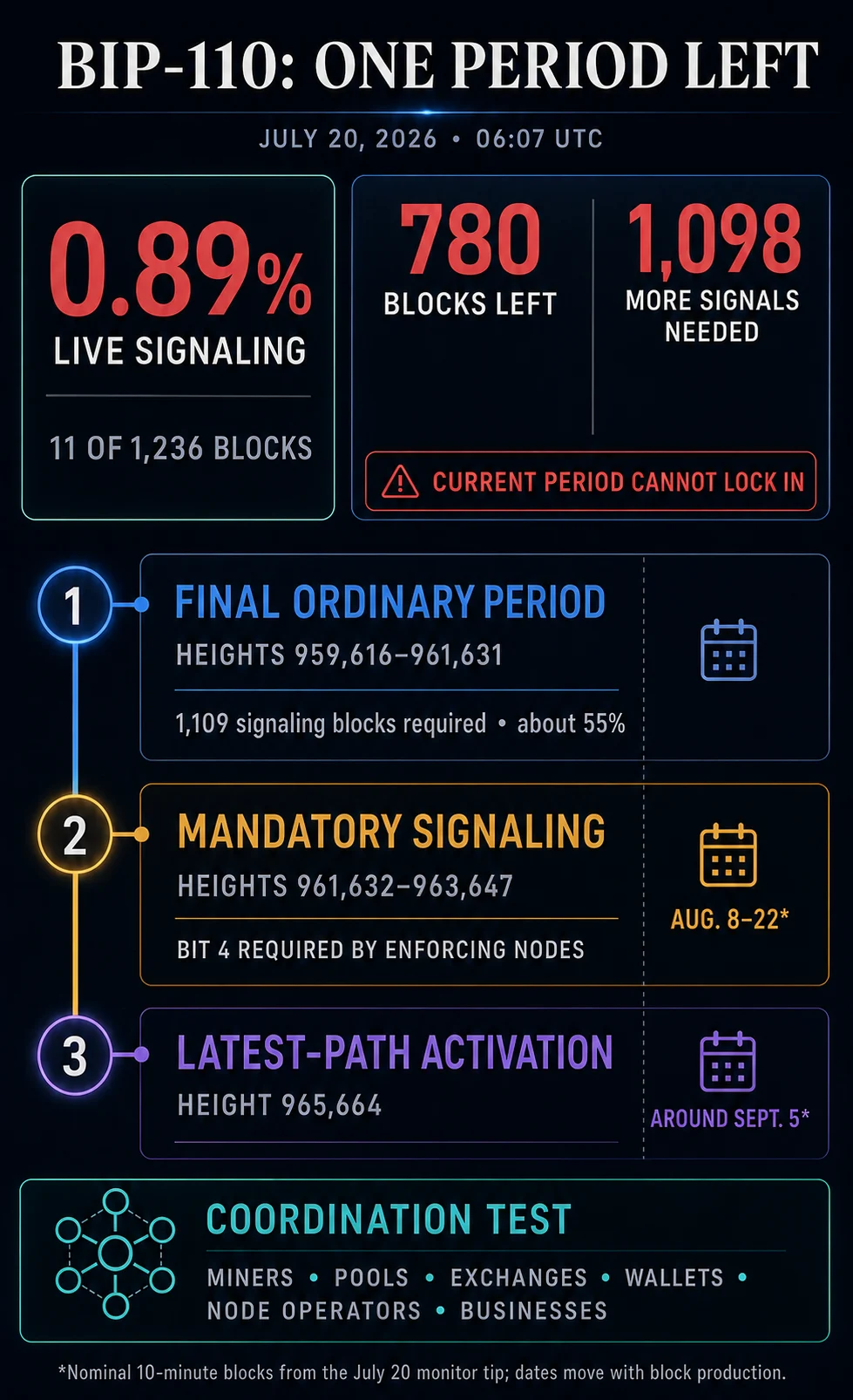
The proposal at the center of this dispute, BIP-110, suggests a one-year temporary restriction on certain types of arbitrary data and script uses at the consensus level. While the primary objective of the proposal is to safeguard node resources and mitigate what proponents describe as "data-storage abuse," the initiative has sparked a fierce backlash from those who view it as a form of protocol-level censorship. Critics, now joined by Saylor, warn that the mandatory signaling path and the rejection of transactions that are currently valid under Bitcoin’s existing rules could set a dangerous precedent, undermining the network’s core tenets of neutrality and permissionless innovation.
The Saylor Intervention: Philosophy and Precedent
Michael Saylor’s entry into the BIP-110 discourse adds significant institutional weight to the opposition. As the leader of the world’s largest corporate holder of Bitcoin, Saylor’s perspective is often viewed as a bellwether for institutional sentiment. In his 110-point case, Saylor articulated a vision for Bitcoin that prioritizes neutral base-layer rules and "hard consensus." While acknowledging the concerns of BIP-110 supporters regarding network bloat and resource management, Saylor argued that "the proposed cure is more dangerous than the condition."
Saylor’s primary contention rests on the sanctity of the protocol’s rules. He warned that invalidating fee-paying transactions that are currently considered valid by the network’s consensus rules introduces a level of subjectivity and governance risk that Bitcoin was designed to avoid. By favoring open markets and permissionless innovation, Saylor’s stance aligns with a "maximalist" view of the base layer as a robust, indifferent settlement engine. His intervention emphasizes that while institutional holders possess no formal authority over the decentralized consensus process, their economic influence can shape the decisions of miners and node operators who must weigh the risks of supporting a contentious fork.
Technical Status: The Closing Window for Voluntary Signaling
As of July 20, 2026, the technical path toward BIP-110 activation is becoming increasingly fraught. Data from the BIP-110 monitor indicates that only 11 signaling blocks were recorded out of 1,236 tracked at 06:07 UTC. With only 780 blocks remaining in the current difficulty period, the proposal would require 1,098 additional signals to reach the 1,109-block (55%) threshold. Mathematically, even if every remaining block in the period were to signal support, the total would only reach 791, far short of the requirement for early lock-in.
This failure shifts the focus to the next 2,016-block period, spanning block heights 959,616 through 961,631. This period represents the final opportunity for the network to reach a consensus through the ordinary signaling process. Under the canonical BIP-110 documentation, a 55% majority (1,109 blocks) is required during this window to secure a voluntary lock-in. If the mining community fails to meet this threshold, the proposal moves into its most controversial phase: mandatory signaling.
The Path to Mandatory Signaling and Forced Activation
Should the final ordinary signaling period conclude without reaching the 55% threshold, the protocol enters a "forced signaling" window. From block heights 961,632 through 963,647, enforcing nodes will begin to require the use of "bit 4" in the block header. During this window, nodes running BIP-110 compliant software will reject any blocks that omit this signal. Based on current block production rates, this mandatory window is projected to occur between August 8 and August 22, 2026.

The implications of this mechanism are profound. If a significant portion of the network’s nodes begin rejecting non-signaling blocks, miners are forced into a binary choice: signal support for BIP-110 or risk having their blocks ignored by a segment of the network. This "User Activated Soft Fork" (UASF) style approach is designed to compel miner compliance, but it carries the inherent risk of a chain split. If a majority of miners continue to produce non-signaling blocks while a significant economic majority of nodes reject them, the Bitcoin blockchain would effectively bifurcate into two competing histories.
The timeline for finality is as follows:
- August 8 – August 22: Mandatory signaling window (Heights 961,632 – 963,647).
- Late August: Forced lock-in occurs at height 963,648.
- September 5 (Approximate): Latest-path activation at height 965,664.
Risk Analysis: Potential for a Chain Split
The primary concern for exchanges, wallet providers, and institutional investors is the potential for a durable chain split. Unlike a clean hard fork, where a new network is intentionally created, a contentious soft fork creates a situation where different parts of the network have different definitions of "valid" blocks.
In the event of a split, enforcing nodes would follow a chain that restricts specific script uses, while non-enforcing nodes and miners might continue on a chain that allows them. This would leave businesses in a difficult position, as they would have to decide which chain to recognize for deposits, withdrawals, and trade confirmations. A split could lead to "replay attacks," where a transaction on one chain is valid on the other, causing significant financial loss and confusion.
However, a split is not a foregone conclusion. History has shown that Bitcoin miners often coordinate at the last minute to avoid the economic devastation of a bifurcated network. Furthermore, the "non-signaling" currently observed among miners does not necessarily equate to a rejection of the proposal; it may simply reflect a "wait-and-see" approach or a lack of technical readiness. The version bit in a block header shows visible support, but it does not convey the underlying reasons for a miner’s silence.
The Economic and Practical Scope of BIP-110
BIP-110 is designed as a temporary measure, with its rules slated to last for 52,416 blocks—approximately one year after activation. To minimize disruption, the proposal includes an exemption for inputs that spend Unspent Transaction Outputs (UTXOs) created before the activation date. This "grandfathering" clause is intended to ensure that existing users are not locked out of their funds, even if those funds were moved using scripts that would be restricted under the new rules.
The focus of the restrictions is on the "abuse" of Bitcoin’s data storage capabilities. In recent years, the rise of protocols that embed large amounts of arbitrary data into the blockchain—such as certain types of inscriptions and complex smart contract scripts—has led to increased costs for node operators. Proponents of BIP-110 argue that these uses represent an "externality" that burdens the entire network for the benefit of a few. By temporarily restricting these uses, they hope to provide a "cooling-off" period to develop more sustainable long-term solutions for data management on the blockchain.

Market Reactions and Institutional Positioning
The broader Bitcoin market has remained relatively stable despite the looming deadline, with Bitcoin currently trading at approximately $65,000 and maintaining a market capitalization of $1.3 trillion. However, the 24-hour trading volume has surged by over 51%, reaching $22.41 billion, suggesting that traders are beginning to position themselves for potential volatility as the August deadline approaches.
Mining pools, which serve as the gatekeepers for consensus signaling, have largely remained silent regarding their intentions for the mandatory signaling window. The decision-making process within these pools is complex, as they must balance the technical preferences of their individual miners with the economic necessity of remaining on the "longest chain" recognized by major exchanges.
Wallet developers and service providers are also in a state of high alert. Developers are currently auditing software to check for exposed Taproot and Miniscript paths that might be affected by the proposed restrictions. Exchange operators, meanwhile, are preparing contingency plans to pause deposits and withdrawals should a chain split appear imminent in late August.
Conclusion: The Final Countdown
The entry of Michael Saylor into the BIP-110 debate has elevated a technical dispute into a fundamental philosophical battle over the future of Bitcoin. As the network moves toward the final ordinary signaling period, the stakes could not be higher. The next few weeks will determine whether Bitcoin can achieve a smooth consensus upgrade or whether it will face its most significant "fork fight" since the block size wars of 2017.
The decisive factors will remain identifiable: the level of mining pool support, the adoption rate of enforcing nodes among the economic majority, and the readiness of the infrastructure that supports the $1.3 trillion Bitcoin economy. While the path to activation is technically defined by block heights and version bits, the ultimate outcome will depend on the collective coordination of a global, decentralized community of actors who must decide what Bitcoin’s rules should be and who has the right to change them.