admin
admin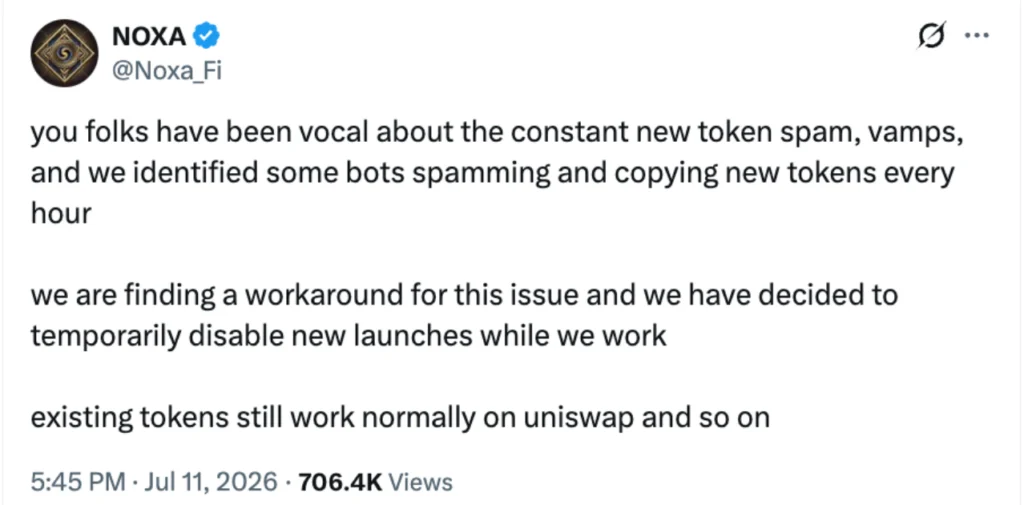
Noxa, once the undisputed dominant token launchpad on Robinhood Chain, unexpectedly ceased operations in mid-July 2026, triggering widespread market instability and casting a long shadow over the nascent network’s foundational purpose. The platform, which had amassed an estimated $12 million in cumulative fees according to DefiLlama data – with some industry trackers pushing the figure closer to $14.5 million – had become the primary engine for the chain’s burgeoning memecoin economy. Its sudden collapse has reignited critical debates regarding Robinhood Chain’s early trajectory, specifically questioning the extent to which its initial activity is driven by highly speculative token trading rather than the more stable, tokenized real-world assets (RWAs) it was explicitly designed to support.
Robinhood Chain’s Ambitious Genesis and Noxa’s Meteoric Rise
Robinhood Chain, an innovative Layer 2 network built on the robust Arbitrum infrastructure, officially launched its mainnet on July 1, 2026. Its core mission was ambitious: to democratize access to financial markets by bringing tokenized stocks, bonds, commodities, and other real-world assets onto the blockchain. The vision was to create a decentralized ecosystem where traditional financial instruments could benefit from the transparency, efficiency, and composability of blockchain technology.
However, almost immediately upon its launch, the network’s narrative took an unexpected turn. Enter Noxa, a token launchpad that quickly established itself as the go-to platform for new token deployments. Within a remarkably short period, Noxa became an indispensable component of the Robinhood Chain ecosystem, responsible for deploying over 60,000 unique tokens and capturing an astounding 75% of all token launches on the chain. Its user-friendly interface and low barrier to entry facilitated an unprecedented surge in new asset creation, predominantly memecoins.
The platform’s success was immediate and staggering. For five consecutive days, Noxa’s daily protocol fees outstripped those of Pump.fun, the long-established Solana-based launchpad widely considered the benchmark in the category. This achievement underscored Noxa’s rapid ascent and the intense activity it was generating. This torrent of new tokens and associated trading volumes propelled Robinhood Chain past an impressive $4 billion in cumulative decentralized exchange (DEX) volume within just two weeks of its launch, a metric that initially signaled robust adoption and liquidity.
A Swift and Chaotic Unfolding: The Shutdown Timeline
The chain of events leading to Noxa’s full shutdown was swift and marked by a series of increasingly concerning announcements and technical difficulties.
-
July 11, 2026: The Initial Halt. At the peak of trading volume for CASHCAT, Robinhood Chain’s breakout memecoin, Noxa made its first critical announcement. Citing an overwhelming influx of bot-driven spam and a deluge of low-quality copycat tokens, the platform declared it would cease accepting new token launches. This decision, aimed at preserving the integrity of the platform, immediately froze the primary avenue for new token creation on the chain. Data analyst Tom Wan quickly confirmed the impact, noting that close to 60,000 tokens had been launched via Noxa before the freeze, with zero new additions the following day. The move, while ostensibly for quality control, instantly dried up the supply of new speculative assets.

-
July 13, 2026: Website Offline and Domain Crisis. Just two days after halting new launches, Noxa’s primary website went completely offline. The team initially attributed the outage to a "Cloudflare issue," a common explanation for web service interruptions. However, subsequent investigations and reports revealed a more critical underlying problem: the platform had, in fact, lost control of its original domain. Sources indicated that the domain registrar had either resold or reclaimed it, effectively severing Noxa’s primary public access point. This incident raised immediate red flags about the operational security and stability of the platform.
-
July 14, 2026: Decentralized Migration and Fee Restructuring. In response to the domain loss, Noxa announced a strategic pivot: a migration to a decentralized interface accessible via the Ethereum Name Service (ENS) – specifically, fun.noxa.eth. This new address could be accessed through Brave’s built-in ENS support or via gateway services like eth.limo and eth.link. The team assured users that creator earnings would remain available for withdrawal, a crucial point for those who had generated revenue through the platform. Later that same Tuesday night, in a dramatic shift, Noxa declared it would stop collecting fees entirely, redirecting 100% of ongoing transaction revenue directly to token creators. Simultaneously, the team reportedly executed a significant 40% burn of its own NOXA token supply, which had been issued on DBK Chain. This token burn, a common deflationary measure, was likely intended to signal commitment and potentially stabilize the value of the remaining NOXA tokens amidst the crisis.
Market Fallout and Divergent Reactions
The news of Noxa’s operational halt and subsequent technical woes sent immediate shockwaves through the Robinhood Chain ecosystem, particularly impacting its highly volatile memecoin sector.
-
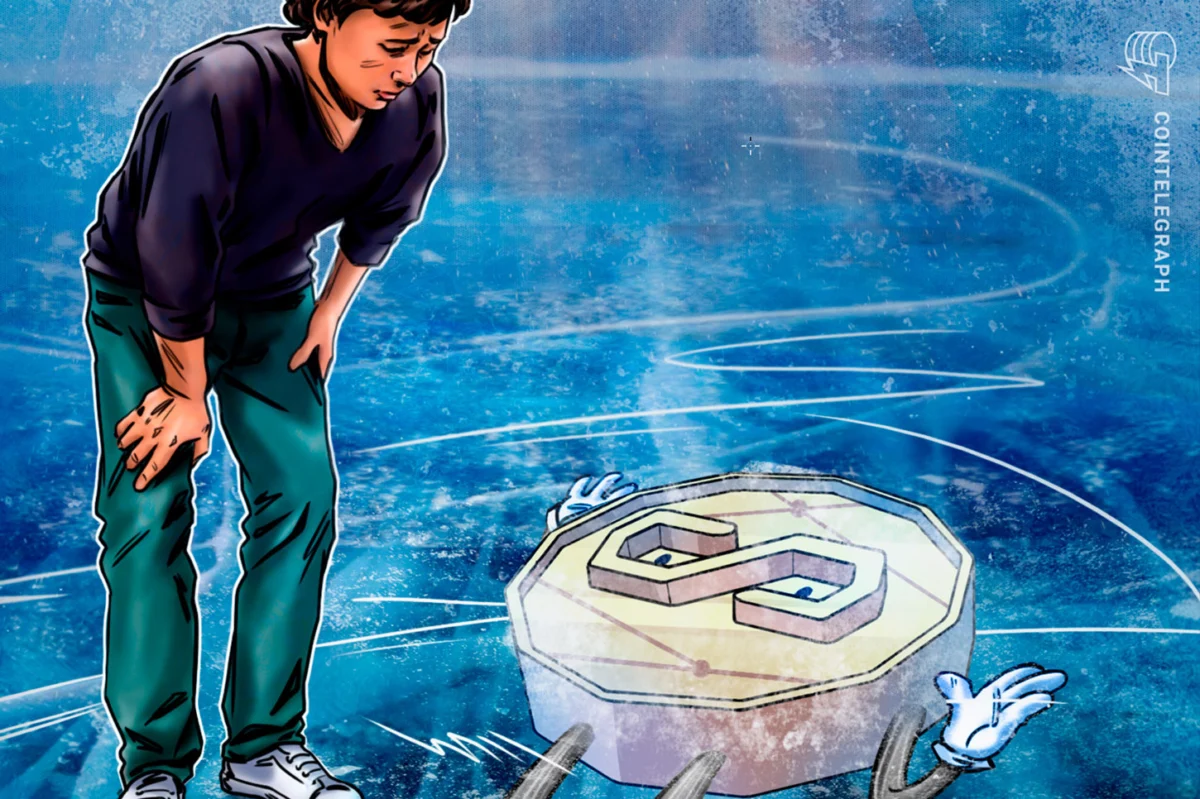
Price Collapse: CASHCAT, the chain’s unofficial flagship memecoin, experienced a precipitous decline, plummeting more than 33% within a mere 24 hours. The broader basket of Robinhood Chain memecoins followed suit, shedding over 30% from their recent all-time highs. While CASHCAT did show signs of partial recovery in the subsequent days, the initial selloff underscored the fragility of the speculative market. At its zenith, CASHCAT had boasted a market capitalization exceeding $150 million – a staggering figure, roughly twelve times the combined value of all tokenized real-world assets that Robinhood Chain was initially designed to facilitate, which currently totaled around $12.66 million. This stark disparity vividly highlighted the network’s early over-reliance on memecoin speculation.
-
Community Divide: Reaction on social media platforms was sharply divided. Prominent trader and commentator @zubic_eth encapsulated the sentiment, observing that a segment of the community viewed the shutdown as a necessary and justified pushback against the rampant spam and low-quality projects. This group argued that the ecosystem needed a "cleansing" to mature. Conversely, another significant portion of the community decried the shutdown as a costly mistake, an unnecessary intervention that stifled innovation and undermined confidence in the nascent chain. Among the latter was 0xAvast, a prominent trader who claimed to have parlayed an initial five-figure investment into a seven-figure gain as CASHCAT surged from a $10,000 market cap to approximately $230 million. Dismissing the crash as unfounded panic, 0xAvast controversially argued that the drop represented a prime buying opportunity; however, the token’s price continued its downward trend following his optimistic pronouncements, illustrating the inherent risks and unpredictability of such markets.
The Scramble for Successors and Infrastructure Vulnerabilities
In the immediate aftermath of Noxa’s freeze, rival platforms on Robinhood Chain moved swiftly to capitalize on the void and absorb the displaced activity. The sheer volume of new launches demonstrated the enduring demand for rapid token deployment, despite the prevailing uncertainty. On July 13 alone, the day Noxa’s website went offline, an estimated 20,000 new tokens were launched elsewhere on Robinhood Chain, with platforms such as flap.sh, trensh.today, and bankr quickly picking up significant market share.
However, the rapid succession of new launchpads attempting to fill Noxa’s shoes quickly exposed deeper vulnerabilities within the chain’s infrastructure and the maturity of its supporting services. Pons, a launchpad that briefly ascended to the top spot on the chain after existing for only two days, spent that same period grappling with widespread reports of a critical front-end token-approval bug. This flaw, which could potentially expose users to security risks or prevent successful transactions, cast doubt on the platform’s reliability. Days later, another emerging rival launchpad, Vlad.fun, also unexpectedly went offline, citing an "internal integrity issue."

The rapid sequence of failures across three platforms that held the top spot in roughly a week – Noxa’s collapse, Pons’s bug, and Vlad.fun’s outage – created a palpable sense of unease. This trifecta of operational mishaps within the chain’s critical token-creation layer significantly added to concerns about the overall reliability and robustness of the underlying infrastructure, particularly given Robinhood Chain’s relatively young age. It highlighted the challenges of scaling rapidly while maintaining security and stability in a highly competitive and often chaotic decentralized environment.
Implications for Holders, Creators, and Robinhood Chain’s Future
For existing token holders and creators, the immediate implications of the Noxa shutdown are mixed but generally manageable, albeit with a lingering sense of uncertainty.
-
Existing Tokens: Tokens that were launched through Noxa before the halt remain fully tradable through established decentralized exchanges like Uniswap, as well as analytics platforms such as DexScreener, GMGN, and various third-party trading bots. This means that direct liquidity for these assets has not been compromised by Noxa’s operational changes. However, the indirect impact of reduced confidence and a potential decline in overall chain activity could still affect their long-term value.
-
Creator Earnings: Creators who previously launched tokens on Noxa can now claim their share of trading fees at a full 100% rate, a significant change from the platform’s previous fee structure. This access is facilitated through the new decentralized fun.noxa.eth interface, offering a pathway for creators to access their accumulated revenues.
-
New Launches: For anyone hoping to launch a new token through Noxa itself, there is currently no viable option. The team has not provided any timeline or indication for reopening new launches, leaving aspiring creators in limbo and forcing them to explore alternative, and potentially less reliable, launchpads.
The Noxa episode has intensified scrutiny of Robinhood Chain’s fundamental purpose and its long-term viability. The network was explicitly engineered to be a hub for tokenized stocks and other real-world assets, aiming to bridge traditional finance with the burgeoning decentralized economy. Yet, the data tells a different story. The RWA segment continues to represent a minuscule fraction of total on-chain activity compared to the frenetic memecoin trading that Noxa so efficiently enabled. Early data indicates that tokenized real-world assets, predominantly stocks, account for only around 4% of total on-chain activity. In stark contrast, CASHCAT alone briefly outweighed this entire category by a factor of twelve, underscoring the severe imbalance.
This divergence between stated mission and actual activity directly contradicts an earlier statement by Robinhood chief executive Vlad Tenev. In early July, just days before the Noxa crisis unfolded, Tenev had publicly asserted that "assets without genuine utility would not last." This prescient, yet ironically timed, stance drew considerable attention once the very ecosystem he championed produced its first major casualty – a platform built almost entirely on facilitating assets whose utility was, at best, speculative.
The core question now facing Robinhood Chain is whether its ambitious real-world asset ambitions can truly sustain the network once the initial speculative fervor of memecoin trading inevitably cools. The Noxa collapse serves as an early, rigorous test of the chain’s resilience under pressure and its ability to pivot back to its original vision. The incident highlights the inherent challenges new Layer 2 networks face in managing the initial speculative booms that often accompany their launch, while simultaneously building a sustainable ecosystem based on tangible utility. The path forward for Robinhood Chain will undoubtedly involve navigating this tension, proving its infrastructure’s robustness, and demonstrating a clear, actionable strategy for fostering the growth of tokenized real-world assets beyond the shadow of memecoin speculation. The outcome of this critical period will largely define the platform’s legacy and its ability to fulfill its promise in the broader decentralized finance landscape.