admin
admin
The United Kingdom has enacted landmark legislation, the Digital Asset Act 2025, which officially recognizes digital and electronic assets as a distinct category of personal property. This groundbreaking statute, which received Royal Assent on December 2nd, redraws the landscape of property law by establishing a new classification that sits independently alongside "things in possession" (tangible physical goods) and "things in action" (intangible rights enforceable through legal proceedings). For years, legal frameworks struggled to neatly categorize cryptocurrencies and other digital assets, often forcing them into ill-fitting existing definitions. This legislative development is poised to have far-reaching implications for the global digital economy, given England’s outsized influence on international commercial and financial law.
A New Dawn for Digital Asset Ownership
The passage of the Digital Asset Act 2025 marks a significant evolution in English property law. Prior to this Act, courts and legal scholars grappled with how to classify digital assets, which defied easy categorization within the established dichotomy of tangible and intangible property. Cryptocurrencies, for instance, are not physical objects, nor are they merely contractual claims. This doctrinal ambiguity created a "fatal flaw" in digital asset ownership, hindering clarity in areas such as collateralization, insolvency proceedings, and dispute resolution.
The Act directly addresses this by stating that a digital object is not disqualified from being considered property simply because it does not conform to the traditional tests of "things in possession" or "things in action." This statutory anchor provides a much-needed foundation for legal certainty, allowing digital assets to function as distinct objects with their own property rights. This development is particularly timely, coinciding with the Bank of England’s ongoing consultation on systemic stablecoins, suggesting that the Act will form the bedrock of the UK’s crypto-market design for the foreseeable future.
The Pre-Act Legal Limbo: Improvisation and Its Limitations
For years, the UK legal system attempted to accommodate digital assets through a process of judicial improvisation. Courts repeatedly treated tokens as property in practical scenarios, issuing freezing orders, granting proprietary injunctions, and appointing receivers. However, these actions were often predicated on stretching existing legal doctrines developed for physical assets or contractual rights. While these ad-hoc solutions provided some measure of relief, they were inherently inelegant and fraught with hidden limitations.
The absence of a clear statutory framework made it challenging to definitively address issues such as:
- Collateralization: Lenders sought clarity on their ability to take digital assets as security, and for that security to remain valid in the event of a borrower’s insolvency.
- Insolvency: When cryptocurrency exchanges or custodians collapsed, determining the exact nature of customer ownership and their priority claims against the general estate proved complex. Were customer holdings contractual rights, trust claims, or something else entirely?
- Title Disputes: In cases of hacks or fraud, establishing clear title and ownership of stolen digital assets was an arduous process, often relying on analogies to intangible assets.
- Control and Ownership: Defining who truly "owns" a token – the holder of the private key, the purchaser, or an entity with contractual rights through an exchange – remained a point of contention.
The Law Commission’s earlier work, which proposed treating crypto assets as "data objects," served as a crucial intellectual precursor to this legislative change. This concept acknowledged assets that derive their existence from consensus mechanisms rather than physical presence or contractual promises. While judges began to reference this idea, the lack of statutory recognition meant each new judgment felt provisional, and recovery efforts for stolen or hacked assets often depended on the court’s willingness to further extend existing legal principles.
The Act’s Impact: Practical Benefits for Citizens, Investors, and Courts
The Digital Asset Act 2025, by creating a dedicated property category for digital assets, aims to resolve a significant coordination problem among various stakeholders, including courts, regulators, creditors, custodians, and users. The implications for these groups are substantial and varied:
Enhanced Protection for Victims of Crypto Crime
The UK has established a reputation for effectively freezing stolen crypto and appointing receivers to recover it. Previously, courts had to justify these powers on a case-by-case basis, often by drawing analogies to traditional asset recovery. The new Act removes this doctrinal strain by affirming that crypto is indeed property, and as such, it can be subject to freezing orders, tracing, assignment, and reclamation. This streamlined process is expected to lead to smoother recovery efforts, quicker interim relief, and a stronger foundation for cross-border cooperation in combating crypto-related crime. Retail and institutional victims of hacks should experience a more predictable and efficient resolution to their cases.
Clarity in Custodial and Insolvency Scenarios
When a UK-based cryptocurrency exchange or custodian fails, administrators face the critical task of determining whether client assets are held in trust or form part of the general insolvent estate. Under the previous legal framework, this often involved a complex piecing together of contract terms, implied rights, and analogies to traditional custodial arrangements. The new property category for digital assets provides a more direct path for treating user holdings as distinct property, thereby supporting stronger asset segregation and reducing the risk of customers becoming unsecured creditors. While poorly drafted terms of service can still present challenges, the Act offers judges a clearer legal map for navigating these complex insolvency situations.

Strengthening Collateralization and Lending
Perhaps the most significant long-term payoff of the Act lies in its impact on collateralization. Banks, investment funds, and prime brokers require legal certainty when accepting digital assets as security. Without it, regulatory capital treatment remains murky, the enforceability of security interests is questionable, and cross-border arrangements become significantly more complex. The new property category bolsters the argument for digital assets to be recognized as eligible collateral in structured finance and secured lending. While it will not immediately rewrite banking regulations, it removes a major conceptual barrier that has previously impeded such practices.
Custody arrangements also stand to benefit. When a custodian holds tokens on behalf of a client, the precise nature of the client’s proprietary interest is crucial for redemptions, staking activities, rehypothecation, and recovery in the event of operational failures. The new framework allows a client’s claim over a digital asset to be classified as a direct property interest, eliminating the need to force it into contractual limitations. This clarity will enable custodians to draft more robust terms, enhance consumer transparency, and reduce the likelihood of litigation following platform failures.
Paving the Way for Systemic Stablecoins
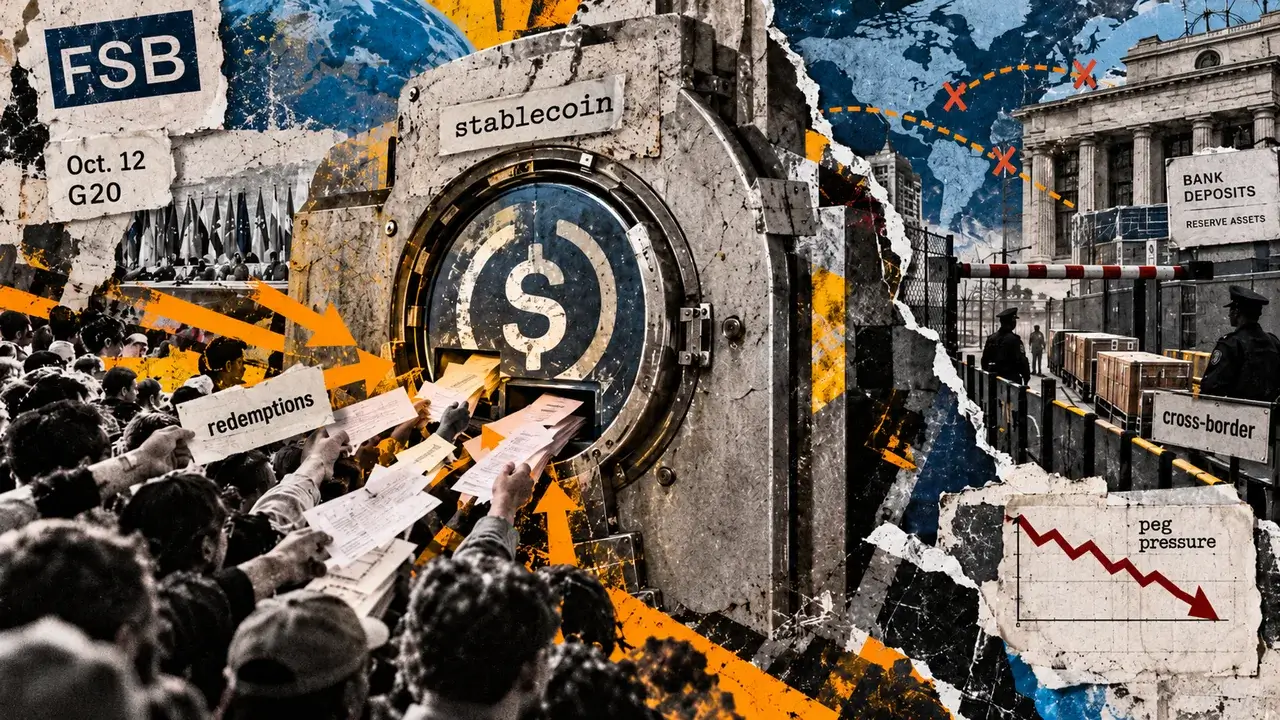
The Digital Asset Act 2025 is also set to interact significantly with the Bank of England’s ongoing work on systemic stablecoins. For stablecoins to operate effectively within payment systems, be redeemable at par, and be subject to bank-like oversight, a robust underlying property law framework is essential. If the Bank of England intends for systemic stablecoin issuers to meet prudential standards, ensure asset segregation, and offer clear redemption rights, courts require a solid legal basis for treating the stablecoins themselves as property that can be held, transferred, and recovered. The Act provides precisely this foundation, smoothing the path for future regulatory developments.
For the average UK crypto user, the benefits, while perhaps less visible, are substantial. Holding Bitcoin (BTC) or Ethereum (ETH) on an exchange means that the legal machinery designed to protect users in a crisis is now more robust. If tokens are stolen, the process of freezing and recovering them is less improvisational and more grounded in statutory law. Furthermore, any interactions with lending markets or collateral-backed products will be governed by agreements based on more straightforward and predictable rules.
A Unified Approach Across the UK
The Digital Asset Act 2025 extends its provisions to England and Wales, and Northern Ireland, thereby establishing a unified approach to digital property law across these regions. While Scotland operates under its own distinct legal system, Scottish courts have historically shown a tendency to align with evolving legal trends in England and Wales, suggesting a potential convergence in their approaches to digital assets.
As the UK moves into 2026, it finds itself in a stronger legal position than many other major jurisdictions. Compared to the EU’s Markets in Crypto-Assets (MiCA) regulation, which focuses on market regulation but largely defers on property classification, and the fragmented US approach characterized by state-level rules like UCC Article 12, the UK now boasts the most coherent statutory recognition of digital property rights in the Western world.
What the Act Does Not Do: Regulation Remains Separate
It is crucial to understand that the Digital Asset Act 2025 is a property law reform, not a regulatory one. The Act does not introduce new tax rules, license custodians, rewrite anti-money laundering (AML) obligations, or bestow special status upon any specific tokens. Its primary function is to rectify a fundamental conceptual mismatch that previously complicated every crypto-related legal case.
The significant regulatory work will continue to be undertaken by the Financial Conduct Authority (FCA) and the Bank of England, particularly as the stablecoin regime solidifies into final rules. However, the essential property law foundation is now firmly established, providing a clear runway for these regulatory endeavors.
For a decade, the cryptocurrency industry has been advocating for the modernization of English law to accommodate digital assets. This single-clause statute has achieved what years of metaphorical interpretation could not. The courts now possess the legal category they desperately needed, regulators have a clear pathway for developing policy around systemic stablecoins, and individuals holding digital assets in the UK can do so with a greater degree of legal certainty than they possessed at the beginning of the year. The full impact of this legislative change will likely unfold gradually, manifesting in specific court cases, dispute resolutions, and the unwinding of distressed platforms, demonstrating the tangible benefits of a clear and modern property law framework for the digital age.