admin
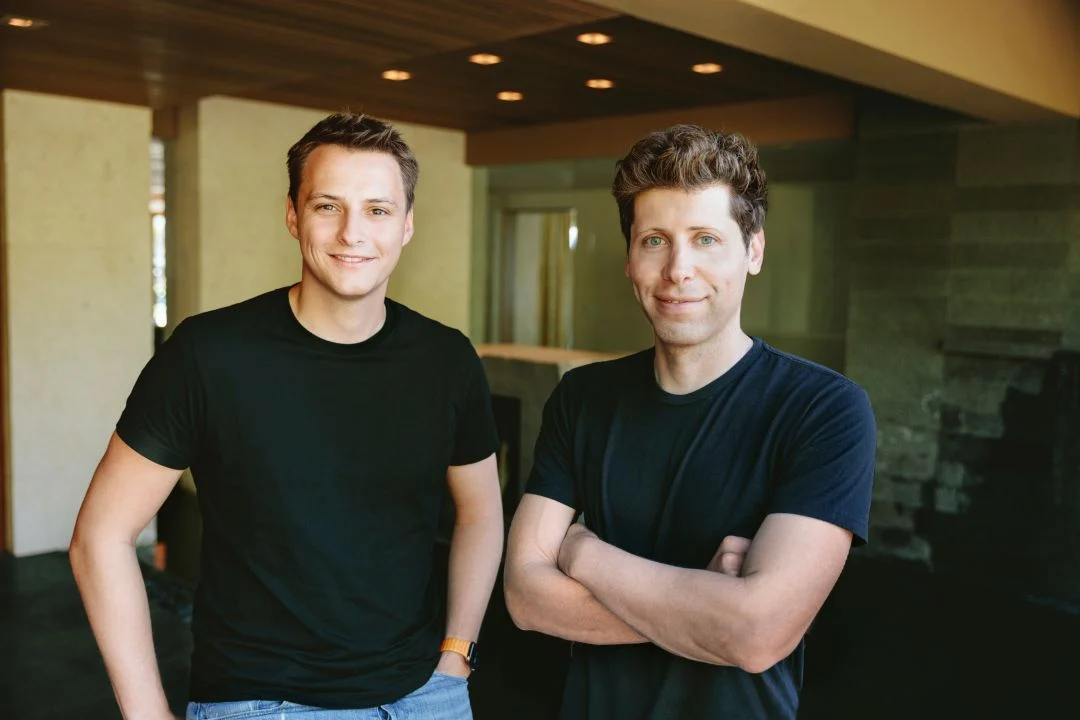
World, the ambitious online identity verification project co-founded by OpenAI Chief Executive Officer Sam Altman and Alex Blania, has successfully raised $52.5 million through a strategic sale of its native cryptocurrency token, WLD. The funding round, which comes during a pivotal period of rebranding and technological expansion for the startup, was led by Pantera Capital, a prominent venture capital firm specializing in digital assets and blockchain ecosystems. Other notable participants in the capital raise included Eightco Holdings, Bain Capital Crypto, Susquehanna Crypto, and Selini Capital, marking a significant vote of confidence from institutional players in the digital asset space.
The capital injection was structured as a token sale with a mandatory 12-month lockup period. This mechanism prevents participating investors from selling or trading their WLD tokens for a full year, a move intended to align the interests of the investors with the long-term stability and growth of the World network. In a statement released on Friday, the company emphasized that this lockup period reflects a "long-term commitment to World’s continued growth and utility," suggesting that the investors are betting on the fundamental necessity of identity verification in an increasingly AI-dominated digital landscape.
Structural Management and the Role of the World Foundation
The proceeds from the $52.5 million sale are slated for the World Foundation, an exempted limited guarantee foundation headquartered in the Cayman Islands. The Foundation acts as the steward of the project, tasked with managing the expansion of the network and ensuring its decentralized governance. While the World Foundation oversees the broader ecosystem, the day-to-day operations and technological development are spearheaded by Tools for Humanity (TFH). Based in San Francisco, TFH is led by Alex Blania as CEO and co-founder, with Sam Altman serving as the other co-founder and a primary visionary for the project’s integration with the broader artificial intelligence sector.
The dual-entity structure is a common model in the blockchain industry, designed to separate the profit-motivated development of software from the non-profit or foundation-led governance of a public protocol. By placing the newly raised funds under the World Foundation, the project aims to demonstrate its commitment to building a public utility rather than a purely commercial enterprise.
The "Proof of Human" Mission in the Age of AI
World occupies a unique and often controversial niche in the technology sector. Its primary objective is to solve what it calls the "proof of personhood" problem. As generative artificial intelligence becomes more sophisticated—capable of creating hyper-realistic images, text, and deepfake videos—the ability to distinguish between a genuine human user and an AI-driven bot has become a critical challenge for online platforms.
World’s solution is the World ID, a privacy-preserving digital identity that allows users to verify their humanity without necessarily revealing their legal identity. To achieve the highest level of verification, users must undergo a physical scan by a specialized piece of hardware known as the "Orb." The Orb is a five-pound, chrome-plated spherical device that utilizes infrared cameras and sensors to scan a user’s iris. This biometric data is then converted into a unique cryptographic hash—a string of numbers—that serves as a digital "humanity" marker.
According to the company, the original iris images are deleted by default once the code is generated, though the project has faced significant scrutiny from data privacy regulators worldwide regarding the collection and storage of such sensitive biological information.
Chronology of Development: From Worldcoin to World
The project has undergone a significant evolution since its inception. Originally launched under the name "Worldcoin," the project was inextricably linked to its eponymous cryptocurrency. The rebranding to "World" earlier this year signaled a strategic shift intended to broaden the project’s appeal and distance it from the volatility and regulatory baggage often associated with the broader "crypto" label.
A timeline of the project’s major milestones illustrates its rapid, if turbulent, trajectory:
- 2019-2021: The project is conceived and enters a stealth development phase, focusing on the engineering of the Orb hardware.
- October 2021: Worldcoin officially launches out of stealth, announcing its goal to distribute a universal basic income (UBI) through its token to every human on Earth.
- May 2023: Tools for Humanity raises $115 million in a Series C funding round led by Blockchain Capital, with participation from a16z crypto and others.
- July 2023: The project officially launches its global network, deploying Orbs in major cities across the globe and sparking immediate regulatory interest in Europe, Africa, and Asia.
- April 2024: The company announces a major upgrade to its ecosystem, including the launch of World App 3.0. It also reveals integrations and partnerships with major digital service providers, including Zoom, Docusign, and the dating app Tinder, to explore how World ID can enhance user trust.
- June 2024: Amidst a broader tightening of the tech market and a need for operational efficiency, Tools for Humanity conducts a round of layoffs, though the exact number of affected employees was not publicly disclosed.
- July 2024: The current $52.5 million token sale is finalized, providing a fresh runway for global expansion.
Supporting Data and Global Footprint
Despite the controversies surrounding its biometric collection methods, World has reported significant adoption metrics. As of mid-2024, the project claims to have verified several million individuals across more than 30 countries. The World App, which serves as the primary gateway for users to hold WLD tokens and manage their World ID, has reportedly surpassed 10 million downloads.
The distribution of Orbs remains a central part of the project’s scaling strategy. While initially located primarily in tech hubs like San Francisco, Berlin, and Tokyo, the company has expanded its "Orb-as-a-Service" model, partnering with local retailers and co-working spaces to provide scanning locations. However, this expansion has not been without friction. Several nations, including Kenya, Spain, and Hong Kong, have at various times suspended or investigated the project’s operations over concerns regarding data consent and the potential for biometric data exploitation.
Investor Rationale and Institutional Reactions
The involvement of Pantera Capital as the lead investor in this round highlights a growing trend of "AI-Crypto convergence." Institutional investors increasingly view blockchain technology as the necessary infrastructure to manage the externalities of the AI revolution.
In discussions surrounding the investment, representatives from participating firms have pointed to the scarcity of reliable identity solutions in a world where "proof of work" (human labor) is being replaced by "proof of computation." By securing a stake in the WLD token, these investors are essentially betting that the World ID will become a foundational layer of the internet, similar to how SSL certificates or OAuth protocols function today, but with a specific focus on human verification.
While official statements from the lead investors have been focused on the utility of the network, market analysts suggest that the 12-month lockup is also a strategic move to prevent a "pump and dump" scenario, which has plagued many other high-profile token launches. This structure forces a focus on the project’s development rather than short-term price speculation.
Broader Impact and Implications for the Future of Privacy
The success of World’s latest funding round carries significant implications for the future of digital identity. If the project continues to scale, it could set a precedent for how biometric data is used in the public sphere. Proponents argue that a decentralized, cryptographic identity is far more secure and private than the current system, where centralized tech giants like Google and Meta hold vast amounts of personal data.
Conversely, privacy advocates remain wary. The "black box" nature of the Orb’s internal hardware and the permanence of biometric identifiers raise questions about what happens if the system is ever compromised. Furthermore, the ethical implications of "incentivized scanning"—where users in developing nations are offered tokens in exchange for their biometric data—continue to be a point of heated debate in international policy circles.
As World utilizes its new $52.5 million capital to refine its hardware and expand its software partnerships, the project sits at the intersection of two of the most transformative technologies of the 21st century: artificial intelligence and decentralized finance. Whether it can overcome regulatory hurdles and public skepticism to become the "de facto" identity standard for the internet remains to be seen, but with the backing of some of the most influential figures in Silicon Valley and the digital asset world, the project is well-positioned to attempt that transition.
The coming year will be a critical test for the startup. As the 12-month lockup period progresses, the focus will shift from fundraising to functional utility. The company must prove that its "proof of human" tools are not only technologically viable but also socially and legally acceptable on a global scale. With partnerships already forming with major platforms like Zoom and Docusign, the integration of World ID into the daily digital lives of millions may be closer than many skeptics realize.