admin
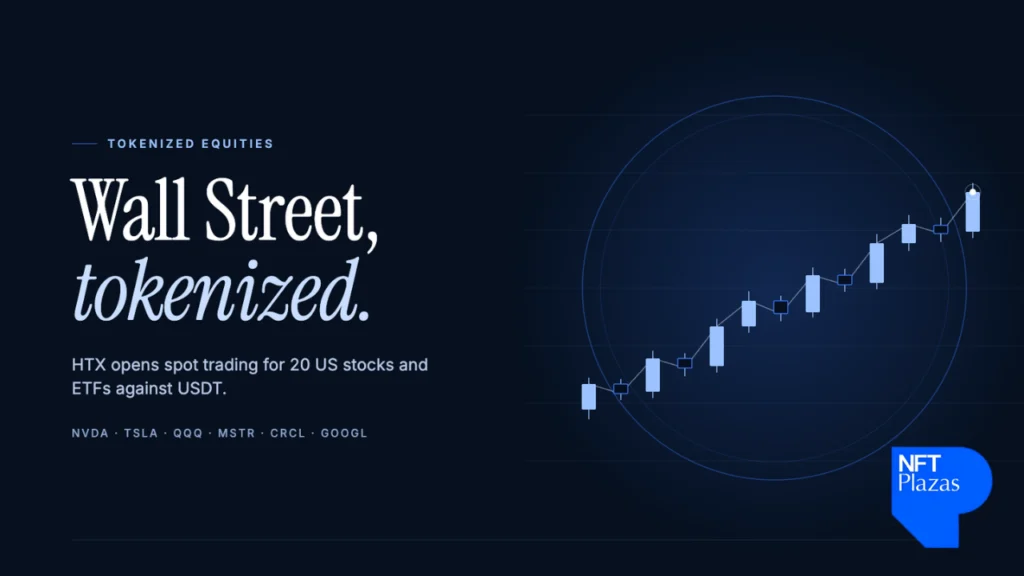
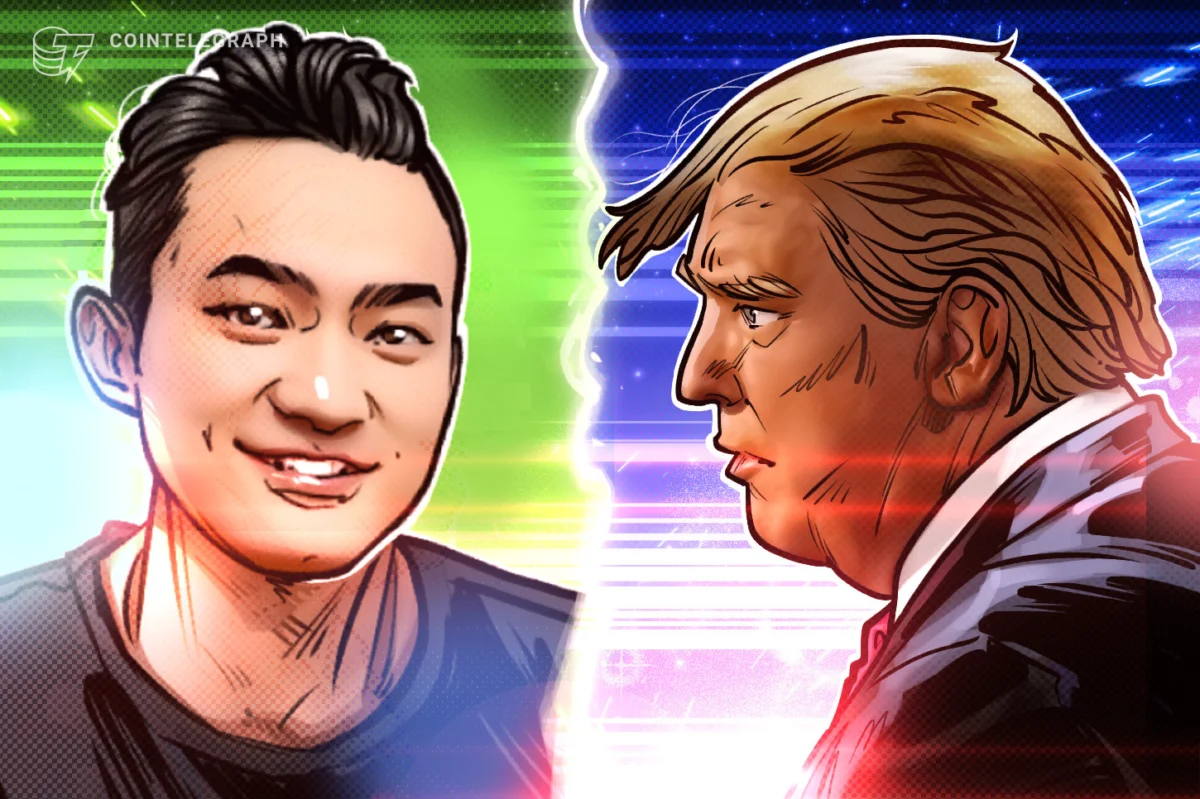
Justin Sun, a prominent figure in the cryptocurrency industry, has announced the official launch of tokenized U.S. stock trading on HTX, a major global cryptocurrency exchange. This strategic expansion introduces 20 U.S. stock and exchange-traded fund (ETF) products, all paired with the stablecoin USDT, signaling a significant move by digital asset platforms to bridge blockchain-based trading with conventional financial markets. The initiative, which commenced on November 9, positions HTX at the forefront of the growing trend of asset tokenization, offering crypto investors new avenues to gain exposure to traditional equities.
The rollout was confirmed by Sun via an X post, stating, "US stock spot trading has officially launched on Huobi HTX," underscoring the exchange’s commitment to diversifying its offerings. This development marks a pivotal moment for HTX, formerly known as Huobi, as it seeks to enhance its competitive standing and attract a broader user base by integrating a hybrid financial model. The introduction of tokenized securities, while not providing direct ownership of underlying shares, offers a novel mechanism for eligible customers to participate in the economic performance of some of the world’s largest companies and popular investment funds.
The Mechanics of Tokenized Equities: A Deeper Dive
At its core, asset tokenization involves representing real-world assets or derivatives on a blockchain. In this case, HTX’s "bStocks series" tokens are designed to track the economic performance of their corresponding U.S. stocks and ETFs. It is crucial to understand that these tokens do not confer direct ownership of the underlying company shares. Instead, they function as tokenized derivatives, offering economic exposure through a blockchain-based instrument.
An HTX representative clarified that the initial offering provides eligible customers with exposure to underlying securities, with the tokens themselves backed by these securities or other eligible assets. The custody and redemption arrangements for these tokens are governed by the relevant issuer’s documentation, indicating a structured, albeit indirect, linkage to traditional markets. Unlike direct shareholders, holders of bStocks generally cannot exercise shareholder voting rights. Furthermore, corporate actions such as dividends and stock splits are subject to the issuer’s specific terms, which may or may not perfectly mirror the underlying security.
HTX explicitly categorizes these instruments as tokenized derivatives, cautioning that their trading prices may diverge from the underlying securities, particularly during periods when U.S. markets are closed. This distinction is paramount for investors: while tokenized stock products offer an innovative and accessible pathway to equity-linked markets, they do not necessarily carry the same ownership rights, legal protections, or direct corporate governance influence as shares purchased through traditional brokerages. This framework is a common approach in the nascent tokenized securities space, aiming to provide market access while navigating complex regulatory landscapes.
Launch Details and Initial Offerings: A Comprehensive Overview
The November 9 launch saw HTX list 20 distinct tokenized assets under its bStocks series. These tokens are initially supported on the BNB Smart Chain (BSC), leveraging its efficiency and established ecosystem for digital asset transactions. The selection of assets is strategically curated to appeal to a broad spectrum of investors, encompassing major U.S. technology companies and popular ETFs.
Key individual stock-linked tokens include:
- Nvidia (NVDA): A semiconductor giant at the forefront of artificial intelligence and high-performance computing, whose stock has seen exponential growth.
- Tesla (TSLA): The electric vehicle pioneer and energy storage company, known for its market volatility and cult following.
- Alphabet (GOOGL): The parent company of Google, a dominant force in search, advertising, cloud computing, and AI.
- Strategy (MSTR): Representing MicroStrategy, a business intelligence firm notable for its substantial corporate holdings of Bitcoin.
- Intel (INTC): A long-standing leader in semiconductor manufacturing.
- AMD (Advanced Micro Devices): A key competitor in the semiconductor industry, specializing in CPUs and GPUs.
- Micron Technology (MU): A major player in memory and storage solutions.
The inclusion of "Circle (CRCL)" on the list is noteworthy. While Circle is a prominent fintech company known for issuing the USDC stablecoin, it is not publicly traded under the ticker CRCL in the traditional U.S. stock markets. This suggests that the "CRCL" token offered by HTX might represent a derivative linked to Circle’s valuation or a specific private token offering, rather than a direct publicly listed stock share. This highlights the nuanced nature of tokenized products, where the underlying asset’s representation can vary.
In addition to individual stocks, HTX has also introduced several ETF-linked products, providing diversified exposure to broader market segments:
- Invesco QQQ (QQQ): An ETF that tracks the Nasdaq 100 Index, composed of the 100 largest non-financial companies listed on the Nasdaq Stock Market.
- ProShares UltraPro QQQ (TQQQ): A 3x leveraged ETF designed to deliver three times the daily performance of the Nasdaq 100 Index.
- Direxion Daily Semiconductor Bull 3X Shares (SOXL): Another 3x leveraged ETF, this one focused on providing three times the daily return of an index of U.S. semiconductor companies.
The inclusion of leveraged ETFs like TQQQ and SOXL is particularly significant. While these products can amplify returns in favorable market conditions, they also carry significantly higher risks than conventional stocks or unleveraged ETFs, making them suitable primarily for sophisticated investors who understand their complex risk profiles and daily rebalancing mechanisms.
All 20 assets are paired with USDT, a stablecoin pegged to the U.S. dollar, which facilitates seamless trading for eligible crypto users without the need to convert to fiat currency. Deposits for these new tokenized assets opened at 08:00 UTC on November 9. HTX subsequently scheduled the trading launch for SPCX/USDT at 09:00 UTC and CRCL/USDT at 10:00 UTC, with additional pairs expected to become available as sufficient liquidity is established on the platform. However, the exchange has not yet announced a timeline for when withdrawals of these tokenized assets will be enabled, a point that prospective users will monitor closely. Contract addresses for all 20 assets were made public as part of the initial BNB Smart Chain rollout, ensuring transparency regarding their blockchain representation.
Strategic Incentives: Zero Fees and Trading Rewards
To catalyze trading activity and attract liquidity to its newly launched tokenized stock and ETF pairs, HTX has rolled out a comprehensive promotional campaign. This incentive program is designed to reward both liquidity providers (makers) and high-volume traders.
The primary incentive is a zero maker fee policy for eligible orders on all 20 tokenized stock and ETF pairs. This promotion commenced on November 9, 2026, and is slated to run through February 9, 2027. By waiving maker fees, HTX aims to encourage users to place limit orders that add depth to the order book, thereby improving liquidity and reducing slippage for all traders. It is important to note that regular taker fees will continue to apply, meaning users who execute market orders immediately will still incur trading costs. This strategy is common among exchanges seeking to build robust markets for new listings.
In parallel, HTX has introduced a separate, volume-based trading rewards campaign running from November 9 to December 9. This initiative offers several tiers of incentives for active traders:
- Daily Fee Rebate: Users who generate at least 10,000 USDT in trading volume within a single day can qualify for a 100% rebate on the actual trading fees paid during that day. This effectively allows active traders to minimize their costs.
- Prize Pool Share: Traders who achieve a cumulative volume of 500,000 USDT or more during the campaign period can qualify for a share of a 50,000 USDT prize pool. This incentivizes sustained, higher-volume trading.
- Top Trader Rewards: The three highest-volume participants, each achieving at least 5 million USDT in cumulative trading volume, will receive premium rewards equivalent to an iPhone Duo 1TB. This top-tier incentive is designed to attract institutional-level or very high-frequency traders.
These multi-pronged incentives demonstrate HTX’s aggressive approach to bootstrapping its tokenized securities market. By reducing costs for liquidity providers and offering substantial rewards for high-volume traders, HTX aims to quickly establish deep order books and vibrant trading environments for its new bStocks series. However, the conditional nature of the taker-fee rebate means it is not a universal zero-fee policy for all types of trades.

Broader Industry Context: The Convergence of Crypto and Traditional Finance
HTX’s foray into tokenized U.S. stocks and ETFs is not an isolated event but rather a significant manifestation of a broader, accelerating trend within the financial industry: the convergence of cryptocurrency and traditional finance (TradFi). This movement seeks to leverage blockchain technology’s inherent advantages—such as transparency, immutability, 24/7 accessibility, and fractional ownership—to enhance traditional financial instruments.
Several factors are driving this convergence:
- Demand for Accessibility: A growing segment of crypto-native investors is seeking exposure to traditional assets without leaving the digital asset ecosystem. Tokenized products offer this convenience, often allowing trading with stablecoins like USDT, bypassing traditional banking rails.
- Operational Efficiencies: Blockchain technology has the potential to streamline various aspects of traditional finance, including clearing, settlement, and record-keeping, potentially reducing costs and settlement times.
- Global Reach: Crypto exchanges inherently operate on a global scale. Tokenized assets can democratize access to markets that might otherwise be geographically or financially restricted for many international investors.
- Increased Liquidity: By bringing traditional assets onto blockchain rails, there is potential to tap into the vast liquidity pools of the crypto market, especially for assets that might be illiquid in traditional markets.
HTX joins a growing list of major cryptocurrency exchanges that have explored or launched similar tokenized equity products. Binance, for instance, previously offered tokenized stock tokens, though it later scaled back these offerings due to regulatory complexities. Kraken and other platforms have also shown interest in integrating traditional financial products into their ecosystems. This collective industry movement underscores a belief that tokenization represents the future of asset management and trading.
For HTX, the introduction of 20 U.S. stock and ETF-linked tokens is a strategic diversification effort. It expands its trading ecosystem beyond cryptocurrencies, potentially attracting a new demographic of investors who are interested in combining digital assets with traditional securities. This move could significantly broaden HTX’s total addressable market and solidify its position as a versatile global trading platform. The estimated global market for tokenized assets is projected to reach trillions of dollars by the end of the decade, according to various reports from institutions like Boston Consulting Group and the World Economic Forum, indicating the immense potential HTX is aiming to tap into.
Regulatory Landscape and HTX’s Recent History
The landscape for tokenized securities is complex and heavily influenced by regulatory developments worldwide. HTX’s launch comes amidst a period of heightened scrutiny for cryptocurrency platforms and associated individuals. Geographic restrictions remain a key consideration for such offerings. When queried about eligibility, HTX stated its commitment to complying with applicable regulatory requirements in its operational markets and explicitly noted that it does not provide services to users in restricted jurisdictions. However, the exchange did not identify specific eligible countries or explicitly clarify whether U.S. residents, given the nature of the underlying assets, would be able to access these products. This ambiguity is typical in an evolving regulatory environment where jurisdictions are still formulating clear guidelines for tokenized assets.
The launch also follows a significant period of regulatory engagements involving Justin Sun and HTX. In March 2023, the U.S. Securities and Exchange Commission (SEC) filed a lawsuit against Sun and several related entities, including the Tron Foundation and BitTorrent Foundation, alleging the unregistered offering and sale of cryptocurrency securities (TRX and BTT) and engaging in manipulative wash trading. This case highlighted the SEC’s aggressive stance on what it deems unregistered securities in the crypto space. Crucially, in March 2026, the SEC dismissed its claims against Sun, the Tron Foundation, and the BitTorrent Foundation with prejudice, meaning the case cannot be brought again on the same grounds. Rainberry, another defendant in the case, agreed to a $10 million civil penalty as part of a settlement, with the defendants neither admitting nor denying the allegations. This dismissal was a notable legal victory for Sun and his associated entities, potentially clearing some of the regulatory overhang.
Separately, HTX reached an agreement with the UK’s Financial Conduct Authority (FCA) in October 2026. This agreement concerned financial promotion restrictions and HTX’s activities in the British market, indicating the exchange’s ongoing efforts to align with stringent financial regulations in key global markets. The FCA is known for its robust consumer protection framework, and any agreement with them suggests HTX is actively working to ensure compliance for its services offered to UK residents.
These regulatory engagements underscore the critical importance of legal compliance for any entity operating at the intersection of traditional finance and blockchain. While the dismissal of the SEC claims against Sun provides some clarity, the broader regulatory environment for tokenized securities remains dynamic. Different jurisdictions have varying classifications and requirements for these products, ranging from treating them as securities to commodities or novel digital assets. This fragmentation poses challenges for global platforms like HTX, necessitating careful navigation and robust legal frameworks.
Implications for Investors and the Market
HTX’s launch of tokenized U.S. stocks and ETFs carries significant implications for both investors and the broader financial market.
For investors, particularly those in regions with limited access to traditional U.S. stock markets or those who prefer to keep their capital within the crypto ecosystem, these products offer unprecedented convenience and accessibility. The ability to trade tokenized equities 24/7, using a stablecoin like USDT, removes many of the friction points associated with traditional brokerage accounts, international wire transfers, and limited trading hours. Fractional ownership, a hallmark of tokenization, also lowers the barrier to entry for expensive stocks like Nvidia or Alphabet, allowing smaller investors to gain exposure. However, investors must be acutely aware of the associated risks:
- Derivative Nature: These are derivatives, not direct shares, meaning they lack shareholder rights and potential for price divergence.
- Liquidity Risk: While HTX is incentivizing liquidity, new markets can be illiquid, leading to wider bid-ask spreads and difficulty in executing large orders.
- Counterparty Risk: The tokens are backed by an issuer, introducing counterparty risk related to that issuer’s solvency and integrity.
- Regulatory Uncertainty: The regulatory status of tokenized securities is still evolving, which could lead to unforeseen operational or legal challenges.
- Leveraged ETF Risks: For products like TQQQ and SOXL, the inherent risks of leveraged instruments are amplified, requiring sophisticated risk management.
For the broader market, HTX’s move signifies a further step towards the mainstream adoption of tokenized assets. It validates the utility of blockchain technology beyond native cryptocurrencies and stablecoins. The success of such offerings on platforms like HTX could:
- Accelerate Tokenization: Encourage other exchanges and traditional financial institutions to explore and launch similar products, fostering innovation.
- Increase Market Efficiency: Potentially lead to faster settlement times, reduced intermediation, and lower transaction costs across the financial ecosystem.
- Redefine Market Access: Democratize access to global markets for a wider array of investors, particularly in emerging economies.
- Intensify Regulatory Scrutiny: As tokenized assets gain traction, regulators globally will likely increase their focus on investor protection, market integrity, and anti-money laundering measures, potentially leading to clearer but also stricter guidelines.
Future Outlook and HTX’s Vision
HTX’s latest move highlights the growing and irreversible convergence between cryptocurrency and traditional finance. While tokenized equities offer a convenient, USDT-denominated access point to stock-linked products, their long-term adoption and success will hinge on several critical factors: the depth of liquidity they achieve, the transparency and reliability of their underlying issuers, the robustness of their redemption arrangements, and the clarity of regulatory access across different jurisdictions.
With 20 assets available at launch, strategically chosen for their market significance and investor appeal, and a robust promotional campaign featuring zero maker fees and substantial trading rewards, HTX is positioning tokenized securities as another major component of its expanding digital asset ecosystem. The exchange has also indicated its intention to potentially introduce additional issuers and support more blockchain networks in the future, suggesting a long-term vision for its tokenization strategy.
This launch is more than just a new product offering; it represents HTX’s strategic intent to evolve into a comprehensive financial platform that caters to both crypto-native and traditional investors. By bridging the gap between these two worlds, HTX aims to carve out a significant share in the future of finance, where assets are seamlessly traded on blockchain rails, offering unprecedented access and efficiency. The coming months will be crucial in observing how this new initiative performs and how it influences the broader trajectory of asset tokenization globally.