admin
admin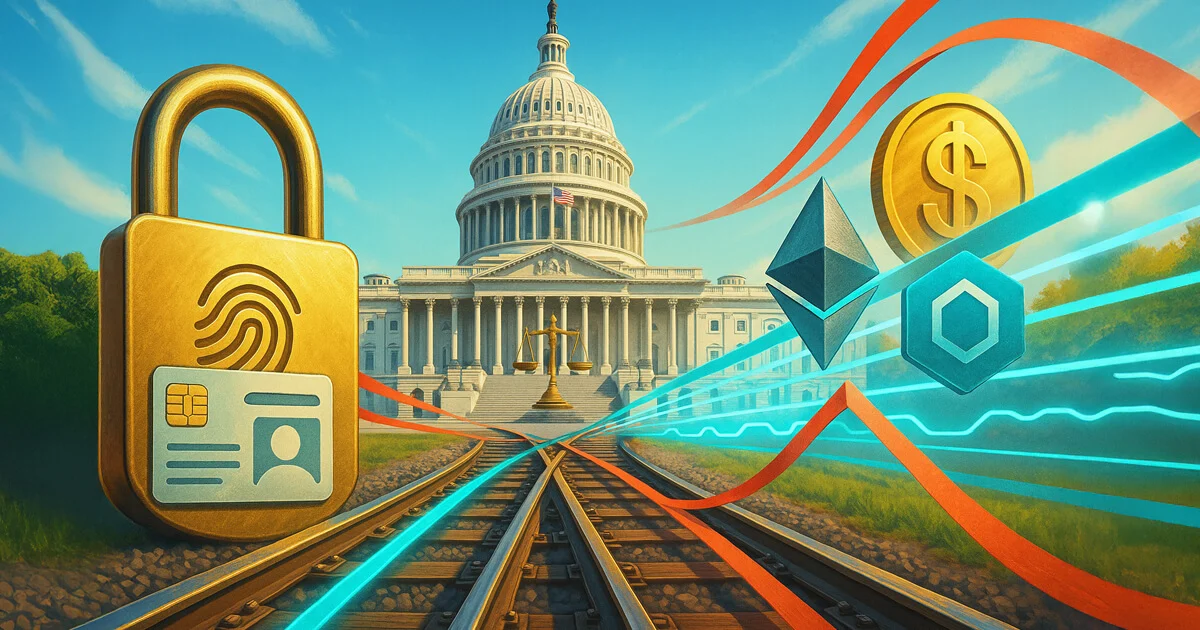
A confidential draft bill circulating among Senate Democrats has ignited a firestorm of concern within the cryptocurrency industry, with critics warning that its sweeping proposals for Decentralized Finance (DeFi) oversight could significantly diminish U.S. liquidity and stifle innovation. The leaked legislation, reportedly intended as a Democratic counterpoint to a House-backed market-structure bill, aims to extend Know-Your-Customer (KYC) and Anti-Money-Laundering (AML) obligations to various actors within the DeFi ecosystem, including interfaces, validators, and even node operators. This aggressive regulatory approach has prompted widespread backlash from industry leaders, legal experts, and policymakers, who fear it could push vital crypto capital and talent offshore.
The core of the leaked proposal, as reported, mandates that all DeFi applications facilitating financial transactions implement front-end KYC controls. This would potentially encompass widely used tools such as browser-based wallets and liquidity aggregation interfaces, forcing users to undergo identity verification to access decentralized financial services. Furthermore, the draft language places new responsibilities on oracle operators, exposing them to potential enforcement actions if their price feeds are linked to protocols deemed "sanctioned." This could create a chilling effect, as oracles, which are crucial for smart contract functionality, may become hesitant to integrate with any protocol that faces even a remote possibility of regulatory scrutiny.
Adding another layer of governmental control, the Treasury Department would be granted the authority to establish a "restricted list" of protocols identified as excessively risky for U.S. users. This provision raises significant concerns about potential censorship and the government’s ability to dictate which financial tools American citizens can or cannot access within the DeFi space.
Senator Ruben Gallego has publicly stated that the Democrats’ bill represents an attempt to forge bipartisan consensus on crypto market structure, asserting that Democrats are "ready to work" and have "delivered paper and substance." However, internal disagreements within the Senate Banking Committee have reportedly stalled broader discussions, suggesting that the path forward for this legislative proposal is far from certain.
The Shifting Sands of U.S. Crypto Liquidity
The potential implications of this leaked bill on U.S. liquidity are profound, particularly when viewed against the backdrop of the current global cryptocurrency trading landscape. Data from Newhedge indicates a significant trend: U.S.-based crypto trading venues currently account for a mere fraction of global trading volume, capturing less than 10% of the total. In stark contrast, the top eight global platforms, predominantly located offshore, are responsible for approximately 90% of global market depth. This disparity underscores a crucial reality: liquidity naturally gravitates towards environments with fewer regulatory constraints.
The proposed Senate bill, by imposing stringent compliance requirements at the protocol level, risks accelerating this existing flight of capital. If U.S. users are compelled to interact solely through KYC-verified front ends, or if the Treasury can effectively block access to specific protocols, traders prioritizing anonymity, flexibility, and lower friction are likely to seek alternatives. This could manifest as a migration to decentralized bridges that circumvent traditional gateways or a direct shift to foreign exchanges where such stringent regulations are either absent or inconsistently enforced.

Over time, such a migration would solidify offshore platforms as dominant liquidity hubs, further entrenching the influence of large, non-U.S.-based exchanges. This fragmentation of trading activity across different jurisdictions would inevitably lead to a shrinking of U.S. liquidity pools. Reduced numbers of active counterparties, wider bid-ask spreads, and diminished market depth would become the norm. Such a scenario would not only hinder innovation within the U.S. crypto sector but also exacerbate market inefficiencies and weaken the nation’s competitive standing in the rapidly evolving global digital asset landscape.
A Glimpse into the DeFi Appeal
The push for DeFi regulation also comes at a time when a significant portion of the American population is reportedly disillusioned with the traditional financial system. A recent report by the DeFi Education Fund highlighted that many Americans are seeking alternatives to conventional banking and investment avenues. They are increasingly turning to DeFi, perceiving it as an industry that offers greater control over their assets, lower transaction fees, and a more equitable financial experience. This sentiment suggests that any regulatory measures that restrict access to or functionality of DeFi could alienate a growing demographic looking for financial empowerment.
Industry Voices Rise in Opposition
The leaked bill has triggered immediate and strong condemnation from prominent figures within the cryptocurrency industry, who view its provisions as fundamentally detrimental to the sector’s growth and its potential for innovation in the United States.
Jake Chervinsky, Chief Legal Officer at Variant Fund, characterized the proposal as "fundamentally broken and unworkable." He argued that the bill appears less like an initial offer in a negotiation and more like a list of demands "designed to kill the bill." Chervinsky went further, describing the proposal as an "unprecedented [and] unconstitutional government takeover of an entire industry." He asserted that the bill is not merely "anti-crypto, it’s anti-innovation, and a dangerous precedent for the entire tech sector."
Echoing these sentiments, Zack Shapiro, Head of Policy at the Bitcoin Policy Institute, pointed out that the draft bill "stretches illicit-finance laws to target software and software developers rather than criminal conduct." He warned that this approach sets a dangerous precedent for censoring lawful private exchange, drawing parallels to the government’s past actions against protocols like Tornado Cash and the developers of Samourai Wallet.
Brian Armstrong, CEO of Coinbase, voiced strong opposition, stating that the bill would "set innovation back years" and prevent the U.S. from leading in the burgeoning field of crypto finance. He declared, "We absolutely won’t accept this. It’s a bad proposal, plain and simple, that would set innovation back, and prevent the US from becoming the crypto capital of the world."

Hayden Adams, founder of Uniswap, a prominent decentralized exchange, expressed a similar concern, asserting that the language within the bill "would kill DeFi domestically." He emphasized that significant shifts in approach from Democratic senators would be necessary if any meaningful progress on market-structure reform is to be achieved.
A Timeline of Regulatory Scrutiny
The current legislative push in the Senate is not an isolated event but rather a continuation of a broader trend of increasing regulatory scrutiny over the digital asset space in the United States.
Early 2020s: As DeFi rapidly expanded, attracting significant capital and user attention, regulatory bodies in the U.S., including the Securities and Exchange Commission (SEC) and the Commodity Futures Trading Commission (CFTC), began to signal their intent to apply existing financial regulations to this new frontier.
Mid-2023: Discussions around comprehensive crypto market structure legislation gained momentum in Congress. The House of Representatives passed the Financial Innovation and Technology for the 21st Century Act (FIT21), aimed at clarifying the regulatory landscape for digital assets, though this bill faced its own set of challenges and differing opinions.
Late 2023 – Early 2024: The Senate began to explore its own legislative avenues. Reports emerged of a confidential draft bill being circulated among Senate Democrats, signaling a different approach to market structure regulation compared to the House. This leaked bill, with its focus on DeFi oversight, quickly became a point of contention.
Present: The leaked DeFi bill has intensified partisan debates and drawn sharp criticism from the crypto industry. While Senator Gallego has positioned it as an attempt at bipartisan consensus, internal opposition and industry backlash suggest a difficult path forward for the proposed legislation. The future trajectory of DeFi regulation in the U.S. remains uncertain, with potential outcomes ranging from significant legislative changes to a prolonged period of regulatory uncertainty.

The Economic Calculus of Regulation
The debate over the Senate’s leaked DeFi bill is intrinsically linked to broader economic considerations regarding U.S. competitiveness in the global financial and technological arenas. Proponents of a more lenient regulatory approach argue that aggressive oversight, particularly at the protocol level, could inadvertently drive innovation and investment out of the United States. This concern is amplified by the fact that U.S. exchanges already represent a small portion of global crypto trading volume.
The argument is that DeFi’s inherent nature—its permissionless and borderless characteristics—is at odds with the imposition of geographically bound, identity-centric regulations. Forcing DeFi interfaces to comply with KYC/AML standards could effectively fragment the decentralized nature of these platforms, making them less attractive to users worldwide. Furthermore, the creation of a government-curated "restricted list" raises concerns about market manipulation and the potential for stifling nascent but potentially revolutionary technologies.
Critics of the bill contend that the U.S. stands to lose its position as a leader in financial technology if it adopts an overly restrictive stance. They point to the rapid growth of financial innovation in other jurisdictions that have adopted more welcoming regulatory frameworks. The fear is that a wave of "regulatory arbitrage," where businesses and capital move to more favorable environments, could leave the U.S. lagging behind in a critical future industry. This could translate into job losses, reduced tax revenue, and a diminished influence on the future of global finance.
The industry’s response highlights a fundamental tension: how to balance the legitimate concerns about illicit finance and consumer protection with the imperative to foster innovation and maintain economic competitiveness. The leaked bill, in its current form, appears to lean heavily towards control, leading many to believe it could have the opposite effect of its intended outcome, ultimately harming U.S. economic interests and its standing in the global digital economy.