admin
admin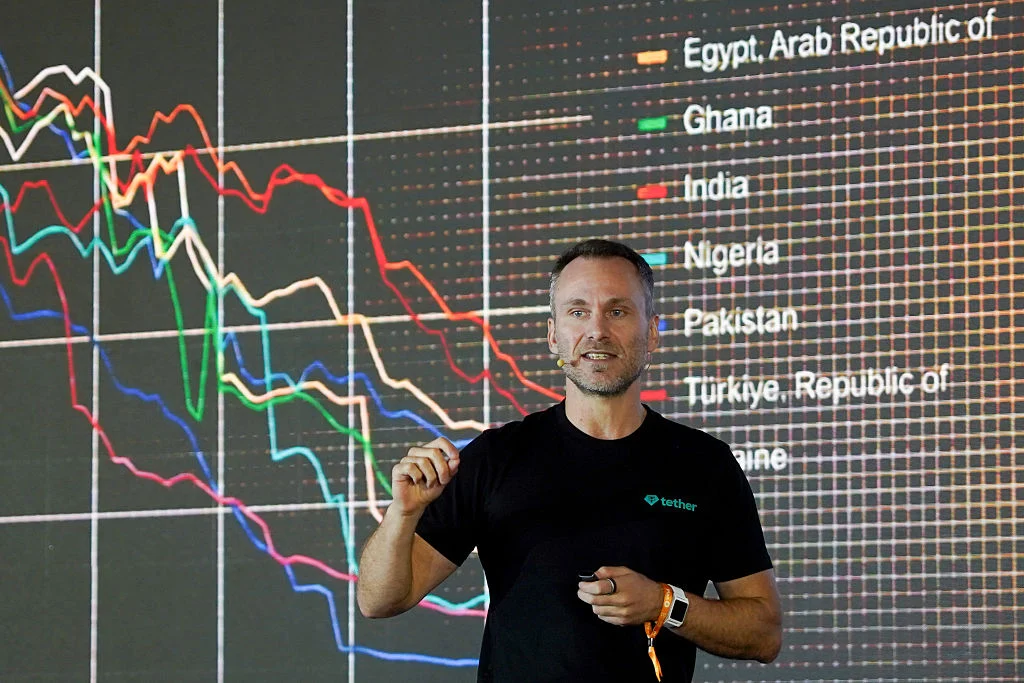
The landscape of digital finance is undergoing a fundamental transformation as Tether, the world’s largest stablecoin issuer, transitions from a defiant offshore entity to a proactive participant in the United States’ regulated financial system. This week, Tether CEO Paolo Ardoino orchestrated an expansive media blitz across major outlets including Fortune, Bloomberg, Reuters, and TechCrunch to signal a new era for the company. The centerpiece of this strategic shift is the launch of USAT, a federally regulated, dollar-backed stablecoin issued in partnership with Anchorage Digital Bank. This move marks Tether’s first product specifically designed to comply with evolving U.S. federal rules, placing the company in direct competition with established domestic players like Circle’s USDC and new entrants from traditional finance, such as Fidelity Investments’ recently unveiled FIDD token.
The Strategic Launch of USAT and the Domestic Expansion
For years, Tether’s primary product, USDT, has dominated the global market while maintaining a deliberate distance from the United States regulatory perimeter. As of early 2026, USDT boasts a market capitalization exceeding $187 billion, making it the most liquid digital asset in the world after Bitcoin and Ethereum. However, USDT’s lack of a formal U.S. regulatory framework has historically limited its adoption among conservative American institutional investors.
The introduction of USAT changes this dynamic. By partnering with Anchorage Digital Bank—the first crypto-native firm to receive a charter from the Office of the Comptroller of the Currency (OCC)—Tether is attempting to bridge the gap between decentralized finance and federal oversight. Unlike USDT, which remains a global tool for cross-border liquidity and inflation hedging, USAT is engineered to meet the stringent requirements of the U.S. banking system. This dual-track strategy allows Tether to maintain its massive global footprint while simultaneously challenging Circle, JPMorgan Chase, and PayPal for dominance within the American digital dollar market.
A Decade of Transformation: From 2014 to the Present
Tether’s journey began in late 2014, with Paolo Ardoino joining the firm just two months after its inception. For much of the following decade, the company operated under a cloud of skepticism. Regulators and critics frequently characterized the firm as opaque, and a 2025 investigative report by The Economist went as far as labeling the stablecoin a "money launderer’s dream." These allegations stemmed from the use of USDT in illicit shadow economies, including its alleged role in facilitating transactions for sanctioned Russian entities and international drug syndicates.
However, Ardoino contends that those days are firmly in the past. Speaking from Tether’s offices in Lugano, Switzerland, the CEO detailed a comprehensive transformation aimed at institutional legitimacy. Tether now reports active collaboration with nearly 300 law enforcement agencies across more than 60 countries, including the FBI and the U.S. Secret Service. The company has integrated with the Office of Foreign Assets Control (OFAC) sanctions lists, enabling it to freeze tokens associated with criminal activity—a capability Ardoino argues makes digital stablecoins superior to physical cash for law enforcement purposes.
The Financial Powerhouse: Reserves, Profits, and Cantor Fitzgerald
The scale of Tether’s financial operation has reached levels that rival major traditional banks. In its 2025 annual report, the company disclosed a staggering $15 billion in profit. These earnings are primarily derived from the yield generated by Tether’s massive holdings of U.S. Treasury bills, which serve as the reserve backing for USDT. Unlike traditional savings accounts, Tether does not share this interest with its token holders—a business model that has allowed it to accumulate approximately $30 billion in excess reserves beyond what is required for a 1:1 redemption of all outstanding tokens.
A critical component of Tether’s newfound transparency is its relationship with Cantor Fitzgerald, the venerable Wall Street brokerage. Howard Lutnick, the longtime leader of Cantor Fitzgerald and the current U.S. Commerce Secretary, has publicly vouched for Tether’s reserves. This relationship provides Tether with a high-level conduit into the heart of the American financial and political establishment, effectively neutralizing many of the "transparency" criticisms that dogged the firm in its earlier years.
Ardoino contrasts Tether’s "full reserve" model with the fractional reserve systems of traditional banks. "The banking system operates on a fractional reserve where up to 90% of deposits are lent out," Ardoino noted. "Even if Bitcoin were to go to zero, Tether would still have more liquid assets than all the USDT tokens issued."
Chronology of Resilience: Surviving Market Volatility
Tether’s claims of stability are backed by its performance during several systemic crises in the crypto market:
- May 2022: The collapse of the TerraLuna algorithmic stablecoin wiped out $40 billion in market value almost overnight. Amid the ensuing panic, Tether processed $7 billion in redemptions within 48 hours and a total of $20 billion (roughly 25% of its reserves) over 20 days without missing a single payment.
- March 2023: During the Silicon Valley Bank collapse, Tether’s primary competitor, Circle (USDC), briefly lost its $1.00 peg after revealing $3 billion in exposure to the failing bank. Tether remained stable throughout the period, absorbing much of the liquidity that fled from USDC.
- November 2025: Despite a "weak" stability rating from S&P Global Ratings, Tether continued to grow its user base, which now stands at 536 million people globally, adding approximately 30 million new users per quarter.
Financial Inclusion and Geopolitical Implications
While the U.S. market is the focus of the USAT launch, Tether’s core mission remains centered on emerging markets. Ardoino frames the company’s success as a "humanitarian financial inclusion story." In nations suffering from hyperinflation and currency devaluation, USDT has become a de facto savings account.
Supporting data highlights the severity of the problem Tether claims to solve:
- Argentina: The peso has lost over 94% of its value against the dollar in the last five years.
- Turkey: The lira has seen an 81% decline in the same period.
- Haiti: With an average daily salary of $1.34, a significant portion of the population remains excluded from the traditional banking system.
For these users, the primary utility of a stablecoin is value preservation rather than interest yield. This perspective explains why Tether is largely unfazed by the proposed CLARITY Act in the U.S. Congress. The bill seeks to prohibit stablecoin issuers from paying interest to holders—a move supported by traditional banks to prevent a flight of deposits. Since Tether’s business model is already built on non-interest-bearing tokens, the legislation would effectively codify its existing competitive advantage while hampering rivals who use interest rewards to attract users.
Beyond Currency: Gold and the Sovereign Wealth Fund Strategy
Tether is rapidly diversifying its balance sheet, evolving into something resembling a private sovereign wealth fund. The company has become one of the world’s largest private holders of gold, possessing approximately 140 tons of the precious metal worth an estimated $24 billion. Tether Gold (XAUt), a token backed by physical bullion, now has $2.6 billion in circulation. Ardoino views gold as the ultimate "neutral" currency and is purchasing between one and two tons of gold per week to further fortify the company’s reserves.
Beyond precious metals, Tether has committed billions of dollars to a diverse array of sectors:
- Artificial Intelligence: Tether launched Qvac, a decentralized AI platform designed to run locally on smartphones, aiming to provide AI access to populations in Africa and South America who cannot afford expensive cloud-based subscriptions.
- Robotics and Infrastructure: The company invested $1 billion in the German AI robotics firm Neura and has taken significant stakes in the social media platform Rumble, as well as ventures in satellite technology, data centers, and sustainable agriculture.
- Traditional Assets: Tether even holds a stake in the Juventus Football Club, reflecting a strategy of broad asset allocation.
Analysis of Broader Impacts
Tether’s pivot toward U.S. regulation carries significant implications for the future of the U.S. dollar as the world’s reserve currency. By facilitating the digital distribution of dollars to over half a billion people, many of whom are in regions where the U.S. has little traditional banking reach, Tether is effectively extending the "dollarization" of the global economy.
However, this expansion also brings Tether into closer proximity with U.S. political risks. While the company is currently enjoying a period of collaboration with federal agencies, its sheer size and influence could eventually be viewed as a threat to the Federal Reserve’s control over monetary policy. Ardoino remains optimistic, suggesting that both major U.S. political parties should theoretically support a tool that expands American financial influence and promotes financial inclusion.
As the October TechCrunch Disrupt event in San Francisco approaches, where Ardoino is scheduled to speak, the industry will be watching closely. The launch of USAT and Tether’s aggressive push into AI and gold suggest that the company no longer views itself as merely a "crypto play," but as a permanent and formidable fixture of the global financial architecture. Whether the U.S. regulatory environment will fully embrace this offshore giant remains the central question for the year ahead.