admin
admin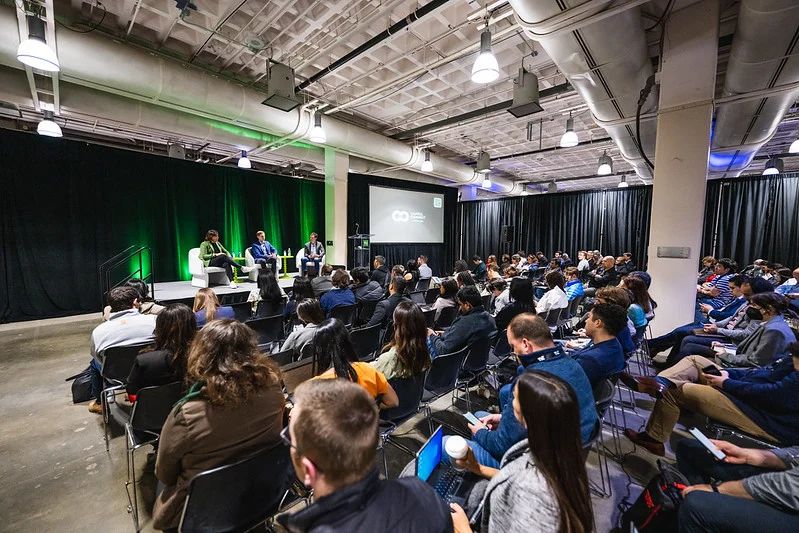
The summit, scheduled for June 23, 2026, in Boston, represents a strategic pivot in the professional development landscape for technology leaders. By bringing together an estimated 1,100 founders and institutional investors, the event aims to move beyond the traditional conference format to provide a high-density environment for growth, execution, and real-world scaling. This flagship gathering is engineered to facilitate peer-to-peer learning among founders who are navigating similar growth trajectories, while simultaneously connecting them with venture capitalists whose portfolios and expertise align with their specific technological innovations.
As the venture capital landscape continues to evolve toward a preference for sustainable growth over "blitzscaling" at any cost, the TechCrunch Founder Summit serves as a critical junction for those at the helm of burgeoning enterprises. Tickets for the event have been released at their lowest seasonal rates, featuring "Super Early Bird" pricing that offers significant savings for individual founders and additional discounts for leadership teams. This pricing structure is designed to ensure that early-stage and mid-growth founders can access the same high-level insights typically reserved for the industry’s most established players.
A Strategic Hub for Innovation in the Northeast
The selection of Boston as the host city for the 2026 Founder Summit is a calculated recognition of the city’s standing as a premier global hub for biotechnology, robotics, and artificial intelligence. While Silicon Valley remains the traditional epicenter of the software world, the Boston-Cambridge corridor has seen a massive influx of capital directed toward "deep tech" and life sciences. By situating the summit in this environment, TechCrunch is providing a platform that bridges the gap between academic research-driven startups and the commercial scaling strategies necessary to dominate international markets.

The event structure emphasizes a "founder-only" philosophy, creating a sanctuary where leaders can discuss the often-isolating challenges of the C-suite without the pressures of public scrutiny. This environment is intended to foster honest conversations about burn rates, board management, and the psychological toll of scaling a company from a dozen employees to several hundred.
Chronology of TechCrunch’s Event Evolution
The 2026 Founder Summit is the culmination of a decade-long evolution in how tech media interacts with the startup ecosystem. Historically, the industry was served by broad, general-interest conferences like TechCrunch Disrupt, which focused on the "launch" phase of a company. However, as the global startup ecosystem matured, a clear need emerged for specialized programming that addressed the "middle years"—the period between finding product-market fit and achieving a successful exit or IPO.
The timeline of this evolution began with the introduction of "Early Stage" workshops in the early 2020s, which focused on the mechanics of incorporation and seed-round fundraising. By 2024, these sessions had expanded into more robust "Founders" tracks. The 2026 Summit in Boston, followed by a subsequent major engagement in San Francisco in October 2026, signals a permanent shift toward a bifurcated event strategy: one that celebrates the spectacle of new technology and another that provides the rigorous, clinical analysis required for operational scaling.
Data-Driven Insights: The Hurdles of Mid-Stage Scaling
Recent industry data suggests that while seed-stage funding remains relatively accessible for high-quality teams, the "Series B and C gap" has become more pronounced. According to recent venture activity reports, approximately 70% of startups that raise a seed round fail to reach their Series B, often due to an inability to scale operations, culture, and sales simultaneously. The TechCrunch Founder Summit addresses these specific failure points through curated sessions led by those who have successfully navigated these transitions.

The summit’s agenda is built around several core pillars of the scaling process:
- Fundraising Strategies for Late-Stage Growth: Moving beyond the pitch deck to master the complexities of debt financing, bridge rounds, and Series C preparation.
- Organizational Scaling and Cultural Integrity: Strategies for hiring the first 50 employees and maintaining the founder’s vision as the company becomes a multi-layered organization.
- Product-Market Expansion: Transitioning from a single-product company to a multi-product platform.
- Global Go-To-Market Execution: Navigating the regulatory and operational challenges of entering international markets.
Expert Perspectives on Product Innovation and Market Focus
The value of the Founder Summit is largely derived from the caliber of its contributors. Past iterations have featured voices such as Jon McNeill, the former President of Tesla and a seasoned investor, who has famously advocated for the importance of reviewing "real products" over digital mockups. McNeill’s philosophy—that true innovation is found in the physical or functional friction of a working prototype—serves as a cornerstone for the summit’s focus on execution over theory.
Similarly, insights from institutional investors like Cathy Gao, a partner at Sapphire Ventures, provide founders with a "look behind the curtain" of the investment committee. Gao’s previous contributions have focused on the rigorous preparation required for a Series C round, emphasizing that by the time a company reaches this stage, the narrative must be backed by impeccable unit economics and a clear path to profitability.
Further challenging traditional startup dogmas, Jahanvi Sardana, a partner at Index Ventures, has utilized the TechCrunch platform to urge founders to move away from an obsession with Total Addressable Market (TAM). Sardana argues that founders should instead focus on the "intensity of the problem" they are solving for their initial core users, as a deep solution for a small group is often a better predictor of long-term success than a shallow solution for a massive market.

Investor Alignment and High-Value Networking
One of the primary drivers for attendance at the 2026 Summit is the opportunity for intentional networking. Unlike larger trade shows where networking can feel haphazard, the Founder Summit utilizes a curated approach to ensure that the 1,100 attendees are matched based on mutual interest. Investors from top-tier firms—including Sequoia Capital, NFX, Greylock, and Precursor Ventures—participate in the event not just as speakers, but as active participants in roundtable discussions.
This "investor-aligned" innovation model ensures that founders are meeting with capital partners who understand their specific sector, whether it be SaaS, Fintech, or Hard Tech. For the investor community, the summit provides a concentrated look at the most promising founders in the Northeast, offering a more efficient scouting process than traditional methods.
Broader Impact and Industry Implications
The ripple effects of the TechCrunch Founder Summit extend beyond the immediate connections made in Boston. By professionalizing the "scaling" phase of the startup lifecycle, the summit contributes to a more stable and resilient technology sector. When founders are better equipped to handle the stresses of rapid growth, the likelihood of catastrophic company failures—which can result in massive job losses and the erosion of investor trust—is significantly reduced.
Furthermore, the emphasis on "peer connection" helps to break down the silos of the tech industry. In an era where remote work has made physical proximity less common, the summit provides a rare opportunity for founders to build a support network of peers. These relationships often result in informal "mastermind" groups that continue to provide value long after the conference has concluded.

Registration and Participation Details
As the June 23 date approaches, the organizers have emphasized that the Super Early Bird pricing is a limited-time offer, designed to reward those who commit early to their growth strategy. With savings of up to $300 on individual passes and 30% discounts for groups of four or more, the summit is positioning itself as an accessible yet elite gathering.
For organizations looking to increase their visibility within the founder community, sponsorship and exhibition opportunities remain open. These partners play a vital role in the summit ecosystem, often providing the tools—from cloud infrastructure to legal services—that founders need to support their next stage of growth.
The TechCrunch Founder Summit 2026 is poised to be a defining moment for the startup community in Boston and beyond. By focusing on the practical, the honest, and the actionable, the event provides a roadmap for the next generation of tech giants to scale with clarity and confidence. As the industry looks toward the latter half of the decade, the lessons learned and the relationships forged in Boston will likely dictate the trajectory of the global innovation economy.