admin
admin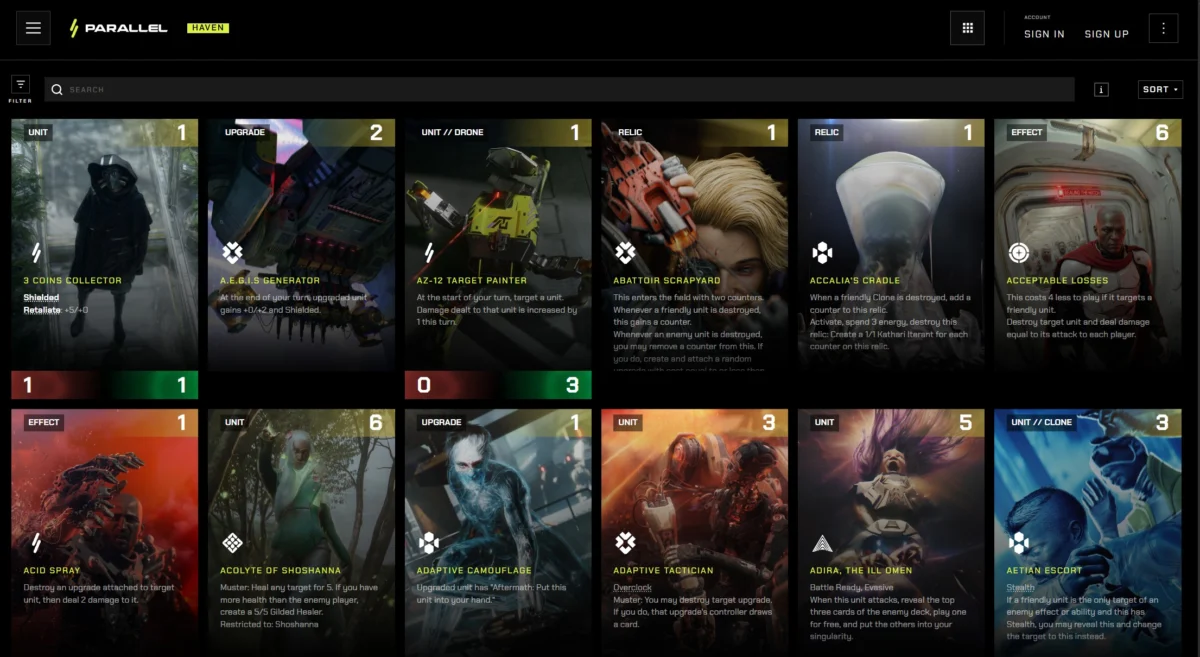
The intersection of gaming and cryptocurrency is often discussed through the lens of specialized “Web3 games,” yet this narrow focus overlooks a much larger, pre-existing synergy. Long before the term “play-to-earn” entered the lexicon, the gaming industry had already meticulously constructed the psychological and technical foundations for seamless digital asset ownership. Global data from industry analyst Newzoo in 2023 indicates a staggering demographic of over 3 billion gamers worldwide. This colossal user base exhibits a significant overlap with the estimated 560 million global crypto users, according to a 2023 report by Triple-A. This striking alignment is far from coincidental; it is the culmination of decades of behavioral conditioning within digital environments and the shared infrastructural demands of digital-first interactions.
The Inherent Digital DNA of Gaming
Unlike traditional industries such as real estate, logistics, or even conventional banking, which are currently grappling with the complex and often costly process of digitizing physical assets and processes, the gaming sector has been intrinsically digitally native since its very inception. From the earliest text-based adventures to today’s photorealistic open-world epics, a virtual sword in an RPG or a cosmetic skin in a first-person shooter exists purely as lines of code and data. There is no tangible, physical counterpart that requires translation or digitization. This fundamental characteristic means that gamers, as a demographic, do not inherently demand the psychological reassurance of a physical receipt or a tangible product to validate their purchases. They have been accustomed to acquiring and valuing bits and bytes for decades, a paradigm that significantly lowers the psychological barrier to entry for cryptocurrencies. The medium of the asset (code on a blockchain) perfectly matches the medium of the platform (the game engine), eliminating the cumbersome “translation layer” required when bridging physical and digital worlds. This inherent digital nature has cultivated a user base already comfortable with the abstract representation of value.
The Overlap Between Gaming and Crypto Audiences: A Shared Power User Mentality
The demographic profiles of a dedicated crypto holder and an avid gamer are remarkably congruent. Both groups tend to skew younger, exhibit a high degree of comfort with frequent and complex digital interactions, and possess an elevated tolerance for technical complexity. The 2023 Triple-A survey, which found that nearly 50% of crypto owners are also active gamers, underscores this profound connection. This substantial overlap is deeply rooted in a shared “power user” mentality. Gamers are routinely engaged in managing intricate inventories, navigating multi-layered user interfaces, and troubleshooting software glitches. The cognitive leap required to transition from managing a character’s elaborate skill tree or a complex inventory system to managing a non-custodial digital wallet and understanding seed phrases is considerably smaller than the friction experienced by a traditional retail banking customer unfamiliar with digital-first financial instruments. For these digitally fluent users, digital assets are not a novel concept or an emerging trend; they represent a default, intuitive state of interaction within their established digital ecosystems. They are early adopters by nature, constantly seeking efficiency and new forms of engagement within digital realms.
Gamers Are Already Fluent in Virtual Currencies and Economies

The concept of a private, closed-loop virtual currency is second nature to anyone who has engaged with a modern video game. Whether it’s the V-Bucks used in Fortnite, Robux in Roblox, or the ubiquitous in-game gold in countless MMORPGs, gamers have spent years, and often significant sums of fiat currency, exchanging real money for digital denominations that hold specific value within a particular game’s ecosystem. The psychological conditioning for this exchange is complete. The primary, yet crucial, difference between these traditional virtual currencies and cryptocurrency lies in the underlying ledger technology. While conventional gaming currencies are typically stored on centralized databases owned and controlled by a single publisher, cryptocurrencies operate on decentralized, immutable blockchains. However, from a consumer behavior standpoint, the fundamental act of “topping up” a digital balance, observing its value on a screen, and then spending it on digital goods or services is virtually identical. Gamers have been implicitly trained to perceive value as a digital number on a screen, effectively dismantling one of the most significant psychological hurdles to broader crypto adoption: the perceived “lack of reality” or tangibility often associated with digital money by the uninitiated. This decades-long exposure to virtual economies, including trading, crafting, and even speculation within game worlds, has prepared gamers for the abstract yet functional nature of blockchain-based assets.
Global Communities Demand Global Payments
Modern gaming is an inherently borderless activity. A cooperative raiding party in a massively multiplayer online (MMO) game might seamlessly comprise players from Seoul, Berlin, and Sao Paulo, collaborating in real-time. Traditional payment rails, however, remain stubbornly regional and often antiquated. Cross-border bank transfers are notoriously slow, expensive, and opaque, often taking days to settle. Credit card processors frequently flag international gaming transactions as potentially fraudulent, particularly when originating from emerging markets with higher perceived risk. This results in declined transactions, frustrating players and stifling developers.
Cryptocurrency, by its very design, provides a unified, permissionless, and global settlement layer that perfectly matches the borderless nature of the player base. A game developer in Poland can receive support or direct payments from a player in Vietnam without needing to navigate the labyrinthine SWIFT network, endure multi-day settlement times, or incur exorbitant currency conversion fees, which can range from 5-7% or more. In regions grappling with hyperinflation, currency controls, or restricted access to USD-based credit cards and banking services, digital assets, particularly stablecoins, function as an essential and often life-saving bridge to the global gaming economy. This removes friction for both consumers and creators, fostering a more inclusive and efficient marketplace.
Digital Goods Require No Physical Fulfillment: The End of the Last Mile Problem
One of the greatest and most persistent frictions in traditional e-commerce is the logistical challenge of the “last mile” of delivery. Warehousing, shipping costs, complex international customs duties, and potential delays can significantly inflate the final price of a physical item, sometimes doubling it, and introduce considerable wait times. The gaming industry, dealing exclusively with digital goods, entirely circumvents this problem. When a transaction is confirmed, whether for a game key, an in-game item, or a cosmetic skin, the asset is delivered instantaneously via an API call or, in the case of blockchain, a smart contract execution.
This instant gratification aligns perfectly with the inherent speed of many modern crypto transactions. In a world where a transaction on networks like Solana or Polygon can settle in mere seconds, the immediate delivery of a digital game key or a coveted skin feels appropriate and expected. There is no waiting for a truck, a warehouse worker, or a postal service. This unparalleled efficiency makes gaming an ideal and high-velocity testing ground for crypto commerce, showcasing its ability to facilitate rapid, frictionless exchange of digital value on a global scale. This efficiency is a core driver of consumer satisfaction and operational cost savings.

Gift Cards: Bridging Crypto with Traditional Gaming Platforms
Despite the undeniable structural and demographic alignment between these two dynamic worlds, many major traditional gaming platforms—such as Steam, PlayStation Network, Xbox, and Nintendo eShop—do not yet accept Bitcoin or Ethereum directly at checkout. This reluctance is often attributed to a combination of factors: the ongoing regulatory uncertainty surrounding cryptocurrencies in various jurisdictions, the inherent price volatility of direct merchant settlement, and a general conservative approach to integrating new, complex payment rails. To circumvent these obstacles and unlock the immense potential of crypto-fluent gamers, the industry has innovated, turning to intermediary solutions.
Gift cards have emerged as the primary, highly liquid method for buying conventional games and in-game content with crypto within the broader gaming sector. These digital vouchers act as an effective bridge between decentralized wallets and centralized storefronts. By utilizing a crypto gift-card marketplace, a user can convert their digital assets (e.g., Bitcoin, Ethereum, USDT) into a platform-specific balance in a matter of seconds. This ingenious workaround allows gamers to maintain their crypto-centric financial stack while still accessing the massive libraries and communities of publishers who are not yet prepared or willing to hold volatile crypto assets directly on their balance sheets. Platforms like CoinsBee exemplify this model, providing vouchers for thousands of brands across various digital categories, effectively transforming cryptocurrency into a universal digital gaming currency without requiring major merchants to overhaul their existing tech stacks or assume direct crypto-related risks. This pragmatic solution has significantly accelerated practical crypto adoption within the gaming community.
Web3 Gaming Versus Using Crypto for Conventional Games: A Crucial Distinction
It is imperative to draw a clear distinction between “Web3 games” (titles explicitly built on blockchain technology, often incorporating NFTs for true asset ownership) and the broader phenomenon of using cryptocurrency to interact with “Web2 games” (conventional titles available on established platforms). Currently, the latter represents a significantly larger and more immediate market. While nascent Web3 games like Illuvium or Parallel are pushing the boundaries of true digital asset ownership via non-fungible tokens, allowing players verifiable control and interoperability of in-game items, the vast majority of crypto-related gaming activity today involves using digital assets to purchase existing, popular titles or acquire in-game currency for established hits such as League of Legends, Counter-Strike: Global Offensive, or Call of Duty.
The immediate and most impactful utility for most consumers right now isn’t necessarily the underlying blockchain architecture of the game itself, but rather the enhanced flexibility and efficiency of the payment method. Cryptocurrency empowers users to bypass traditional regional pricing disparities, circumvent payment restrictions, and overcome the limitations of conventional financial systems. While on-chain gaming undoubtedly represents a theoretical future with profound implications for digital property rights, the current reality demonstrates that crypto is primarily functioning as a more efficient, borderless, and often more accessible way to fund a standard, existing gaming habit. This practical application drives real-world adoption on a much larger scale than the more niche Web3 gaming sector, at least for now.
What Gaming Tells Us About Broader Crypto Adoption

The burgeoning success of crypto integration within the gaming sector provides an invaluable roadmap for other industries contemplating blockchain adoption. It strongly suggests that mainstream adoption tends to follow the path of least resistance. Industries that are already inherently digital-first, possess a globally distributed, tech-literate user base, and deal primarily with intangible assets are poised to be the earliest and most successful movers.
Furthermore, gaming demonstrates that for many consumers, verifiable digital ownership (the philosophical cornerstone of many Web3 projects) is often a secondary concern compared to immediate access and practical utility. While the ideological argument for crypto frequently centers on self-sovereignty and true digital property rights, the practical usage in gaming predominantly revolves around tangible utility—specifically, the ability to spend money across international borders without the delays, fees, or permissions required by traditional banks and payment intermediaries. This critical shift from an ideological impetus to a functional, problem-solving usage is a clear indicator of a maturing market, moving beyond early adopters and toward broader mainstream integration. Gaming proves that when crypto solves a real-world pain point, adoption accelerates.
Challenges and Future Considerations
Despite the undeniable synergy, the path to full integration is not without hurdles. Regulatory clarity remains a significant concern for major publishers, who operate in highly regulated environments across dozens of countries. The volatility of many cryptocurrencies also poses a challenge for direct merchant acceptance, requiring sophisticated hedging strategies or reliance on stablecoins. User experience, while improving, still presents complexities for non-technical users, particularly regarding self-custody and security. Environmental concerns related to energy consumption, though largely mitigated by the shift to Proof-of-Stake consensus mechanisms, continue to be a talking point. Lastly, established gaming companies, with their existing revenue models and vast installed bases, often exhibit inertia when it comes to radical technological shifts, preferring gradual adoption or indirect integration methods like gift cards.
Conclusion
Gaming has not become a leading crypto use case due to aggressive marketing campaigns or speculative hype, but rather because of a profound and fundamental structural alignment. The two industries share a digital DNA that makes the integration of blockchain-based value transfer feel less like a disruptive imposition and more like a natural, logical upgrade to existing systems. As more consumers globally seek to move away from fragmented, inefficient, and often discriminatory regional payment systems, the robust template provided by the gaming industry—using digital assets to acquire digital goods instantly, efficiently, and globally—is highly likely to be replicated across other forms of digital media, software-as-a-service, and virtual economies. The real friction hindering broader crypto adoption isn’t inherent in the blockchain technology itself; it resides squarely within the legacy financial and logistical systems that the gaming industry has already spent decades evolving away from. This makes gaming not just a user of crypto, but a powerful harbinger of its widespread future.
FAQs

Can you buy video games with Bitcoin?
Most major platforms like Steam, PlayStation Store, and Xbox do not accept Bitcoin directly at checkout. However, several reputable third-party marketplaces, such as CoinsBee, offer platform-specific gift cards that can be purchased with Bitcoin or other cryptocurrencies. The gift card is then redeemed on the respective platform to access its game library or in-game content.
Why do gamers adopt crypto faster than other demographics?
Gamers are already inherently comfortable with virtual currencies (e.g., V-Bucks, Robux, in-game gold), managing complex digital inventories, and navigating intricate digital interfaces. This prior experience significantly reduces the cognitive leap required to understand and utilize cryptocurrencies compared to individuals who have primarily dealt with tangible assets and traditional financial systems. They possess a "digital-first" mindset.
What is the difference between Web3 gaming and using crypto for regular games?
Web3 gaming refers to games explicitly built on blockchain technology, where players often truly own in-game assets as NFTs, enabling verifiable digital property rights and potential interoperability. Using crypto for regular (Web2) games simply means paying with Bitcoin or other tokens—via gift cards or direct payment where accepted—to purchase conventional titles or in-game content on established platforms like Steam, Xbox, or PlayStation. Currently, the latter represents the much larger and more common market.
What should users consider when buying crypto gift cards?
Users should prioritize marketplaces that source their gift card codes directly from authorized distributors rather than through peer-to-peer exchanges, which carry a higher risk of fraudulent or compromised codes. It is also advisable to review the platform’s refund policy, data retention practices, customer support availability, and the specific cryptocurrencies and networks supported before making a purchase. Checking user reviews and the platform’s reputation is also crucial.
Why don’t Steam and PlayStation accept crypto directly?
The primary reasons major platforms like Steam and PlayStation do not accept crypto directly are regulatory uncertainty across numerous global jurisdictions, the inherent price volatility of most cryptocurrencies, and the operational complexities of integrating and managing a new, rapidly evolving payment rail. Accepting crypto directly would require them to handle real-time price fluctuations, potentially complex tax implications, and evolving compliance requirements, risks they prefer to avoid by utilizing intermediary solutions like gift cards.