admin

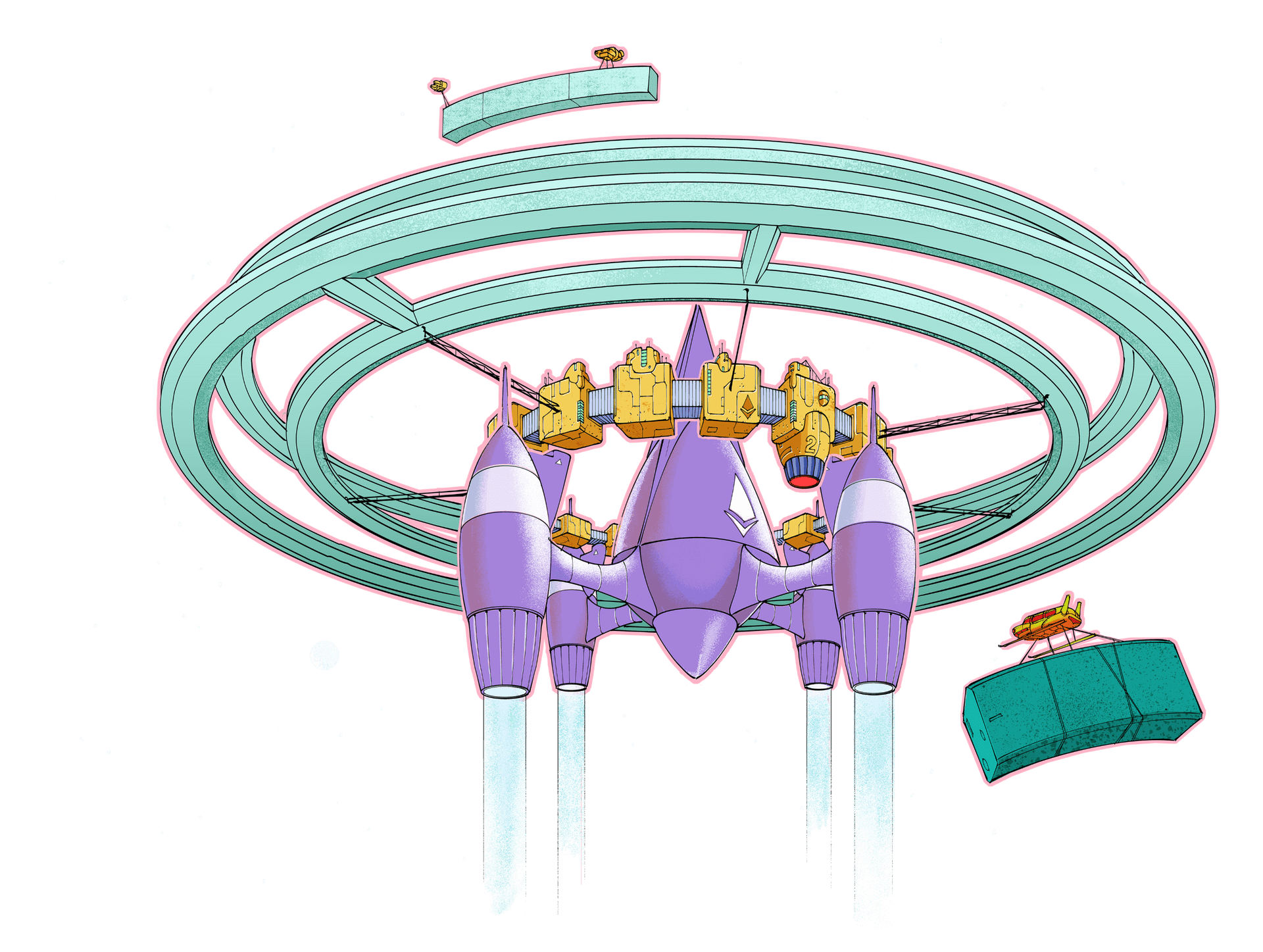
The Ethereum network, the world’s most commercially active blockchain and the foundation for a decentralized finance (DeFi) ecosystem valued in the hundreds of billions of dollars, is approaching its most significant evolutionary milestone since its inception in 2015. Scheduled for the middle of this year, the network will undergo a transition from a Proof-of-Work (PoW) consensus mechanism to a Proof-of-Stake (PoS) system. This process, known colloquially as "The Merge," has been likened by developers and industry analysts to the high-stakes task of replacing an airplane’s engine while the aircraft is in mid-flight. Because Ethereum serves as the settlement layer for an enormous array of global assets, the transition must occur without a single second of downtime or the production of an invalid block.
The migration to PoS is not merely a change in how transactions are validated; it represents a fundamental restructuring of the network’s architectural layers. Unlike the Bitcoin network, which relies on a relatively singular software implementation (Bitcoin Core), the Ethereum community, led by the Ethereum Foundation (EF), has championed a philosophy of multi-client diversity. This strategy involves the development of various independent software implementations of the Ethereum protocol, written in different programming languages and managed by separate teams. However, as the deadline for The Merge approaches, a critical imbalance in the distribution of these clients has emerged, posing a potential existential threat to the network’s stability and security.

The Architectural Evolution: Separating Execution and Consensus
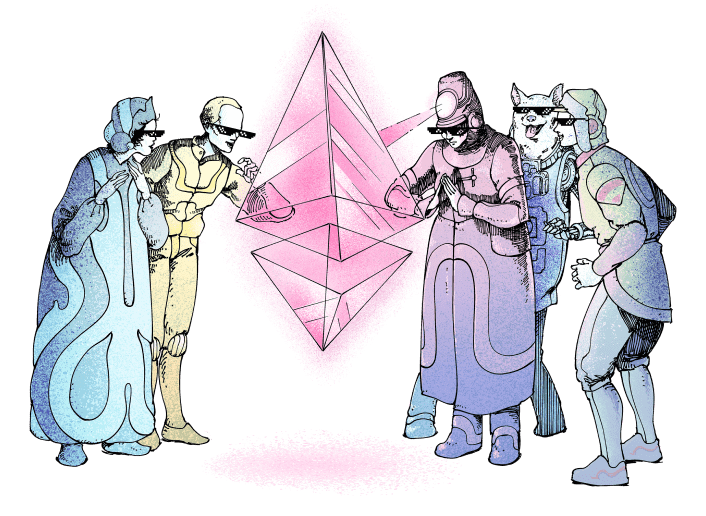
The Merge is technically defined as the unification of the existing Ethereum mainnet with the Beacon Chain, a PoS coordination layer that has been running in parallel since December 2020. Post-transition, the responsibilities of a traditional Ethereum node will be bifurcated into two distinct roles: execution and consensus.
The Execution Layer, powered by the Ethereum Virtual Machine (EVM), will remain the environment where smart contracts reside and transactions are processed. Execution nodes will handle the heavy lifting of state transitions, ensuring that the logic of decentralized applications (dApps) is carried out correctly. However, these nodes will no longer be responsible for securing the network through mining. Instead, they will pass the processed data to the Consensus Layer.
The Consensus Layer, comprised of validator nodes on the Beacon Chain, will be responsible for agreeing on the order of blocks and finalizing the state of the blockchain. This separation of duties is intended to enhance the robustness of the system by creating logical layers. While the two layers share some code to facilitate communication, they operate as distinct entities. This modularity allows for upgrades to one layer without necessarily disrupting the other, but it also necessitates that both layers maintain a healthy ecosystem of diverse software clients.
A Chronology of the Transition
The path to The Merge has been a multi-year endeavor marked by rigorous testing and incremental upgrades. The timeline began in earnest with the launch of the Beacon Chain on December 1, 2020, which introduced the staking mechanism without yet affecting the main Ethereum network. Following this, the Altair upgrade in October 2021 refined the Beacon Chain’s incentive structures.
In early 2022, the development team launched the Kintsugi and Kiln testnets, which were specifically designed to simulate the "merging" process. These environments allowed developers to identify and patch bugs in the interaction between execution and consensus clients. The final countdown to the mainnet transition is currently underway, with the community closely monitoring the "Terminal Total Difficulty" (TTD) value—a specific metric of mining difficulty that, once reached, will trigger the automated switch to Proof-of-Stake.
The Mathematical Risk of Client Concentration
The primary rationale for maintaining multiple client versions is to prevent a single bug from taking down the entire network. If 100% of the network ran a single software implementation and that software contained a critical vulnerability, the network would halt or, worse, finalize an incorrect state. By distributing the "staking power" across different codebases, the community ensures that a bug in one client only affects a minority of validators.
The security of Ethereum’s PoS system is governed by specific mathematical thresholds:
- The 33% Threshold: If a client used by more than one-third of validators fails, the network loses "liveness." It can still produce blocks, but it cannot "finalize" them. While disruptive, this is a recoverable state.
- The 50% Threshold: If a client used by more than half of the network fails, the system faces significant complications, including potential chain splits and reorgs, though automatic protocols exist to eventually mend the situation.
- The 66% (Supermajority) Threshold: This is the "critical failure" scenario. If a client with more than two-thirds of the staking power contains a bug that causes it to follow an invalid chain, that invalid chain will be finalized. Because the majority of the network agrees on the error, the non-buggy minority clients are forced into a choice: join the buggy chain and accept the error, or permanently split the network into two separate blockchains.
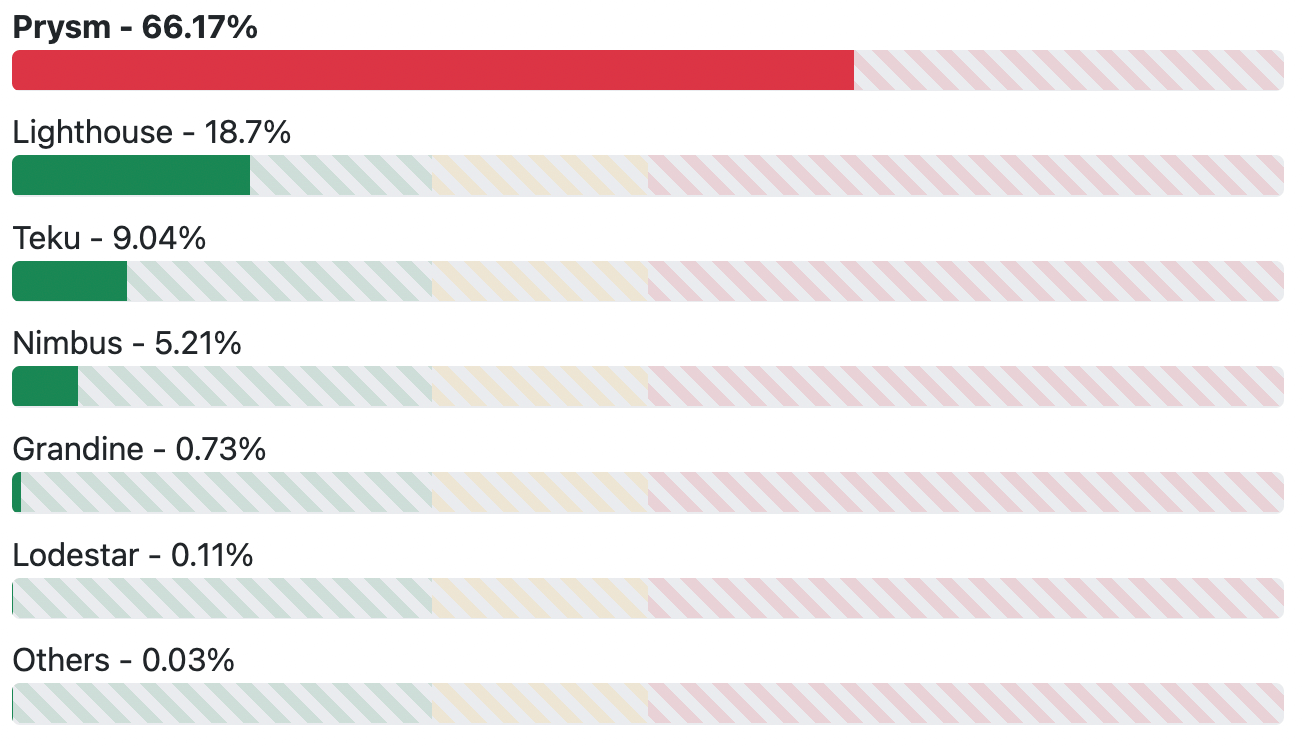
As of current estimates, the Prysm client, developed by Prysmatic Labs, commands nearly two-thirds of the consensus layer market share. While Prysm is a highly respected and well-maintained client, its dominance means that a single oversight in its code could theoretically lead to a "game over" scenario for the current Ethereum mainnet.
The Prysm Dominance: Origins and First-Mover Advantage
The market dominance of Prysm is not a result of malicious intent but rather a combination of technical excellence and timing. Marius van der Wijden, an Ethereum core developer, notes that Prysm benefited immensely from a first-mover advantage. "Prysm was the first prototype implementation of a beacon client," van der Wijden explained. This early start allowed the team to optimize performance, create comprehensive documentation, and build superior tooling, such as a user-friendly Web UI.
Furthermore, Prysm is written in Golang (Go), a programming language that is both performant and widely understood within the developer community. Since Geth, the dominant execution client, is also written in Go, developers familiar with the Ethereum codebase found it easier to audit and implement Prysm. This technical familiarity solidified its position as the default choice for both individual and institutional stakers.
Institutional Staking and the Centralization Trap
A significant portion of the client diversity issue can be traced back to the largest staking providers. Centralized exchanges and staking pools, such as Coinbase, Kraken, Binance, and Lido, control a massive percentage of the Ether currently staked on the Beacon Chain. Because these organizations prioritize stability and security for their customers, they have historically gravitated toward the most "proven" software—which, in this case, is Prysm.
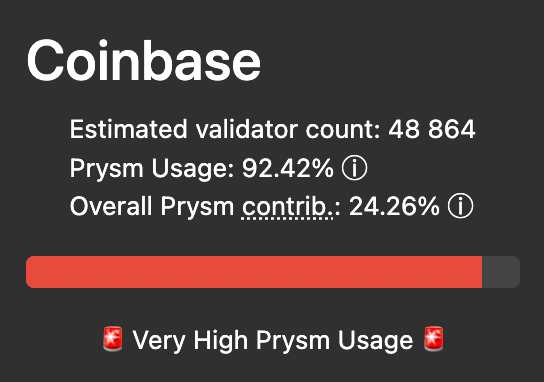
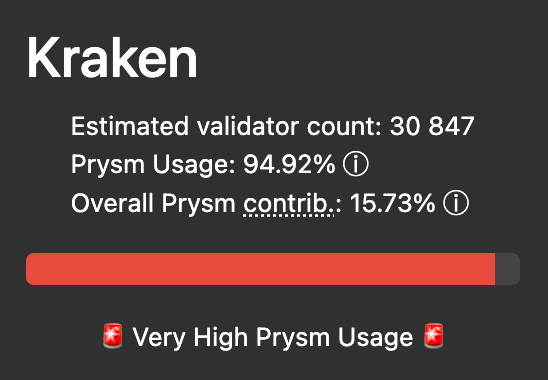
Data reveals a stark picture of this concentration:
- Coinbase: Operates over 48,000 validators (17.5% of the network), with a staggering 92.4% of those running Prysm.
- Kraken: Operates over 30,000 validators (11% of the network), with 94.9% running Prysm.
- Binance: Operates over 24,000 validators (8.7% of the network), with 76.6% running Prysm.
- Lido: While more decentralized in its node operator set, still sees 42.8% of its validators utilizing Prysm.
When questioned about this concentration, Coinbase pointed to the necessity of "remote signers"—a security feature that allows validator keys to be stored in isolated environments. At the time of their launch, Prysm was the only viable client supporting this feature. Kraken expressed similar sentiments, citing Prysm’s maturity and stability as the primary drivers for their initial choice.
However, the tide is beginning to turn. Kraken has confirmed it is working with the Ethereum Foundation to migrate a portion of its validators to Teku, another consensus client. Coinbase Cloud has also announced support for Lighthouse, a Rust-based client, and is encouraging a more diverse distribution.
The Execution Layer and Geth’s Supermajority
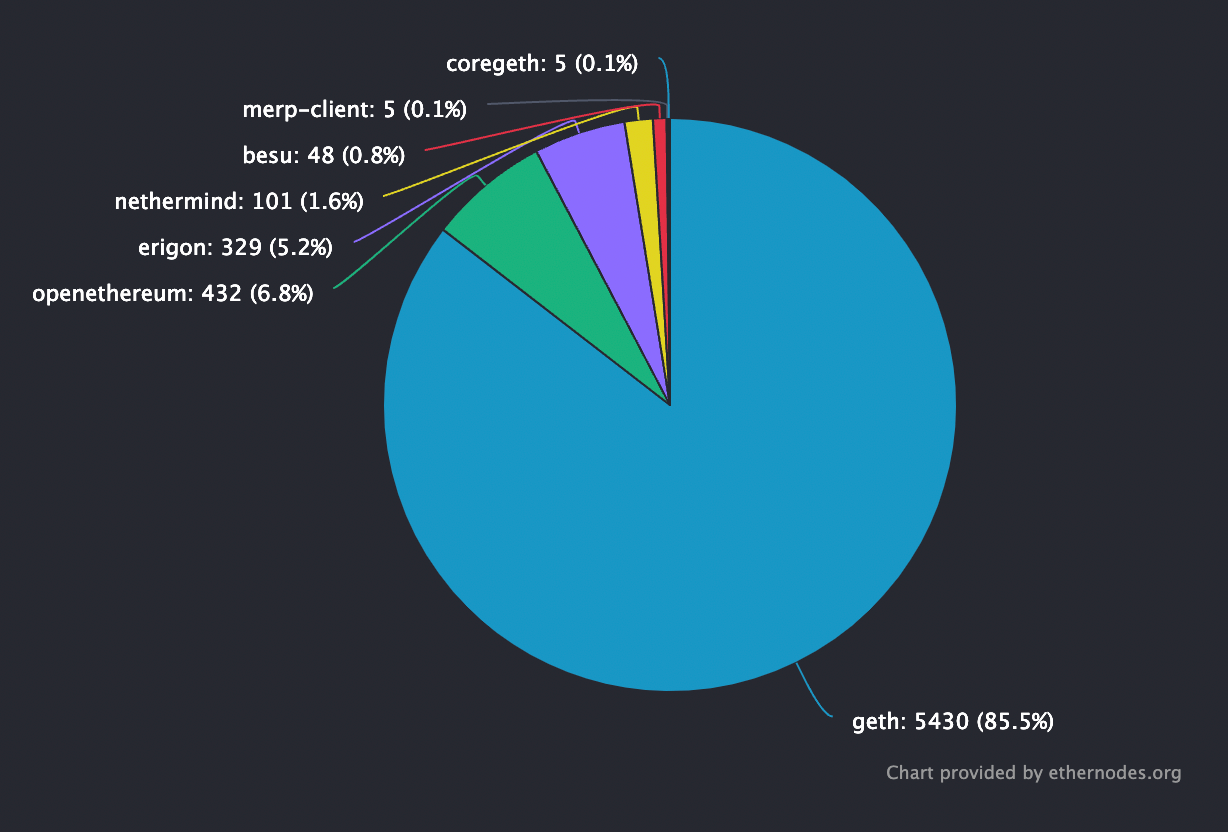
While much of the current focus is on the consensus layer, the execution layer faces an even more severe concentration issue. Geth (Go-Ethereum) currently maintains an 85% market share among execution clients. While this is a concern, core developers argue that the risks are slightly different post-Merge. Because execution nodes merely execute the logic passed to them and do not "vote" on consensus in the same way, a bug in Geth is perceived as slightly easier to manage than a bug in a consensus supermajority. Nevertheless, the community is actively promoting alternatives like Erigon, Besu, and Nethermind to ensure the entire stack is resilient.
Strategic Responses and the Path to Resilience
The Ethereum Foundation and core developers are not standing idly by. There is a strong consensus within the community that there will be no "bailouts" for stakers who choose to run a majority client if that client fails. This "social consensus" serves as a financial incentive: if you run the majority client and it bugs out, you risk losing your staked assets through "slashing" or inactivity leaks.
Decentralized staking protocols like Rocket Pool are leading by example. Rocket Pool’s validator set currently shows only 10.6% usage of Prysm, with the remainder distributed across Lighthouse, Teku, and Nimbus. This demonstrates that a more balanced distribution is technically feasible when decentralization is a core design principle.
Marius van der Wijden remains optimistic about the safety of the upcoming Merge despite the current client imbalance. "The chances of a consensus failure happening are very small," he stated, pointing to the "great testing and fuzzing infrastructure" that runs permanently to find discrepancies between clients. He also noted that switching clients is a relatively straightforward process for node operators, requiring only a few minutes of downtime to ensure they do not accidentally double-sign a block.
Analysis of Implications
The Ethereum Merge is more than a technical upgrade; it is a test of the decentralized governance model. The client diversity crisis highlights a paradox in blockchain development: the pursuit of the "best" and most "stable" software can lead to a monoculture that undermines the very security it seeks to provide.
As the industry moves toward the mid-year deadline, the pressure on institutional stakers to diversify will likely intensify. The success of The Merge will depend not just on the code itself, but on the willingness of the network’s largest stakeholders to prioritize the long-term health of the ecosystem over short-term operational convenience. If the community can successfully navigate this "supermajority" risk, Ethereum will emerge as a significantly more energy-efficient, secure, and robust platform, ready for the next phase of its roadmap—addressing scalability and data availability. If not, the "airplane" may find itself in a very turbulent descent.