admin
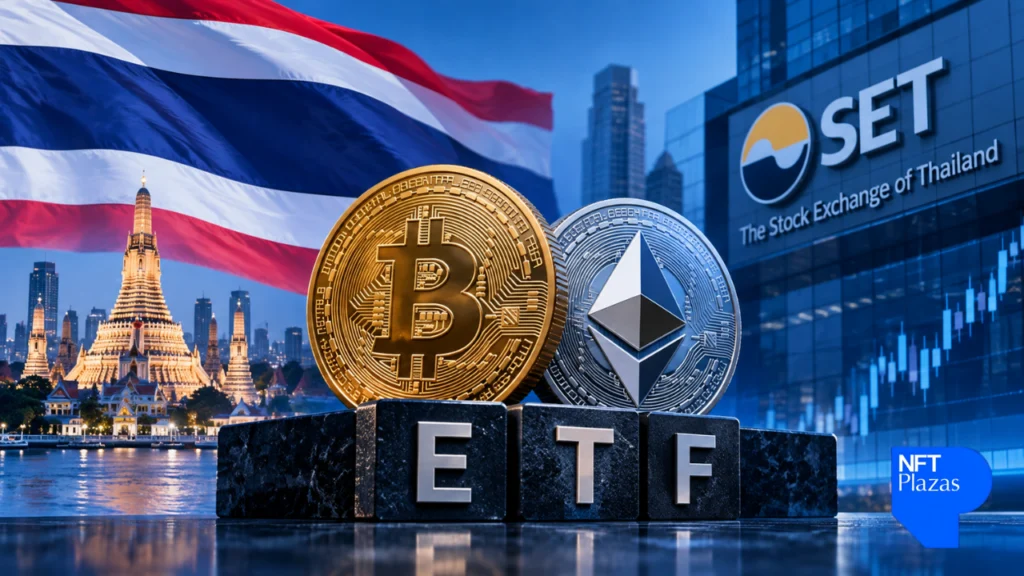
Thailand’s Securities and Exchange Commission (SEC) has officially concluded the regulatory framework that will permit locally established Bitcoin (BTC) and Ethereum (ETH) Exchange-Traded Funds (ETFs) to be listed and traded on the country’s main stock exchange. This landmark decision, formalized through 11 notifications issued on October 8, 2026, marks a significant step towards integrating digital assets into traditional financial markets, offering investors a regulated pathway to gain exposure to leading cryptocurrencies. The new rules are scheduled to take effect on October 16, 2026, setting a clear timeline for the anticipated launch of these innovative financial products.
The comprehensive framework introduces stringent requirements encompassing various aspects of fund management, digital asset custody, investor disclosures, and trading restrictions. Initially, the eligibility for these ETFs will be limited exclusively to Bitcoin and Ethereum, reflecting a cautious and measured approach by the Thai regulator. While the effective date of October 16, 2026, paves the way for these new offerings, it does not guarantee an immediate commencement of trading. Individual asset management companies are still required to meet all prescribed regulatory standards and secure explicit approval for their specific products before they can be launched to the public.
A Regulated Bridge to Digital Assets for Thai Investors
The introduction of locally listed Bitcoin and Ethereum ETFs is poised to transform how Thai investors engage with the cryptocurrency market. Previously, direct acquisition of cryptocurrencies through digital asset exchanges was the primary route. With ETFs, investors accustomed to conventional securities accounts will find a more familiar and potentially less daunting method to participate in the price movements of Bitcoin and Ethereum. This mechanism allows investors to buy and sell fund units through the Stock Exchange of Thailand (SET), while the complexities of managing underlying digital assets, such as security and storage, are handled by professional fund managers and regulated service providers. This "hands-off" approach could appeal to a broader segment of the investor population, particularly those who have been hesitant due to concerns about technical complexities or the perceived risks associated with direct crypto ownership.
Furthermore, this regulatory expansion significantly broadens the investment landscape for Thailand’s domestic fund industry. Under the new guidelines, both mutual funds and private funds are now permitted to invest in locally established crypto ETFs, albeit subject to existing investment limits and prudential rules. This marks an evolution from the previous scenario, where these funds were primarily restricted to investing in foreign crypto ETFs, often under more complex regulatory and operational constraints. By localizing the investment options, the SEC aims to foster growth within the domestic financial sector and ensure a more robust and supervised ecosystem for digital asset exposure.
The journey to this finalized framework has been a consultative one, reflecting the SEC’s commitment to stakeholder engagement and a thorough evaluation of market sentiment. The regulator conducted extensive consultations in April and May, followed by another round in August and September. According to official statements from the SEC, the overwhelming majority of respondents expressed support for the proposed rules, indicating a broad consensus within the financial industry and among market participants regarding the necessity and benefits of such products. This iterative consultative process underscores the thoughtful consideration given to balancing innovation with investor protection and market stability.
Strict Exposure and Custody Requirements Underpin the Framework
Thailand’s initial crypto ETF framework is characterized by its deliberate narrowness and focus on established digital assets, a strategy designed to manage nascent market risks. At launch, only Bitcoin and Ethereum will qualify as eligible underlying assets for these ETFs. This focused approach allows the regulator and market participants to gain experience with these products before potentially considering a broader range of cryptocurrencies. The SEC has indicated that any future expansion of the eligible asset list would be contingent upon a rigorous assessment of several factors, including the liquidity of the asset, its market acceptance, the security of its underlying network, and robust investor protection mechanisms.
A cornerstone of the regulatory design is the "passive investment strategy" mandate. Each ETF must be structured to track the price of a single underlying cryptocurrency. Critically, the fund is required to maintain an average net exposure of at least 80% of its Net Asset Value (NAV) to that specific digital asset over each accounting year. This stringent requirement ensures a clear and direct correlation between the ETF’s performance and the price movements of its designated cryptocurrency, preventing managers from deviating into broader or more speculative digital asset portfolios. This clarity is vital for investor understanding and risk assessment.
Beyond exposure, the SEC has placed paramount importance on the secure handling and storage of digital assets. Under the new framework, funds are mandated to hold their digital assets with custodians that are licensed and supervised by the Thai regulator. This localized custody requirement aims to enhance oversight and reduce counterparty risk. While initially focused on domestic custodians, the SEC has indicated that it may consider permitting qualified foreign custodians in the future, should such arrangements be deemed necessary and appropriate for market development and efficiency. This flexibility suggests an adaptive regulatory stance that can evolve with market needs while prioritizing security.

Asset managers seeking to establish these funds must demonstrate significant operational readiness and expertise. This includes proving they have qualified personnel with relevant experience, appropriate operating systems capable of managing digital assets, and suitable arrangements with reputable service providers. The framework also allows for the outsourcing of digital asset investment management, but only to other licensed digital asset fund managers, ensuring a high standard of professional oversight. Furthermore, qualified digital asset businesses are now eligible to apply to become mutual fund supervisors for crypto ETFs, provided they meet strict requirements concerning financial standing, personnel qualifications, and robust operational systems. These measures collectively aim to ensure that the entities handling these new products possess the necessary capabilities and adhere to high standards of governance.
Robust Investor Safeguards and Restricted Foreign Access
Investor protection is a central pillar of Thailand’s new crypto ETF regulations. The SEC has implemented several safeguards specifically for retail investors purchasing these products. Securities brokers will be obligated to thoroughly explain the characteristics and inherent risks associated with crypto ETFs to their clients. Crucially, investors will be required to formally acknowledge their understanding of these risks before engaging in any trading activities. This proactive disclosure mechanism is designed to ensure that investors are fully aware of the volatile nature of cryptocurrencies and the potential for substantial losses, despite the regulated environment.
In a further effort to mitigate excessive risk-taking, the rules explicitly prohibit securities firms from providing margin loans for crypto ETF purchases. This restriction prevents investors from leveraging their positions, thereby limiting potential losses in a highly volatile market. Brokers are also tasked with emphasizing appropriate asset allocation strategies, discouraging over-concentration in digital assets, and ensuring that investment decisions are aligned with individual customers’ documented risk tolerance profiles. These measures, while not eliminating cryptocurrency market risk entirely, aim to foster responsible investment practices and protect retail investors from undue exposure. Bitcoin and Ethereum prices can remain highly volatile, and ETF investors must understand that they may still experience substantial losses, even within a regulated framework.
Parallel to opening the domestic market, Thailand is taking a cautious approach regarding access to certain overseas crypto investment products during this initial phase. Securities firms are expressly prohibited from facilitating investments in foreign crypto ETFs for clients who do not qualify as institutional investors or ultra-high-net-worth individuals. Additionally, the regulator will forbid the initial issuance and offering of alternative products linked to foreign crypto ETFs, such as depositary receipts referencing overseas funds. This strategic restriction is designed to channel ordinary investors towards locally established products, thereby nurturing the domestic financial ecosystem.
This approach is expected to empower Thai asset managers, custodians, brokers, and other domestic financial businesses to play a more prominent role in this emerging market segment. By prioritizing local offerings, the SEC aims to stimulate local expertise, infrastructure development, and job creation within Thailand’s financial sector. However, the ultimate success and extent of this opportunity will depend on various factors, including the ability of domestic firms to develop attractive and competitive products, the fee structures associated with these ETFs, and, fundamentally, the willingness and confidence of investors to utilize them. As of now, the SEC has not yet identified an approved ETF issuer, confirmed a first trading date, or announced specific tickers for the initial products, leaving these details to be determined as asset managers navigate the approval process.
Global Context and Market Outlook Amid Shifting Tides
Thailand’s decision to embrace locally listed crypto ETFs aligns with a broader global trend of integrating established cryptocurrencies into conventional investment markets under formal regulatory oversight. Countries like the United States have already seen the launch of spot Bitcoin ETFs, attracting significant institutional and retail interest. European markets have also offered various crypto ETPs (Exchange Traded Products) for some time. Thailand’s measured approach—starting with Bitcoin and Ethereum, emphasizing regulated custody, enforcing strict risk disclosures, and initially limiting retail access to foreign alternatives—reflects a common regulatory strategy seen worldwide: cautiously fostering innovation while prioritizing market stability and investor protection.
This regulatory opening in Thailand comes at a time when activity on domestic cryptocurrency exchanges has shown signs of weakening. Data attributed to the Thai SEC and reported in August indicated a notable decline in active exchange accounts, falling to approximately 121,000 in July 2026, a significant drop from roughly 265,000 in 2024. Concurrently, the daily trading value also experienced a substantial decline of 27.13% month-over-month, settling at 1.378 billion baht. These figures suggest a potential cooling in direct crypto market participation among retail investors.
Against this backdrop, the introduction of crypto ETFs could serve as a vital new catalyst for market engagement. While a new investment channel does not automatically guarantee stronger market participation, ETFs have the potential to attract a distinct segment of investors who prefer the familiarity and perceived safety of regulated financial products over direct cryptocurrency ownership. These products allow traditional asset managers to offer cryptocurrency exposure without requiring customers to manage digital wallets or navigate the complexities of decentralized exchanges. However, the ultimate demand for these ETFs will inevitably be influenced by several factors: the availability of diverse product offerings, the competitiveness of associated fees, prevailing market conditions for cryptocurrencies, and the overall confidence of investors in both the products and the regulatory framework.
The SEC’s cautious yet progressive stance is a testament to its commitment to modernizing Thailand’s financial landscape while upholding its mandate of investor protection. By providing a regulated, transparent, and accessible avenue for crypto investment, Thailand is positioning itself as a forward-thinking jurisdiction in the evolving digital asset space. With the rules officially taking effect on October 16, 2026, the immediate focus shifts to the financial industry. The next critical milestone will be the successful application and approval of asset managers, culminating in the exciting prospect of the first locally listed crypto ETFs making their debut on the Stock Exchange of Thailand. This development promises to be a pivotal moment for both the country’s financial markets and the broader acceptance of digital assets within the region.