admin
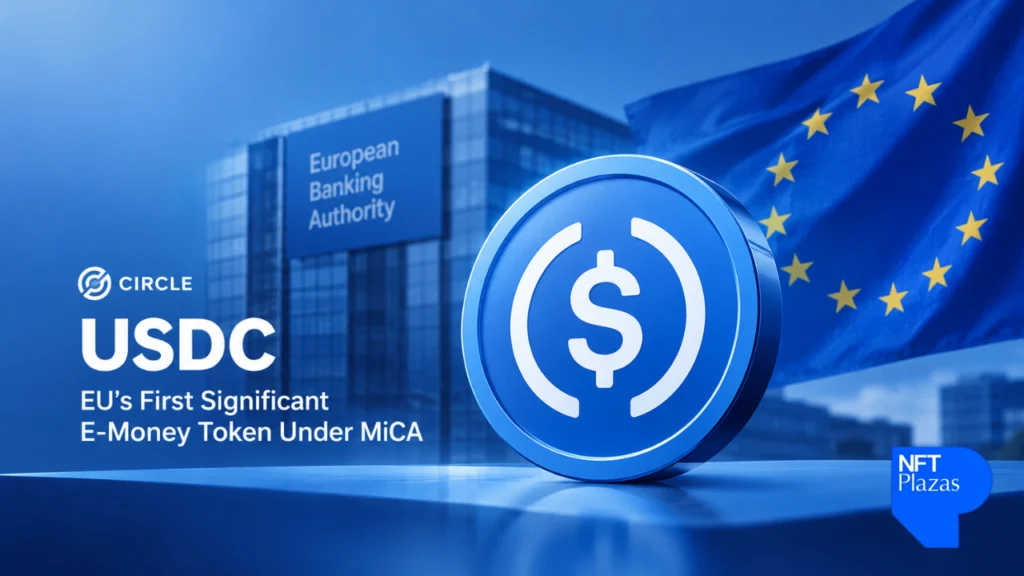
Circle’s USD Coin (USDC), a prominent dollar-backed stablecoin, has officially become the inaugural e-money token to be designated with "significant" status under the European Union’s landmark Markets in Crypto-Assets Regulation (MiCA). This pivotal classification places USDC under the direct supervisory purview of the European Banking Authority (EBA) for critical financial safeguards, with this enhanced oversight scheduled to commence on November 12, 2026. The EBA’s decision, publicly announced on October 14, followed a rigorous assessment of USDC against MiCA’s stringent significance criteria. Among the 45 e-money tokens that have been notified under the comprehensive regulatory framework, USDC stands alone as the first to receive this elevated designation, marking a significant milestone for both the stablecoin issuer and the broader European digital asset landscape.
This classification introduces a robust, additional layer of regulatory scrutiny, meticulously designed to bolster consumer protection and financial stability within the EU’s burgeoning crypto market. Crucially, this designation does not alter USDC’s fundamental dollar peg nor its existing authorization to operate within Europe. Instead, it establishes a clear division of supervisory responsibilities, delineating the roles of the EBA and France’s Autorité de Contrôle Prudentiel et de Résolution (ACPR). The ACPR has historically served as the primary supervisor for Circle’s European operational footprint, granting the company authorization to issue USDC and its euro-backed counterpart, EURC, under the European regulatory framework in July 2024. This latest development, therefore, does not signify USDC’s initial entry into the EU market but rather subjects the token to an intensified level of oversight due to its assessed systemic importance under MiCA.
Understanding MiCA and Its Ambitious Scope
The Markets in Crypto-Assets Regulation (MiCA) represents a groundbreaking legislative effort by the European Union to establish a harmonized regulatory framework for crypto-assets across all 27 member states. Proposed by the European Commission in September 2020 as part of a broader digital finance package, MiCA was formally adopted in June 2023 and is being implemented in phases. Its primary objectives are multifaceted: to foster innovation in the digital finance sector while simultaneously ensuring financial stability, protecting consumers and investors, and maintaining market integrity. MiCA categorizes crypto-assets into several distinct types, including e-money tokens (EMTs), asset-referenced tokens (ARTs), and utility tokens, each subject to tailored regulatory requirements. EMTs, such as USDC, are defined as crypto-assets that purport to maintain a stable value by referencing the value of a single fiat currency.
The regulation mandates that issuers of e-money tokens obtain authorization from a national competent authority, disclose comprehensive information to the public via whitepapers, and maintain sufficient reserve assets to back the tokens. The "significant" status introduced by MiCA is reserved for tokens that achieve a certain scale or level of activity, thereby posing potential systemic risks if not adequately supervised. The legislative journey of MiCA itself underscores the EU’s proactive stance on crypto regulation. It emerged from a recognized need to address the inherent risks and regulatory gaps associated with a rapidly evolving digital asset market, particularly concerning stablecoins, which have garnered increasing attention from global financial authorities due to their potential to scale and integrate with traditional finance. The phased implementation allows for a gradual transition, with rules concerning stablecoins (EMTs and ARTs) coming into effect first, followed by broader rules for other crypto-assets and service providers.
EBA’s Expanded Mandate: Direct Oversight of USDC’s Core Financials
Under the new regulatory paradigm, the EBA will assume direct and principal responsibility for supervising several critical aspects of USDC’s operations within the EU, commencing on November 12, 2026. This mandate includes rigorous oversight of USDC’s own-funds requirements, the composition and management of its reserve assets, adherence to stringent liquidity standards, and the robustness of its recovery and redemption plans. These enhanced safeguards are meticulously designed to ensure that Circle, as the issuer, consistently maintains adequate financial resources to absorb potential losses, holds sufficient, high-quality assets to fully support the stablecoin’s value, and possesses the operational capacity to meet all redemption requests promptly and reliably, even under stressed market conditions. Furthermore, the mandatory recovery plans establish clear, pre-defined procedures for responding effectively to severe financial difficulties, ensuring an orderly resolution process.
For instance, the EBA will scrutinize the types of assets held in USDC’s reserves, ensuring they meet MiCA’s requirements for low-risk, highly liquid assets, and that a sufficient portion is held in segregated bank accounts. This is a direct response to past market events where stablecoin reserves faced scrutiny. The EBA’s role will also encompass regular audits and reporting requirements, demanding transparency and accountability from Circle regarding the backing of USDC. This level of oversight moves beyond traditional national supervision, signaling a coordinated European approach to managing systemic risks posed by large-scale digital assets.
Division of Responsibilities: A Coordinated Supervisory Approach
While the EBA takes the lead on the core financial stability aspects, the ACPR will retain crucial responsibilities for other significant components of Circle’s European business operations. These include corporate governance frameworks, assessments of qualifying ownership interests, evaluations of senior management’s suitability, oversight of outsourcing arrangements, and the management of potential conflicts of interest. This carefully defined division of responsibilities, which strictly adheres to Article 117 of MiCA, establishes a pragmatic and efficient framework for supervising significant e-money tokens.
The two regulatory bodies – the EBA and the ACPR – are mandated to coordinate their supervisory work closely, ensuring seamless continuity and avoiding regulatory arbitrage or gaps. This collaborative model is essential given the integrated nature of Circle’s operations and the cross-border implications of stablecoins. Circle Internet Financial Europe SAS issues USDC within the European Union, while Circle Internet Financial, LLC handles issuance in the United States. The initial authorization from France’s ACPR in July 2024 for Circle to issue USDC and EURC was a precursor to this expanded oversight, demonstrating Circle’s early engagement with European regulatory standards. The current designation, therefore, builds upon existing regulatory compliance, elevating it to a pan-European level due to USDC’s perceived scale and market influence.
Criteria for "Significant" Status: Why USDC Qualified
MiCA explicitly outlines the criteria for identifying e-money tokens that necessitate enhanced supervision. Article 56 of the regulation stipulates that the EBA must classify an e-money token as significant if it meets at least three of the detailed criteria established under Article 43. These criteria encompass a range of factors designed to assess the token’s systemic importance and potential impact on financial stability. Key considerations include:

- Number of Tokenholders: A high number of tokenholders indicates widespread adoption and potential reach.
- Value of Tokens Issued: The aggregate value of tokens in circulation reflects the scale of the issuer’s operations and the volume of capital tied to the stablecoin.
- Transaction Activity: Frequent and high-volume transaction activity underscores the token’s utility and integration into the broader financial ecosystem.
- Extent of Their Use: This broader criterion considers the token’s role in payments, remittances, trading, and other digital asset transactions across various jurisdictions.
While the EBA’s official announcement on October 14 did not explicitly detail which specific criteria USDC satisfied, its market position provides strong indicators. USDC is consistently ranked as the world’s second-largest stablecoin by market capitalization, trailing only Tether’s USDT. Its market capitalization frequently hovers in the tens of billions of dollars, with daily transaction volumes often reaching billions. Its dollar peg makes it an indispensable tool for crypto trading, acting as a crucial bridge between fiat and digital assets, facilitating cross-border transfers, and supporting various decentralized finance (DeFi) applications. This extensive scale, coupled with its pervasive cross-border operations, naturally places significant emphasis on robust reserve management, stringent liquidity provisions, and effective coordination among diverse national and supranational regulators. The EBA is committed to periodically reassessing whether designated tokens continue to meet the requirements for significant status, ensuring that regulatory oversight remains dynamic and responsive to market evolution.
Strengthening Cross-Border Cooperation: EBA and NYDFS Memorandum of Understanding
In parallel with the classification of USDC as a significant e-money token, the EBA confirmed the establishment of a pivotal Memorandum of Understanding (MoU) with the New York State Department of Financial Services (NYDFS). This agreement is designed to facilitate enhanced information sharing and foster closer cooperation on cross-border stablecoin activities. This initiative directly addresses the inherent complexities of supervising stablecoins, which are often issued through legal entities operating in multiple jurisdictions and form part of a larger, interconnected global ecosystem.
Although Circle’s European and U.S. entities function as distinct legal issuers, their operations are intrinsically linked through the overarching USDC ecosystem. The EBA-NYDFS MoU acknowledges this global interconnectedness, providing a formal channel for authorities to monitor relevant risks comprehensively and coordinate their supervisory efforts more effectively. Such cooperation is paramount in mitigating risks associated with regulatory arbitrage, ensuring consistent consumer protection standards, and addressing potential financial stability concerns that transcend national borders. While the memorandum represents a significant step towards international regulatory alignment, it explicitly states that it does not supersede or alter either regulator’s existing legal responsibilities or jurisdictional authority. This move reflects a growing global trend among financial authorities to pay closer attention to stablecoins that operate across borders, recognizing their potential to impact international financial systems. For issuers like Circle, navigating and maintaining compliance across a patchwork of diverse and evolving regulatory systems is becoming an increasingly central and complex aspect of their business strategy.
Circle’s Ongoing Advocacy and the MiCA Reserve Debate
The designation of USDC as a significant e-money token unfolds amidst an ongoing and animated debate surrounding the European Union’s stablecoin rules. Notably, Circle has been an active participant in this discourse, publicly calling on European policymakers in October to reconsider certain requirements governing the reserve assets that stablecoin issuers are mandated to hold under MiCA.
Under the current MiCA framework, issuers are obliged to maintain reserves in accordance with highly specific requirements, including minimum thresholds for commercial bank deposits. Circle has consistently argued that these mandatory deposits with commercial banks, while seemingly intended to ensure liquidity, can inadvertently expose stablecoin issuers to concentration risks and counterparty risks associated with their banking partners. The company has frequently cited the March 2023 collapse of Silicon Valley Bank (SVB) as a compelling real-world example of these risks, where approximately $3.3 billion of USDC reserves became temporarily inaccessible. This incident, though swiftly resolved, underscored the vulnerabilities inherent in relying heavily on specific banking institutions for reserve management.
The ongoing debate over reserve requirements highlights a fundamental challenge for regulators: striking an optimal balance between ensuring robust financial stability and accommodating the practical operational needs of stablecoin issuers. While it is unequivocally critical that reserves remain sufficiently liquid, diversified, and secure to support instantaneous redemptions, their specific composition and the mandated holding mechanisms can profoundly impact issuers’ operational resilience and, by extension, the stability of the wider banking system. It is important to note that the EBA’s recent decision regarding USDC’s significant status does not introduce any changes to these existing MiCA reserve rules. Instead, it applies the established MiCA framework to USDC and specifically transfers certain supervisory responsibilities to the European authority, reinforcing the existing regulatory structure rather than modifying it.
Broader Implications for Europe’s Stablecoin Market and Global Regulation
USDC’s designation as a significant e-money token unequivocally marks a new and advanced stage in the European Union’s oversight of large-scale stablecoins. Commencing on November 12, 2026, the EBA will assume direct and principal supervision over the critical financial safeguards for the token, encompassing its reserves, liquidity, and redemption mechanisms. Concurrently, the ACPR will continue its vital role in overseeing other operational facets of Circle’s European business, ensuring a comprehensive yet specialized regulatory approach.
For Circle, this pivotal change translates into a heightened level of regulatory scrutiny applied to its reserve management, liquidity provisions, and overall financial resilience within the EU. While this undoubtedly entails increased compliance costs and operational adjustments, it also confers a significant reputational advantage, signaling to institutional investors and users a commitment to adhering to the highest regulatory standards in one of the world’s most comprehensive crypto regulatory regimes. For the broader European stablecoin market, this decision serves as a concrete and high-profile example of how MiCA’s enhanced supervisory framework will be applied to a major stablecoin. It sets a precedent for how other large e-money tokens might be evaluated and regulated in the future, providing much-needed clarity and predictability.
Furthermore, the decision underscores the increasing imperative for sophisticated coordination between national and supranational regulators as digital assets continue to transcend traditional national borders. With the EBA and the NYDFS establishing a formal and structured channel for cooperation, authorities are actively constructing robust mechanisms to address the intricate challenges posed by stablecoins with significant international reach and interconnectedness. This model of cross-border regulatory collaboration could potentially influence how other jurisdictions approach stablecoin oversight, fostering greater global alignment.
While USDC’s classification does not definitively resolve the broader and ongoing debate concerning the optimal regulatory approach for stablecoins within Europe, it decisively establishes a clearer, more robust, and harmonized supervisory structure for one of the market’s most prominent dollar-backed tokens. As the EU progresses with the comprehensive implementation of its groundbreaking crypto regulatory framework, this development provides a critical blueprint for managing systemic risks, enhancing investor confidence, and fostering the responsible evolution of the digital asset economy.