admin
admin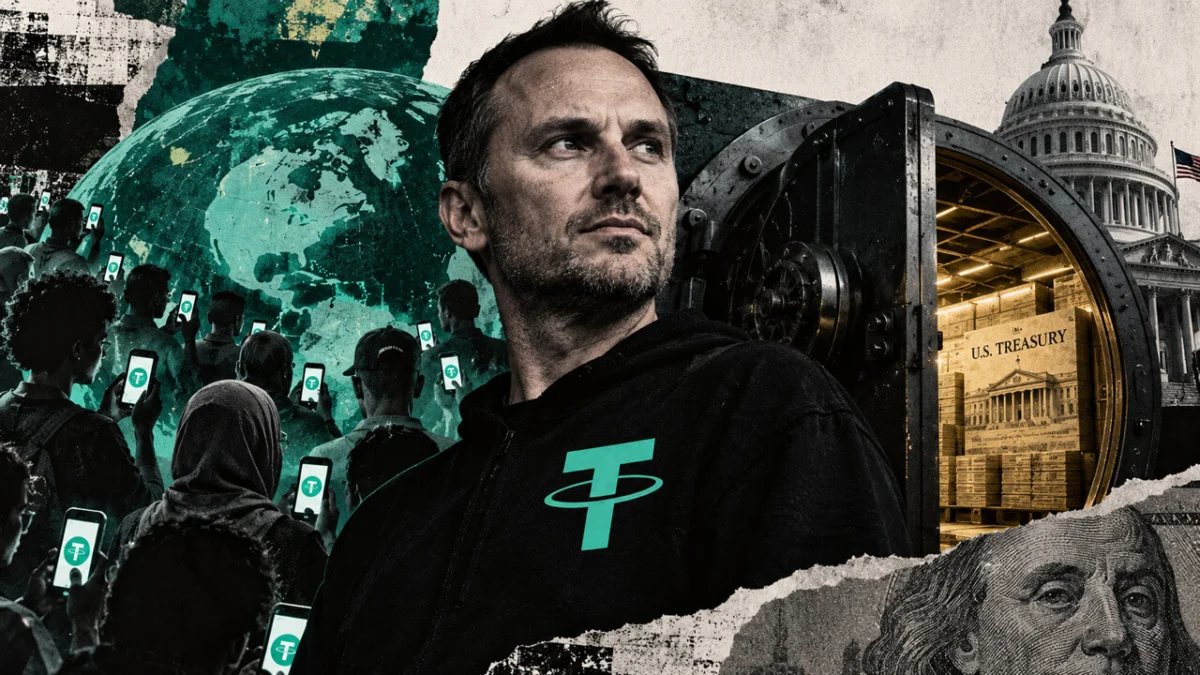
Paolo Ardoino, the Chief Executive Officer of Tether, has put forth a provocative proposition to address the persistent challenge of U.S. debt management: a radical reimagining of its buyer base. Instead of relying on concentrated foreign entities, Ardoino suggests that hundreds of millions of stablecoin users could effectively become decentralized stakeholders in U.S. Treasury holdings. This assertion, made during a recent appearance on The Wolf of All Streets podcast on August 31st, has ignited a significant discussion regarding the intricate relationship between stablecoin issuers, their users, and the vast U.S. debt market.
Ardoino’s core argument hinges on the concept of mitigating concentration risk. He posited that Tether has fostered "the decentralized ownership of the US debt" through its extensive user base, claiming that approximately 650 million individuals are "basically holding some US Treasuries." The underlying logic is that a vast, globally distributed network of individual users is far less likely to coordinate a mass sell-off of U.S. debt simultaneously, a scenario that could pose a systemic risk if initiated by a single large foreign government. This macroeconomic intuition carries weight, as demand for Tether’s USDT stablecoin provides the company with substantial capital that it strategically allocates into a reserve portfolio heavily weighted towards U.S. Treasuries.
However, the assertion that stablecoin users are direct owners of government debt is a simplification that collapses several distinct financial and legal relationships into a single, overarching narrative. A closer examination of Tether’s own documentation reveals a more nuanced reality. Users are generally understood to own USDT tokens, which represent a claim on the underlying assets. Eligible verified customers possess a personal contractual right to redeem these tokens with Tether. Crucially, Tether International itself is the entity that owns and manages the reserve assets that back the stablecoin.
The figure of 650 million users, while cited by Ardoino, is a metric attributed to Tether rather than an independently verified count of direct Treasury investors. In an announcement on August 13th regarding its inaugural financial audit, Tether stated that over 650 million users across emerging markets rely on Tether daily. However, the company has not publicly detailed the methodology employed to arrive at this precise user count.
Tether’s previous statements shed light on the complexities of defining "users." A methodology note from 2024 treated on-chain addresses or accounts as a proxy and an upper-bound estimate for user numbers. This approach acknowledged that a single individual might control multiple wallets. Furthermore, Tether has incorporated estimates for individuals holding USDT through centralized exchanges and other platforms. In its fourth-quarter 2025 report, Tether utilized this broad methodology to estimate a user base of 534.5 million individuals at the close of that year. While these figures are valuable for gauging the network’s reach and scale, they do not definitively establish 650 million unique individuals, nor do they confirm that all these individuals are current holders or possess the direct ability to redeem with Tether. Instead, they represent the scale that Tether assigns to its operational network.
Understanding USDT Holder Ownership: Tokens, Contracts, and Reserves
Delving into Tether’s current terms and conditions provides greater clarity on what USDT holders actually possess. The right to purchase or redeem tokens is defined as a personal contractual right, administered by Tether and contingent upon customer verification. The company’s Relevant Information Document further elucidates the allocation of control. Once a verified customer exchanges fiat currency for USDT, Tether states that it holds or invests these funds in a basket of reserve assets. The composition of this reserve portfolio is subject to Tether’s sole discretion and is primarily managed through banks and licensed financial institutions.
Tether International’s most recent Financial Figures and Reserves Report employs similarly direct accounting language. It categorizes the reserves as assets owned by Tether International, while the issued tokens are treated as refund liabilities recorded at their contractual redemption value. This operational structure fundamentally differs from direct ownership of a Treasury bill through a brokerage account or holding a beneficial interest in a fund that passes through portfolio economics. USDT holders own transferable tokens, and the underlying reserve assets reside on the issuer’s balance sheet.
| Relationship | What Tether’s Documents Provide |
|---|---|
| USDT Holder | Ownership or control of a transferable token denominated in dollars |
| Eligible Direct Customer | A personal contractual right to redeem with Tether, subject to its terms |
| Reserve Owner & Manager | Tether International owns the assets and dictates portfolio composition |
| Reserve Investment Gains | Holders are not entitled to gains above token face value |
While Tether’s documentation does not negate holder rights entirely, it defines them within specific parameters. The Relevant Information Document specifies that redemptions are paid at the token’s face value in fiat currency, minus applicable fees. Crucially, it states that holders are not entitled to any appreciation in reserve value beyond the token’s face value. Consequently, the income and capital gains generated from the reserve portfolio do not automatically accrue to USDT holders solely because Treasuries form part of the backing.
Access to Redemption: A Privileged Right, Not Universal Entitlement
Direct access to Tether’s redemption promise is also more restricted than the global circulation of USDT might suggest. Tether’s fee schedule indicates a minimum threshold of $100,000 for direct acquisition or redemption of tokens. The cost of redemption is set at the greater of $1,000 or 0.1% of the redeemed amount. Prospective redeemers must undergo a verification process, and Tether retains the sole discretion to approve or reject applications to become verified customers.
Furthermore, Tether’s legal terms grant the company the authority to delay or suspend services, including redemptions, under various circumstances. These include suspected prohibited use of the stablecoin, compliance with legal requirements, government directives, ongoing investigations, unauthorized access, or any risks that Tether deems unacceptable. The company also reserves the right to adjust its fee structure.
While direct redemption is governed by these strict terms, USDT holders retain the option to sell their tokens on secondary markets, such as cryptocurrency exchanges or through over-the-counter dealers. However, this constitutes a market exit strategy rather than a direct exercise of the issuer contract. Such transactions typically involve transferring ownership of the token to another buyer, rather than reducing Tether’s outstanding liabilities. This distinction also has implications for creditor priority. Tether’s public disclosures establish an issuer liability and a redemption right for eligible customers, but they do not delineate a universal insolvency ranking for all secondary-market holders across various jurisdictions.
The Tangible Treasury Exposure: Scale and Significance
Despite the legal and contractual distinctions, the economic relevance of Tether’s reserve portfolio to its users remains undeniable. The reliability and stability of USDT are intrinsically linked to Tether’s capacity to fulfill its obligations, and the composition and liquidity of its reserves are paramount to this ability.
As of June 30th of the current year, Tether International reported total reserve assets amounting to $187.751 billion, against outstanding liabilities of $183.642 billion. Within this substantial reserve, $114.961 billion comprised direct holdings of U.S. Treasury bills. Additionally, the company reported $18.626 billion in overnight reverse-repurchase agreements, collateralized by approximately $18.596 billion in U.S. Treasuries. It is important to note that these are distinct positions. Directly owned Treasury bills and the Treasury collateral underpinning a repurchase agreement should not be conflated, as they represent different legal relationships and risk profiles.
The sheer scale of Tether’s Treasury holdings provides a tangible basis for Ardoino’s framing of the issue. Broad and sustained demand for USDT translates into significant capital inflows for Tether, which in turn fuels substantial demand for short-term government debt. Previous analyses by CryptoSlate have highlighted the magnitude of Tether’s Treasury holdings, examining the risks embedded within U.S. debt markets and exploring how stablecoin issuers have emerged as marginal buyers as traditional investors have reduced their exposure to Treasury bills.
The question of ownership, therefore, is distinct from the economic impact. While Tether effectively decentralizes the distribution of dollar-denominated claims through its stablecoin, and this decentralized demand contributes to a geographically dispersed funding demand for U.S. debt, the legal title to the reserves, the control over portfolio management, and the economic benefits beyond the token’s face value remain centralized with Tether. Ardoino’s macroeconomic observation regarding dispersed demand is directionally accurate, but the intricate legal and economic mechanisms by which this demand impacts the Treasury market are undeniably issuer-mediated. The broader implication is a growing reliance on stablecoin issuers as significant players in the U.S. debt market, a dynamic that necessitates ongoing scrutiny of their reserve management practices and their impact on financial stability.