admin
admin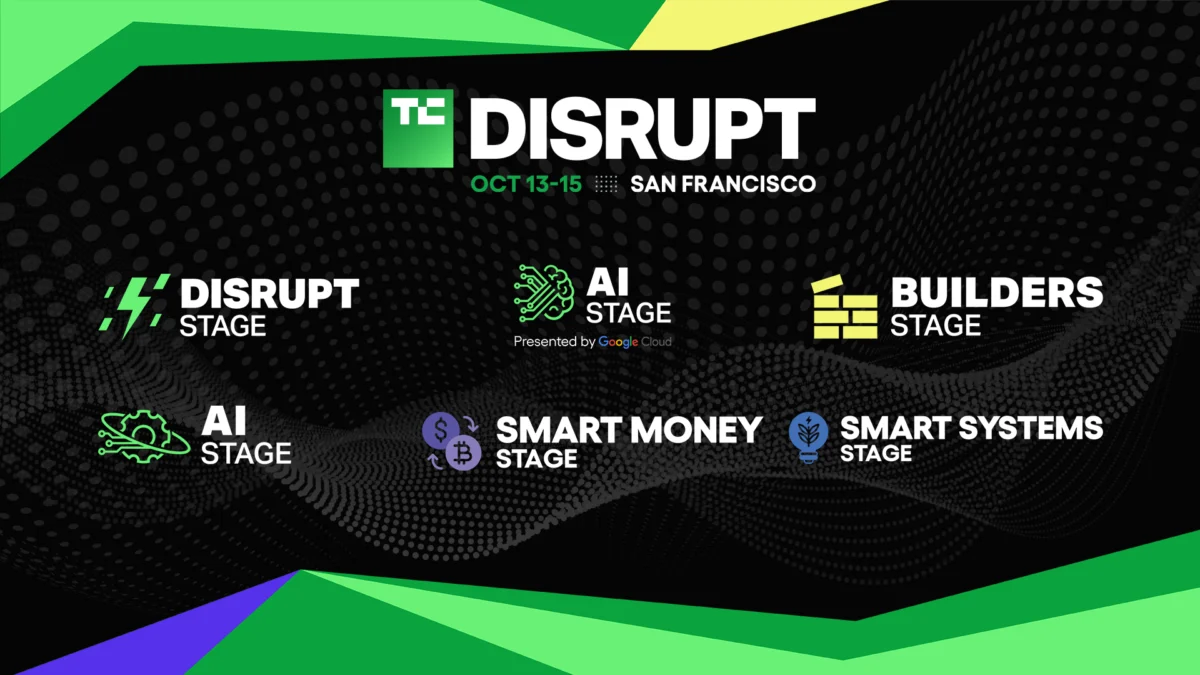
The global technology landscape is currently undergoing its most significant structural transformation since the advent of the mobile internet, characterized by a shift from speculative growth to operational resilience. TechCrunch Disrupt 2026, scheduled to take place from October 13–15 at the Moscone West convention center in San Francisco, aims to address this transition by providing a comprehensive roadmap for the next generation of founders, investors, and operators. The event organizers have signaled that the primary risk facing today’s tech ecosystem is no longer the speed of innovation, but rather the delayed reaction to market shifts that have already occurred.
The three-day summit is expected to host more than 10,000 attendees and feature over 250 sessions. The 2026 iteration introduces a refined six-stage architecture designed to deconstruct the complexities of a market defined by artificial intelligence (AI) saturation, infrastructure bottlenecks, and evolving venture capital dynamics. As the industry moves away from the "growth at all costs" era of the early 2020s, Disrupt 2026 will focus on the tactical execution required to build durable enterprises in a high-interest-rate environment.
The Strategic Framework of the Six Stages
To accommodate the diverse needs of the modern tech professional, the event has been partitioned into specialized tracks. Each stage serves as a focused forum for specific sectors of the economy, ranging from hard infrastructure to the nuances of software-as-a-service (SaaS).

The Disrupt Stage: Macro Trends and the Startup Battlefield 200
The Disrupt Stage remains the focal point of the conference, where high-level discourse on market trajectories takes place. This stage will feature headline founders and tier-one investors discussing the broader economic signals that dictate capital flow. Central to this stage is the Startup Battlefield 200, a highly competitive program that showcases startups with high breakout potential.
Historically, the Startup Battlefield has served as a launchpad for companies that eventually become industry titans, including the likes of Dropbox and Mint. For 2026, the application window for the Battlefield is set to close on May 29. The sessions on this stage are designed to identify where attention is concentrating and which categories are accelerating, providing a crucial "weather report" for the venture ecosystem.
The Builders Stage: Tactical Operational Excellence
While the Disrupt Stage focuses on "what" is happening, the Builders Stage addresses the "how." This track is specifically curated for founders under pressure to achieve product-market fit and scale operations with increased efficiency. The programming departs from traditional motivational content, focusing instead on the friction points of 2026, such as competing against AI-native incumbents and navigating the "Series B crunch."
A notable session titled “How to Win When You’re Not Building AI” highlights a growing concern in the industry: the difficulty of securing capital for non-AI ventures. Speakers such as Nina Achadjian of Index Ventures and Josh Reeves of Gusto are expected to provide insights into hiring strategies, go-to-market execution, and the preservation of equity in a demanding fundraising environment.

The Smart Money Stage: The Evolution of Fintech
The Smart Money Stage will examine the maturation of financial technology. Following the "fintech winter" of previous years, the 2026 discussions will center on digital financial systems that have moved beyond the hype cycle. The focus will be on durable growth and the infrastructure required for real-time payments and embedded finance.
Industry leaders, including Jack Zhang of Airwallex and Lotti Siniscalco of Emergence Capital, will analyze why certain fintech models failed while others reached unicorn status. The objective is to identify where capital is still finding long-term opportunities, particularly in cross-border transactions and automated compliance.
The Smart Systems Stage: Physical Infrastructure and Energy
Perhaps the most critical addition for 2026 is the Smart Systems Stage. As AI models grow in complexity, the demand for data center capacity, grid connectivity, and sustainable energy has reached a breaking point. This stage bridges the gap between software and the physical world, focusing on energy, robotics, and logistics.
Jeff Lawson of Inertia and David Kirtley of Helion are slated to discuss the operational systems that modern tech companies often overlook. The sessions will explore the "hard tech" challenges of the next decade, including the decarbonization of the grid and the supply chain requirements for a robot-integrated workforce.

AI in the Real World: Beyond the Prototype
The AI in the Real World Stage is dedicated to the transition of artificial intelligence from digital demos to industrial applications. In sectors like manufacturing, drug discovery, and autonomous transportation, reliability is not just a feature but a legal and operational requirement.
This track will investigate how to build trustworthy AI systems that can function in "edge" environments where cloud access is limited. The focus is on operational reality, providing a clearer picture for investors of which AI companies can survive the transition from a research-and-development prototype to a production-grade product.
The AI Stage: Rewriting the Software Business Model
Presented by Google Cloud, the AI Stage focuses on the fundamental changes occurring within the software industry. Generative AI and autonomous agents are currently eroding traditional SaaS advantages, forcing a total rethink of product economics.
Sessions such as “Rewriting SaaS: Why AI Breaks the Old Business Model” will delve into how user expectations are shifting toward outcomes rather than seat-based licensing. This stage will be essential for operators trying to understand the next wave of competitive advantages in a world where code is increasingly generated by machines.

Event Chronology and Vital Statistics
The timeline for TechCrunch Disrupt 2026 follows a structured rollout designed to maximize engagement from the early-stage community.
- May 29, 2026: Final deadline for Startup Battlefield 200 applications.
- Summer 2026: Announcement of the full speaker roster and detailed session agendas.
- Early Fall 2026: Expiration of Early Bird ticket rates, which currently offer savings of up to $410 and a 50% discount on secondary tickets.
- October 13–15, 2026: The main event at Moscone West, San Francisco.
San Francisco’s role as the host city is significant. Despite previous narratives regarding a "tech exodus," the city has seen a resurgence in 2025 and 2026, largely driven by the concentration of AI talent and venture capital in the South of Market (SoMa) district. The selection of Moscone West underscores the event’s scale and its importance to the local economy.
Market Context and Data Analysis
The 2026 summit arrives at a time when venture capital data suggests a "flight to quality." According to recent industry reports, while overall deal volume has stabilized, the average check size for companies with proven revenue models has increased by 15% year-over-year. Conversely, seed-stage companies without a clear AI integration or hardware moat are finding it increasingly difficult to close rounds.
The "Smart Systems" and "AI in the Real World" stages reflect a broader industrial trend where "bits meet atoms." Investment in climate tech and energy infrastructure is projected to reach record highs by the end of 2026, as the tech industry seeks to secure its own power supply for massive GPU clusters.

Furthermore, the "SaaS reset" mentioned in the AI Stage programming is backed by market data showing a decline in the retention rates of traditional productivity tools. As AI agents begin to automate tasks previously performed by human users, the "per-seat" revenue model is being challenged by "per-outcome" billing, a shift that Disrupt 2026 intends to analyze in depth.
Industry Reactions and Broader Implications
The tech community’s reaction to the Disrupt 2026 agenda has been largely positive, with many noting the shift toward "tactical" and "operational" content. Industry analysts suggest that the focus on infrastructure and real-world AI is a necessary correction after years of focus on consumer-facing apps and social media.
"The 2026 agenda reflects a realization that the easy wins in software have been claimed," noted one venture partner from a leading Silicon Valley firm. "The next decade belongs to those who can solve the energy crisis and integrate AI into the physical economy. TechCrunch is moving the conversation to where the real money is being spent."
The broader impact of the event extends beyond the three days in October. The insights shared on these six stages often set the tone for the following year’s investment cycles. For San Francisco, the influx of 10,000 high-net-worth individuals and tech professionals provides a significant boost to the hospitality and service sectors, further cementing the city’s status as the global epicenter of technology.

As the industry prepares for October, the message from the organizers is clear: in a market this complex and volatile, the most dangerous move is to stand still. TechCrunch Disrupt 2026 is positioned not just as a conference, but as a critical intervention for a tech sector at a crossroads. By focusing on the operational pressures reshaping innovation—from infrastructure bottlenecks to changing venture dynamics—the event provides the informed perspective necessary for founders and investors to make faster, more effective decisions.