admin
admin
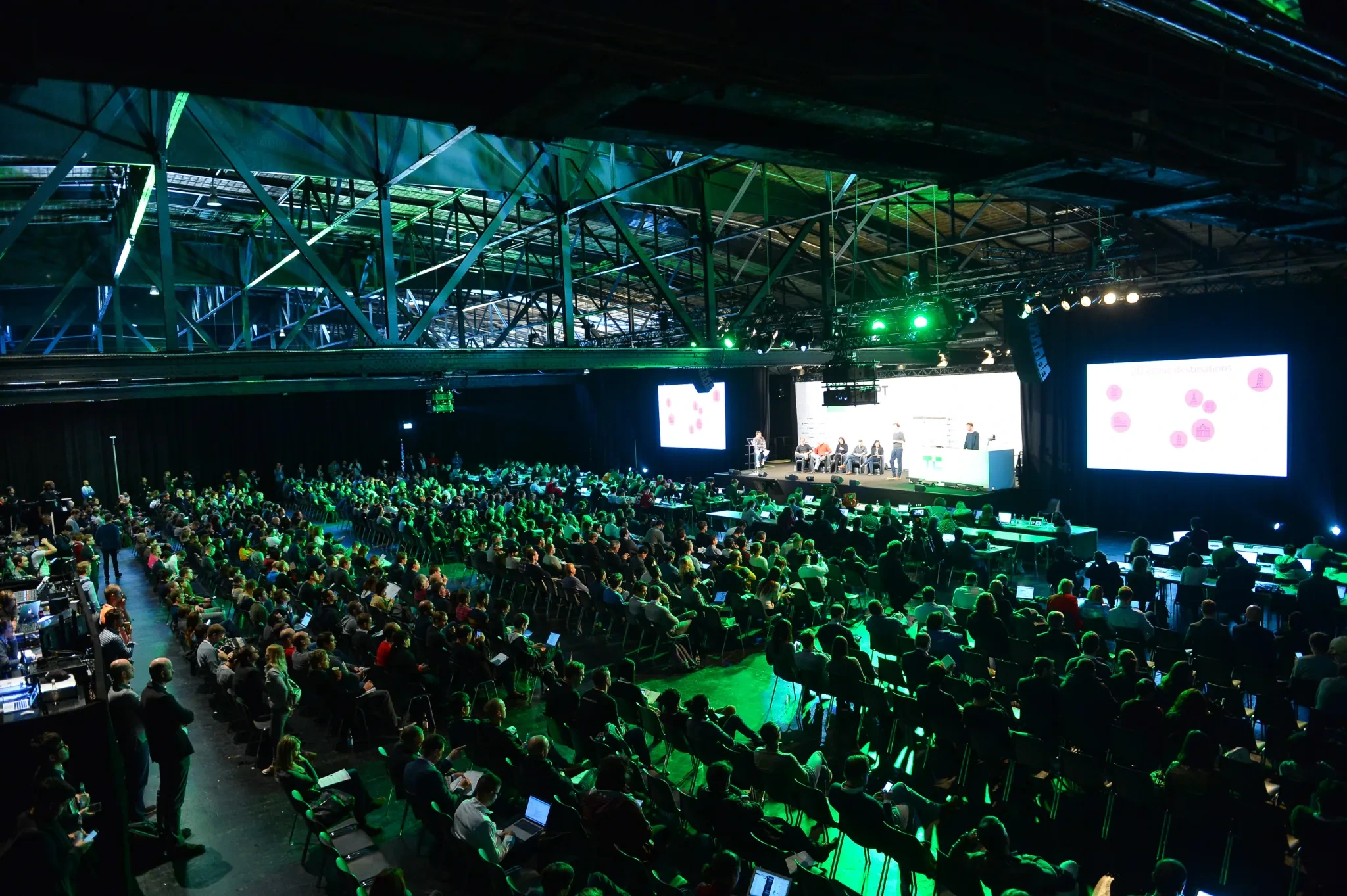
TechCrunch has officially announced that its flagship event, TechCrunch Disrupt 2026, will return to San Francisco’s Moscone West from October 13–15, 2026. The three-day conference is projected to attract more than 10,000 founders, investors, operators, and industry decision-makers, marking a significant milestone in the annual technology calendar. As the venture capital landscape continues to evolve toward a focus on sustainable growth and measurable metrics, the 2026 iteration of Disrupt is positioning itself as a high-density environment for concentrated deal flow rather than a traditional marketing exhibition.
The organizers have opened the floor for startup exhibit applications, emphasizing that the event serves as a strategic catalyst for business expansion. In an era where digital fatigue has made face-to-face interaction a premium commodity, the Disrupt Expo Hall is designed to facilitate direct access to the global tech ecosystem’s most influential players. For early-stage and growth-stage companies, the opportunity to secure an exhibit table is presented not merely as a branding exercise but as a functional tool for filling sales pipelines, securing strategic partnerships, and accelerating fundraising cycles.
Strategic Context: The Role of Physical Ecosystems in 2026
The return to Moscone West underscores San Francisco’s enduring status as the global epicenter of technological innovation. Despite the rise of distributed work and regional tech hubs, the concentration of venture capital and technical talent in the Bay Area remains unparalleled. Data from recent fiscal quarters suggests that while seed-stage funding has become more localized, mid-to-late-stage "megadeals" and strategic acquisitions are still heavily influenced by the density of networking found at major industry summits.
TechCrunch Disrupt 2026 arrives at a time when the "Series A crunch" and rigorous due diligence have become the norm. Startups are no longer evaluated solely on vision; they are scrutinized on product-market fit and operational scalability. By providing a physical platform for live demonstrations, TechCrunch aims to bridge the gap between abstract pitch decks and tangible technology. The exhibition floor acts as a live vetting ground where investors can witness product iterations in real-time and founders can gather immediate feedback from a concentrated pool of potential enterprise buyers.

The Exhibitor Experience: Mechanics of Growth
The 2026 exhibitor package is structured to maximize return on investment (ROI) through a multi-channel approach. Unlike traditional trade shows that rely on passive foot traffic, Disrupt integrates exhibitors into the event’s digital and physical infrastructure. Key components of the 2026 exhibitor program include:
- Integrated Lead Generation: Exhibitors will utilize the proprietary Disrupt app, which allows for instant lead capture and data synchronization. This technology is designed to transform casual conversations into actionable data points, allowing sales teams to initiate follow-ups before the event even concludes.
- High-Volume Personnel Access: Each exhibit table includes 10 total passes, a strategic allocation intended to allow startups to deploy specialized teams. By sending a mix of engineers, sales executives, and founders, companies can simultaneously manage technical inquiries, partnership negotiations, and investor relations.
- Investor Proximity: The layout of Moscone West for Disrupt 2026 is engineered to minimize the friction between the Expo Hall and the Investor Lounge. This proximity is intended to shorten the fundraising lifecycle by facilitating "serendipitous" encounters that can be immediately transitioned into formal meetings.
- Brand Validation: Association with the TechCrunch brand provides a "halo effect" for emerging startups. Featured listings in the sponsor directory, the event app, and official announcements serve as a third-party validation that can be critical for startups looking to establish credibility with conservative enterprise clients.
Historical Timeline and Event Evolution
TechCrunch Disrupt has undergone a significant transformation since its inception. Originally known for the "Startup Battlefield" competition—which has seen alumni like Dropbox, Mint, and Fitbit go on to achieve massive exits—the event has expanded to become a comprehensive industry summit.
- Early 2010s: Disrupt was primarily a launchpad for consumer internet startups, characterized by the "move fast and break things" ethos.
- 2020–2023: The event adapted to the global pandemic by pioneering hybrid models, emphasizing the resilience of the tech community and the rise of SaaS and remote-work tools.
- 2024–2025: A shift toward "Deep Tech," Artificial Intelligence, and Sustainability reflected broader market trends as investors sought out companies solving complex, hardware-integrated problems.
- 2026 Projection: The upcoming event is expected to be dominated by Applied AI, Quantum Computing, and Climate Tech, with a renewed focus on the "Founder-Operator" model where efficiency is prioritized over unbridled burn rates.
The chronology of the 2026 event begins with the current exhibitor call-to-action. Early-bird registration and table assignments are handled on a first-come, first-served basis, reflecting the high demand for space in the Moscone West facility.
Data-Driven Insights into Conference ROI
Recent industry reports on B2B marketing indicate that nearly 68% of B2B marketers believe that in-person events are the most effective way to reach customers. For startups, the cost of customer acquisition (CAC) via digital channels has risen by approximately 22% year-over-year in some sectors. In contrast, the "concentrated" nature of TechCrunch Disrupt allows for a lower CAC by consolidating three months’ worth of networking into 72 hours.
Furthermore, internal data from previous Disrupt events shows that companies exhibiting in the Expo Hall are 40% more likely to secure a follow-up meeting with a venture capitalist within 30 days of the event compared to those who only attend as general admission guests. The ability to demonstrate a "live" product significantly reduces the "trust deficit" that often plagues early-stage fundraising.

Official Perspectives and Industry Implications
While TechCrunch has not released individual statements from its editorial board regarding the 2026 lineup, the focus of the programming suggests an emphasis on "measurable business growth." Industry analysts suggest that the 2026 event will likely feature heavy involvement from "Big Tech" strategic arms—such as Google Ventures, Microsoft for Startups, and AWS—who use the event to scout for potential acquisitions or ecosystem partners.
The implications for the San Francisco economy are also notable. Major events like Disrupt contribute millions of dollars in local revenue, supporting the hospitality and service sectors. For the tech industry at large, Disrupt 2026 serves as a barometer for the health of the venture ecosystem. If exhibit spaces sell out early, it will be viewed as a signal of strong "dry powder" reserves and a high level of entrepreneurial confidence.
Logistics and Participation Details
Startups interested in exhibiting are encouraged to move quickly due to the finite space within Moscone West. The application process requires companies to provide details regarding their current funding stage, industry vertical, and primary objectives for the event. This vetting process ensures that the Expo Hall remains a high-quality environment for investors and buyers.
For companies looking for engagement beyond the standard exhibit table, TechCrunch offers tiered sponsorship opportunities. These include main stage presence, branded breakout sessions, and curated networking events designed to provide maximum visibility to the 10,000+ attendees.
The three-day schedule is expected to be rigorous:

- Day 1: Opening keynotes, initial Expo Hall reveal, and the start of the Startup Battlefield 200 sessions.
- Day 2: Deep-dive vertical tracks (AI, SaaS, Fintech, etc.) and intensive investor speed-dating rounds.
- Day 3: Closing ceremonies, final Battlefield competition, and high-level networking mixers designed to solidify the deals initiated earlier in the week.
Conclusion: A Growth Strategy for the Next Decade
TechCrunch Disrupt 2026 is more than a conference; it is a manifestation of the tech industry’s resilience and its commitment to physical collaboration. By securing an exhibit table, startups are not just buying space; they are executing a multi-faceted growth strategy that touches on sales, marketing, and capital infusion. As the tech landscape continues to shift toward more rigorous standards of excellence, events like Disrupt provide the necessary platform for the next generation of industry leaders to prove their worth on the global stage.
With the 2026 dates set and the application portal now active, the tech community’s eyes are once again on San Francisco. The deals made at Moscone West in October 2026 will likely define the market leaders of the 2030s, making the upcoming months of preparation critical for any founder looking to scale.