admin
admin
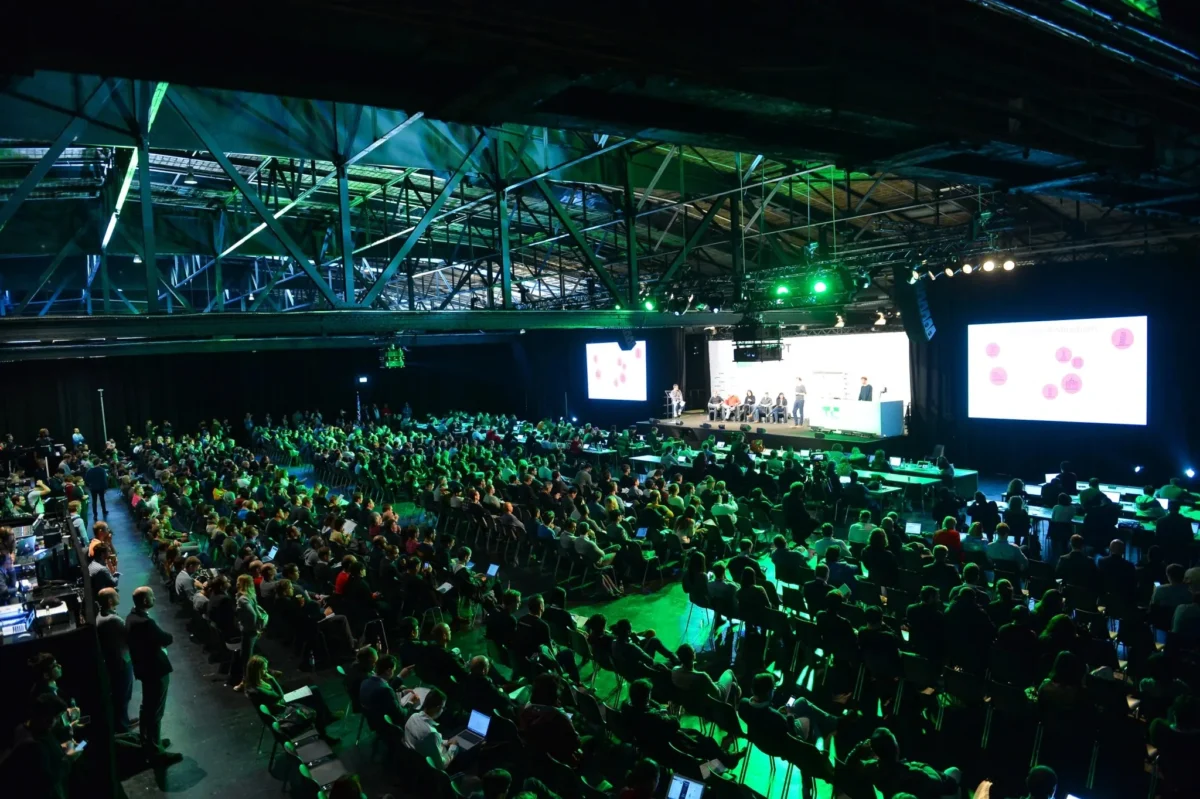
The technology ecosystem is preparing for its most significant annual gathering as TechCrunch Disrupt 2026 returns to the Moscone Center in San Francisco from October 13 to 15, featuring the highly anticipated Builders Stage. This year’s programming is designed to provide more than 10,000 founders, venture capitalists, and startup operators with a practical blueprint for navigating an increasingly complex global market. As the venture capital landscape shifts from the "growth at all costs" mentality toward a focus on sustainable unit economics and rapid AI integration, the Builders Stage serves as the operational heart of the conference, offering a series of candid discussions, case studies, and tactical workshops.
The 2026 agenda arrives at a critical juncture for the tech industry. Following several years of market volatility and a fundamental restructuring of the startup lifecycle, the Builders Stage will feature a diverse roster of industry leaders. Key participants include Grant Lee, CEO and co-founder of Gamma; Leah Solivan, founder and general partner at Precedent.vc; and Robby Stein, Vice President of Product at Google. These experts, alongside representatives from firms such as Blackstone, Index Ventures, and General Catalyst, will address the core challenges of modern company building, including fundraising in a high-conviction environment, talent retention in the age of automation, and the defense of intellectual property against platform giants.
The Evolution of the Builders Stage and TechCrunch Disrupt
TechCrunch Disrupt has long been recognized as a premier platform for debut technologies and early-stage companies. Since its inception, the conference has evolved from a niche gathering of Silicon Valley enthusiasts into a global institution that has seen the rise of companies like Dropbox, Cloudflare, and Fitbit through its Startup Battlefield competition. The Builders Stage, one of six specialized industry tracks at the 2026 event, was established to address the "missing middle" of startup education: the transition from a minimum viable product (MVP) to a mature, scalable organization.
The 2026 iteration reflects a broader industry trend where the "founder" role is becoming increasingly technical and operational. Historical data from the past decade of venture activity suggests that startups that reach Series A funding now require significantly higher revenue milestones than they did in the late 2010s. Consequently, the Builders Stage has shifted its focus toward the "90-day go-to-market (GTM)" strategy and the compression of the $0 to $10 million annual recurring revenue (ARR) timeline.
Navigating the Competitive Landscape of Artificial Intelligence
A central theme of the 2026 Builders Stage is the pervasive influence of artificial intelligence. Unlike previous years where AI was treated as a vertical sector, the current agenda approaches AI as a horizontal utility that impacts every facet of business operations. One of the most anticipated sessions, "What Happens When OpenAI Ships Your Roadmap," features Michel Tricot of Airbyte and Linda Tong of Webflow. This discussion will analyze the "platform risk" faced by startups whose core value propositions may be subsumed by updates to large language models (LLMs) from companies like OpenAI or Anthropic.

Analysis of the current market suggests that defensibility is no longer found in the model itself, but in proprietary data sets, workflow integration, and user experience. The Builders Stage will also explore the "non-AI" path to success. In a session titled "How to Win When You’re Not Building AI," investors from Baillie Gifford and General Catalyst will argue that while AI dominates headlines, significant market opportunities remain in sectors focusing on efficient growth, high retention, and disciplined execution.
Supporting data from 2025 indicated that while nearly 40% of all venture capital flowed into AI-related firms, the most resilient returns were often found in companies that used AI to optimize existing industries rather than those attempting to build foundational models. This reality informs the Builders Stage’s focus on "Tokenmaxxing"—the orchestration across multiple models to manage costs and reliability at scale.
The 2026-2027 Fundraising and M&A Environment
The financial landscape for startups has undergone a rigorous transformation, and the Builders Stage aims to demystify the new requirements for capital infusion. With sessions like "The Series A in 2027," partners from Index Ventures and Bessemer Venture Partners will provide a forward-looking analysis of what "fundable" metrics will look like in the coming year. Current projections suggest that investors are moving away from traditional metrics toward "high-conviction" filters, prioritizing teams that demonstrate founder-market fit and a clear path to profitability.
Furthermore, the agenda highlights a significant shift in exit strategies. "M&A Is Now an Early-Stage Strategy" will feature Karl Alomar of M13 and legal experts discussing why founders should build with acquisition in mind from day one. In an environment where the initial public offering (IPO) window remains selective, strategic acquisitions have become a primary liquidity event for many successful startups. This session will explore how product strategy and partnerships can be leveraged to create attractive acquisition targets for larger tech conglomerates.
Human Capital: Hiring and Founder Resilience
Despite the rise of automated engineering and AI "co-founders," the human element remains the most volatile variable in startup success. The 2026 Builders Stage will address the intensified competition for talent. A session featuring Matt Birnbaum of Wylder.co and Atli Thorkelsson of Redpoint Ventures will examine how startups are adapting compensation packages and equity structures to retain top-tier engineers who are frequently courted by big tech firms with massive capital reserves.
In addition to talent acquisition, the conference will tackle the often-taboo subject of founder mental health. "Yes, It’s Hard to Be a Founder: An Honest Conversation" will bring together mental performance experts from Harvard Medical School and high-growth founders to discuss the psychological toll of sustained pressure. Data indicates that founder burnout is a leading cause of early-stage failure, and the Builders Stage aims to provide leaders with the habits and systems necessary to maintain performance without sacrificing well-being.

Tactical Execution: From MVP to Billions of Users
The operational sessions at Disrupt 2026 are designed to provide immediate value. Robby Stein, VP of Product at Google, will lead a fireside chat on how decision-making processes must evolve as a product scales from its first 1,000 users to billions. This transition requires a balance between the speed of innovation and the necessity of reliability—a challenge that has become more acute as user expectations for seamless, AI-driven experiences reach an all-time high.
Other tactical sessions include:
- The Zero-to-1K Playbook: Focusing on founder-led distribution and community building without the reliance on traditional marketing budgets.
- PMF Red Flags: A critical look at "false" product-market fit signals that can lead to premature scaling and eventual collapse.
- The 90-Day GTM: An analysis of how AI-enabled tools have compressed the time required to achieve initial revenue milestones.
Chronology of TechCrunch Disrupt 2026
The event is structured to maximize networking and learning opportunities over three days:
- Day 1: Foundation and Fundraising. The opening day focuses on the current state of venture capital, pre-seed strategies, and the reveal of the "AI Disruptors 60," a list spotlighting the companies most likely to redefine the technology landscape.
- Day 2: Operations and Scaling. The second day dives deep into product development, hiring, and the "Second Act"—how companies can build repeatable multi-product engines to avoid stalling after their first success.
- Day 3: The Future and Exits. The final day concludes with the Startup Battlefield finals and discussions on M&A, the 2027 funding outlook, and a closing session on founder resilience.
Broader Impact and Industry Implications
The insights shared on the Builders Stage at TechCrunch Disrupt 2026 are expected to ripple through the tech industry well after the October event. By focusing on the "how-to" of company building, TechCrunch is positioning itself as an essential resource for the next generation of category-defining businesses.
Industry analysts suggest that the emphasis on "hybrid teams"—where AI agents handle support and engineering while humans focus on strategy and culture—will be the defining operational trend of the late 2020s. As San Francisco continues to assert its dominance as the global center for AI development, the gathering at the Moscone Center will serve as a barometer for the health and direction of the worldwide startup ecosystem.
For participants, the Builders Stage represents more than just a series of lectures; it is a forum for high-stakes networking and the formation of partnerships that could define the next decade of tech. With ticket prices set to increase as the event approaches, the urgency for founders to secure their place in these conversations reflects the competitive nature of the modern tech landscape. TechCrunch Disrupt 2026 stands ready to facilitate the connections and provide the knowledge necessary for the next wave of innovators to scale their visions into enduring global enterprises.