admin
admin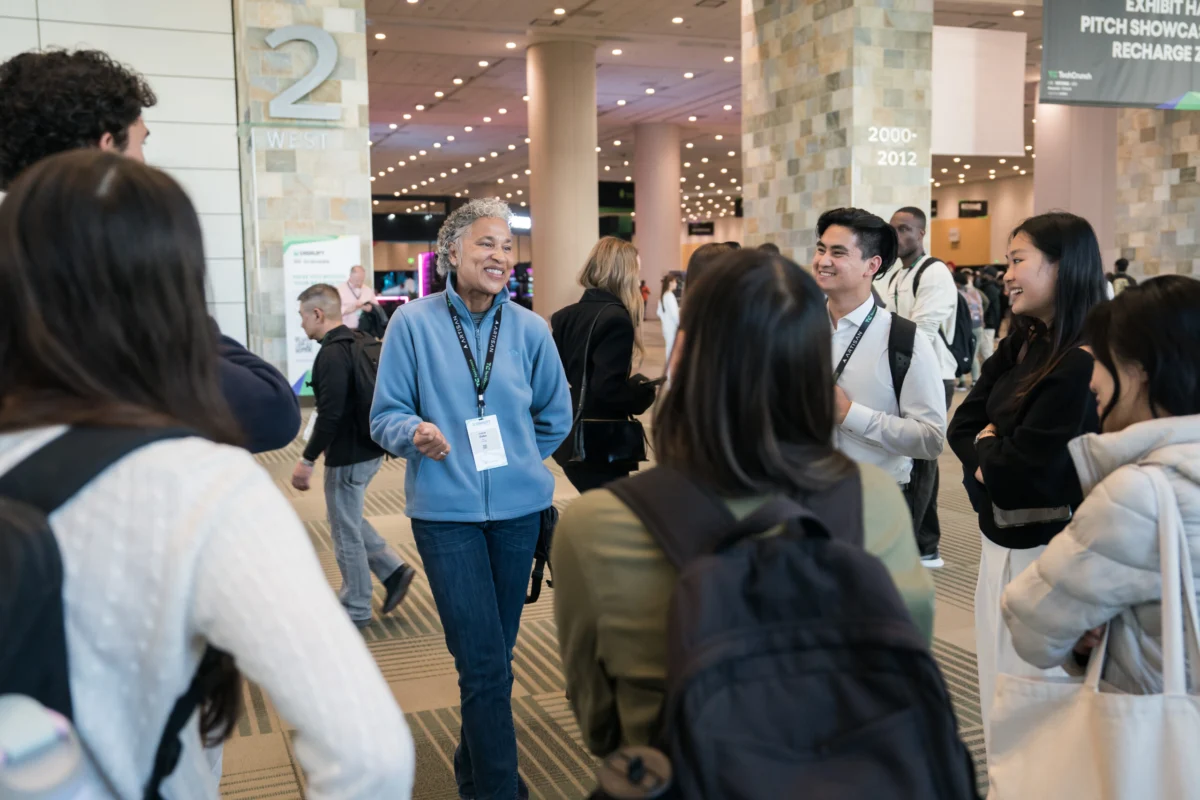
The third and final day of TechCrunch Disrupt 2025 at Moscone West in San Francisco marks the conclusion of one of the global technology sector’s most influential gatherings, characterized this year by a profound focus on the maturation of artificial intelligence and the resilience of the venture ecosystem. As the event enters its final hours, the focus shifts from broad industry trends to the specific innovations emerging from the Startup Battlefield 200, alongside high-level strategic discussions featuring leaders from Meta, Google Cloud, and the San Francisco municipal government. The atmosphere within Moscone West remains high-octane, reflecting a year in which the technology industry has pivoted aggressively toward agentic AI, sustainable growth models, and the revitalization of the Bay Area as the undisputed epicenter of the AI revolution.
The Strategic Significance of TechCrunch Disrupt in the Current Economic Climate
TechCrunch Disrupt has long served as a bellwether for the startup economy, and the 2025 edition arrives at a critical juncture. Following several years of market correction and a shift away from the "growth at all costs" mentality of the early 2020s, the current landscape is defined by a rigorous focus on profitability, capital efficiency, and the integration of generative AI into core business functions. The event’s location in San Francisco is particularly symbolic; despite narratives of a "tech exodus" in previous years, the city has seen a massive influx of capital and talent driven by the generative AI boom. According to industry data, San Francisco-based startups accounted for a significant plurality of all AI venture funding in the first half of 2025, a trend that is reflected in the heavy presence of local founders and policymakers at this year’s conference.
The final day of Disrupt is historically the most significant, as it hosts the Grand Finale of the Startup Battlefield. This competition, which has previously featured companies such as Dropbox, Cloudflare, and Mint, offers a $100,000 equity-free prize and, perhaps more importantly, the visibility required to secure Series A and B funding in a competitive market. For the 2025 cohort, the stakes are heightened by the rapid pace of technological change, with many finalists leveraging proprietary large language models (LLMs) or novel hardware-software integrations.
The AI Stage: From Theoretical Models to Agentic Reality
The programming on the AI Stage during Day 3 highlights a shift in the industry’s narrative: the transition from chatbots to "agents"—AI systems capable of autonomous reasoning and action. Will Grannis, Chief Technology Officer at Google Cloud, addressed this shift in his session regarding the "Agentic Cloud." Grannis detailed how cloud infrastructure is being redesigned to support not just data storage and processing, but the orchestration of complex AI agents that can manage enterprise workflows with minimal human intervention.
This theme was further explored in a panel titled "AI and Agents: Shaping How We Build, Live & Connect," which featured revenue and product leaders from Composio and Maket. The consensus among these experts is that the "agentic" era will redefine productivity metrics. Instead of measuring software by user engagement time, the next generation of enterprise tools will likely be measured by task completion and autonomous problem-solving capabilities.
In addition to enterprise applications, the AI Stage tackled the social and ethical dimensions of the technology. A notable session titled "Love, Lies & Algorithms" featured Dr. Amanda Gesselman of the Kinsey Institute and Mark Kantor of Tinder, discussing how AI is reshaping human intimacy. This reflects a broader trend at Disrupt 2025: the recognition that AI is no longer a niche technical field but a foundational layer of the human experience, necessitating rigorous academic and ethical oversight.
The Startup Battlefield Finals: A Proving Ground for Innovation
The centerpiece of the final day is the Startup Battlefield Final, where the top contenders from the initial 200 startups pitch to a panel of elite venture capitalists. This year’s judging panel includes Kirsten Green of Forerunner Ventures, Aileen Lee of Cowboy Ventures, and Kevin Hartz of A*. These judges represent some of the most successful "unicorn hunters" in the industry, and their critiques provide a masterclass in what professional investors are looking for in the 2025 market.
The finalists this year represent a diverse array of sectors, though a common thread is the application of deep tech to solve "unsexy" but essential problems. From logistical optimization to cybersecurity and healthcare diagnostics, the 2025 finalists are moving beyond consumer apps toward industrial-scale solutions. The announcement of the winner serves as the ceremonial closing of the event, signaling which technology the industry believes has the highest potential for global impact.

Builders Stage: Navigating the New Venture Landscape
While the Disrupt Stage focuses on "big picture" ideas, the Builders Stage provides granular, tactical advice for founders. A recurring theme on Day 3 is the evolution of startup capital. Sessions such as "Rethinking Startup Capital without VCs" reflect a growing movement toward alternative financing, including venture debt, crowdfunding, and "vibe coding"—a term used to describe the rapid, AI-assisted development of software that reduces the need for large, expensive engineering teams.
Marlon Nichols of MaC Venture Capital and Gabby Cazeau of Harlem Capital participated in a deep dive into "Seed Money Secrets," emphasizing that while the "bar" for entry has remained high, the diversity of the founder pool is slowly expanding. Data suggests that while overall venture volume has stabilized, early-stage valuations for AI-centric startups have remained robust, creating a "two-tier" market where AI companies command premiums while traditional SaaS firms face more scrutiny.
San Francisco’s Civic and Technological Resurgence
A pivotal moment for the local ecosystem occurred on the Disrupt Stage with a session featuring Daniel Lurie, the Mayor of San Francisco. Lurie’s presence underscores the symbiotic relationship between the city’s administration and the tech industry. His discussion, "Rebuilding the City that Builds Startups," addressed the challenges of urban governance in a post-pandemic world, including public safety, housing, and the importance of maintaining San Francisco’s status as a global innovation hub.
The city has reportedly seen a 20% increase in tech-related office leases in the last twelve months, largely driven by AI firms seeking proximity to the talent clusters in the South of Market (SoMa) and Mission districts. This regional revitalization is a core backdrop of Disrupt 2025, providing a counter-narrative to the "doom loop" stories that dominated headlines in 2023.
National Security and the Global Race for AI Supremacy
The intersection of technology and geopolitics was a major focus of the "AI and National Security" panel. Featuring Justin Fanelli, CTO of the U.S. Department of the Navy, and Kathleen Fisher of the RAND Corporation, the session highlighted the strategic importance of maintaining a lead in AI development. The discussion moved beyond theoretical risks to the practical implementation of AI in cybersecurity and defense logistics. The panelists emphasized that the "race to innovate" is no longer just about economic dominance but about national resilience and the protection of democratic values in an era of digital warfare and disinformation.
Networking and the "Collision" Economy
Beyond the formal sessions, the value of TechCrunch Disrupt lies in its role as a networking catalyst. The Expo Hall, hosting over 300 startups, serves as a high-density environment for "serendipitous collisions" between founders and investors. The use of the Braindate platform has formalized this process, allowing for targeted 1:1 meetings based on specific technical challenges or investment interests.
The "Investors Breakfast" held at the Deal Flow Cafe provided a closed-door environment for pass holders to discuss the next decade of growth engines. Many investors noted that the next "big thing" may not be a single software product but a convergence of AI, synthetic biology, and renewable energy—sectors that were well-represented in the Startup Battlefield 200.
Conclusion: The Path Toward 2026
As TechCrunch Disrupt 2025 draws to a close, the key takeaway is one of cautious optimism. The "AI hype" of 2023 and 2024 has transitioned into a "delivery phase," where the focus is on building sustainable businesses and solving real-world problems. The insights shared by leaders like Rohit Patel of Meta and Aaron Levie of Box suggest that while the technological landscape is shifting beneath our feet, the fundamentals of startup success—problem-solving, resilience, and timing—remain unchanged.
The event’s finale, culminating in the crowning of the Startup Battlefield winner, serves as a reminder that despite economic cycles and geopolitical tensions, the drive to innovate remains a powerful force. As attendees depart Moscone West, the conversations started here are expected to fuel the next wave of venture activity, setting the stage for what many industry veterans believe will be the most transformative decade in the history of computing. For those who missed the live sessions, the 50% registration discount for latecomers and the digital archives provide a window into the strategies that will define the tech landscape heading into 2026.