admin
admin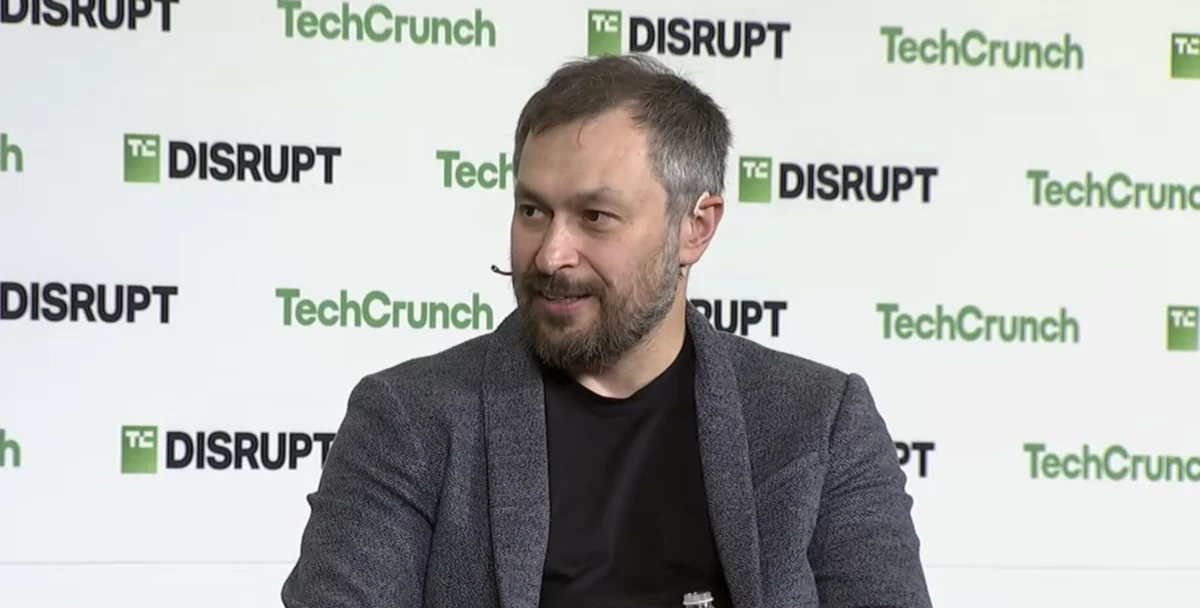
The landscape of software engineering is undergoing a fundamental transformation driven by the integration of agentic artificial intelligence, a shift that Anatoly Yakovenko, the co-founder and CEO of Solana Labs, described as a "sea change" during his appearance at the TechCrunch Disrupt conference in San Francisco. Speaking to a capacity audience on October 29, 2025, Yakovenko revealed that the rise of autonomous AI coding agents has significantly altered his own relationship with software development, allowing him to transition from a primary builder to an expert overseer. Yakovenko, a veteran engineer with over 15 years of experience in the industry, noted that AI has become an indispensable "force multiplier" for experienced developers who possess the intuition to guide these sophisticated tools.
During the keynote session, Yakovenko admitted that he has become increasingly comfortable delegating complex development tasks to AI models, specifically citing Anthropic’s Claude as a central part of his current workflow. He described the experience of watching the AI "churn" through code, noting that his role has evolved into one of high-level quality control. "I can almost smell when it’s going off the rails," Yakovenko remarked, emphasizing that while the AI can handle the bulk of the labor, the "expert in the loop" remains critical for identifying logical fallacies or architectural missteps. The CEO even quipped about his level of engagement with the technology, stating that if he appears distracted during internal meetings, it is often because he is preoccupied with monitoring the progress of an AI-driven coding task.
The Evolution of Agentic Coding in the Tech Industry
The shift toward "agentic" AI represents a step beyond simple autocomplete tools like the early versions of GitHub Copilot. While previous iterations of AI coding assistants suggested snippets of code or completed lines, agentic tools are capable of understanding broader project goals, navigating entire codebases, and executing multi-step plans to solve complex bugs or implement new features autonomously. For a high-performance blockchain like Solana, which requires rigorous optimization and low-level systems programming, the ability of AI to accelerate the development cycle is of particular strategic importance.
Industry analysts suggest that the adoption of these tools by high-profile leaders like Yakovenko signals a broader trend where the value of a software engineer is shifting from the ability to write syntax to the ability to architect systems and verify outputs. This transition is not without its risks; the "hallucinations" common in large language models can introduce subtle vulnerabilities into codebases. However, Yakovenko’s comments suggest that for those who have spent decades in the field, the efficiency gains far outweigh the oversight requirements.
Solana’s Unprecedented Financial Momentum
The discussion of AI at TechCrunch Disrupt occurred against a backdrop of historic financial success for the Solana ecosystem. Earlier in October 2025, Solana Labs reported that the protocol had generated an astounding $2.85 billion in annual revenue. This figure represents a massive leap forward compared to previous years and underscores Solana’s position as a dominant force in the decentralized finance (DeFi) and digital asset sectors. The revenue surge has been largely attributed to the explosion of activity on crypto trading platforms and the high volume of transactions facilitated by Solana’s high-throughput, low-latency architecture.
Further cementing Solana’s mainstream financial integration was the launch of the first Solana-based exchange-traded fund (ETF) by Bitwise, a prominent crypto asset manager. The fund debuted just one day before Yakovenko’s stage appearance and immediately shattered expectations by attracting nearly $70 million in inflows within its first 24 hours of trading. The success of the Bitwise Solana ETF is viewed by many as a watershed moment, indicating that institutional investors are increasingly viewing Solana as a viable alternative or complement to Bitcoin and Ethereum.
Traditional Finance and the Logic of Blockchain
Yakovenko addressed the growing synergy between the cryptocurrency world and the conventional finance (TradFi) industry. He argued that the perceived complexity of crypto is often less of a barrier for finance professionals than it is for the general public. "If you are a back-office finance person, you actually get crypto much, much faster," Yakovenko explained. He noted that professionals in banking and settlement deal with inherent risks, such as settlement delays and counterparty failures, on a daily basis.
According to Yakovenko, the value proposition of a blockchain like Solana—which offers near-instant finality and transparent, immutable records—is immediately apparent to those who manage the "plumbing" of the global financial system. By reducing settlement risk and eliminating the need for numerous intermediaries, Solana provides a technical solution to problems that have plagued traditional banking for decades. This alignment of interests has fueled a surge in institutional adoption, as banks and investment firms seek to leverage blockchain technology to modernize their internal operations.
Political Controversies and the "Trumpcoin" Dilemma
Despite the technical and financial milestones, the session did not shy away from the controversies currently surrounding the Solana ecosystem. In recent months, the protocol has been at the center of a political firestorm involving "Trumpcoin," a digital asset hosted on the Solana blockchain. Critics and investigative reports have estimated that the coin has directed approximately $350 million toward the current U.S. administration. This has led to intense public scrutiny and allegations of "public bribery," particularly in light of high-profile presidential pardons granted to major crypto figures.
Among those pardoned were Justin Sun, the founder of the Tron protocol, and Changpeng "CZ" Zhao, the founder of Binance. Critics argue that the financial success of politically themed coins on Solana creates a murky ethical landscape where digital assets can be used to exert political influence or reward favorable regulatory treatment. When questioned about these developments, Yakovenko maintained a firm stance on the neutrality of the underlying technology.
He compared the Solana protocol to the fundamental architecture of the internet, such as the SMTP protocol used for email. "I could send you an email with a link to Trumpcoin or Fartcoin," Yakovenko stated, "and both of those are protocols—both the email and the underlying protocol that creates that market." His argument hinges on the principle of permissionless innovation: as an open-source, decentralized protocol, Solana Labs does not have the authority or the technical ability to censor specific tokens or transactions without compromising the integrity of the network. This defense highlights the ongoing tension between the decentralized ideals of blockchain technology and the regulatory expectations of modern nation-states.
Chronology of Solana’s Rise: 2017–2025
To understand Yakovenko’s current perspective, it is necessary to look at the timeline of Solana’s development:
- 2017: Anatoly Yakovenko publishes the Solana whitepaper, introducing "Proof of History" (PoH) as a way to synchronize clocks between computers on a network that don’t trust each other.
- 2020: The Solana Mainnet Beta launches, positioning itself as a "World Computer" capable of matching the speeds of centralized exchanges like Nasdaq.
- 2022-2023: The protocol weathers significant volatility following the collapse of the FTX exchange, which was a major supporter of the ecosystem. Solana focuses on developer retention and network stability.
- 2024: Solana becomes the leading platform for retail memecoin trading and decentralized physical infrastructure networks (DePIN).
- 2025: The protocol hits $2.85 billion in revenue and sees the launch of its first U.S.-based spot ETF, marking its full entry into the institutional financial landscape.
Broader Impact and Industry Implications
Yakovenko’s insights at TechCrunch Disrupt reflect a broader maturation of the crypto industry. The transition from "experimental tech" to a "financial utility" is nearly complete for Solana. However, the integration of AI into this mix introduces a new variable. If AI can indeed accelerate the development of decentralized applications (dApps), the speed of innovation on high-performance blockchains could increase exponentially.
Furthermore, the debate over protocol neutrality and political involvement is likely to intensify. As blockchains become more integrated into the global economy, the pressure on founders like Yakovenko to implement governance structures that can address ethical concerns will grow. For now, Yakovenko remains focused on the technical horizon, betting that the combination of expert human intuition and autonomous AI agents will define the next era of the digital economy.
The TechCrunch Disrupt event, which continues in San Francisco through the end of the week, remains a critical forum for these discussions. As the tech world watches the interplay between AI, finance, and decentralized protocols, Solana stands as a primary case study for both the immense potential and the complex challenges of the 21st-century technological landscape.