admin
admin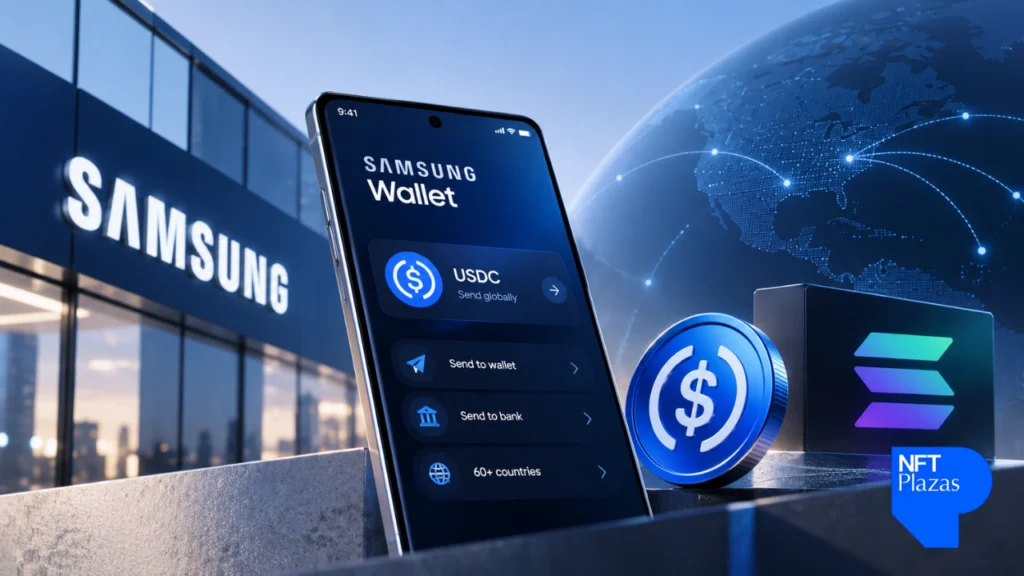
Samsung Electronics is poised to revolutionize the landscape of cross-border payments by integrating stablecoin transfers directly into its Samsung Wallet, a move anticipated to bring crypto-powered financial transactions to an estimated 82 million Galaxy devices in the United States. This significant development, slated to commence in the last week of October 2026, will empower eligible U.S. users to send Circle’s USDC stablecoin to compatible crypto wallets or qualifying bank accounts across more than 60 countries. This initiative represents one of the most ambitious endeavors by a major smartphone manufacturer to embed stablecoins into the fabric of everyday digital payments, potentially ushering in a new era of financial accessibility and efficiency.
A New Era for Digital Payments: Seamless Cross-Border Transfers
The forthcoming feature will be seamlessly integrated into the existing Samsung Wallet, an application already serving as a central hub for various digital credentials, including payment cards, digital IDs, and boarding passes. A cornerstone of this integration is the commitment to user simplicity: Samsung has affirmed that users will not be required to download a separate cryptocurrency application or manage complex private keys, traditionally a significant barrier to entry for crypto newcomers. This design philosophy underscores Samsung’s strategic intent to make stablecoin transfers as intuitive and convenient as conventional mobile payment methods.
Woncheol Chai, head of Samsung Electronics’ Digital Wallet Team, articulated this vision, stating, "Sending money abroad should feel as convenient as using the wallet already on your phone." This sentiment highlights the company’s focus on abstracting the underlying blockchain complexities, presenting a user experience that prioritizes familiarity and ease. The sheer scale of the rollout, reaching 82 million compatible Galaxy devices in the U.S. alone, provides stablecoins with an unprecedented distribution channel, a critical factor that crypto companies have historically struggled to establish independently.
Users will possess the flexibility to direct USDC transfers to supported external crypto wallets or eligible bank accounts in over 60 nations. For bank transfers, a crucial detail is the ability for recipients to receive funds directly in their local currency. This functionality negates the necessity for recipients to possess or understand cryptocurrency, effectively bridging the gap between the blockchain ecosystem and traditional financial systems. While Samsung will not impose fees for USDC transfers to compatible external wallets, recipients may encounter fees levied by their chosen wallets or exchanges. Bank transfers, however, will involve charges determined by the destination country and transaction amount, with Samsung Wallet transparently displaying the applicable fee and estimated delivery time prior to confirmation. This tiered fee structure aims to balance the benefits of blockchain efficiency with the operational costs of converting and distributing funds via traditional banking networks.
Unpacking the Technology Backbone: A Collaborative Ecosystem
Samsung’s venture into stablecoin remittances is built upon a robust, multi-partner infrastructure designed to ensure regulatory compliance, security, and operational efficiency. The company is strategically leveraging specialized expertise to manage the intricate layers of blockchain technology and regulated financial services.
At the foundational level, blockchain network support will be provided by industry leaders Solana and Sui. Solana is renowned for its high throughput and low transaction costs, making it a suitable choice for facilitating rapid and economical transfers. Sui, a relatively newer blockchain, also emphasizes scalability and developer-friendliness, contributing to a resilient and efficient underlying infrastructure. These networks are critical for the swift and secure movement of USDC across decentralized ledgers.
For regulated stablecoin infrastructure, Samsung has partnered with Bastion. Bastion’s role is crucial in ensuring that the stablecoin operations adhere to stringent financial regulations, a non-negotiable aspect for a mainstream consumer offering. Complementing this, Coinbase, a leading cryptocurrency exchange and infrastructure provider, will serve as Bastion’s sub-custodian. This partnership means that USDC funds will be securely safeguarded through Coinbase Prime Vault, a highly secure and regulated custody solution. Coinbase Prime Vault is specifically designed for institutional clients, offering advanced security measures and insurance, thereby instilling confidence in the safekeeping of user assets.
This intricate partnership model allows Samsung to concentrate its efforts on perfecting the consumer-facing experience within the Samsung Wallet. Its partners, meanwhile, assume responsibility for the complex and specialized domains of custody, regulatory compliance, and the actual movement of money. Samsung has explicitly clarified its operational boundaries, stating that it is neither a bank, a money transmitter, nor a digital-asset custodian. This distinction is vital for regulatory clarity and consumer trust, as it means customer funds and stablecoins will be managed and held by its regulated partners, ensuring adherence to established financial protocols. For enhanced security, every transaction initiated through Samsung Wallet will require biometric authentication on the registered Galaxy device, adding an essential layer of user protection against unauthorized access.
Strategic Timing and Market Context: Tapping into Remittance Demands
The timing of Samsung’s stablecoin integration is particularly opportune, aligning with the growing prominence of stablecoins in the global financial landscape, especially for cross-border payments. Stablecoins, digital currencies pegged to a stable asset like the U.S. dollar, have emerged as a compelling solution to the inefficiencies inherent in traditional international money transfers.
USDC, issued by Circle, stands as one of the largest and most widely adopted dollar-pegged stablecoins globally. Its design, leveraging blockchain technology, enables the swift and borderless transfer of dollar-denominated value without the sole reliance on conventional banking rails, which are often characterized by high fees, slow settlement times, and opaque processes. The global remittance market is a colossal industry, with the World Bank estimating that remittances to low and middle-income countries alone exceeded $831 billion in 2022. Traditional methods for sending money abroad often involve average fees ranging from 5% to 7%, translating into billions of dollars in costs annually for senders and recipients. These fees disproportionately affect vulnerable populations who rely on remittances for essential needs.
Samsung’s strategic move directly targets these pain points. By providing a streamlined, mobile-first channel for USDC transfers, the company aims to offer a more cost-effective and faster alternative to legacy systems. This initiative also capitalizes on the accelerating trend of digital wallet adoption. Statista projects that the number of mobile wallet users worldwide could reach 4.4 billion by 2027. By integrating stablecoins into an already widely used digital wallet, Samsung positions itself at the forefront of this digital transformation, blending established mobile payment habits with the innovation of blockchain technology. The sheer market penetration of Samsung’s Galaxy devices in the U.S., a major source country for remittances, provides a fertile ground for rapid adoption and significant impact on this market segment.
Samsung’s Vision: Beyond Remittances and into the Ecosystem
The U.S. rollout of USDC transfers is not an isolated initiative but rather a foundational step in Samsung’s broader and more ambitious plans for digital-dollar payments across its expansive Galaxy ecosystem. The company had previously indicated its exploration of stablecoin-powered savings and payment features, and this October 2026 launch represents the first major consumer-facing deployment of that strategic vision.
The significance of this move extends far beyond the impressive number of supported devices. Crucially, Samsung is not demanding that consumers actively "enter the crypto ecosystem" by navigating complex onboarding processes, understanding blockchain addresses, or managing private keys. Instead, it is seamlessly embedding blockchain-based payments into a familiar, user-friendly mobile wallet experience. This approach could unlock the true potential of stablecoins for a mass audience, particularly for use cases like remittances where speed, cost-effectiveness, and accessibility are paramount. A sender in the U.S. can initiate a USDC transfer, while a recipient abroad can receive their funds in local currency directly in an eligible bank account, effectively simplifying what has historically been a cumbersome and expensive cross-border payment process.
Looking ahead, Samsung has hinted at even broader applications. While remittances are the initial focus, the company has indicated future support for online payments and tap-to-pay transactions on eligible Galaxy devices. If these plans materialize, Samsung Wallet could evolve from a mere repository for cards and credentials into a comprehensive payment platform where stablecoins operate quietly and efficiently in the background, powering various commercial activities without the user needing to interact directly with the underlying blockchain. This vision positions Samsung as a significant player in the convergence of mobile technology, fintech, and the burgeoning digital asset space.

Lowering the Barrier to Entry: The "Invisible Crypto" Advantage
One of the most significant barriers to mainstream cryptocurrency adoption has been its inherent complexity. The process typically involves setting up specialized wallets, securely managing cryptographic private keys, navigating cryptocurrency exchanges to acquire tokens, and understanding the nuances of blockchain addresses and network fees. Samsung’s approach directly confronts this friction. By embedding the entire process within an application that millions of Galaxy users already possess and are familiar with, Samsung is effectively making the underlying cryptocurrency infrastructure "invisible."
This abstraction of complexity is key to attracting a broader demographic beyond early adopters and crypto enthusiasts. Lily Liu, president of the Solana Foundation, echoed this sentiment, stating, "Stablecoins have the potential to make moving money around the world faster and easier." She further emphasized that while stablecoins have clearly demonstrated the efficiency of blockchain for financial transactions, achieving mainstream distribution has remained a formidable challenge. Samsung, with its vast user base and established brand trust, is uniquely positioned to provide that missing distribution layer, transforming a niche technology into a widely accessible utility. The "invisible crypto" paradigm championed by Samsung aims to shift the user’s focus from "how" the money moves to simply "that" it moves efficiently and securely, much like how users don’t typically concern themselves with the intricacies of SWIFT codes when making traditional bank transfers.
Eligibility and Global Reach: Navigating Regulations and Access
While the promise of widespread stablecoin adoption through Samsung Wallet is significant, there are specific eligibility criteria and operational limitations that users must be aware of. To utilize the new transfer features, individuals must be 18 years or older, reside in the United States, possess a valid Samsung Account, and use a compatible Galaxy device running Android 13 or a later version. Furthermore, rigorous identity verification (KYC – Know Your Customer) and biometric authentication will be mandatory before users can initiate any transfers, aligning with standard financial regulatory requirements and enhancing security.
The geographical scope of the service is also subject to specific conditions. The availability of transfers will depend on the supported countries, blockchain networks, and the eligibility of recipient bank accounts. This means that while over 60 countries are targeted, the precise functionality and available receiving options may vary. Crucially, Samsung has affirmed that sanctioned jurisdictions will remain explicitly excluded from the service, adhering to international compliance standards and anti-money laundering (AML) regulations. These limitations underscore the complex regulatory landscape that global financial services, particularly those involving digital assets, must navigate. The phased rollout, starting with the U.S., allows Samsung and its partners to refine the service and address regulatory considerations before potential expansion.
Economic Implications and Fee Structure: A Competitive Edge
The fee structure introduced by Samsung Wallet for USDC transfers presents a compelling alternative to traditional remittance services. The absence of fees for direct USDC transfers to compatible external crypto wallets positions this option as potentially one of the most cost-effective ways to move value internationally. This zero-fee model for crypto-to-crypto transfers is a significant differentiator, as many conventional services, even digital-first ones, often levy a percentage-based fee on transactions.
For bank transfers, where recipients receive local fiat currency, a separate fee structure will apply, based on the destination country and transaction amount. While these fees exist, Samsung Wallet’s commitment to transparency—displaying the applicable fee and estimated delivery time before confirmation—empowers users to make informed decisions. The competitive nature of stablecoin-powered remittances suggests that these fees are likely to be lower and the transfer times faster than many incumbent services. Traditional bank wires can take several business days and incur multiple intermediary bank fees, whereas blockchain-based transfers often settle within minutes or hours, depending on network congestion and the final fiat conversion process. This combination of speed and potentially lower costs could exert downward pressure on fees across the entire remittance industry, benefiting consumers globally.
The Regulatory Landscape and Security Measures: Building Trust in a New Frontier
The integration of stablecoins into a mainstream mobile wallet like Samsung Wallet comes at a time when regulatory frameworks for digital assets are still evolving globally. In the U.S., discussions around stablecoin legislation are ongoing, aiming to establish clear rules for issuance, redemption, and oversight. Samsung’s approach, by partnering with regulated entities like Bastion and Coinbase Prime Vault, demonstrates a proactive commitment to operating within existing and anticipated regulatory guidelines. This strategy helps mitigate regulatory risks and builds trust among users who may be wary of the often-unregulated nature of some crypto services.
Security remains paramount for any financial service, especially one dealing with digital assets. Samsung’s insistence on biometric authentication on the user’s Galaxy device for every transfer adds a critical layer of protection. This aligns with the highest standards of mobile security, leveraging hardware-level encryption and secure elements present in modern smartphones. Furthermore, by explicitly stating that it is not a custodian and relies on regulated partners, Samsung reinforces its commitment to secure and compliant asset management. This separation of concerns, where Samsung handles the user interface and experience, and specialized partners manage the underlying financial and blockchain infrastructure, creates a more secure and robust ecosystem.
Competitive Dynamics in the Digital Wallet Space: Samsung’s Bold Play
Samsung’s foray into stablecoin remittances marks a significant strategic move within the highly competitive digital wallet landscape. This initiative positions Samsung Wallet as a differentiated offering against rivals such as Apple Pay and Google Pay, which primarily focus on traditional fiat payments. While Apple and Google have explored various aspects of fintech, Samsung is making a bold and direct entry into the blockchain-powered payment space.
This move could provide Samsung with a competitive edge, attracting users who are looking for more efficient and cost-effective ways to send money internationally. It also aligns with a broader trend of technology companies expanding their financial service offerings, blurring the lines between tech and finance. By leveraging its vast hardware ecosystem and integrating innovative financial solutions, Samsung aims to deepen user engagement within its Galaxy platform and potentially unlock new revenue streams. The success of this stablecoin integration could serve as a blueprint for other smartphone manufacturers and technology giants to follow, further accelerating the mainstream adoption of digital assets in everyday transactions.
A Glimpse into the Future of Finance: The Mainstreaming of Digital Assets
Samsung Wallet’s integration of USDC transfers represents a watershed moment, not just for Samsung or the stablecoin industry, but for the broader future of finance. It signifies a tangible step towards the mainstreaming of digital assets, demonstrating that blockchain technology can be leveraged to create practical, user-friendly financial services without requiring consumers to become "crypto experts."
The success of the October 2026 launch will serve as a crucial test case: are mainstream smartphone users ready to adopt blockchain-powered payments when the underlying crypto infrastructure is largely invisible and the experience feels as familiar as using any other mobile payment service? If the answer is yes, Samsung’s initiative could fundamentally reshape the remittance market, accelerate the adoption of stablecoins for various other payment use cases (online, in-store), and set a new standard for how traditional finance and blockchain technology can converge to create a more efficient, inclusive, and globally interconnected financial system. The journey begins with 82 million Galaxy devices, but its implications could resonate across the global economy.