admin
admin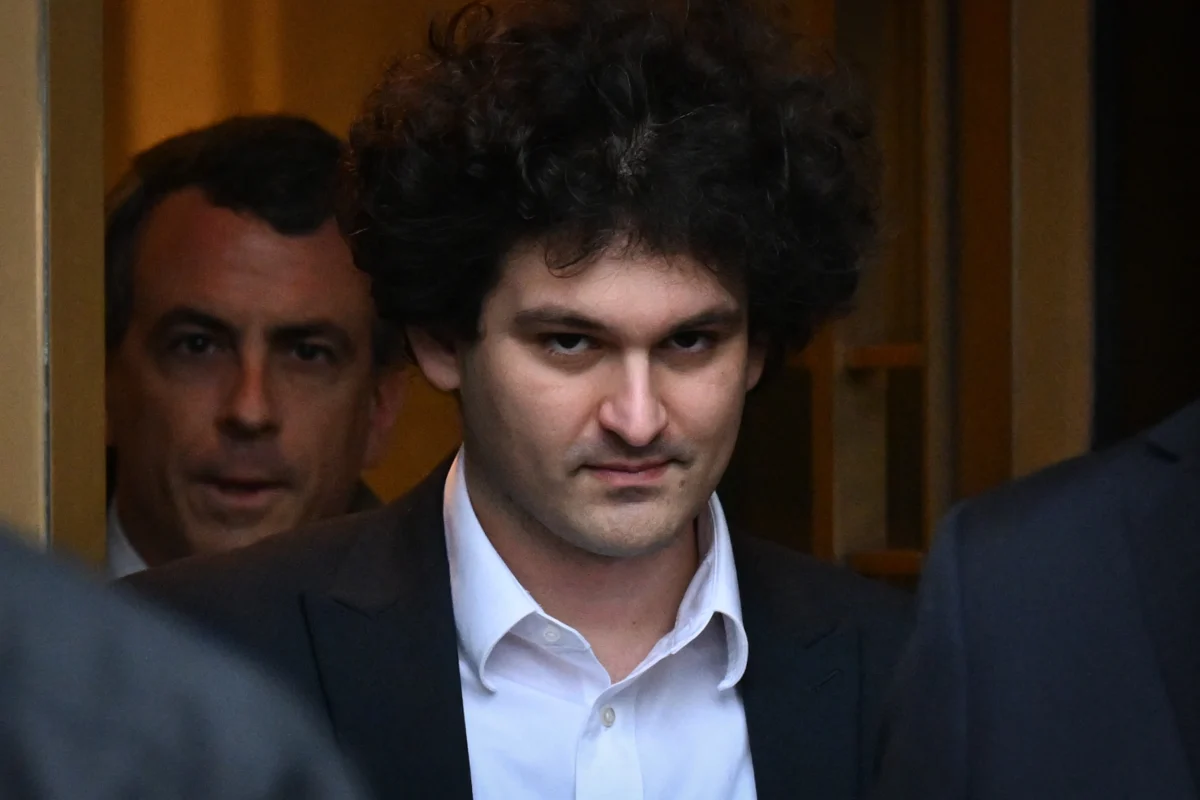
Sam Bankman-Fried, the disgraced co-founder and former CEO of the cryptocurrency exchange FTX, has officially submitted an application for a presidential pardon to the United States Department of Justice’s Office of the Pardon Attorney. The move, first identified through updates on the Department of Justice’s public clemency database and subsequently reported by Bloomberg News, represents a significant escalation in Bankman-Fried’s efforts to overturn or mitigate the 25-year prison sentence he began serving earlier this year. Convicted on seven counts of fraud, conspiracy, and money laundering in late 2023, Bankman-Fried’s request comes at a time when President Donald Trump has demonstrated a prolific and unconventional approach to the use of executive clemency during his second term in office.
The application for a pardon follows one of the most high-profile financial collapses in American history. Once hailed as the "king of crypto" and a leading figure in the "Effective Altruism" movement, Bankman-Fried saw his multi-billion-dollar empire vanish in a matter of days in November 2022. The subsequent criminal trial revealed a systemic misappropriation of customer funds, where billions of dollars were diverted from FTX to its sister hedge fund, Alameda Research, to cover speculative investments, political donations, and luxury real estate acquisitions. While Bankman-Fried has maintained that he never intended to defraud customers, a federal jury in Manhattan found him guilty on all counts after a month-long trial that featured testimony from his closest former associates.
The Chronology of a Collapse: From Industry Leader to Incarceration
The downfall of Sam Bankman-Fried was as rapid as his ascent. To understand the gravity of the current pardon request, one must examine the timeline of events that led to his conviction. In early 2022, FTX was valued at approximately $32 billion, bolstered by high-profile celebrity endorsements and a massive marketing presence, including the naming rights to the Miami Heat’s arena. However, the veneer of stability began to crack in November 2022, when a leaked balance sheet from Alameda Research suggested that the hedge fund was heavily reliant on FTT, a token created by FTX itself.
On November 6, 2022, Binance CEO Changpeng Zhao announced that his exchange would liquidate its holdings of FTT, triggering a massive bank run on FTX. Within days, FTX faced a $6 billion liquidity shortfall. By November 11, the company filed for Chapter 11 bankruptcy, and Bankman-Fried resigned as CEO. He was arrested in the Bahamas in December 2022 and extradited to the United States shortly thereafter.
The legal proceedings moved with unusual speed for a complex white-collar case. The trial commenced in October 2023, where prosecutors presented a mountain of evidence, including encrypted messages and testimony from former Alameda CEO Caroline Ellison and FTX co-founders Gary Wang and Nishad Singh. On November 2, 2023, the jury returned a guilty verdict on all counts. On March 28, 2024, Judge Lewis Kaplan sentenced Bankman-Fried to 25 years in federal prison, citing the defendant’s "perjury" during testimony and a "lack of remorse" for the billions lost by investors and customers.
Statistical Context: The Trump Administration’s Pardon Patterns
The decision to file an official pardon application with the Justice Department is a calculated move that aligns with the broader trends observed during the Trump administration. While President Trump has the constitutional authority to grant pardons or commutations at his sole discretion, the formal application process through the DOJ is the traditional, albeit often bypassed, route for clemency seekers.
According to data compiled by Bloomberg and legal analysts, very few of the individuals pardoned by President Trump during his second term have followed the formal DOJ application protocol. Instead, many high-profile pardons have been the result of direct appeals to the White House or recommendations from political allies. However, the filing by Bankman-Fried signals a desire to engage with the formal bureaucratic process, perhaps in an attempt to lend a sense of procedural legitimacy to a highly controversial request.
An NBC News analysis of presidential clemency actions reveals a specific pattern in the types of crimes forgiven. More than half of the individual pardons granted during this administration have been directed toward individuals convicted of white-collar crimes, including money laundering, bank fraud, and wire fraud. This trend is significant for Bankman-Fried, whose convictions fall squarely within these categories. While a large portion of recent pardons has also been granted to individuals involved in the January 6 Capitol riot, the administration’s willingness to forgive massive financial malfeasance provides a potential, if narrow, window of hope for the FTX founder.
The Political and Financial Stakes of Clemency
The request for a pardon is further complicated by Bankman-Fried’s history as a prolific political donor. During the 2022 election cycle, Bankman-Fried was one of the largest contributors to Democratic candidates and causes, though he later claimed in interviews to have donated an equal amount to Republicans through "dark money" channels to avoid public scrutiny. This history of political engagement has led to intense speculation regarding the potential motivations behind a pardon.
Critics of the pardon process argue that granting clemency to a figure responsible for an $8 billion fraud would undermine the integrity of the U.S. financial system and signal that well-connected individuals can escape accountability. Conversely, supporters of Bankman-Fried—including some members of his family and legal team—have argued that the 25-year sentence was "draconian" and that the ongoing bankruptcy proceedings are likely to result in the full repayment of many creditors, a factor they believe should mitigate his criminal culpability.
Legal experts note that the "no loss" argument was explicitly rejected by Judge Kaplan during sentencing. The judge emphasized that the eventual recovery of funds through bankruptcy does not erase the fact that the crimes were committed or the immense harm caused to customers at the time of the collapse. Nevertheless, in the realm of executive clemency, the President is not bound by the findings of the court or the sentencing guidelines used by the judiciary.
Potential Implications for the Cryptocurrency Industry
A pardon for Sam Bankman-Fried would have profound implications for the cryptocurrency industry and its regulatory future. Under the current administration, the United States has seen a shift in its stance toward digital assets. President Trump, who once described Bitcoin as a "scam" during his first term, has rebranded himself as the "crypto president" in his second term, advocating for the U.S. to become the "crypto capital of the planet."
This pro-crypto stance creates a paradoxical situation for the administration. On one hand, pardoning the industry’s most notorious fraudster could be seen as a betrayal of the legitimate crypto entrepreneurs who have sought to distance themselves from the FTX scandal. On the other hand, the administration’s skepticism of "over-regulation" and its criticism of the Department of Justice’s "lawfare" could be used as a rhetorical framework to justify intervening in Bankman-Fried’s case.
Industry leaders have expressed a range of opinions on the matter. Many fear that a pardon would reignite public distrust in digital assets, while others argue that the focus should remain on legislative clarity rather than individual criminal cases. The SEC and CFTC continue to pursue civil litigation against various entities related to the FTX collapse, and a pardon would not necessarily shield Bankman-Fried from these civil liabilities or potential state-level charges.
Official Responses and Next Steps
As of the date of the filing, the White House has not issued a formal statement regarding Bankman-Fried’s application. The Office of the Pardon Attorney typically reviews applications and provides recommendations to the President, though these recommendations are non-binding. Given the high-profile nature of the case, it is expected that the review process will be subject to intense public and political scrutiny.
Victims of the FTX collapse have already begun to voice their opposition. Advocacy groups representing former FTX customers have argued that a pardon would be a "slap in the face" to those who lost their life savings. "Justice was served in a court of law," said one representative of a creditor committee. "To undo that through political intervention would be a travesty."
Bankman-Fried remains incarcerated at the Metropolitan Detention Center in Brooklyn, though his legal team has requested a transfer to a facility closer to his parents’ home in California. His appeal of the original conviction is also moving through the court system, a process that is independent of the pardon application. Should the pardon be granted, it could range from a full pardon, which wipes away the conviction, to a commutation, which would merely reduce his time in prison.
The unfolding situation represents a unique intersection of high-stakes finance, digital asset regulation, and the exercise of presidential power. As the Justice Department processes the request, the financial world remains focused on whether the man once considered the face of the future of finance will find a path to freedom through the pen of the President.