admin
admin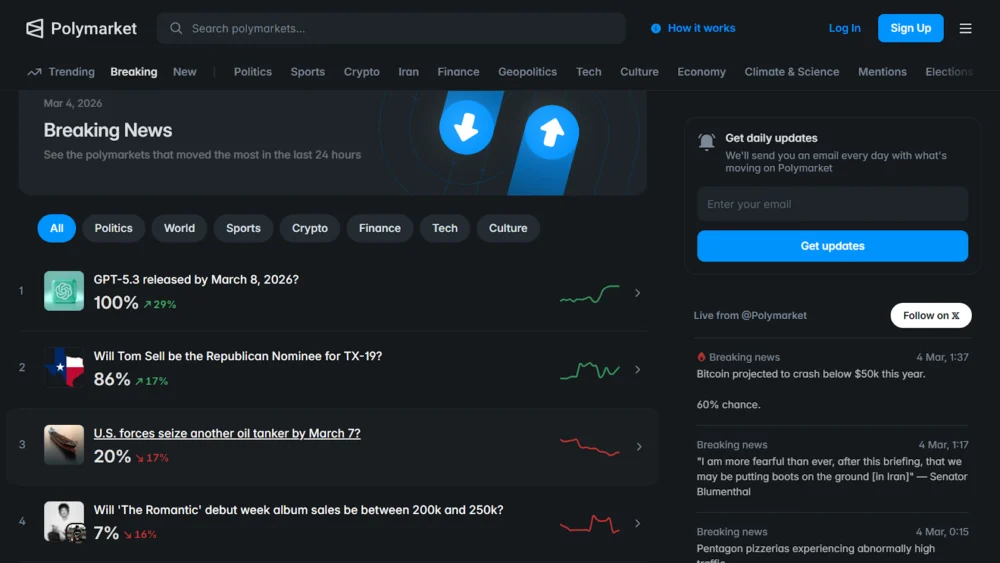
Polymarket, a pioneering blockchain-based platform, has rapidly emerged as a significant force in the evolving landscape of prediction markets, offering users an innovative avenue to trade on the outcomes of future real-world events. This decentralized marketplace leverages the power of blockchain technology to create transparent, immutable records of transactions, fundamentally altering how individuals engage with market trends and data-driven insights. As investor interest in novel financial instruments grows and the utility of cryptocurrencies seeks tangible applications, Polymarket stands out as a compelling example of blockchain innovation applied to collective forecasting.
Understanding Polymarket: A Decentralized Approach to Prediction
At its core, Polymarket operates as a decentralized prediction market, a system where participants bet on the future outcome of specific events. Unlike traditional betting platforms or centralized exchanges that rely on a single entity for operation, record-keeping, and settlement, Polymarket runs on a robust blockchain infrastructure. This architectural choice means that all transactions, market creations, and outcome settlements are managed through automated smart contracts and recorded on a public, tamper-proof ledger. Users interact directly with each other, taking positions on whether an event will or will not occur, without the need for an intermediary.
The markets available on Polymarket are diverse, designed around specific, verifiable questions about real-world developments. These span a broad spectrum, including political elections (e.g., "Will Candidate X win the 2024 US Presidential Election?"), financial trends (e.g., "Will the price of Bitcoin exceed $100,000 by year-end?"), major sporting events, scientific breakthroughs, and even pop culture phenomena. This wide array of topics positions Polymarket not merely as a speculative platform, but as a dynamic aggregator of collective intelligence on pressing global issues. In a crypto ecosystem where many projects have struggled to demonstrate practical utility beyond speculative trading, Polymarket offers a clear, tangible use case, blending market insights with the inherent advantages of blockchain technology.
The Mechanics of Forecasting: How Polymarket Works
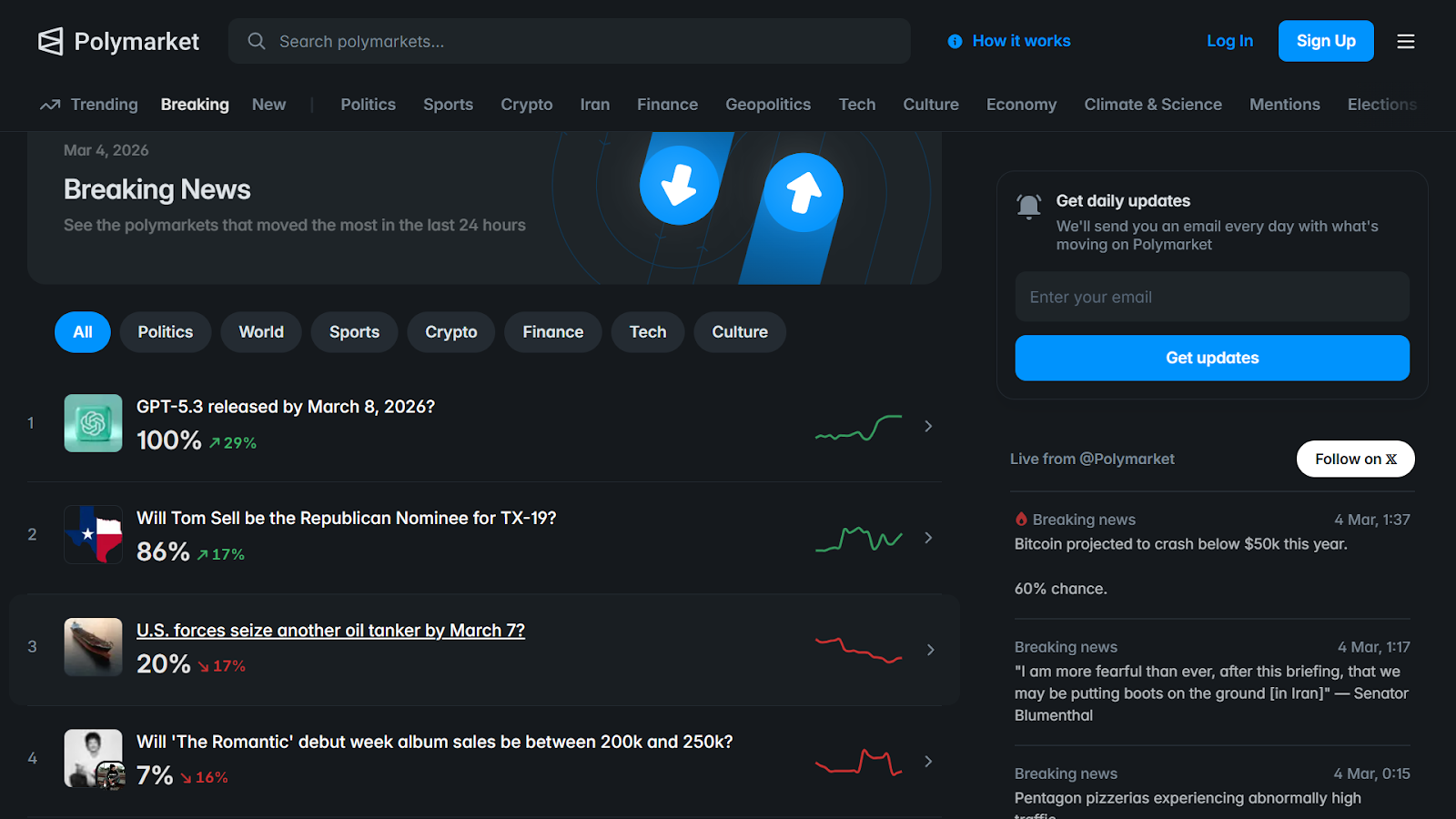
Polymarket’s operational model is built on the principle of crowd-based forecasting, where the collective wisdom of many individuals often proves more accurate than individual experts. Users participate by buying and selling "shares" tied to specific event outcomes. Each share represents a potential outcome, and its price dynamically adjusts to reflect the collective probability assigned to that event by market participants. For instance, if shares for "Candidate X wins" are trading at $0.70, it implies that the market collectively estimates a 70% chance of that outcome occurring. Conversely, shares for the opposing outcome would trade at $0.30.
Transactions on Polymarket are meticulously recorded on a blockchain ledger, ensuring a high degree of transparency and immutability. This tamper-proof record is a cornerstone of the platform’s security and trust model. The security of the cryptocurrency used on Polymarket—primarily USDC, a stablecoin pegged to the US dollar—is intrinsically linked to its integration with these blockchain protocols. Smart contracts play a pivotal role, automating the entire market lifecycle from creation to resolution. Once an event’s outcome is verified, these smart contracts automatically distribute payouts to users who held winning shares, eliminating the need for manual intervention or trust in a central party. This framework not only bolsters security but also cultivates trust among participants, solidifying Polymarket’s standing within the burgeoning prediction markets ecosystem.
Market prices on Polymarket are not static; they continuously evolve as new information becomes available and participants revise their expectations. When significant news breaks, or new data emerges, traders buy or sell shares, directly influencing the price and, by extension, the perceived probability of an event. This dynamic mechanism allows the market to efficiently aggregate disparate pieces of information from a diverse participant base into a single, real-time probability estimate, making it a powerful tool for understanding public sentiment and expert consensus on future events.
The Genesis and Evolution of Prediction Markets
The concept of prediction markets is far from new, with historical roots tracing back centuries. Early forms were used for political elections in ancient Rome and later for financial speculation in European coffee houses. In more recent times, academic institutions and specialized firms have explored prediction markets as tools for forecasting everything from election results to disease outbreaks. However, these traditional models often faced limitations, including issues of trust, transparency, high operational costs, and susceptibility to manipulation due to their centralized nature.
The advent of blockchain technology introduced a paradigm shift. Decentralized prediction markets like Polymarket emerged as a natural evolution, leveraging blockchain’s inherent properties of transparency, immutability, and censorship resistance. By removing the central operator, blockchain platforms mitigate many of the trust issues that plagued their predecessors. The ability to automate market operations through smart contracts further reduces costs and increases efficiency, opening these markets to a broader global audience. Polymarket, launched in recent years, quickly capitalized on these advantages, positioning itself at the forefront of this new wave of decentralized forecasting. Its choice to operate on the Polygon blockchain further enhances its appeal by offering low transaction fees and fast settlement times, addressing key scalability challenges often associated with earlier blockchain iterations.
Key Drivers of Polymarket’s Ascendancy
Polymarket’s rapid ascent to prominence in the prediction market landscape can be attributed to several distinguishing factors that set it apart from both traditional betting platforms and other decentralized alternatives:

-
Transparent and Decentralized Framework: Unlike conventional platforms that operate behind opaque systems, Polymarket’s decentralized blockchain infrastructure ensures that all transactions and market data are publicly recorded and verifiable. This transparency fosters immense trust among users, as there is no single entity that can manipulate outcomes or withhold funds. The removal of intermediaries streamlines operations and enhances integrity.
-
Real-Time Market Sentiment and Information Aggregation: Polymarket serves as a powerful barometer of real-time public sentiment on global events. As new information, data, or "insider" insights emerge, market prices dynamically adjust. This makes the platform not just a place for speculation but a valuable tool for gauging collective probabilities and understanding how new information is being processed by a diverse pool of participants. Its utility extends beyond individual traders, offering insights for researchers, analysts, and policymakers.
-
Low Fees and Fast Transactions: The platform’s integration with the Polygon blockchain is a critical advantage. Polygon, a Layer 2 scaling solution for Ethereum, offers significantly lower transaction fees and faster processing times compared to the main Ethereum network. This accessibility makes Polymarket attractive to a wide range of users, from small-scale participants to larger institutional players, reducing the barrier to entry and enhancing user experience.
-
Wide Variety of Markets: Polymarket’s expansive market offerings are crucial for attracting and retaining a broad user base. By covering a diverse range of real-world events—from high-stakes political contests and financial market movements to niche cultural phenomena—the platform ensures there is always something relevant to trade on. This variety keeps markets active, liquid, and engaging, catering to different interests and areas of expertise among its global community.
Accuracy and Reliability: How Good Are Polymarket’s Predictions?
A central question for any prediction market revolves around the accuracy of its forecasts. Polymarket has consistently demonstrated a high level of accuracy, particularly as events draw closer to their resolution. The platform actively publishes its accuracy metrics, often referencing Brier scores, a widely used measure for the accuracy of probabilistic predictions. For instance, data indicates that Polymarket’s markets often converge on the correct outcome with increasing certainty as the event date approaches, frequently outperforming traditional polling methods in specific scenarios, especially in political elections.
This accuracy stems from the market’s efficiency in aggregating distributed information. Participants, motivated by financial incentives, are driven to incorporate all available data into their trading decisions. This collective processing of information, often referred to as "the wisdom of the crowd," allows the market price to reflect a highly refined probability estimate. While no prediction system is infallible, Polymarket’s track record suggests it provides a remarkably reliable indicator of future events, serving as a powerful alternative or supplement to conventional forecasting methods.
Navigating the Regulatory Landscape: Legality and Compliance
The legality of participating in Polymarket, like many decentralized platforms, is complex and varies significantly by jurisdiction. While the platform operates globally, it faces stringent regulatory oversight in certain regions, with some countries restricting or outright prohibiting prediction markets. Polymarket proactively addresses these challenges by employing geo-fencing technology, which blocks access from restricted areas to ensure compliance with regional laws.
In the United States, for example, Polymarket operates under the watchful eye of the Commodity Futures Trading Commission (CFTC). The CFTC views prediction markets, particularly those involving financial or economic outcomes, as a form of derivatives trading, subjecting them to specific regulatory frameworks. While Polymarket has navigated these complexities, users are always advised to conduct their due diligence and verify local laws before participating. Trading responsibly and within the legal framework of one’s jurisdiction is paramount to avoid potential legal complications. It’s also worth noting that Polymarket generates revenue primarily through small trading fees applied to transactions within its markets, rather than acting as a bookmaker taking opposing bets. This fee-based model is a common practice in financial markets and differentiates it from traditional gambling operations.
A frequently asked question is whether Polymarket constitutes gambling or investing. Generally, it is categorized as a prediction market. While it involves risk and potential financial gain or loss, the underlying mechanism is trading shares that represent the probability of real-world events occurring, often seen as a form of information aggregation or speculative investing rather than pure chance-based gambling. Pseudonymous participation through crypto wallets, where users connect their wallets instead of creating traditional accounts with personal details, is also a feature, offering a degree of privacy that further distinguishes it from highly regulated financial institutions.
Key Benefits for Participants
Beyond its innovative technology, Polymarket offers several compelling benefits for its users:
- Access to Decentralized Information: The platform provides a unique window into collective intelligence, offering real-time probabilities on a vast array of topics, which can be valuable for personal decision-making, research, or even professional analysis.
- Low Entry Barriers: With low transaction fees on Polygon and the use of USDC, Polymarket is accessible to a broad demographic of users, regardless of their investment capital.
- Transparency and Trust: The blockchain-based system ensures verifiable transactions and outcomes, eliminating concerns about manipulation or unfair practices common in less transparent systems.
- Diverse Speculative Opportunities: The wide range of markets caters to varied interests, allowing users to leverage their specific knowledge or insights across different domains.
- Educational Value: For many, participating in prediction markets can be an educational experience, sharpening critical thinking skills, understanding market dynamics, and learning about real-world event probabilities.
Inherent Risks and Considerations
Despite its advantages, Polymarket, like any financial platform, carries inherent risks that users must carefully consider:
- Market Risk: The most obvious risk is the potential for incorrect predictions, which can lead to a total loss of invested funds. Market prices can be volatile and influenced by unforeseen events.
- Liquidity Risk: In less popular or niche markets, liquidity can be low, making it challenging to buy or sell shares at desired prices, especially as the event approaches resolution. This can lead to slippage or inability to exit a position.
- Regulatory Restrictions: As highlighted, the evolving regulatory landscape poses a significant challenge. Sudden regulatory changes in a user’s jurisdiction could limit access or impact the legality of holding funds on the platform.
- Smart Contract Vulnerabilities: While rigorously audited, blockchain smart contracts are not entirely immune to bugs or exploits, which could theoretically lead to loss of funds.
- Oracle Risk: Decentralized prediction markets rely on "oracles" to feed real-world event outcomes onto the blockchain. While Polymarket utilizes robust oracle networks, any potential compromise or inaccuracy in the oracle data could lead to incorrect market resolution.
- Volatility of Cryptocurrencies: While USDC is a stablecoin, the broader crypto market can be highly volatile, and reliance on crypto wallets and infrastructure carries its own set of risks, including security breaches if wallets are not properly secured.
Users are strongly advised to trade responsibly, understand the mechanics of each market, and only invest amounts they can comfortably afford to lose.
Getting Started: A User’s Guide to Polymarket
Initiating participation on Polymarket is a streamlined process designed for relative ease of access within the decentralized finance ecosystem:
- Create/Connect a Polymarket Account: The first step involves visiting the Polymarket website and connecting a self-custodial cryptocurrency wallet, such as MetaMask. This wallet acts as the primary interface for all transactions and holds your digital assets. No traditional account sign-up with personal details is required, aligning with the platform’s pseudonymous nature.
- Funding Your Account with USDC: Polymarket exclusively uses USDC (USD Coin) for trading. Users must transfer USDC to their connected wallet. This can typically be done by acquiring USDC on a supported cryptocurrency exchange and then sending it to the wallet address. The use of the Polygon blockchain ensures that these transfers are generally fast and incur low fees.
- Browse and Explore Available Markets: With funds in place, users can then explore the diverse range of markets available. Each market clearly outlines the event, its resolution criteria, and the potential outcomes. It is crucial to thoroughly understand the specifics of each market before committing funds.
- Understanding Shares and Probabilities: Before placing a trade, grasp the concept of shares. A share’s price directly correlates to the market’s perceived probability of that outcome. A share at $0.70 means a 70% chance. Buying shares expresses a belief in an outcome, while selling implies skepticism.
- Place Your First Trade: Once a market is chosen and the user’s prediction is formed, a trade can be placed by buying or selling shares. Users can monitor their positions as the market evolves and adjust their trades by buying or selling additional shares until the market closes or the event is resolved.
Polymarket vs. Other Prediction Market Platforms
Polymarket distinguishes itself from both traditional centralized betting platforms and other decentralized prediction markets through several key attributes. Traditional platforms often suffer from a lack of transparency, higher operational fees, slower settlement times, and limited market diversity, primarily due to their centralized control. Their reliance on intermediaries also introduces trust issues and potential for censorship.
In contrast, Polymarket’s foundation on the Polygon blockchain offers unparalleled transparency, significantly lower transaction fees, and rapid settlement. Its extensive range of markets caters to a broader audience, fostering greater liquidity and engagement. Furthermore, Polymarket’s commitment to publishing accuracy metrics, such as Brier scores, highlights its reliability and scientific approach to forecasting, a feature not commonly emphasized by all competitors. The immutable nature of blockchain records ensures tamper-proof operations, a stark contrast to the opaque record-keeping sometimes found in centralized alternatives. This combination of technological innovation, user-centric features, and a focus on transparency firmly positions Polymarket as a frontrunner in the prediction market space.
The Future Horizon of Decentralized Forecasting
The future of decentralized prediction markets, exemplified by Polymarket, holds immense potential for innovation and broader societal impact. As blockchain technology continues its rapid advancement, these platforms are poised to become even more efficient, secure, and user-friendly. Enhanced scalability solutions, improved interoperability between different blockchain networks, and continued reduction in transaction costs will make these markets accessible to an even wider global audience.
Beyond financial speculation, the implications for information aggregation are profound. Decentralized prediction markets can serve as powerful tools for gathering collective intelligence on critical issues, from climate change predictions to public health outcomes, offering real-time insights that could inform policy-making and strategic planning across various sectors. The integration of advanced data analytics and artificial intelligence could further refine market accuracy and provide deeper, more nuanced insights to participants.
As trust in traditional information sources sometimes wanes, transparent and auditable prediction markets offer a compelling alternative for understanding collective belief and forecasting future events. The ongoing evolution of regulatory frameworks will be crucial in shaping their growth, but the underlying technological advantages and the demonstrated utility of platforms like Polymarket suggest a pivotal role in the future of global financial ecosystems and information economies. These platforms are set to revolutionize how individuals engage with real-world events, creating a secure, efficient, and transparent ecosystem for collective foresight.
Conclusion
Polymarket represents a significant leap forward in the application of blockchain technology to real-world problem-solving. By creating a decentralized, transparent, and efficient prediction market, it has not only carved out a niche for itself but also illuminated the vast potential of crowd-based forecasting. Its ability to aggregate diverse information into accurate, real-time probabilities offers a powerful tool for understanding public sentiment and future outcomes. While navigating inherent market risks and evolving regulatory landscapes, Polymarket’s innovative approach, robust technology, and commitment to transparency underscore its role in transforming how individuals engage with global events, positioning decentralized prediction markets as a pivotal component in the future of financial and information ecosystems.