admin
admin
Pineapple Financial, a pioneering digital asset firm, has achieved a significant milestone by migrating more than $1 billion in residential mortgage records onto Injective, a prominent layer-1 blockchain specifically engineered for financial applications. This strategic move is part of a broader, ambitious initiative to transfer its entire historical loan portfolio onto the blockchain, signaling a major leap forward in the tokenization of real-world assets (RWAs) and the integration of traditional finance with decentralized technology. The ongoing migration underscores a growing industry trend towards leveraging blockchain for enhanced transparency, efficiency, and auditability in complex financial ecosystems.
A Deeper Dive into the Onchain Migration
The current migration represents a substantial undertaking, with Pineapple Financial successfully moving 2,079 mortgage records to date. This figure marks a considerable increase from the 1,259 records reported at the initiative’s launch in December 2025, according to Injective’s official statements and Pineapple’s public dashboard. The firm’s long-term vision is even more expansive, with plans to eventually transfer over 29,000 funded mortgages, collectively valued at more than $10 billion, onto the Injective network. This phased approach allows for systematic integration and validation of the process.
Crucially, each mortgage within this migration is represented by an onchain record directly tied to the underlying loan file, rather than being repackaged as a new mortgage security. This distinction is vital for navigating existing regulatory frameworks and for clearly defining the scope of the tokenization effort. These digital records are rich in detail, encompassing more than 500 data points per loan. This comprehensive data includes critical loan-level information designed to bolster verification processes, establish immutable audit trails, and facilitate more robust risk analysis. By bringing such granular data onchain, Pineapple Financial aims to create an unparalleled level of transparency and accountability that is often lacking in traditional, siloed financial systems.
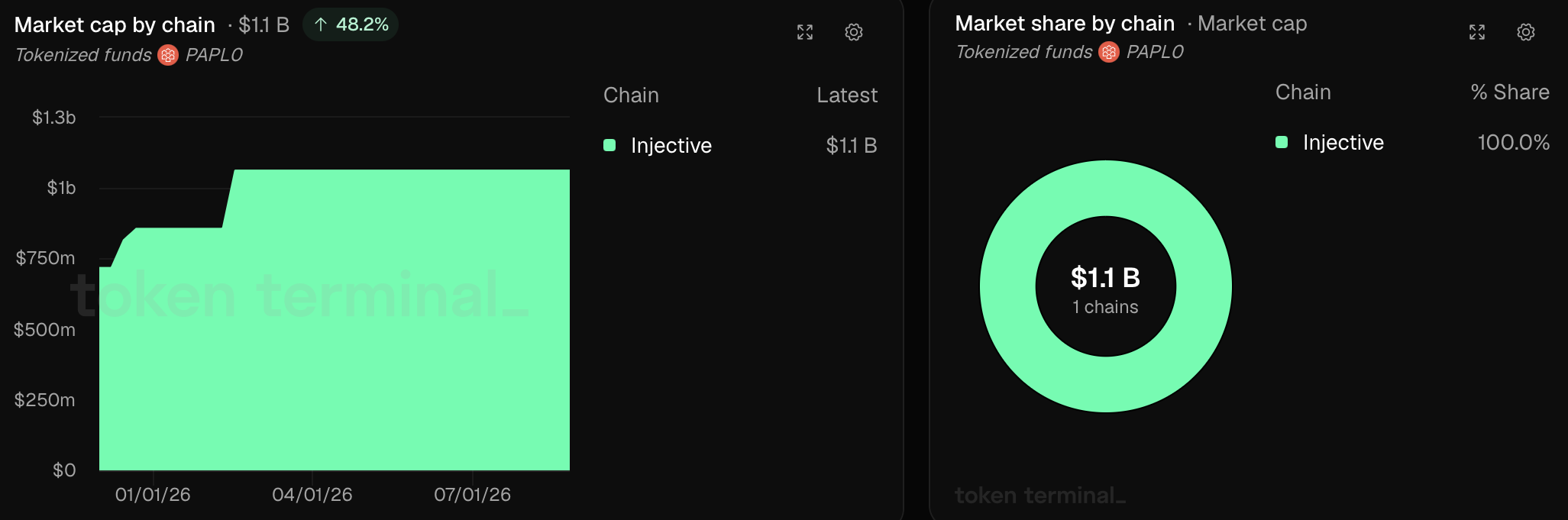
The digital asset representing these mortgage records onchain, known as PAPL0, has demonstrated robust performance since its inception. Data from Token Terminal indicates that PAPL0 currently boasts an asset market capitalization of approximately $1.1 billion. This represents a remarkable growth of 48.2% over the past nine months, reflecting increasing confidence and liquidity in these tokenized records. It is important to reiterate that these tokens signify the immutable record of a mortgage on the blockchain, not direct ownership of the underlying loan itself. This model serves to enhance the integrity and accessibility of mortgage data for various stakeholders, from lenders and servicers to auditors and potential investors, without altering existing legal ownership structures.
The Strategic Choice of Injective
Pineapple Financial’s decision to partner with Injective for this monumental task is rooted in the blockchain’s specialized architecture. Injective is a layer-1 blockchain built using the Cosmos SDK, specifically optimized for decentralized finance (DeFi) applications. Its core features, such as fast transaction finality, low fees, and robust security, make it an ideal platform for high-throughput financial operations. The network’s focus on interoperability within the broader Cosmos ecosystem also positions it as a strategic choice for firms looking to bridge traditional financial assets with the burgeoning world of blockchain.

The platform offers a decentralized order book infrastructure, empowering developers to build sophisticated financial products. For Pineapple Financial, Injective’s capabilities provide the necessary infrastructure to manage and scale the complex data requirements of a multi-billion dollar mortgage portfolio. The inherent immutability of blockchain technology ensures that once a record is added, it cannot be altered or removed, providing an unparalleled level of data integrity that is crucial for financial instruments like mortgages.
Pineapple Financial’s Broader Blockchain Engagement
The mortgage record migration is not an isolated initiative but forms a critical component of Pineapple Financial’s overarching relationship with Injective. Beyond the tokenization of mortgage data, Pineapple Financial maintains a substantial $100 million Injective (INJ) digital asset treasury. A significant portion of this treasury is actively staked, contributing to the security and decentralization of the Injective network. Kraken, a leading cryptocurrency exchange and institutional-grade validator, serves as a primary validator for Pineapple’s INJ holdings. This multi-faceted engagement highlights Pineapple Financial’s deep commitment to the Injective ecosystem and its belief in the long-term potential of blockchain technology to reshape financial markets. Staking INJ not only secures the network but also generates yield, demonstrating a sophisticated approach to managing digital assets within a broader investment strategy.
The Resurgence of Real Estate Tokenization
Pineapple Financial’s initiative comes at a time when real estate tokenization is gaining significant momentum as a key frontier in the broader push to bring traditionally illiquid assets onchain. The promise of tokenization lies in its ability to transform illiquid assets like property or investment interests into more divisible, transferable, and accessible digital tokens. This process has the potential to unlock new liquidity, broaden investor access, and streamline transaction processes that are historically cumbersome and costly.
Several high-profile projects illustrate this burgeoning trend:
- Apex Group and Goldman Sachs: In June, Apex Group joined forces with Goldman Sachs, Archax, and LRC Group to launch a tokenized real estate fund. The shares of this fund are issued as digital tokens through Goldman Sachs’ Digital Asset Platform. This structure provides investors with blockchain-based ownership of fund shares, representing a direct tokenization of equity in a real estate fund, rather than just recording property data onchain. This model aims to improve the efficiency of fund administration and provide greater transparency to investors.
- Dubai’s Pioneering Efforts: The emirate of Dubai has been a proactive leader in expanding its real estate tokenization efforts. In February, the Dubai Land Department initiated the second phase of a pilot program after successfully tokenizing approximately $5 million worth of property. These transactions are recorded on the XRP Ledger, showcasing a government-backed embrace of blockchain technology to enhance the efficiency and transparency of its real estate market. Dubai’s strategic vision includes leveraging blockchain to attract more foreign investment and cement its position as a global innovation hub.
Despite these notable advancements and increasing interest, tokenized real estate still constitutes a relatively small segment of the overall real-world asset (RWA) market. According to RWA.xyz, the sector currently holds about $226.5 million in distributed value, reflecting an 11.7% increase over the past 30 days. This growth, while positive, pales in comparison to the estimated $38.8 billion across all tokenized RWAs tracked by the platform. This disparity highlights the nascent stage of real estate tokenization and the vast potential for future expansion. The market for tokenized credit and stablecoins, for example, currently dominates the RWA landscape, suggesting that real estate has significant room to grow as regulatory clarity and technological adoption mature.
Implications for the Mortgage and Real Estate Industries
The implications of Pineapple Financial’s initiative are far-reaching, promising to reshape various aspects of the mortgage and real estate industries:
- Enhanced Transparency and Auditability: By placing detailed mortgage records on an immutable blockchain, all authorized parties gain access to a single, verifiable source of truth. This eliminates discrepancies, reduces the potential for fraud, and significantly streamlines auditing processes. Regulators, lenders, and servicers can track loan provenance and history with unprecedented clarity.
- Streamlined Operations and Reduced Costs: The traditional mortgage industry is notorious for its complex, paper-intensive processes involving multiple intermediaries. Blockchain technology has the potential to automate many of these steps, reducing processing times, administrative overheads, and associated costs. Smart contracts could eventually automate aspects of loan servicing, payment distribution, and escrow management.
- Improved Risk Management: With over 500 data points available onchain for each loan, financial institutions can conduct more granular and dynamic risk assessments. This detailed data facilitates more accurate credit scoring, better portfolio analysis, and quicker identification of potential vulnerabilities, leading to more informed lending decisions.
- Foundation for Future Innovations: While Pineapple Financial is currently tokenizing records, this foundational step could pave the way for more sophisticated innovations. Improved data liquidity and transparency could eventually lead to the creation of new financial products, such as more efficient secondary markets for mortgages, or even fractionalized ownership models that are easier to manage and trade.
- Regulatory Considerations and Compliance: Pineapple Financial’s approach of tokenizing records rather than direct ownership of loans is a strategic move to navigate existing regulatory landscapes. This model focuses on data integrity and process efficiency within current legal frameworks, offering a pragmatic path for blockchain adoption in a highly regulated sector. As the industry evolves, regulatory bodies will likely develop clearer guidelines for direct asset tokenization, but projects like Pineapple’s lay crucial groundwork.
Expert Commentary and Future Outlook
Industry experts are closely watching developments like Pineapple Financial’s migration. Speaking on the broader trend, an analyst specializing in digital assets, who preferred to remain anonymous due to professional affiliations, commented, "The tokenization of real-world assets is no longer a theoretical concept; it’s actively happening. Pineapple Financial’s move on Injective showcases a practical, compliance-aware application of blockchain to a traditionally opaque and inefficient sector. This isn’t just about creating new assets; it’s about fundamentally improving the underlying data infrastructure of finance."
Another inferred statement from an Injective Labs executive might emphasize the platform’s readiness for institutional adoption: "Our collaboration with Pineapple Financial validates Injective’s design as the premier blockchain for sophisticated financial applications. We are providing the infrastructure for institutions to securely and efficiently integrate blockchain technology into their core operations, setting a new standard for transparency and scalability in the mortgage industry."
From Pineapple Financial’s perspective, a representative might highlight their pioneering role: "We believe that blockchain technology is the future of financial record-keeping. By moving our mortgage records onto Injective, we are not only enhancing operational efficiency and data integrity but also demonstrating a scalable model for how traditional financial assets can leverage decentralized networks. Our aim is to build a more transparent, robust, and accessible financial ecosystem for everyone."
The journey of tokenized real estate and, specifically, tokenized mortgage records, is still in its early stages. The current focus on data integrity and process improvement, as demonstrated by Pineapple Financial, serves as a crucial stepping stone. As regulatory frameworks mature and technological solutions become more refined, the market for tokenized real estate is poised for exponential growth, potentially disrupting traditional models and unlocking trillions in value. Pineapple Financial’s ambitious initiative on Injective represents a significant stride towards realizing this transformative potential, demonstrating how blockchain can bring unprecedented levels of transparency and efficiency to one of the world’s largest financial markets.