admin
admin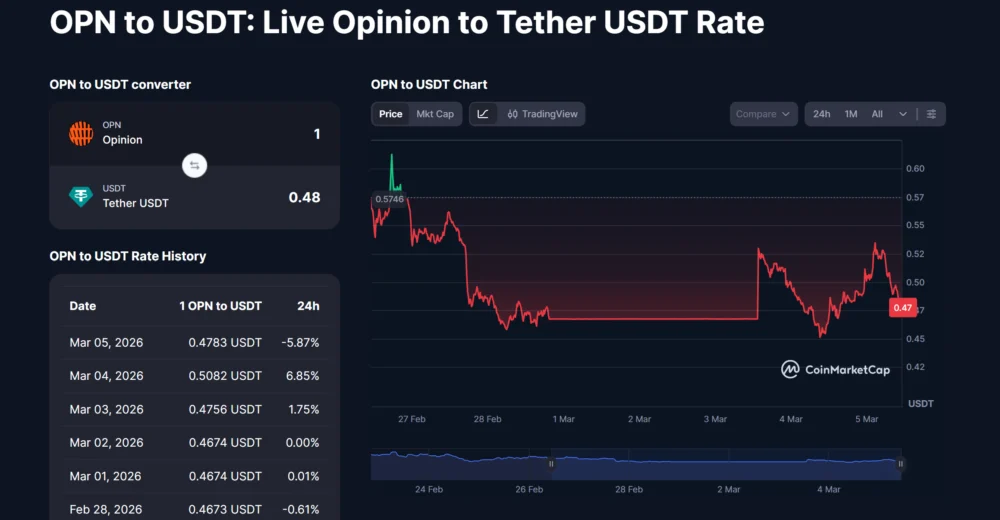
Opinion (OPN) is emerging as a significant player in the burgeoning decentralized finance (DeFi) landscape, pioneering a blockchain-based prediction market designed to harness the collective intelligence of its users. This platform distinguishes itself by allowing participants to trade on the outcomes of real-world events using blockchain technology, moving away from the centralized oversight prevalent in traditional forecasting methods. Opinion champions a transparent and automated system where market prices are intended to reflect collective probability, offering a new paradigm for forecasting and information aggregation.
This article will meticulously explore Opinion (OPN), detailing its foundational principles, sophisticated stack architecture, the mechanics of its prediction markets, and practical guidance on how to engage with the platform. Furthermore, we will draw critical comparisons between Opinion and its competitors, alongside a comprehensive analysis of the inherent challenges and risks faced by both traders and investors in this innovative, yet volatile, ecosystem.
Understanding Opinion (OPN): The Core Proposition
At its core, Opinion (OPN) represents a paradigm shift in how information is aggregated and future events are predicted. It is a blockchain-native prediction market where users can create, trade, and ultimately settle predictions on a diverse array of real-world occurrences, ranging from sports outcomes and political elections to fluctuations in cryptocurrency prices. The platform’s operational integrity is rooted entirely in smart contracts, immutable pieces of code residing on a blockchain. This architectural choice fundamentally eliminates the need for centralized bookmakers or intermediaries, thereby decentralizing control and empowering the collective wisdom of the crowd to determine probabilities through dynamic market pricing.
The native utility token of the Opinion ecosystem, OPN, is integral to its functionality. It facilitates trading activities, incentivizes liquidity provision through staking, and underpins the platform’s governance mechanisms. Essentially, Opinion transmutes collective speculation into a powerful, blockchain-based forecasting instrument that captures real-time sentiment and expectations. In stark contrast to conventional betting platforms, the Opinion crypto project places paramount importance on transparency and security, leveraging the inherent verifiability of blockchain-based settlement and outcome validation. The markets are meticulously engineered to aggregate the wisdom of the crowd, ensuring that prices within each market serve as a real-time reflection of collective probability. Participants can generate profits either by accurately predicting outcomes or by contributing liquidity to the markets, thereby enhancing market depth and stability. This unique amalgamation of decentralization, robust token utility, and innovative market mechanics positions Opinion as a distinctive entity within the rapidly expanding domain of blockchain-based prediction platforms.
The Mechanics of a Decentralized Prediction Market on Opinion
Opinion operates on principles akin to a standard prediction market, yet with a critical distinction: all trading activities and settlements are executed on a blockchain, ensuring unparalleled transparency and immutability. The process begins with users creating prediction markets for specific events. These markets require clearly defined possible outcomes, and participants must commit capital using the OPN token to initiate or join a market.
Once a market is established, other participants can purchase "shares" representing the outcome they believe will materialize. The price of these shares adjusts dynamically, influenced by the forces of supply, demand, and overall market sentiment. Consequently, the evolving share prices serve as a real-time indicator of the market’s collective expectations regarding the probability of each outcome. Upon the conclusion of the event, a pre-programmed smart contract automatically settles the market. This automated process ensures that users who correctly predicted the outcome are rewarded, with funds redistributed fairly and without the need for human intervention or trust in a central authority.
Liquidity is a cornerstone of Opinion’s ecosystem. Users are incentivized to stake their OPN tokens to provide liquidity to various markets. In return for this vital contribution, liquidity providers earn a portion of the trading fees generated within those markets. This mechanism is crucial for maintaining active markets and ensuring that share prices accurately reflect the true collective probability, preventing illiquidity from skewing price discovery.
Furthermore, the Opinion blockchain platform incorporates sophisticated mechanisms such as incentives and reputation tracking. These features are designed to foster honest participation and actively deter any attempts at market manipulation, thereby cultivating a transparent and self-regulating forecasting environment that seamlessly blends decentralized finance (DeFi) principles with the power of prediction markets.
The Opinion Stack Architecture: A Technical Overview
The Opinion ecosystem is meticulously constructed upon a layered architecture, purpose-built to facilitate decentralized prediction markets with optimal transparency and efficiency. Each layer within this stack fulfills a distinct and critical role, spanning from core trading functionalities and liquidity management to data verification and the enforcement of protocol standards. Together, these components integrate seamlessly to deliver a robust and intuitive user experience. Below are the key architectural components that define the Opinion stack:
-
Blockchain Base Layer: Opinion operates on an EVM-compatible blockchain (e.g., Ethereum, BNB Chain, Polygon, or a similar high-throughput layer-2 solution). This foundational layer provides the immutable ledger, secure transaction processing, and smart contract execution environment necessary for the entire ecosystem. Its inherent security and decentralization are paramount to Opinion’s trustless operation.
-
Smart Contract Layer: This layer houses the core business logic of the Opinion protocol. It comprises a suite of smart contracts responsible for:
- Market Creation Contracts: Enabling users to define new prediction markets, specify event details, and set potential outcomes.
- Trading Contracts: Facilitating the buying and selling of outcome shares, managing order books (or AMM pools), and executing trades.
- Liquidity Pool Contracts: Managing staked OPN tokens, distributing trading fees to liquidity providers, and maintaining market depth.
- Settlement Contracts: Automatically verifying outcomes based on oracle data and distributing winnings to successful participants.
- Governance Contracts: Handling voting mechanisms for OPN token holders on protocol upgrades and market parameters.
-
Oracle Layer (Decentralized AI Oracle): This is a critical component for bridging real-world event outcomes to the blockchain. Opinion utilizes a "Decentralized AI Oracle" system. This implies:
- Decentralization: Multiple independent data providers or nodes contribute information, preventing a single point of failure or manipulation.
- AI Integration: Artificial intelligence algorithms may be employed for data aggregation, validation, and dispute resolution, enhancing the accuracy and resilience of outcome verification. The AI could analyze multiple data sources, identify discrepancies, and assign confidence scores to reported outcomes, reducing human bias and improving speed.
- Verifiable Outcomes: The oracle system ensures that event outcomes are reported accurately and transparently on-chain, triggering smart contract settlements.
-
Metapool (Liquidity Aggregation Layer): A distinguishing feature of Opinion, the Metapool addresses liquidity fragmentation. Instead of having isolated liquidity pools for each market, the Metapool aims to aggregate liquidity across multiple markets or even different assets. This mechanism is designed to:
- Improve overall capital efficiency.
- Reduce slippage for traders, ensuring better execution prices.
- Provide deeper liquidity, making markets more robust and less susceptible to large price swings from individual trades.
-
Application Layer (Opinion.Trade): This is the user-facing interface, the portal through which users interact with the Opinion ecosystem. It includes:
- Web DApp: The primary web application (e.g., app.opinion.trade) for browsing markets, trading, staking, and managing positions.
- APIs: Application Programming Interfaces for developers to build third-party applications or integrate Opinion’s functionalities into other platforms.
- User Wallet Integration: Seamless connection with popular Web3 wallets (e.g., MetaMask, WalletConnect).
The OPN Token: Fueling the Ecosystem

The OPN token stands as the native utility and governance token of the Opinion ecosystem, serving as the economic backbone for all market activities and incentives. Its multifaceted utility is central to the platform’s decentralized operation and growth. Users stake OPN tokens not only to provide essential liquidity to prediction markets but also to participate directly in the markets themselves. In return for their contributions, stakers and liquidity providers earn a share of the trading fees generated across the platform, creating a direct financial incentive for participation. Beyond its utility as a medium for transaction and a reward mechanism, OPN also functions as a governance token. This empowers OPN holders to actively participate in crucial decision-making processes, including voting on protocol upgrades, adjustments to market parameters, and other key strategic directions that shape the future development of the Opinion ecosystem. This democratic governance model ensures that the platform evolves in alignment with the collective interests of its community.
Opinion (OPN) Tokenomics: A Structured Approach
Opinion’s tokenomics are meticulously structured around a fixed supply model, strategically designed to strike a balance between maintaining sufficient circulating liquidity and fostering long-term ecosystem incentives. The total supply of OPN tokens is capped at 1 billion, with an initial circulating supply of 198.5 million tokens made available for early liquidity and market participation. This fixed cap is intended to introduce scarcity, which can support the token’s value as the platform grows and adoption of its prediction market applications expands.
While the original article did not detail the full allocation breakdown, a typical tokenomics structure for a project like Opinion would strategically distribute tokens across various categories to ensure sustainable development and community engagement:
- Liquidity Mining (e.g., 35%): A significant portion allocated to incentivize users to provide liquidity to OPN trading pairs and prediction markets. This is crucial for initial market depth and stability.
- Team & Advisors (e.g., 15%): Reserved for the core development team and strategic advisors, often subject to vesting schedules to align long-term interests with project success.
- Community Rewards & Ecosystem Development (e.g., 20%): Dedicated to fostering community growth, grants, bounties, partnerships, and future development initiatives.
- Platform Reserves (e.g., 10%): Held by the Opinion Foundation for operational sustainability, security audits, and unexpected expenses.
- Seed/Private Sale (e.g., 15%): Tokens distributed to early investors who provided initial capital, typically with vesting periods.
- Public Sale/Launchpad (e.g., 5%): A smaller portion for wider public distribution, ensuring broader access and decentralization from the outset.
These allocations are generally accompanied by emission schedules and vesting periods to manage the release of tokens into the circulating supply, thereby aiming to mitigate excessive sell pressure and promote long-term token stability. The overarching goal of Opinion’s tokenomics is to meticulously align incentives among all stakeholders—traders, liquidity providers, and the protocol itself—ensuring a symbiotic relationship that drives sustained growth and active participation within the ecosystem.
Opinion’s Value Proposition: Solving Industry Challenges
Opinion directly addresses several critical shortcomings inherent in both traditional and nascent digital prediction markets:
-
Transparency and Trust Deficits: Traditional prediction markets often suffer from opaque operations and a lack of trust in centralized intermediaries regarding fair settlement and data integrity. Opinion leverages blockchain technology and smart contracts to provide an entirely transparent and auditable record of all transactions, market creations, and outcome settlements. This immutability ensures that all participants can independently verify the fairness and accuracy of market operations, eradicating the need for trust in any central authority.
-
Liquidity Fragmentation: Many decentralized prediction markets struggle with fragmented liquidity, where each market operates with its own isolated pool of capital. This can lead to low liquidity, high slippage, and inefficient price discovery. Opinion’s innovative Metapool mechanism is designed to aggregate liquidity across multiple markets, significantly improving capital efficiency. By centralizing or connecting liquidity sources, the Metapool ensures deeper markets, better pricing for traders, and reduced slippage, making the platform more attractive and functional.
-
Data Inaccuracies and Manipulation: The integrity of prediction markets hinges on accurate and unbiased outcome verification. Centralized systems are vulnerable to manipulation or human error. Opinion tackles this through its decentralized AI oracle system. By utilizing multiple independent data sources and potentially employing AI for enhanced validation and dispute resolution, the platform significantly minimizes the risk of manipulation and ensures that outcomes are verified accurately and in a trustless manner, thereby enhancing the reliability of the forecasting tool.
-
Accessibility and Regulatory Hurdles: Traditional regulated prediction markets like Kalshi often impose stringent Know Your Customer (KYC) requirements and geographical restrictions (e.g., limited to US residents). Opinion, as a decentralized platform, offers global accessibility. Anyone with a compatible crypto wallet can participate, fostering a more inclusive and censorship-resistant environment for collective forecasting, free from jurisdictional limitations that hinder traditional platforms.
Market Performance and Investor Outlook for OPN
The price performance of the OPN token has, predictably, been characterized by notable volatility, reflecting the inherent speculative nature and rapid capital rotation typical of early-stage cryptocurrency projects. Currently, OPN is trading at approximately 0.5171 USDT, having experienced an upward movement of 10.65% over the past 24 hours. However, this recent short-term bounce is set against a backdrop of broader weakness, with the token remaining down over the past 30 days. This pattern suggests that current price movements are largely momentum-driven, rather than indicative of sustained accumulation based on long-term fundamental shifts.
Analysis of OPN’s price structure indicates that market sentiment and narrative shifts are exerting a more significant influence on its direction than core fundamentals alone. For traders, this environment presents both opportunities for rapid gains and elevated risks of sharp reversals. Factors such as overall crypto market sentiment, project development milestones, strategic partnerships, regulatory news, and user adoption rates will continue to play a pivotal role in shaping OPN’s future trajectory. Potential investors are strongly advised to conduct thorough due diligence, understand the intricate mechanics of prediction markets, and become proficient in technical analysis, such as reading candlestick patterns, to navigate the short-term entries and exits driven by market momentum. Furthermore, a comprehensive understanding of risk management is essential before engaging with highly volatile assets like OPN.
Opinion.Trade in Practice: A User’s Guide
Opinion.Trade serves as the primary gateway for users to interact with the Opinion ecosystem, allowing them to speculate on the outcomes of real-world events by buying and selling outcome shares. Each market is built around a specific question with clearly defined potential results, and the prices of outcome shares fluctuate dynamically in response to real-time supply and demand. As traders position themselves based on their conviction, the market price for each outcome reflects its implied probability. Markets can span a wide spectrum of topics, including crypto price targets, political events, macroeconomic developments, or cultural trends, depending on user creation and liquidity support.
The settlement process is entirely automated through smart contracts once the event outcomes are verified by the decentralized oracle system, thus eliminating the need for a central authority. This results in a capital-driven, blockchain-based forecasting system where convictions are backed by financial commitment, rather than mere opinion. For efficient trading, understanding market depth and liquidity is crucial, as these factors directly impact the ease with which positions can be opened and closed. Users are advised to familiarize themselves with concepts like market capitalization in crypto and to utilize tracking software to stay current on OPN’s market metrics.
Here are the general steps on how to effectively use Opinion:
- Connect Your Web3 Wallet: Access Opinion.Trade via a compatible web browser (e.g., Brave, Chrome with MetaMask installed). Connect your preferred Web3 wallet (e.g., MetaMask, WalletConnect).
- Acquire OPN Tokens: Ensure your wallet holds OPN tokens, which are required for market participation and staking. OPN can typically be acquired on major decentralized exchanges (DEXs) or centralized exchanges (CEXs) where it is listed.
- Browse or Create Markets: Navigate the platform to explore existing prediction markets covering various events. Alternatively, users with an idea for a new market can initiate its creation by defining the event, its possible outcomes, and providing initial liquidity.
- Trade Outcome Shares: For an existing market, analyze the implied probabilities reflected in the share prices. Buy shares of the outcome you believe will occur and sell shares of outcomes you believe are less likely. Prices will adjust dynamically based on trading activity.
- Provide Liquidity (Staking): To earn a share of trading fees, users can stake their OPN tokens into liquidity pools associated with specific markets. This helps to deepen market liquidity and improve trading conditions for others.
- Monitor Positions: Keep track of your open positions, market developments, and the real-time implied probabilities.
- Claim Winnings: Once an event concludes and its outcome is verified by the decentralized oracle, smart contracts will automatically settle the market. Users with winning positions can then claim their profits directly from the platform.
Opinion in the Competitive Landscape: Comparisons and Differentiators

The decentralized prediction market sector is increasingly competitive, with several platforms vying for market share. Opinion differentiates itself through unique architectural and operational features.
Opinion vs. Polymarket
| Features | Opinion | Polymarket |
|---|---|---|
| Platform Type | Decentralized prediction market | Decentralized prediction market |
| Native Token | OPN (utility & governance) | POLY (primarily governance) |
| Liquidity | Aggregated via Metapool | Separate liquidity per market |
| Outcome Verification | Decentralized AI oracle | Community consensus/Oracle network |
| Governance | Token holders vote on protocol changes | Limited governance, more centralized initial |
| Market Variety | Crypto, politics, sports, macro events | Primarily politics, crypto, pop culture |
| Key Differentiator | Metapool for capital efficiency, AI oracle, broad governance. | Established user base, focus on specific high-profile events. |
Opinion’s Metapool represents a significant advantage by tackling liquidity fragmentation, potentially offering better pricing and a more seamless trading experience compared to Polymarket’s market-specific liquidity. The decentralized AI oracle also aims for a higher degree of automation and resilience in outcome verification.
Opinion vs. Kalshi
| Features | Opinion | Kalshi |
|---|---|---|
| Platform Type | Decentralized prediction market | Regulated centralized prediction market |
| Native Token | OPN (utility & governance) | None (USD trading) |
| Liquidity | Aggregated via Metapool | Market-specific liquidity |
| Outcome Verification | Decentralized AI oracle | Centralized verification (internal team) |
| Access | Anyone with a crypto wallet (global) | US residents only, KYC required, CFTC regulated |
| Market Variety | Crypto, sports, politics, macro trends | Mainly regulated US events, economic indicators |
| Key Differentiator | Global, permissionless, blockchain-native, community governance. | Regulated, legally compliant in US, traditional finance model. |
The comparison with Kalshi highlights the fundamental ideological divide: decentralization versus centralization and regulation. Opinion’s global, permissionless access stands in stark contrast to Kalshi’s strict KYC and geographic limitations, making Opinion a choice for those prioritizing censorship resistance and broader participation.
Navigating the Horizon: Risks and Challenges for Opinion
While Opinion presents a compelling vision for the future of prediction markets, its operation and growth are not without significant risks and challenges that traders and investors must carefully consider:
-
Regulatory Uncertainty: The regulatory landscape for decentralized prediction markets and DeFi projects remains highly ambiguous and rapidly evolving across jurisdictions. Governments may classify these platforms as unregulated gambling, unregistered securities, or other financial instruments, leading to potential legal challenges, operational restrictions, or outright bans. This uncertainty poses a substantial threat to Opinion’s long-term viability and global accessibility.
-
Smart Contract Vulnerabilities: Despite rigorous auditing, smart contracts are inherently susceptible to bugs, exploits, or hacks. A vulnerability in Opinion’s core smart contracts (e.g., market creation, trading, or settlement contracts) could lead to significant financial losses for users, loss of funds, or a complete compromise of the platform’s integrity. The immutability of blockchain means that once an exploit occurs, it can be extremely difficult, if not impossible, to reverse.
-
Oracle Manipulation and Integrity: The reliability of any prediction market hinges on the accuracy and impartiality of its outcome verification mechanism. While Opinion employs a "Decentralized AI Oracle," this system is not immune to potential manipulation or unforeseen flaws. Bad actors could attempt to corrupt data feeds, compromise oracle nodes, or exploit AI vulnerabilities to influence reported outcomes, thereby subverting market settlements and eroding user trust.
-
Liquidity Depth and User Adoption: For a prediction market to be efficient and accurately reflect probabilities, it requires a critical mass of active users and deep liquidity. If Opinion struggles to attract sufficient participants or capital, markets may remain illiquid, leading to high slippage, inaccurate pricing, and a poor user experience. Low adoption could hinder its ability to effectively aggregate the "wisdom of the crowd."
-
Market Manipulation: Despite mechanisms designed to deter it, large capital holders or coordinated groups could attempt to manipulate market prices in thinly traded prediction markets. By placing significant orders, they might artificially sway probabilities, potentially misleading other participants or profiting from their actions, which undermines the fairness and forecasting utility of the platform.
-
Volatility of the OPN Token: The OPN token’s price volatility, as observed, impacts not only investor returns but also the capital efficiency for liquidity providers and market participants. Sharp price declines could lead to impermanent loss for stakers and erode confidence in the ecosystem’s economic stability, making it less attractive to hold or use the token.
-
Intense Competition: The decentralized prediction market space is increasingly crowded, with established players like Polymarket and Augur, as well as new entrants, all vying for users and liquidity. Opinion must continuously innovate, build a strong community, and maintain a superior user experience to differentiate itself and compete effectively against well-funded and recognized rivals.
-
Scalability and Transaction Costs: Depending on the underlying blockchain layer, Opinion could face challenges related to scalability and high transaction fees during periods of network congestion. High gas fees or slow transaction times could deter active trading and participation, especially for smaller-value predictions.
Conclusion
The Opinion crypto project stands as a pioneering decentralized prediction market ecosystem, meticulously engineered to transform collective speculation into actionable probability signals. By leveraging blockchain technology and smart contracts, Opinion aims to deliver unparalleled transparency, trustless settlement, and efficient information aggregation, directly addressing the limitations of traditional forecasting methods. The OPN token is the lifeblood of this platform, serving as the primary incentive for trading, liquidity provision, and active participation in its decentralized governance.
While Opinion offers a compelling array of opportunities for traders and enthusiasts to engage in a new form of decentralized finance, it inherently carries the significant risks associated with the nascent and volatile crypto sector. These include, but are not limited to, regulatory uncertainties, potential smart contract vulnerabilities, the challenges of oracle integrity, and the critical need for sustained user adoption and liquidity depth. Therefore, careful consideration, thorough due diligence, and a robust understanding of the inherent risks are absolutely essential for any individual contemplating participation in this innovative, yet still early-stage, ecosystem. Opinion’s journey underscores the ongoing evolution of DeFi, offering a glimpse into a future where collective intelligence is harnessed on-chain for verifiable forecasting.