admin
admin
Ondo Finance, a prominent player in the tokenized real-world asset (RWA) sector, has formally petitioned US regulators to permit the onshore operation of perpetual futures contracts tied to individual stocks. The company asserts that these innovative financial products can be seamlessly integrated into the country’s existing security futures framework, obviating the need for the creation of entirely new regulations. This proactive stance, articulated in a series of three comprehensive comment letters submitted on August 24 to both the Securities and Exchange Commission (SEC) and the Commodity Futures Trading Commission (CFTC), underscores a growing industry push for regulatory clarity and the modernization of financial market rules to accommodate blockchain-native instruments.
Ondo’s core argument rests on the adaptability of current legal definitions and regulatory mechanisms. The firm contends that the established framework for security futures is sufficiently robust to encompass perpetual stock futures, even while accounting for the unique characteristics of these products, such as modern margining practices and the utilization of onchain market data for enhanced transparency and efficiency. This position challenges the conventional view that perpetual contracts, lacking a fixed expiration date, fundamentally diverge from traditional futures, which typically mature on a specific schedule.
The urgency of Ondo’s appeal is amplified by the significant market activity already taking place offshore. The company highlighted that its Panama-based affiliate currently offers stablecoin-settled perpetual futures on individual US-listed stocks to international participants. This platform has rapidly gained traction, recording an impressive $8 billion in cumulative trading volume as of August 14, a mere six weeks after its launch. This substantial volume serves as compelling evidence of strong market demand for these products and illustrates the potential for significant liquidity to be brought onshore if regulatory pathways are established.
Understanding Perpetual Futures and Ondo’s Argument
Perpetual futures are a type of derivatives contract that, unlike traditional futures, do not have an expiration date. This key distinction allows traders to hold positions indefinitely, as long as they maintain sufficient margin. To keep the contract price closely aligned with the underlying asset’s spot price, perpetual futures employ a mechanism called a "funding rate." This rate is typically exchanged between long and short positions at regular intervals, incentivizing convergence between the perpetual contract price and the underlying asset’s market price. When the perpetual contract trades at a premium to the spot price, longs pay shorts; when it trades at a discount, shorts pay longs. Ondo argues that these scheduled funding payments effectively perform a similar function to expiration in traditional futures, ensuring price alignment and market efficiency.
In its product-classification letter, Ondo explicitly stated, “Nothing in the statutory definition of a security futures product requires a fixed expiration date.” This precise legal interpretation is central to their case, suggesting that the spirit and intent of the existing security futures regulations are broad enough to include perpetual instruments. Furthermore, Ondo emphasizes that many of the underlying stocks for these offshore perpetual contracts are principally traded on US exchanges. From this perspective, allowing onshore perpetuals would not only satisfy market demand but also repatriate significant trading activity and liquidity currently flowing through less-regulated foreign jurisdictions. “Bringing that activity back to the U.S. should not be an open question; it’s something both agencies should actively pursue,” the company asserted, framing its proposal as a clear benefit for US market oversight and competitiveness.
Ondo Finance’s Market Position and Broader Industry Trends
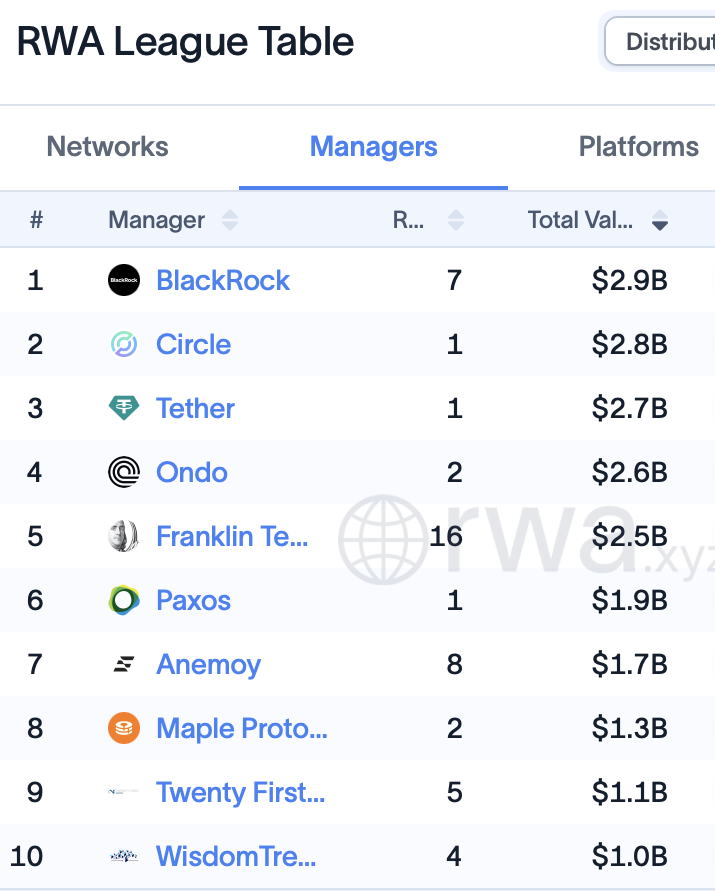
Ondo Finance is not a peripheral player in the evolving digital asset landscape. The firm stands as one of the largest managers of tokenized real-world assets (RWAs), a rapidly expanding segment of the blockchain industry that bridges traditional financial instruments with decentralized finance (DeFi). According to data from RWA.xyz, Ondo ranks fourth globally among tokenized RWA managers, boasting approximately $2.6 billion in distributed value as of the latest Wednesday figures. Tokenized RWAs involve representing tangible or intangible real-world assets—such as bonds, real estate, or even commodities—as digital tokens on a blockchain. This process aims to enhance liquidity, transparency, and fractional ownership, making traditional assets more accessible and efficient.

Ondo’s strategic pivot from a layer-1 blockchain plan to an offchain execution network further illustrates its commitment to adapting to the demands of institutional finance and regulatory realities, positioning itself at the forefront of integrating traditional financial products with blockchain technology. This background lends significant weight to their regulatory arguments, as they are not merely advocating for a niche crypto product but for a mechanism that could significantly enhance the accessibility and utility of mainstream equities within a modernized financial infrastructure.
A Shifting Regulatory Landscape in the US
Ondo’s proposal arrives at a critical juncture for US financial regulators, who are increasingly confronted with the challenge of applying decades-old market rules to novel, blockchain-native products. The dynamic interplay between innovation and regulation has long been a hallmark of financial markets, but the speed and scope of digital asset development are forcing a rapid re-evaluation of existing frameworks.
The regulatory landscape in the US is complex, with the SEC primarily overseeing securities markets and the CFTC regulating commodities and derivatives markets. The classification of digital assets and related products has frequently fallen into a gray area, leading to jurisdictional disputes and uncertainty. However, there has been a noticeable acceleration in efforts to achieve greater clarity and coordination.
In a significant move earlier this year, the SEC and CFTC announced a historic memorandum of understanding (MOU) in March. This agreement signals a concerted effort by the two agencies to harmonize oversight in areas where their jurisdictions overlap, particularly concerning novel financial products that blur the lines between traditional securities and commodities. This increased coordination is a prerequisite for effectively addressing proposals like Ondo’s, which inherently touch upon both security and derivatives aspects.
Political interest in bringing digital asset innovation onshore has also become more pronounced. In August, then-President Donald Trump publicly stated that CFTC Chair Michael Selig was actively working to integrate Hyperliquid, a prominent onchain perpetual futures market, into the United States in a “fully compliant and legal fashion.” While neither the CFTC nor Hyperliquid has publicly detailed the specific mechanisms for US access, Trump’s comments sparked considerable market enthusiasm. HYPE, Hyperliquid’s native token, surged by more than 20% following the announcement and had gained nearly 49% over the past month, trading around $81 as of Wednesday, according to CoinGecko data. This demonstrates both the market’s appetite for regulated access to these products and the potential for political will to drive regulatory action.
Further evidence of regulators’ willingness to modernize comes from the SEC itself. On Tuesday, the agency proposed a comprehensive overhaul of its decades-old transfer agent framework. Citing the growing demand for blockchain-native recordkeeping and tokenized securities in US markets, the SEC’s initiative aims to update rules originally built for older market infrastructure. This move is highly pertinent to Ondo’s proposal, as it directly addresses the need for regulatory adaptation to accommodate onchain data and blockchain-based settlement, which are integral to the efficient operation of digital asset perpetual futures.
Implications and Broader Impact
The potential approval of onshore perpetual stock futures, as advocated by Ondo Finance, carries significant implications across various facets of the US financial ecosystem.
For US Markets and Investors:
Allowing these products onshore could unlock substantial liquidity and foster innovation within regulated environments. Currently, US investors seeking exposure to perpetual stock futures must often resort to offshore platforms, which may operate under less stringent regulatory oversight, potentially exposing investors to greater risks. By bringing this activity within the purview of the SEC and CFTC, investor protection could be significantly enhanced through clearer rules, robust market surveillance, and established dispute resolution mechanisms. It could also level the playing field for US-based financial institutions, allowing them to compete with their international counterparts in offering cutting-edge derivatives products. This could attract capital back to the US, stimulate economic activity, and reinforce the country’s position as a global financial leader.
For Regulators:
The decision regarding Ondo’s proposal will set an important precedent for how the SEC and CFTC approach other novel blockchain-native financial instruments. It will test the adaptability and flexibility of existing regulatory frameworks in the face of rapid technological advancement. The regulators face a delicate balancing act: fostering innovation to maintain market competitiveness while simultaneously safeguarding market stability and protecting consumers from undue risks. Successfully integrating perpetual futures would demonstrate a progressive regulatory approach, potentially paving the way for a broader embrace of tokenized assets and DeFi within a compliant framework. Conversely, a rejection or prolonged delay could be perceived as stifling innovation, pushing more activity offshore and potentially hindering the growth of a nascent but powerful sector.
For the Future of DeFi and Tokenized Assets:
Ondo’s initiative is part of a larger trend towards the "tokenization of everything," where real-world assets are brought onto blockchains. The successful integration of perpetual stock futures could accelerate this trend, providing a regulated bridge between traditional capital markets and the burgeoning world of decentralized finance. It could encourage more institutional participation in DeFi, as regulated products would offer the compliance and security assurances often required by large financial entities. This move could also validate the efficiency and transparency benefits of onchain market data and modern margining practices, potentially leading to their broader adoption across financial markets.
Challenges and Considerations
Despite the potential benefits, bringing perpetual stock futures onshore is not without its challenges. Regulators will need to meticulously assess the unique risks associated with these products, including:
- Liquidity and Volatility: While offshore volumes are high, ensuring sufficient liquidity and managing volatility within a regulated US market will be crucial.
- Margining and Risk Management: Adapting traditional margining requirements to the 24/7 nature of crypto markets and the specific mechanics of perpetuals will require careful consideration.
- Market Manipulation: The potential for market manipulation in novel markets needs robust surveillance and enforcement mechanisms.
- Jurisdictional Clarity: While the SEC and CFTC have signed an MOU, the precise division of oversight for hybrid products remains a complex area.
Conclusion
Ondo Finance’s robust proposal to integrate perpetual stock futures into existing US regulatory frameworks marks a pivotal moment in the ongoing evolution of financial markets. By demonstrating significant offshore demand and meticulously arguing for the applicability of current rules, Ondo is challenging US regulators to embrace innovation and adapt to the realities of a digitized global economy. The confluence of Ondo’s advocacy, the SEC and CFTC’s increased coordination, and high-level political interest in bringing digital asset activities onshore suggests that the US financial regulatory landscape is on the cusp of significant transformation. The outcome of this debate will not only shape the future of derivatives trading but also set a critical precedent for how blockchain technology and tokenized assets will be integrated into the mainstream financial system, potentially ushering in an era of greater efficiency, transparency, and accessibility for investors worldwide.