admin
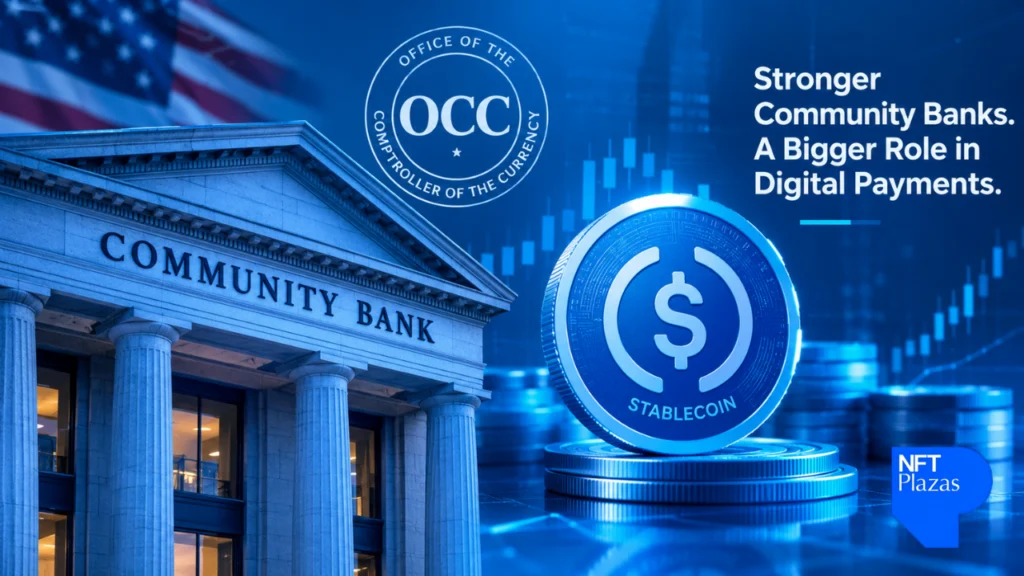
The U.S. Office of the Comptroller of the Currency (OCC) has initiated a significant push to integrate community banks into the burgeoning stablecoin market, actively encouraging smaller lenders to seek authorization to issue their own dollar-pegged digital tokens. This proactive stance comes well in advance of the comprehensive federal regulatory framework set to take effect in January 2027, signaling a strategic effort by the regulator to shape the future of digital payments and ensure traditional financial institutions remain central to its evolution.
In a pivotal statement released on Monday, October 26, the OCC formally invited community banks to apply, either directly or through dedicated subsidiaries, for authorization to become payment stablecoin issuers. This initiative falls under the newly enacted Guiding and Establishing National Innovation for U.S. Stablecoins (GENIUS) Act, a landmark piece of legislation designed to provide clarity and oversight for this rapidly expanding sector of digital finance. The OCC’s move is framed as an opportunity for community banks not only to participate in but also to actively influence the trajectory of digital payments, aligning seamlessly with its broader "Community Bank Comeback" initiatives. These programs are specifically designed to tailor regulatory and supervisory approaches, enabling smaller lenders to foster growth, enhance competitiveness, and continue their vital role in serving local communities across the nation.
This regulatory encouragement arrives at a crucial juncture, as stablecoins increasingly solidify their position within the digital payments ecosystem, and traditional banking institutions grapple with intensifying competition from agile cryptocurrency firms. The OCC’s strategy aims to equip community banks with the tools to navigate this evolving landscape, potentially turning a competitive threat into an avenue for innovation and expanded service offerings.
The Genesis of Regulation: Understanding the GENIUS Act
The foundation for this significant shift was laid on July 18, 2025, when President Donald Trump signed the GENIUS Act into law. This legislative milestone established the first comprehensive federal regulatory framework specifically for payment stablecoins. Prior to this, the stablecoin market largely operated under a patchwork of state-level regulations and federal guidance that was often ambiguous or applied retroactively. The GENIUS Act introduced a standardized set of requirements, critically addressing issuer authorization, the maintenance of robust reserve assets, and the establishment of stringent regulatory oversight.
Following the act’s passage, the OCC moved swiftly to translate the legislation into actionable rules. Its implementing regulations were finalized in October 2026, setting a firm effective date of January 18, 2027, for compliance. Under this new framework, stablecoin issuers will be required to demonstrate unequivocally their capacity to maintain sufficient reserves to back their tokens, meet all redemption obligations promptly, and effectively manage a spectrum of financial and operational risks inherent in digital asset issuance. The requirements extend to capital adequacy, liquidity management, robust governance structures, regular auditing, and comprehensive regulatory reporting, mirroring many of the stringent standards applied to traditional financial institutions.
It is important to note that while the regulatory framework is established, the OCC has not yet commenced accepting formal applications. The application window is slated to open once the necessary federal paperwork receives approval from the Office of Management and Budget (OMB), a standard procedural step in the federal regulatory process. This phased approach allows potential applicants, particularly community banks, ample time to prepare their systems and strategies for compliance.
For existing stablecoin issuers, the GENIUS Act includes provisions for transitional relief. Issuers who submit substantially complete applications by the January 2027 deadline may request temporary waivers, allowing them to continue their operations while their submissions undergo regulatory review. The OCC has indicated a general expectation to grant such waivers when deemed appropriate, demonstrating a pragmatic approach to ensure market continuity during the transition. For community banks, this framework represents a formalized pathway into a market that has historically been dominated by cryptocurrency-native companies and larger, more technologically advanced financial institutions. However, entry is not without its demands; applicants must meticulously demonstrate that they possess the requisite systems, financial resources, and risk controls to operate effectively and safely as authorized stablecoin issuers.
The Evolving Landscape of Digital Payments and Stablecoins
The stablecoin market has witnessed exponential growth in recent years, becoming a critical component of the broader digital asset economy. By late 2026, the total market capitalization of stablecoins had surpassed $200 billion globally, with daily transaction volumes often exceeding those of major payment networks. These digital tokens, designed to maintain a stable value relative to a fiat currency like the U.S. dollar, have found diverse applications ranging from facilitating cryptocurrency trading and cross-border remittances to enabling decentralized finance (DeFi) applications and exploring new avenues for e-commerce.
The OCC’s encouragement of community bank participation is partly a response to this market expansion and the increasing recognition of stablecoins as a legitimate form of digital payment. Historically, the issuance of stablecoins has been concentrated among a few large players, predominantly crypto-native firms like Tether (USDT) and Circle (USDC). These entities have rapidly innovated, offering faster, cheaper, and more accessible payment solutions, which has, in turn, exerted pressure on traditional banking models.
By inviting community banks, the OCC aims to democratize access to stablecoin issuance, fostering a more diversified and resilient ecosystem. This strategy also aligns with the broader national interest in maintaining the U.S. dollar’s prominence in the digital economy. By anchoring stablecoins to the dollar and ensuring their issuance under a robust federal framework, the U.S. seeks to cement its leadership in financial innovation while mitigating potential risks associated with unregulated digital currencies.
Navigating Concerns: Deposit Stability and Competition
The OCC’s invitation, while forward-looking, comes amidst a simmering dispute between traditional banking groups and the cryptocurrency industry, particularly concerning stablecoin rewards. Banking associations, including the Independent Community Bankers of America (ICBA), have vocally urged lawmakers to impose restrictions on stablecoin yields, expressing significant apprehension that attractive reward programs could entice customers to transfer substantial funds from conventional bank accounts to cryptocurrency platforms. Such a migration, they argue, could severely weaken banks’ deposit bases, thereby reducing the capital available for crucial lending activities to households and businesses.

The GENIUS Act directly addresses one facet of this concern by explicitly prohibiting payment stablecoin issuers from paying interest or yield solely for holding their tokens. However, the legislation does not automatically forbid every reward program offered by cryptocurrency exchanges or other third-party platforms. This nuanced distinction has emerged as a major point of contention. Banking groups contend that even if issuers themselves do not pay interest, third-party incentives could still render stablecoins highly attractive alternatives to traditional savings products, drawing deposits away from the banking sector.
This concern is particularly acute for community banks, which are fundamentally reliant on their deposit bases to finance local loans, which are vital for supporting local economies. A significant shift of customer funds towards stablecoins held on crypto platforms could intensify competition for funding, potentially raising costs for community banks and limiting their capacity to extend credit. The OCC’s strategy of encouraging community banks to issue their own tokens is, in part, an attempt to empower them to participate directly in digital payments rather than simply losing ground to crypto-focused businesses. However, entering this market does not automatically insulate their existing deposits or guarantee new revenue streams.
Crucially, the OCC’s final rules under the GENIUS Act do not mandate that stablecoin issuers hold their reserves at community banks. Nor do they require community banks to accept deposits from stablecoin issuers. The regulator has acknowledged that deposits backing stablecoins could potentially be less stable than traditional deposits, especially during the market’s nascent stages. This inherent uncertainty adds another layer of complexity for lenders evaluating the potential benefits and risks of venturing into digital token issuance. The volatility observed in some stablecoin markets in previous years underscores the importance of robust reserve management and regulatory oversight to maintain public confidence.
OCC Under Scrutiny: Broader Regulatory Challenges
The OCC’s stablecoin initiative unfolds against a backdrop of increasing legal and political scrutiny regarding its approach to cryptocurrency companies. On October 2, 2026, the Independent Community Bankers of America (ICBA) filed a lawsuit against the OCC, accusing the regulator of overstepping its legal authority by granting national trust bank charters to crypto-focused firms. Traditional banking representatives argue that such approvals could enable cryptocurrency companies to offer specific financial services, such as digital asset custody, without adhering to the full spectrum of regulatory requirements applicable to conventional banks. This, they contend, creates an uneven playing field and could expose the financial system to undue risks.
The OCC has sought to differentiate these trust charter approvals from its current encouragement of community banks entering stablecoin issuance. The regulator maintains that crypto-focused trust institutions often operate under distinct business models and provide different services compared to traditional community banks, necessitating tailored regulatory approaches.
Adding to the pressure, Senator Elizabeth Warren has also raised serious questions regarding the OCC’s approval of nine crypto-focused institutions, expressing concerns that some may not adequately meet federal requirements and could pose systemic risks to the broader financial system. Consumer protection remains a paramount concern in these debates. A national trust bank charter, for instance, does not automatically guarantee that customers’ digital assets are covered by federal deposit insurance. This highlights the critical need for clear and transparent disclosures about regulatory protections and the inherent risks associated with digital assets. These ongoing disputes underscore the delicate balancing act regulators face: fostering financial innovation while rigorously maintaining appropriate oversight and safeguarding consumers.
The Road Ahead: A Multi-Agency Regulatory Landscape
While the OCC has finalized its specific regulations under the GENIUS Act, it is crucial to understand that this is but one component of a broader, multi-agency federal framework still under development. Other key federal agencies are actively contributing to the comprehensive regulatory landscape for stablecoins.
The Federal Deposit Insurance Corporation (FDIC), for example, is diligently working on establishing robust standards for stablecoin issuers that fall within its jurisdiction, particularly concerning deposit insurance and consumer protection aspects. Simultaneously, the Federal Reserve is actively soliciting input on specific requirements and approval procedures for banks interested in issuing stablecoins, focusing on monetary policy implications and systemic stability. The Treasury Department also plays a critical role, contributing to the development of overarching authorization and supervisory rules, particularly regarding financial crime prevention and national security implications.
Furthermore, separate and equally critical requirements covering customer identification (Know Your Customer or KYC) and anti-money laundering (AML) protocols will significantly shape the operational environment for stablecoin issuers. These measures are fundamental to preventing illicit finance and maintaining the integrity of the financial system.
For community banks, the OCC’s invitation represents a genuine opportunity to explore the realm of digital payments within an increasingly clear and structured regulatory framework. Dollar-pegged tokens could unlock new service offerings, diversify revenue streams, and allow these banks to retain and attract tech-savvy customers in an increasingly digital world. However, these prospects must be carefully weighed against the substantial compliance costs, significant operational demands, and the intensifying competition from both traditional and crypto-native entities.
The January 18, 2027, implementation date will serve as a pivotal milestone, marking the official commencement of the new regulatory regime and requiring all participants to adhere to the stringent new standards. Whether smaller lenders will enthusiastically embrace stablecoin issuance remains an open question. Their decisions will undoubtedly hinge on a confluence of factors, including demonstrable customer demand for such services, the commercial viability of stablecoin products, and, critically, their ability to meet and sustain compliance with the rigorous federal standards.
Nevertheless, the OCC’s message is unequivocal: community banks are strongly encouraged to actively consider entering the stablecoin market. The regulator’s clear intent is to prevent digital payment innovation from becoming the exclusive domain of cryptocurrency companies and larger, globally integrated financial institutions, thereby ensuring that community banks remain integral players in the evolving financial ecosystem.