admin
admin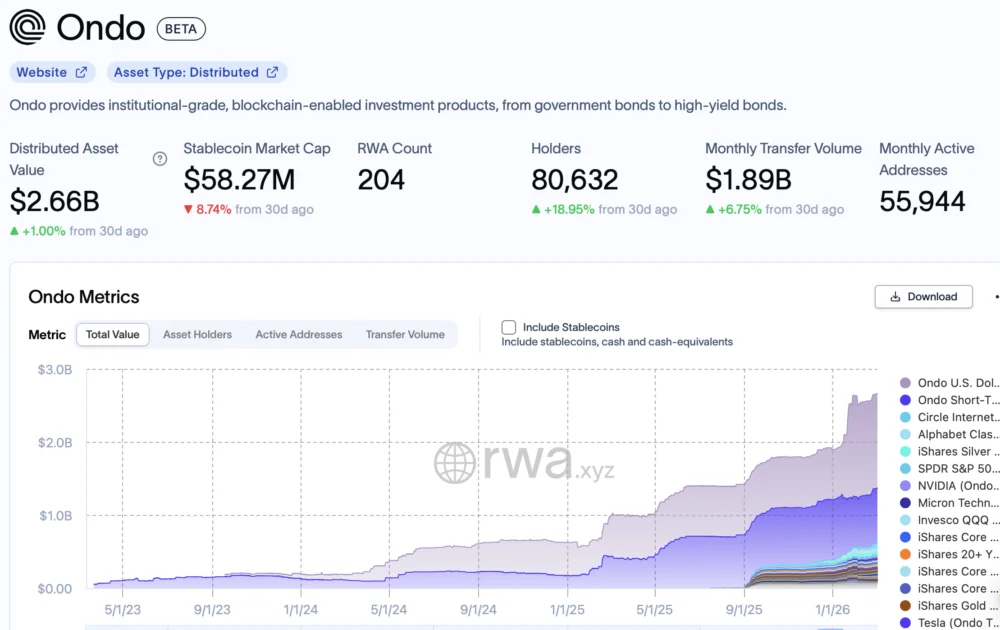
MEXC, a prominent centralized cryptocurrency exchange, has significantly broadened its tokenized equities portfolio through an ongoing strategic partnership with Ondo Finance, a leader in the tokenization of real-world assets. This latest expansion introduces 24 new on-chain representations of US stocks, which are made available for trading against Tether (USDT) on the MEXC platform. The move underscores a growing trend within the digital asset space to bridge traditional finance with blockchain technology, offering unprecedented access and liquidity to global investors.
The expansion, detailed in a series of company announcements this week, specifically includes 17 newly listed tokenized stock pairs and an additional seven tokens tied to key US defense and energy companies. These tokens are issued as ERC-20 assets on the Ethereum blockchain, providing interoperability and leveraging the network’s robust infrastructure. Each token is designed to represent ownership of a corresponding underlying equity, with the actual shares held in regulated trust accounts and subjected to quarterly third-party audits to ensure transparency and security. This structured approach aims to instill confidence among traders in the nascent yet rapidly expanding tokenized securities market.
Detailed Expansion of Offerings
The initial announcement on March 3 highlighted the introduction of 17 new tokenized stock pairs. These additions span a diverse array of high-growth sectors, including cutting-edge technology, vital healthcare, and robust finance, reflecting a broad appeal to investors seeking exposure across various industries. While the specific names of the individual companies within this batch were not disclosed at the time of the announcement, the breadth of sectors suggests a strategic effort to offer a comprehensive investment landscape. To incentivize early adoption and trading activity, MEXC has announced a waiver of trading fees for these 17 newly listed tokenized stock pairs for the first 30 days following their launch. This promotional period is a common tactic in the competitive crypto exchange environment to attract users and generate initial liquidity for new listings.
A subsequent release on Wednesday further augmented this offering, adding seven highly strategic tokenized equities specifically focused on the defense and energy sectors. This batch includes shares from globally recognized industry giants such as Lockheed Martin (LMT), a leading aerospace and defense corporation; RTX (RTX), formerly Raytheon Technologies, another defense and aerospace powerhouse; ConocoPhillips (COP), one of the world’s largest independent exploration and production companies; and Occidental Petroleum (OXY), a major player in the oil and gas industry. The inclusion of these companies provides investors with direct on-chain exposure to sectors critical for global infrastructure and national security, which are often considered stable and strategically important investments. Withdrawals for these newly listed defense and energy tokens are scheduled to commence on March 5, providing a clear timeline for investors to manage their assets.
The Enduring Partnership Between MEXC and Ondo Finance
This latest influx of tokenized equities marks a significant milestone in the collaboration between MEXC and Ondo Finance, representing the ninth expansion of their tokenized equity offering. The partnership has been instrumental in progressively bringing traditional financial assets onto the blockchain, thereby democratizing access to global markets. MEXC, founded in 2018, has rapidly ascended to become a leading centralized cryptocurrency exchange, offering an extensive range of spot and derivatives trading options for digital assets. According to data from CoinMarketCap, MEXC currently ranks as the ninth-largest exchange globally by spot trading volume, underscoring its substantial market presence and operational capabilities. Its strategic embrace of tokenized real-world assets demonstrates a forward-looking approach to diversifying its product offerings and attracting a broader user base.
Ondo Finance, based in New York, specializes in bridging the gap between traditional finance and decentralized finance (DeFi) by tokenizing real-world assets (RWAs). The company’s core mission revolves around making these assets accessible on-chain, enhancing liquidity, transparency, and fractional ownership opportunities. Ondo Finance has emerged as a significant player in the RWA tokenization space, with assets issued through its platform totaling approximately $2.66 billion in tokenized value at the time of writing, according to RWA.xyz data. This substantial figure highlights Ondo Finance’s expertise and leadership in structuring and managing tokenized versions of real-world assets, ranging from equities to government bonds and other financial instruments. The partnership with MEXC leverages Ondo’s technical prowess in tokenization and compliance, combined with MEXC’s expansive global trading infrastructure and user base.
The Mechanics of Tokenization and Regulatory Oversight
The process behind these tokenized equities involves a meticulous framework designed to ensure both digital asset functionality and traditional financial security. As ERC-20 assets on Ethereum, the tokens benefit from the blockchain’s inherent security, immutability, and transparency. Each token directly represents a proportional share of an underlying physical stock. Crucially, these underlying shares are not held by MEXC or Ondo Finance directly in a speculative capacity, but rather in segregated, regulated trust accounts. This mechanism ensures that the tokens are truly backed by tangible assets and are not merely synthetic derivatives.
Furthermore, the commitment to quarterly third-party audits of these trust accounts provides an additional layer of investor protection and transparency. These audits verify that the number of outstanding tokens accurately corresponds to the underlying shares held, mitigating risks associated with potential misrepresentation or mismanagement. This regulatory-aligned approach is critical for building trust in the tokenized securities market, which often faces scrutiny regarding asset backing and investor safeguards. By adhering to such rigorous standards, MEXC and Ondo Finance aim to differentiate their offerings and appeal to a more discerning segment of the global investment community, including those who might be hesitant to engage with less regulated crypto products.
The Strategic Imperative: Rise of Real-World Asset (RWA) Tokenization

The expansion by MEXC and Ondo Finance is indicative of a broader and accelerating trend within the cryptocurrency ecosystem: the tokenization of real-world assets (RWAs). RWA tokenization is rapidly becoming a cornerstone of the next evolutionary phase of blockchain technology, aiming to unlock trillions of dollars in value from illiquid or traditionally inaccessible assets. This movement seeks to integrate the efficiency, transparency, and global accessibility of blockchain with the stability and intrinsic value of tangible assets.
The advantages of RWA tokenization are multifaceted. It enables fractional ownership, allowing smaller investors to gain exposure to high-value assets that would otherwise be out of reach. It also facilitates greater liquidity by creating a secondary market for assets that might traditionally be difficult to trade. Furthermore, blockchain’s inherent transparency can reduce settlement times and costs, making transactions more efficient. For crypto exchanges, offering tokenized RWAs is a strategic move to diversify revenue streams, attract new user demographics from traditional finance, and position themselves at the forefront of financial innovation. This trend is not merely about bringing stocks on-chain but extends to bonds, real estate, commodities, and intellectual property, signaling a profound shift in how value is represented and exchanged globally.
Competitive Landscape and Market Dynamics
The race among crypto exchanges to tokenize stocks and other real-world assets has been gaining significant momentum, transforming the competitive landscape. MEXC’s latest expansion places it firmly within a growing cohort of exchanges actively pursuing this frontier. In June, more than 60 tokenized equities became available on platforms like Kraken and Bybit through Backed Finance’s xStocks product. This lineup featured shares of major technology and consumer companies, including Apple, Amazon, Nvidia, Tesla, Meta, and Netflix, indicating a strong market appetite for these digital representations of blue-chip stocks.
Gemini, another prominent crypto exchange, has also entered the sector through a partnership with Dinari. In July, Gemini announced that customers in the European Union could trade a growing list of tokenized US stocks on its platform, including shares tied to companies such as Exxon, Sony, BlackRock, and Visa. This demonstrates a clear strategy among exchanges to cater to specific geographic markets where regulatory frameworks are more accommodating for tokenized securities.
Beyond tokenized equities, some exchanges are also expanding into traditional brokerage-style services. In April, Kraken announced plans to offer trading in approximately 11,000 US-listed stocks and exchange-traded funds (ETFs) as part of a phased rollout across the United States. Similarly, Coinbase and Bitpanda have recently introduced stock trading features, allowing users to buy and sell equities alongside cryptocurrencies on their platforms. This convergence of crypto and traditional finance platforms suggests a future where investors can manage a diverse portfolio of digital assets and traditional securities from a single interface, blurring the lines between asset classes and investment platforms.
Navigating the Regulatory Environment
Despite the global enthusiasm for tokenized equities, their availability remains largely restricted for US users. The industry continues to await clearer regulatory guidance from bodies such as the Securities and Exchange Commission (SEC) for blockchain-based securities. In the United States, traditional equities are subject to stringent securities laws, and the tokenization of these assets introduces complexities regarding classification, trading, and investor protection under existing legal frameworks. The SEC has historically taken a cautious approach to novel financial products, particularly those involving blockchain, due to concerns about market manipulation, investor disclosure, and compliance with anti-money laundering (AML) and know-your-customer (KYC) regulations.
This regulatory ambiguity creates a bifurcated market where non-US traders often have broader access to tokenized securities compared to their US counterparts. This disparity highlights the critical need for regulatory clarity to unlock the full potential of tokenized assets globally. While some jurisdictions, particularly in Europe and Asia, have begun to develop more explicit frameworks for digital securities, the US market remains a significant challenge. The ongoing dialogue between industry innovators and regulators will be crucial in shaping the future of tokenized securities and ensuring that innovation can flourish within a robust and secure legal environment. Until then, expansions like MEXC’s with Ondo Finance will predominantly serve international markets, offering fractional and liquid access to US equities for a global audience.
Implications for Investors and the Broader Financial Market
The expansion of tokenized US equities by MEXC and Ondo Finance carries significant implications for both retail investors and the broader financial market. For retail investors, particularly those outside the United States, it provides unprecedented access to US equity markets that might otherwise be difficult or costly to enter through traditional brokerages. Fractional ownership, low trading fees (especially during promotional periods), and 24/7 blockchain-based trading can significantly lower barriers to entry, enabling greater financial inclusion. The ability to trade these assets against stablecoins like USDT also simplifies the process for crypto-native investors, eliminating the need for traditional fiat on-ramps and off-ramps for every transaction.
For the broader financial market, this trend signifies a gradual but fundamental shift towards a more interconnected and efficient global financial system. The tokenization of equities demonstrates the potential of blockchain technology to enhance market infrastructure, reduce intermediaries, and improve liquidity across asset classes. As more traditional assets migrate onto the blockchain, it could lead to the development of novel financial products, more sophisticated trading strategies, and a convergence of traditional and decentralized finance. However, the success and widespread adoption of tokenized equities will ultimately depend on continued technological innovation, robust regulatory frameworks that foster trust and security, and the ability of platforms to seamlessly integrate these new asset classes into existing financial ecosystems. The strategic partnership between MEXC and Ondo Finance is a clear indicator of this ongoing evolution, pushing the boundaries of what is possible in the digital asset economy.