admin
admin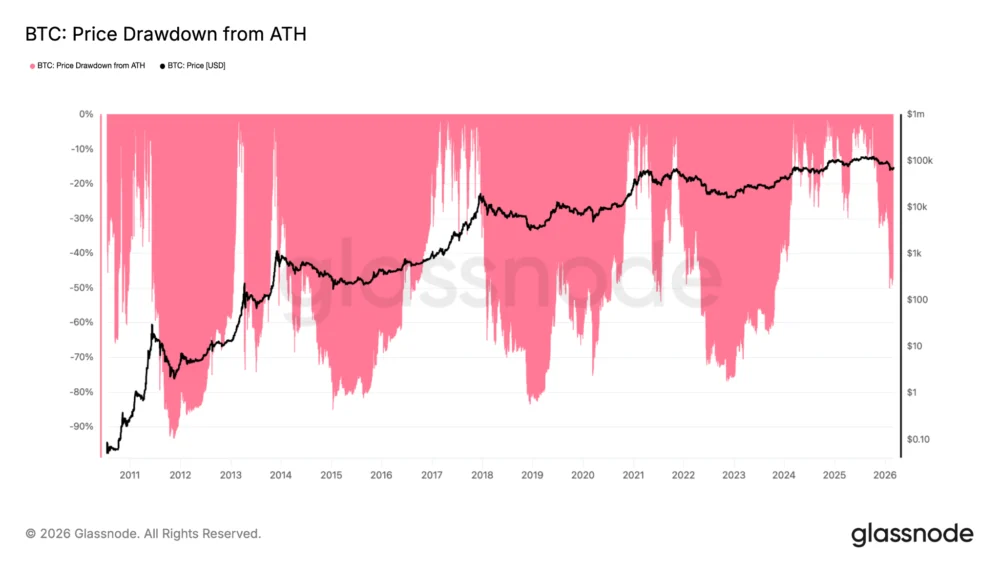
While Bitcoin (BTC) remains significantly below its recent all-time high of approximately $73,800 recorded in March 2024, a confluence of technical analysis patterns and historical market correlations suggests that the price range between $60,000 and $72,000 could be solidifying as a new foundational bottom, potentially preceding a sustained recovery in the cryptocurrency market. This emerging consensus among analysts is fueled by observations of bullish reversal patterns, a cyclical bottoming signal against gold, and the retesting of crucial multi-year support trend lines.
The "Adam and Eve" Double-Bottom Pattern Signals Trend Reversal
One of the most compelling technical indicators currently at play is the formation of an "Adam and Eve" double-bottom pattern on Bitcoin’s 12-hour chart. This pattern, a variation of the classic double-bottom, is widely recognized in technical analysis as a strong bullish reversal signal, typically appearing after a prolonged downtrend and indicating a significant shift from selling pressure to buying accumulation. The "Adam" part of the pattern is characterized by a sharp, V-shaped price decline and recovery, reflecting a quick capitulation and rebound. The "Eve" portion, conversely, features a more rounded, U-shaped bottom, suggesting a gradual accumulation phase where buyers slowly gain control, absorbing selling interest without sharp price movements.
Bitcoin’s price action over recent weeks aligns with this structure. The cryptocurrency staged a robust 21% recovery from its multi-year low of $60,000, reached on February 6, climbing to a 30-day high of $74,000. Following this ascent, BTC retraced to approximately $72,500 by Thursday, a movement that analysts are interpreting as the formation of the "Eve" portion of the pattern. Crypto analyst Jelle highlighted this development, stating on X that an "Adam and Eve bottom is still playing out" on the Bitcoin 12-hour chart. The pattern was formally confirmed when Bitcoin’s price successfully broke out and closed above the neckline at $70,000 on Wednesday. The neckline, representing the peak between the two bottoms, acts as a critical resistance level that, once breached, validates the reversal signal. For the bullish scenario to continue unfolding, analysts emphasize the importance of bulls maintaining control over this breakout area. A failure to hold above $70,000 could lead to further retesting or, in a more bearish scenario, invalidate the pattern, prompting concerns about another potential downside deviation.
This technical setup is supported by broader market sentiment indicators, which have recently suggested an easing of profit-taking pressures. Cointelegraph previously reported that a slowdown in profit realization was a crucial prerequisite for Bitcoin to sustain its position above the $70,000 mark and confirm the nascent recovery. The successful hold above this level, therefore, not only validates the Adam and Eve pattern but also indicates a growing confidence among market participants. Historically, confirmed double-bottom patterns often precede substantial upward movements, as they reflect a definitive rejection of lower prices and a renewed commitment from buyers. Traders and investors closely monitor such patterns, as they can provide early signals for strategic entry points into a new uptrend.
Bitcoin-Gold Ratio Flashes a Cyclical Bottom Signal
Further bolstering the bullish outlook is an intriguing historical correlation observed in Bitcoin’s price performance relative to gold. As of March 2026, Bitcoin’s price, when measured against gold, has been in a discernible downtrend for 13 months, following its peak in December 2024. This ratio, often seen as a barometer for risk sentiment in global markets, offers a compelling macro signal. When Bitcoin, a traditionally risk-on asset, depreciates against gold, a classic safe-haven asset, it typically signals a broader risk-off environment. This shift in investor preference often stems from fears of macroeconomic instability, escalating geopolitical uncertainties, or a general liquidity squeeze in the financial system. In such conditions, investors tend to reduce their exposure to riskier assets like cryptocurrencies and reallocate capital into perceived safer stores of value, with gold being a prime beneficiary.

Nic, CEO of Coinbureau, highlighted the cyclical nature of this phenomenon in a recent X post, noting that "in the 3 previous cycles, it’s taken about 14 months to go from peak to bottom" in the Bitcoin-gold ratio. He further emphasized that "these also coincided with bear market bottoms." This historical pattern suggests a strong predictive capability. For instance, when the BTC/XAU ratio bottomed out in late 2022, Bitcoin’s price subsequently hit a macro low of approximately $15,500. This low was then followed by an astonishing rally, with Bitcoin surging by 352% to reach its previous all-time high of $73,800 in March 2024. Similar trajectories were observed in 2018 and 2014, where Bitcoin experienced gains ranging between 300% and 450% within a year after the BTC/XAU pair registered its respective bottoms.
The current 13-month drawdown from the last ratio peak, therefore, strongly suggests that a macro bottom for Bitcoin against gold is imminent. If history serves as a reliable guide, this cyclical turning point could precede another significant bull run for Bitcoin, reaffirming its position and potentially attracting a new wave of institutional and retail investment. This analysis provides a longer-term perspective, indicating that the current price levels, while perhaps perceived as stagnant or bearish by some, might represent a crucial accumulation phase before the next major expansion. The comparison to gold also subtly reinforces Bitcoin’s narrative as "digital gold," even as it temporarily underperforms its physical counterpart during periods of heightened global uncertainty.
Bitcoin’s Ascending Channel and Multi-Year Support Lines Point to Cycle Bottoms
Adding another layer of bullish confirmation, data from TradingView indicates that Bitcoin’s price is currently retesting a critical multi-year support trend line on the monthly time frame. This particular trend line forms part of a larger ascending channel, a pattern that has historically demarcated significant bear market bottoms for Bitcoin. An ascending channel is characterized by two parallel upward-sloping trend lines that contain price action, with the lower line acting as dynamic support and the upper line as dynamic resistance. The monthly chart reveals that this support trend line has consistently marked the lowest points of Bitcoin’s previous bear cycles, notably in 2018 and 2022. Each time Bitcoin has approached and touched this trend line, it has historically found strong buying support, leading to subsequent market recoveries and new all-time highs.
Trader and analyst Coinvo Trading elucidated this historical correlation in a video post on X, observing that "Bitcoin is now approaching the historical bottom level at the trend line." Extending this historical precedent, Coinvo Trading boldly predicted, "If history plays out, Bitcoin is going to retest this trend line and then top out somewhere around $500K." This ambitious target underscores the potential upside that long-term trend lines can imply when successfully defended. The psychological significance of such long-term support levels cannot be overstated. They represent major decision points for institutional investors and long-term holders, often triggering substantial buying interest as market participants anticipate a rebound.
In corroboration, fellow analyst Rekt Fencer expressed strong conviction, stating on X that he was "sure the BTC bottom is in" after identifying a similar pattern on the weekly time frame. This analysis also highlighted the price retesting a trend line that accurately marked the 2022 bottom. The convergence of these multi-timeframe analyses (monthly and weekly charts) on similar long-term support levels significantly strengthens the argument for a cycle bottom being established. The resilience of these trend lines over multiple market cycles provides a powerful technical foundation, suggesting that current price levels are not merely arbitrary but are anchored by historical buying interest and market structure. Should Bitcoin successfully hold these levels, it would reinforce the long-term bullish trajectory of the asset, further validating its growth narrative despite short-term volatility.
Broader Market Context and Additional Indicators
Beyond these specific patterns, other technical indicators and broader market dynamics also contribute to the sentiment that Bitcoin is nearing a potential bottom. As previously reported by Cointelegraph, the Relative Strength Index (RSI) is among the indicators signaling this possibility. The RSI is a momentum oscillator that measures the speed and change of price movements, typically ranging from 0 to 100. Readings below 30 generally indicate oversold conditions, while readings above 70 suggest overbought conditions. When Bitcoin’s RSI enters oversold territory or shows bullish divergence (where price makes a lower low but RSI makes a higher low), it often precedes a price reversal. While the exact current RSI reading isn’t provided, its inclusion in the bottoming thesis suggests it aligns with the other bullish signals.

The broader macroeconomic environment also plays a crucial role in shaping Bitcoin’s trajectory. Factors such as global inflation rates, central bank interest rate policies, and geopolitical events significantly influence investor appetite for risk assets. During periods of high inflation or economic uncertainty, Bitcoin has increasingly been viewed by some as an inflation hedge, while others see it as a higher-beta asset that benefits from overall market liquidity. Geopolitical tensions, while often driving initial risk-off moves, can also lead to increased interest in decentralized, censorship-resistant assets like Bitcoin as a safe haven from traditional financial systems. The current market sentiment, while cautious, appears to be gradually shifting towards optimism, partly due to expectations of future monetary easing or a more stable global economic outlook.
Furthermore, the evolving landscape of institutional adoption, including the increasing accessibility of Bitcoin through regulated investment vehicles like spot Exchange Traded Funds (ETFs), continues to provide underlying support for the asset. These developments can attract significant capital inflows, contributing to market stability and providing robust buying pressure at key support levels. The sustained interest from institutional players, even during periods of price consolidation, suggests a growing long-term confidence in Bitcoin’s value proposition.
Implications and Forward Outlook
The convergence of the "Adam and Eve" double-bottom pattern, the cyclical bottoming of the Bitcoin-gold ratio, and the retesting of multi-year ascending channel support lines presents a compelling narrative for Bitcoin’s immediate future. These technical signals, when viewed collectively, suggest that the recent price consolidation between $60,000 and $72,000 is not merely a transient dip but a potential foundational re-accumulation phase.
Should these technical patterns hold true, the implications for Bitcoin and the broader cryptocurrency market are profoundly positive. A confirmed bottom would likely instill renewed confidence among investors, potentially triggering increased capital inflows and setting the stage for the next leg of a bull market. The ability of Bitcoin to defend these crucial support zones would underscore its growing maturity as an asset class and its adherence to predictable market cycles, albeit with higher volatility than traditional assets.
However, market participants remain vigilant. While the signals are predominantly bullish, the volatile nature of cryptocurrency markets dictates that caution is always prudent. The importance of sustained buying volume and follow-through in price action cannot be overstated in confirming any trend reversal. A failure to maintain the breakout areas or defend the long-term support lines could lead to further downside exploration, although the current technical picture makes such a scenario less probable in the short term. The long-term vision, as articulated by some analysts, even hints at ambitious price targets like $500,000, suggesting that if these current bottoms prove successful, Bitcoin’s growth trajectory could continue to defy conventional expectations. For now, all eyes remain on the $60,000 to $72,000 range, as it holds the key to Bitcoin’s next significant move.
This article does not contain investment advice or recommendations. Every investment and trading move involves risk, and readers should conduct their own research when making a decision. While we strive to provide accurate and timely information, Cointelegraph does not guarantee the accuracy, completeness, or reliability of any information in this article. This article may contain forward-looking statements that are subject to risks and uncertainties. Cointelegraph will not be liable for any loss or damage arising from your reliance on this information.
Bitcoin’s $60,000 – $72,000 Range Emerges as Potential New Bottom Amid Bullish Technical Signals and Historical Precedents

While Bitcoin (BTC) remains significantly below its recent all-time high of approximately $73,800 recorded in March 2024, a confluence of technical analysis patterns and historical market correlations suggests that the price range between $60,000 and $72,000 could be solidifying as a new foundational bottom, potentially preceding a sustained recovery in the cryptocurrency market. This emerging consensus among analysts is fueled by observations of bullish reversal patterns, a cyclical bottoming signal against gold, and the retesting of crucial multi-year support trend lines.
The "Adam and Eve" Double-Bottom Pattern Signals Trend Reversal
One of the most compelling technical indicators currently at play is the formation of an "Adam and Eve" double-bottom pattern on Bitcoin’s 12-hour chart. This pattern, a variation of the classic double-bottom, is widely recognized in technical analysis as a strong bullish reversal signal, typically appearing after a prolonged downtrend and indicating a significant shift from selling pressure to buying accumulation. The "Adam" part of the pattern is characterized by a sharp, V-shaped price decline and recovery, reflecting a quick capitulation and rebound. The "Eve" portion, conversely, features a more rounded, U-shaped bottom, suggesting a gradual accumulation phase where buyers slowly gain control, absorbing selling interest without sharp price movements. This difference in formation implies a transition from a rapid, fear-driven sell-off to a more methodical, conviction-driven buying phase.
Bitcoin’s price action over recent weeks aligns with this structure. The cryptocurrency staged a robust 21% recovery from its multi-year low of $60,000, reached on February 6, climbing to a 30-day high of $74,000. Following this ascent, BTC retraced to approximately $72,500 by Thursday, a movement that analysts are interpreting as the formation of the "Eve" portion of the pattern. Crypto analyst Jelle highlighted this development, stating on X that an "Adam and Eve bottom is still playing out" on the Bitcoin 12-hour chart. The pattern was formally confirmed when Bitcoin’s price successfully broke out and closed above the neckline at $70,000 on Wednesday. The neckline, representing the peak between the two bottoms, acts as a critical resistance level that, once breached, validates the reversal signal. For the bullish scenario to continue unfolding, analysts emphasize the importance of bulls maintaining control over this breakout area. A failure to hold above $70,000 could lead to further retesting or, in a more bearish scenario, invalidate the pattern, prompting concerns about another potential downside deviation. Such a deviation would suggest that buying pressure has not yet fully overcome selling interest, leading to a potential re-evaluation of the immediate bullish outlook.
This technical setup is supported by broader market sentiment indicators, which have recently suggested an easing of profit-taking pressures. Cointelegraph previously reported that a slowdown in profit realization was a crucial prerequisite for Bitcoin to sustain its position above the $70,000 mark and confirm the nascent recovery. The successful hold above this level, therefore, not only validates the Adam and Eve pattern but also indicates a growing confidence among market participants. Historically, confirmed double-bottom patterns often precede substantial upward movements, as they reflect a definitive rejection of lower prices and a renewed commitment from buyers. Traders and investors closely monitor such patterns, as they can provide early signals for strategic entry points into a new uptrend, anticipating a shift in market psychology from capitulation to accumulation.
Bitcoin-Gold Ratio Flashes a Cyclical Bottom Signal
Further bolstering the bullish outlook is an intriguing historical correlation observed in Bitcoin’s price performance relative to gold. As of March 2026, Bitcoin’s price, when measured against gold (BTC/XAU ratio), has been in a discernible downtrend for 13 months, following its peak in December 2024. This ratio, often seen as a barometer for risk sentiment in global markets, offers a compelling macro signal. When Bitcoin, a traditionally risk-on asset due to its volatility and growth potential, depreciates against gold, a classic safe-haven asset, it typically signals a broader risk-off environment. This shift in investor preference often stems from fears of macroeconomic instability, escalating geopolitical uncertainties, or a general liquidity squeeze in the financial system. In such conditions, investors tend to reduce their exposure to riskier assets like cryptocurrencies and reallocate capital into perceived safer stores of value, with gold being a prime beneficiary. This movement highlights the ongoing debate about Bitcoin’s role as "digital gold" versus its function as a high-growth technology asset.
Nic, CEO of Coinbureau, highlighted the cyclical nature of this phenomenon in a recent X post, noting that "in the 3 previous cycles, it’s taken about 14 months to go from peak to bottom" in the Bitcoin-gold ratio. He further emphasized that "these also coincided with bear market bottoms." This historical pattern suggests a strong predictive capability, providing a longer-term lens through which to view Bitcoin’s current market position. For instance, when the BTC/XAU ratio bottomed out in late 2022, Bitcoin’s price subsequently hit a macro low of approximately $15,500. This low was then followed by an astonishing rally, with Bitcoin surging by 352% to reach its previous all-time high of $73,800 in March 2024. Similar trajectories were observed in 2018 and 2014, when Bitcoin experienced gains ranging between 300% and 450% within a year after the BTC/XAU pair registered its respective bottoms. These historical precedents provide a robust statistical basis for interpreting the current ratio’s behavior.

The current 13-month drawdown from the last ratio peak, therefore, strongly suggests that a macro bottom for Bitcoin against gold is imminent. If history serves as a reliable guide, this cyclical turning point could precede another significant bull run for Bitcoin, reaffirming its position and potentially attracting a new wave of institutional and retail investment. This analysis provides a longer-term perspective, indicating that the current price levels, while perhaps perceived as stagnant or bearish by some, might represent a crucial accumulation phase before the next major expansion. The comparison to gold also subtly reinforces Bitcoin’s narrative as "digital gold," even as it temporarily underperforms its physical counterpart during periods of heightened global uncertainty, underscoring its potential to regain its premium as risk appetite returns to the market.
Bitcoin’s Ascending Channel and Multi-Year Support Lines Point to Cycle Bottoms
Adding another layer of bullish confirmation, data from TradingView indicates that Bitcoin’s price is currently retesting a critical multi-year support trend line on the monthly time frame. This particular trend line forms part of a larger ascending channel, a pattern that has historically demarcated significant bear market bottoms for Bitcoin. An ascending channel is characterized by two parallel upward-sloping trend lines that contain price action, with the lower line acting as dynamic support and the upper line as dynamic resistance. The monthly chart reveals that this support trend line has consistently marked the lowest points of Bitcoin’s previous bear cycles, notably in 2018 and 2022. Each time Bitcoin has approached and touched this trend line, it has historically found strong buying support, leading to subsequent market recoveries and new all-time highs. This recurring behavior suggests that these long-term trend lines are not merely coincidental but reflect fundamental shifts in market equilibrium and investor conviction at critical junctures.
Trader and analyst Coinvo Trading elucidated this historical correlation in a video post on X, observing that "Bitcoin is now approaching the historical bottom level at the trend line." Extending this historical precedent, Coinvo Trading boldly predicted, "If history plays out, Bitcoin is going to retest this trend line and then top out somewhere around $500K." This ambitious target underscores the potential upside that long-term trend lines can imply when successfully defended. The psychological significance of such long-term support levels cannot be overstated. They represent major decision points for institutional investors and long-term holders, often triggering substantial buying interest as market participants anticipate a rebound. The collective memory of past successful bounces from these levels reinforces their importance, turning them into self-fulfilling prophecies to some extent.
In corroboration, fellow analyst Rekt Fencer expressed strong conviction, stating on X that he was "sure the BTC bottom is in" after identifying a similar pattern on the weekly time frame. This analysis also highlighted the price retesting a trend line that accurately marked the 2022 bottom. The convergence of these multi-timeframe analyses (monthly and weekly charts) on similar long-term support levels significantly strengthens the argument for a cycle bottom being established. The resilience of these trend lines over multiple market cycles provides a powerful technical foundation, suggesting that current price levels are not merely arbitrary but are anchored by historical buying interest and market structure. Should Bitcoin successfully hold these levels, it would reinforce the long-term bullish trajectory of the asset, further validating its growth narrative despite short-term volatility. The repeated validation of these long-term support zones speaks to Bitcoin’s fundamental market structure and the enduring belief in its long-term value proposition among a significant portion of its holder base.
Broader Market Context and Additional Indicators
Beyond these specific patterns, other technical indicators and broader market dynamics also contribute to the sentiment that Bitcoin is nearing a potential bottom. As previously reported by Cointelegraph, the Relative Strength Index (RSI) is among the indicators signaling this possibility. The RSI is a momentum oscillator that measures the speed and change of price movements, typically ranging from 0 to 100. Readings below 30 generally indicate oversold conditions, while readings above 70 suggest overbought conditions. When Bitcoin’s RSI enters oversold territory or shows bullish divergence (where price makes a lower low but RSI makes a higher low), it often precedes a price reversal. While the exact current RSI reading isn’t provided, its inclusion in the bottoming thesis suggests it aligns with the other bullish signals, indicating a weakening of bearish momentum.
The broader macroeconomic environment also plays a crucial role in shaping Bitcoin’s trajectory. Factors such as global inflation rates, central bank interest rate policies, and geopolitical events significantly influence investor appetite for risk assets. During periods of high inflation or economic uncertainty, Bitcoin has increasingly been viewed by some as an inflation hedge, while others see it as a higher-beta asset that benefits from overall market liquidity. The narrative of Bitcoin as "digital gold" gains traction during periods of currency debasement or geopolitical instability, as investors seek alternative stores of value outside traditional fiat systems. Geopolitical tensions, while often driving initial risk-off moves, can also lead to increased interest in decentralized, censorship-resistant assets like Bitcoin as a safe haven from traditional financial systems. The current market sentiment, while cautious, appears to be gradually shifting towards optimism, partly due to expectations of future monetary easing or a more stable global economic outlook, which could inject fresh capital into risk assets.

Furthermore, the evolving landscape of institutional adoption, including the increasing accessibility of Bitcoin through regulated investment vehicles like spot Exchange Traded Funds (ETFs), continues to provide underlying support for the asset. These developments can attract significant capital inflows, contributing to market stability and providing robust buying pressure at key support levels. The sustained interest from institutional players, even during periods of price consolidation, suggests a growing long-term confidence in Bitcoin’s value proposition and its integration into mainstream financial portfolios. The entry of sophisticated institutional capital often provides a floor for prices, as these entities tend to have longer investment horizons and conduct thorough due diligence, lending credibility to Bitcoin’s long-term potential.
Implications and Forward Outlook
The convergence of the "Adam and Eve" double-bottom pattern, the cyclical bottoming of the Bitcoin-gold ratio, and the retesting of multi-year ascending channel support lines presents a compelling narrative for Bitcoin’s immediate future. These technical signals, when viewed collectively, suggest that the recent price consolidation between $