admin
admin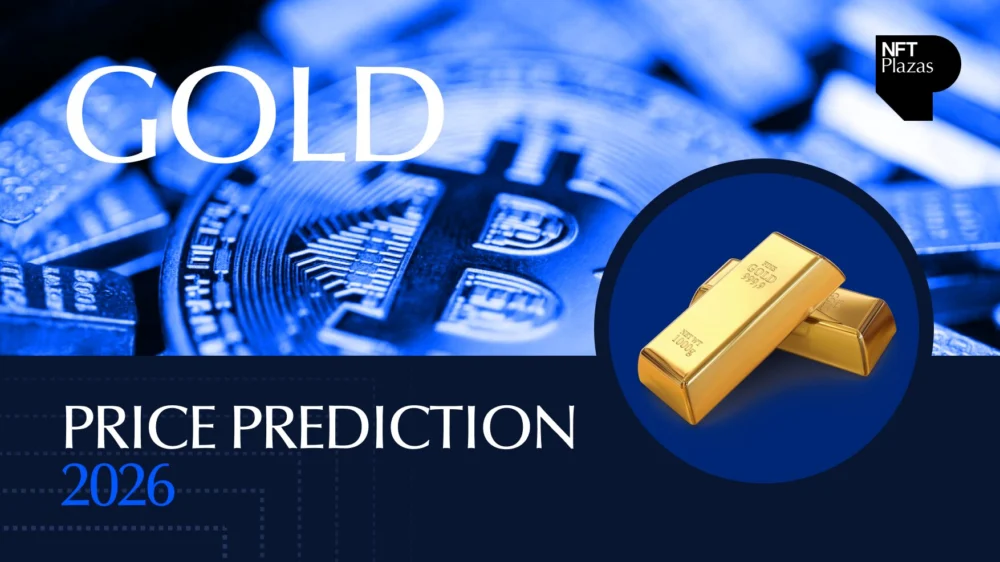
As of early March 2026, the precious metal gold is trading at $5,186.00 per ounce, having recently touched intraday peaks of $5,192.92, underscoring its sustained appeal as a critical hedge against persistent inflation and global market volatility. This robust performance sets the stage for a dynamic year, with analysts and market participants closely monitoring a confluence of macroeconomic factors that will dictate gold’s trajectory throughout 2026. Forecasts suggest a stable yet potentially volatile trading range, averaging around $5,185.50, reflecting cautious optimism amid ongoing economic uncertainties.
The Current Gold Market: A Snapshot in Early 2026
The opening months of 2026 have seen gold consolidate its position above the $5,000 mark, a psychological and technical milestone that few predicted just a few years prior. This sustained high valuation is a testament to gold’s enduring role as a safe-haven asset, particularly in an environment characterized by fluctuating interest rates, elevated inflation expectations, and simmering geopolitical tensions. The current price of $5,186.00 per ounce reflects a market that is both resilient and reactive, absorbing various global shocks while maintaining a strong underlying bid. Investors are increasingly prioritizing assets that offer protection against the erosion of purchasing power and systemic risks, cementing gold’s relevance in modern portfolios.
Historical Context: Gold’s Ascent to Record Highs
Gold’s journey to its current elevated levels is a compelling narrative of macro-economic shifts and investor sentiment. For decades, the precious metal held a significant but relatively stable position, often reacting to specific crises. A pivotal moment occurred in August 2020, when gold broke its then all-time high, reaching approximately $2,075 per ounce. This surge was primarily driven by the unprecedented global response to the COVID-19 pandemic, which included massive fiscal stimulus packages and aggressive monetary easing by central banks worldwide. The injection of liquidity into the financial system, coupled with widespread economic uncertainty, fueled fears of inflation and currency debasement, prompting a flight to gold.
The subsequent years witnessed a continuation of this upward trend, propelled by a confluence of factors. Persistent global inflation, exacerbated by supply chain disruptions, commodity price shocks stemming from geopolitical conflicts, and tight labor markets, became a dominant economic theme. Central banks, initially slow to react, eventually embarked on aggressive interest rate hiking cycles, but the inflationary pressures proved more stubborn than anticipated. Simultaneously, geopolitical tensions, particularly the prolonged conflict in Eastern Europe and increasing friction in other strategic regions, heightened global risk aversion. Nations and institutions sought to diversify their reserves away from traditional fiat currencies, leading to unprecedented levels of central bank gold accumulation.
This sustained demand, both from institutional and retail investors, saw gold surpass the $3,000 per ounce mark in early 2025, a significant psychological barrier. This milestone signaled a broad market acceptance of gold’s enhanced role in a fractured global economic order. The metal’s climb beyond $5,000 by early 2026 thus represents not merely a continuation of a trend but a fundamental re-evaluation of its intrinsic value in an era defined by volatility, uncertainty, and a renewed appreciation for tangible assets. The dramatic shift from its 2020 record of $2,075 to its current levels above $5,000 underscores how profoundly the macro environment has shifted in gold’s favor, making previous records seem modest by comparison.
Short-Term Forecasts: Daily and Weekly Momentum
Near-term projections for gold indicate a continuation of its steady momentum, albeit with minor fluctuations. These forecasts are meticulously derived from current trading volumes, technical analysis, and prevailing market sentiment, offering a granular view of expected price movements. For the immediate future, gold is anticipated to maintain an upward bias:
| Date | Forecasted Price |
|---|---|
| Today | $5,186.00 |
| Tomorrow | $5,188.40 |
| Next Few Days | $5,192.75 |
| Next Week | $5,198.50 |
These slight increases suggest that the underlying demand for gold remains robust, absorbing any minor selling pressure and indicating a market confident in the metal’s short-term stability. While not indicative of explosive growth, this steady appreciation points to sustained investor interest and a resilient pricing mechanism that continues to value gold for its inherent stability.
The 2026 Outlook: Dual Scenarios
The consensus among analysts for 2026 suggests a stable trading range for gold, with prices averaging approximately $5,185.50. However, this average masks the potential for significant swings, contingent upon the prevailing macroeconomic conditions. Experts outline two primary scenarios: a bullish case driven by persistent inflation and central bank demand, and a bearish case influenced by aggressive interest rate hikes and a strengthening US Dollar.
Bullish Momentum: Conditions and Projections
In a bullish scenario, gold prices are projected to reach new highs, potentially testing the upper bounds of its historical performance. This outlook is predicated on two critical conditions:
- Persistent Inflation: If global inflation rates prove to be stickier than current expectations, perhaps due to ongoing supply chain disruptions, renewed commodity price shocks, or sustained wage-price spirals in major economies, gold’s appeal as an inflation hedge will intensify. Higher inflation erodes the purchasing power of fiat currencies, making tangible assets like gold more attractive.
- Strong Central Bank Demand: Should central banks, particularly those in emerging markets or those seeking to diversify away from traditional reserve currencies, continue or even accelerate their aggressive gold purchases, this institutional demand will provide a solid floor and upward pressure on prices. Their strategic accumulation of gold acts as a powerful demand driver, signaling a global shift towards greater reserve diversification.
Under these conditions, gold could break through established resistance levels, pushing its valuation significantly higher. The projected metrics for this bullish case are:
| Metric | Prediction |
|---|---|
| Minimum Price | $5,400.00 |
| Average Price | $5,450.75 |
| Maximum Price | $5,500.00 |
This scenario envisions a market where investors, both institutional and retail, increasingly favor gold as a sanctuary from economic instability, driving prices to an unprecedented average nearing $5,450.75 and potentially hitting a peak of $5,500.00.
Bearish Headwinds: Conditions and Projections
Conversely, a bearish scenario could see gold prices retract from their current highs, albeit within a defined range. This downside potential is primarily linked to:
- Aggressive Interest Rate Hikes: If major central banks, particularly the U.S. Federal Reserve, implement further aggressive interest rate hikes that prove highly effective in taming inflation, real yields on fixed-income assets would rise significantly. Higher real yields increase the opportunity cost of holding non-yielding gold, diverting investment capital towards interest-bearing instruments.
- Stronger US Dollar: A substantial strengthening of the US Dollar, driven perhaps by robust U.S. economic performance relative to other major economies, or increased global demand for dollar-denominated assets during periods of stress, would make gold more expensive for international buyers. Given gold’s traditional inverse correlation with the dollar, a surging greenback tends to exert downward pressure on gold prices.
- De-escalation of Geopolitical Tensions: A significant reduction in global geopolitical risks or a more stable international political landscape could also diminish gold’s safe-haven appeal, leading investors to reallocate capital to higher-risk, higher-reward assets.
Under these conditions, gold could experience a notable pullback. The projected metrics for this bearish case are:
| Metric | Prediction |
|---|---|
| Minimum Price | $4,850.00 |
| Average Price | $4,895.20 |
| Maximum Price | $4,950.00 |
This scenario suggests that while gold would retain a strong base, its average price could dip towards $4,895.20, with a potential floor around $4,850.00, as market conditions shift to favor other asset classes.
Key Macroeconomic Drivers for Gold in 2026
Gold’s performance in 2026 will be intricately linked to a complex interplay of macroeconomic forces. Understanding these drivers is crucial for anticipating market movements and making informed investment decisions.
Global Inflationary Environment
Inflation remains the paramount factor influencing gold prices. Gold has historically served as an excellent hedge against inflation, as its intrinsic value tends to preserve purchasing power when fiat currencies depreciate. In 2026, the persistence, or moderation, of global inflation rates will significantly dictate investor sentiment towards gold. If inflation continues to outpace central bank targets, demand for gold is likely to remain strong. Conversely, a definitive retreat of inflation could diminish some of gold’s appeal. Economists are closely watching core inflation metrics, wage growth, and commodity price trends for clues regarding the long-term inflationary outlook.

Central Bank Monetary Policy and Interest Rates
The monetary policy decisions of major central banks, particularly the U.S. Federal Reserve, the European Central Bank (ECB), and the Bank of England (BoE), will profoundly impact gold prices. Interest rate hikes increase the opportunity cost of holding non-yielding assets like gold, as investors can earn higher returns from bonds and other interest-bearing instruments. Conversely, interest rate cuts or a dovish stance tend to make gold more attractive. The market will be scrutinizing every central bank announcement for indications of future rate paths, quantitative tightening or easing programs, and their impact on real interest rates—the nominal interest rate minus inflation.
Geopolitical Stability and Risk Aversion
Geopolitical events, including ongoing conflicts, trade disputes, political instability in key regions, and international relations, consistently influence gold’s safe-haven demand. In times of heightened uncertainty or crisis, investors typically flock to gold, viewing it as a reliable store of value when other assets become volatile. The lingering effects of the Eastern European conflict, potential flashpoints in the Asia-Pacific, and political transitions in major economies will continue to contribute to global risk aversion, potentially bolstering gold demand throughout 2026.
The Strength of the US Dollar
Gold and the US Dollar typically share an inverse relationship. As the world’s primary reserve currency, a stronger dollar makes dollar-denominated gold more expensive for investors holding other currencies, thereby reducing demand. Conversely, a weaker dollar can boost gold prices. Factors influencing the dollar’s strength include interest rate differentials, economic growth disparities between the U.S. and other nations, and its status as a global safe haven during times of stress. Any significant shifts in these dynamics will directly affect gold’s valuation.
Central Bank Gold Accumulation
One of the most significant and underappreciated drivers of gold prices in recent years has been the robust demand from central banks globally. Reports from the World Gold Council have consistently highlighted record levels of gold purchases by central banks, particularly from emerging market economies seeking to diversify their foreign exchange reserves away from the US Dollar and hedge against geopolitical risks. This consistent institutional buying provides a structural demand floor for gold and reflects a strategic long-term shift in global reserve management. This trend is expected to continue into 2026, offering strong support for gold prices.
Supply and Demand Dynamics
Beyond macroeconomic factors, the fundamental supply and demand dynamics of the physical gold market also play a role. Gold supply is influenced by mining output, recycling rates, and central bank sales (though the latter has been minimal recently). Demand comes from jewelry consumption (especially in India and China), industrial applications, and investment (bars, coins, ETFs). Significant disruptions in mining operations or shifts in consumer demand patterns could impact price stability, though these tend to be less volatile drivers than macroeconomic forces.
Analyst Perspectives and Market Sentiment
Market strategists largely concur that gold’s trajectory in 2026 will be a delicate balance between its traditional role as a safe haven and the evolving landscape of global monetary policy. Analysts from major investment banks have issued varied forecasts, reflecting the complex interplay of these factors. Many point to lingering inflationary pressures as a primary catalyst for sustained gold demand, arguing that even if central banks achieve their inflation targets, the memory of recent price surges will keep gold relevant for portfolio protection.
"The enduring utility of gold as a hedge against economic uncertainty is more pronounced now than it has been in decades," remarked one senior commodity strategist, emphasizing the metal’s resilience. "While interest rate movements will certainly introduce volatility, the underlying demand driven by geopolitical risk and sovereign debt concerns provides a strong fundamental backdrop."
Central bankers’ actions and statements will remain under intense scrutiny, as their forward guidance on interest rates and inflation targets can swiftly alter market sentiment. "The market will be hypersensitive to any signals of a pivot in monetary policy," noted an economist specializing in precious metals. "A more dovish stance could ignite gold, while unexpected hawkishness could trigger a temporary correction."
Strategic Implications for Investors: Gold vs. Digital Assets
For investors navigating the complexities of 2026, gold continues to represent a foundational component of a diversified portfolio. Its historical performance as a safe-haven asset makes it a reliable choice for long-term investors seeking to preserve capital and hedge against inflation and economic uncertainty. Its tangible nature and long-standing acceptance as a store of value offer a unique appeal compared to purely financial instruments.
A common question among investors today is whether gold or Bitcoin represents a better investment in 2026. The answer largely depends on an individual’s risk tolerance, investment horizon, and specific financial goals. Gold is a stable, time-tested asset with a history spanning millennia. It offers relatively lower volatility, acts as a proven inflation hedge, and provides a tangible store of value, making it suitable for conservative investors or those seeking portfolio stability.
Bitcoin, on the other hand, offers higher potential returns but comes with significantly greater volatility. It represents a newer, digital asset class often dubbed "digital gold," with a fixed supply and decentralized nature. While it has shown incredible growth, it is also subject to rapid price swings driven by market sentiment, regulatory news, and technological developments. For investors with a higher risk appetite seeking aggressive growth, Bitcoin might be appealing. However, its lack of correlation with traditional assets is still being debated, and its regulatory future remains uncertain in many jurisdictions.
A balanced approach often involves diversifying between the two. Gold can provide the bedrock of stability and inflation protection, while a smaller allocation to Bitcoin or other digital assets can offer exposure to the high-growth potential of the evolving digital economy. This strategy allows investors to benefit from both established safe havens and emerging speculative assets, mitigating the risks associated with an over-reliance on a single asset class.
Long-Term Trajectory: Beyond 2026
Looking beyond 2026, gold’s future performance will continue to be shaped by the same fundamental drivers: global interest rates, central bank policies, geopolitical stability, and inflationary pressures.
For 2027, if economic conditions globally stabilize, inflation comes under control, and interest rates continue to normalize or even rise further, gold prices could face downward pressure. A return to an environment of strong economic growth and low inflation typically reduces gold’s appeal. However, given the persistent uncertainties that characterize the modern global economy, a complete erosion of gold’s safe-haven demand seems unlikely.
Over the next five years, gold is widely considered a good investment, particularly for those focused on portfolio diversification and long-term wealth preservation. Its historical track record during periods of economic turmoil and its role as a tangible asset make it a robust choice. As central banks continue to grapple with managing national debts and currency stability, gold’s value as an independent, universally accepted store of value is expected to endure.
The question of whether gold can reach $10,000 per ounce remains a topic of considerable speculation. While not considered likely in the near term, achieving such a valuation would necessitate extreme economic conditions. Scenarios such as hyperinflation, a widespread collapse of major fiat currencies, or unprecedented, sustained central bank demand on a scale far beyond current levels would be required. Such events, while possible, are highly speculative and would signify a profound systemic crisis in the global financial order. Nevertheless, the fact that such a possibility is even discussed underscores gold’s ultimate potential as a last-resort asset in the most severe economic dislocations.