admin
admin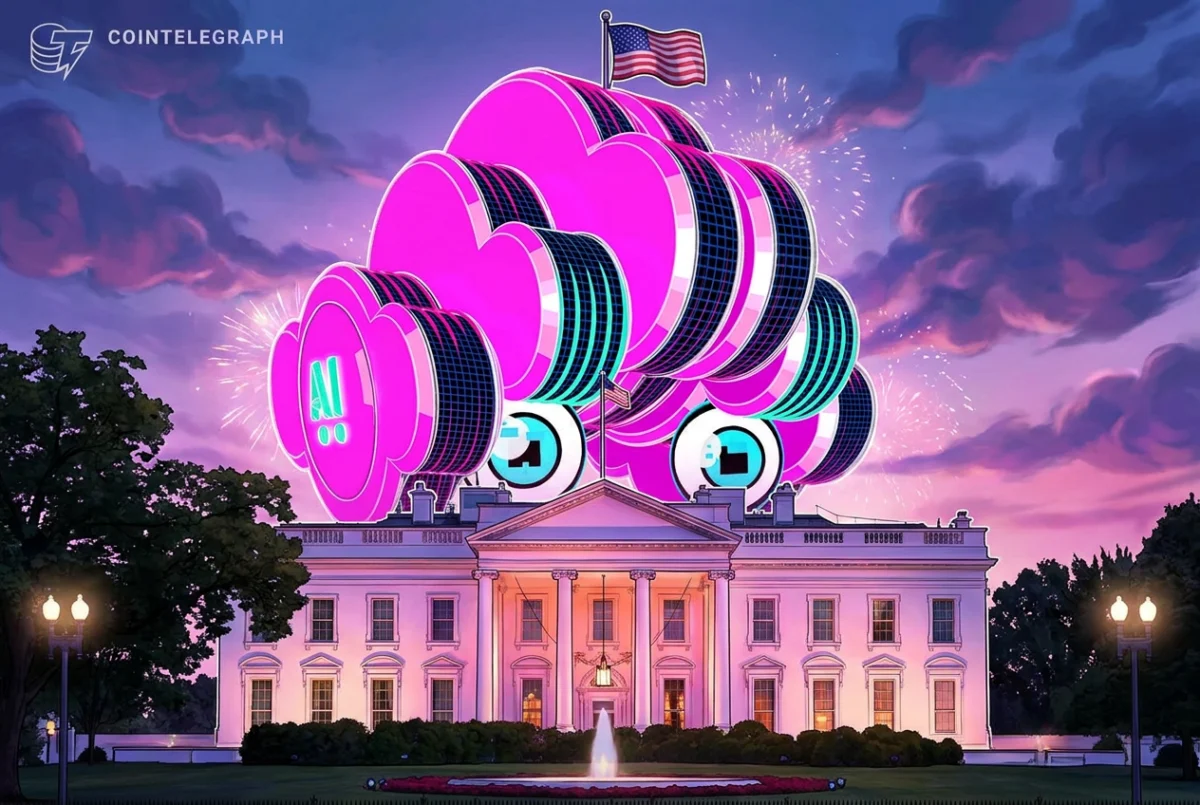
President Donald Trump is reportedly set to appoint Jay Clayton, currently the U.S. Director of National Intelligence (DNI) and former Chairman of the Securities and Exchange Commission (SEC), as the nation’s inaugural Artificial Intelligence (AI) czar. This significant move, reported Friday by CNN and other major media outlets citing unidentified sources, signals an escalated commitment from the Trump administration to address the burgeoning challenges and opportunities presented by advanced AI technologies. The appointment comes amidst a period of intense public debate and industry-led initiatives concerning the rapid pace of AI development and its potential societal implications. While CBS News initially reported Clayton as the frontrunner, a White House official dismissed early reports as speculation, stating any such announcement would come directly from the president.
The creation of an "AI czar" position and a broader "AI Force," first outlined by President Trump on his Truth Social platform on September 20, is envisioned as a dedicated governmental effort to manage the fast-evolving AI sector. Trump’s stated objective for this new project is to foster innovation without stifling progress through heavy-handed regulations. This strategy echoes his administration’s general approach to technology, prioritizing growth and competitiveness. However, the exact scope and powers of this new czar role remain to be fully defined, particularly given the unprecedented nature of governing a technology with such pervasive and rapidly expanding influence.
The Urgency of AI Governance: A Global Imperative
The reported appointment of an AI czar reflects a growing consensus among policymakers, technologists, and the public that artificial intelligence, particularly advanced generative AI models, requires dedicated oversight and strategic direction at the highest levels of government. The past year has seen an explosion in AI capabilities, from sophisticated large language models (LLMs) to advanced image and video generation tools, raising both immense potential for economic growth and significant concerns regarding safety, ethics, and national security. The market for AI is projected to reach trillions of dollars in the coming decade, underpinning its strategic economic importance.
Globally, nations are grappling with how to effectively govern AI. The European Union has taken a proactive stance with its comprehensive AI Act, aiming to establish a risk-based regulatory framework that categorizes AI systems based on their potential to cause harm. China, a leader in AI research and development, has implemented various regulations focusing on data security and algorithmic transparency, while also making massive state-backed investments in the sector through initiatives like its "New Generation Artificial Intelligence Development Plan." The United States, by contrast, has largely favored a more industry-led, voluntary approach, though discussions around federal legislation and executive actions have intensified under both the Trump and Biden administrations. The proposed AI czar role could consolidate disparate federal efforts and provide a central point of contact for domestic and international AI policy, potentially streamlining the U.S. response to the global AI race.
Jay Clayton: A Profile for a Pivotal Role
Jay Clayton brings a robust background in law, finance, and national security to what would be a highly complex and influential role. His most prominent prior position was as Chairman of the Securities and Exchange Commission from 2017 to 2020 during President Trump’s first term. At the SEC, Clayton navigated a rapidly evolving financial landscape, including the emergence of cryptocurrencies and blockchain technology. His tenure was marked by efforts to balance investor protection with capital formation, often taking a cautious approach to novel financial instruments while also advocating for market efficiency and technological innovation within financial markets. This experience in overseeing a complex, fast-moving, and often disruptive sector like financial technology could prove invaluable in the AI domain, which similarly presents both immense opportunities and significant regulatory challenges.
Prior to his SEC chairmanship, Clayton was a partner at Sullivan & Cromwell, a prominent law firm, where he specialized in mergers and acquisitions and capital markets transactions, advising major corporations on complex legal and regulatory matters. His legal acumen and deep understanding of corporate governance and regulatory frameworks would be crucial in shaping the nascent field of AI policy. More recently, Clayton was confirmed by the Senate in July to lead the intelligence community as the Director of National Intelligence. Sources cited by CNN indicate that he is expected to remain in his DNI role even if he takes on the AI czar position, a dual responsibility that would underscore the national security dimensions of AI governance. This dual hat raises questions about potential conflicts of interest, workload management, and the integration of intelligence insights into broader AI policy, particularly regarding the ethical deployment of AI in sensitive national security contexts.
During his confirmation hearing for the DNI position, Clayton articulated a clear perspective on AI, calling it a "game changer" that presents "not only an opportunity but a threat." This balanced view suggests an understanding of both the transformative potential and the inherent risks of advanced AI, ranging from economic disruption and job displacement to sophisticated cyberattacks and autonomous weapons systems. His experience within the intelligence community would provide a unique vantage point on the geopolitical implications of AI, including its use in cyber warfare, surveillance, and disinformation campaigns, further reinforcing the strategic importance of the AI czar role in safeguarding national interests.
Trump’s AI Vision: Innovation Without Stifling Regulation
President Trump’s vision for AI governance, as articulated on Truth Social, centers on fostering innovation while managing the sector without imposing regulations that could impede progress. This philosophy aligns with his administration’s broader economic policies, which often emphasized deregulation and private sector growth to stimulate economic activity. The proposed "AI Force" is explicitly modeled after the Space Force, an independent branch of the U.S. Armed Forces established during his first term. The analogy suggests that AI is viewed not merely as a technological advancement but as a strategic domain requiring dedicated national infrastructure and expertise, akin to military or space operations, crucial for maintaining U.S. global leadership.
The emphasis on avoiding regulations, however, places the Trump administration at odds with a growing chorus of voices, including some prominent AI leaders, who advocate for more stringent oversight. A recent survey by the Center for AI Safety found that a significant portion of AI researchers believe there’s a 10% or greater chance of AI leading to human extinction, underscoring the perceived need for robust safety measures. The challenge for an AI czar would be to strike a delicate balance: encouraging American leadership in AI development while simultaneously addressing the profound ethical, safety, and security concerns that have become increasingly pressing. This approach contrasts sharply with the European Union’s regulatory framework and even the Biden administration’s executive order on AI, which leaned more towards a structured, risk-based regulatory environment, including mandates for safety testing and transparency.
Industry’s Call for Caution and Self-Regulation
The discussions around AI governance gained significant momentum following a series of public warnings from leading figures in the AI community. On September 12, Cointelegraph reported on a three-step proposal by Dario Amodei, CEO of Anthropic, a prominent AI safety and research company. Amodei’s proposal urged a slowdown in AI development, advocating for a "safer pace" to prevent AI systems from "outrunning our ability to understand and control these systems." His concerns highlighted the potential for unforeseen consequences if AI capabilities advance too rapidly without adequate safety mechanisms and societal understanding, a sentiment echoed by hundreds of leading AI researchers and public figures who signed open letters calling for a pause in AI development.
Anthropic subsequently announced its partnership with Accenture, selecting the consulting giant as an "embedded evaluator" to help moderate the pace of AI development. This move was seen as the first practical step in implementing Amodei’s vision, demonstrating a commitment from a major AI developer to integrate external safety assessments directly into its development process. Such initiatives underscore the industry’s recognition of the need for proactive measures, even as the debate continues over the optimal balance between self-governance and external regulation.
Reactions from other tech titans to Amodei’s proposal were mixed, reflecting the diverse perspectives within the AI ecosystem. Sam Altman, CEO of OpenAI, and Elon Musk, CEO of SpaceX and xAI, both responded positively, signaling their agreement with the need for caution and potentially even regulation in AI development. Altman has been a vocal proponent of safe AI development and has testified before Congress on the need for thoughtful governance, advocating for a new government agency to license advanced AI systems. Musk, a long-time alarmist regarding AI’s existential risks, has consistently called for robust oversight and even a temporary pause in advanced AI research, co-founding xAI with the stated goal of understanding the true nature of the universe while ensuring AI safety.
Conversely, Jensen Huang, CEO of Nvidia, a semiconductor company critical to AI’s infrastructure, expressed skepticism about the necessity of such regulation. Huang argued that regulatory interventions could stifle innovation, a perspective shared by many in the tech industry who believe that market forces and responsible corporate practices are sufficient to guide AI development. Nvidia’s position is particularly noteworthy given its central role in providing the powerful graphics processing units (GPUs) that underpin most advanced AI training and deployment, making it a key enabler of the current AI boom.
In a related development, President Trump convened a gathering of AI and technology chiefs at the White House on a Tuesday preceding the AI czar reports. At this summit, participating firms signed a commitment to "self-police" their companies’ AI models and development. This accord aimed to establish industry best practices for safety, security, and transparency, further emphasizing the administration’s preference for voluntary commitments over mandated regulations. The effectiveness of such self-policing agreements, however, remains a subject of ongoing debate among experts and policymakers, with critics arguing that voluntary measures may not be sufficient to address systemic risks.
Precedent and the Evolving "Czar" Role
The concept of an "AI czar" is not entirely new to the Trump administration, though the scope and permanence of Jay Clayton’s potential role would mark a significant escalation. In March, Cointelegraph reported that venture capitalist David Sacks had concluded a 130-day tenure as a "crypto and AI czar" within the White House. Sacks, who became a special White House official, was subject to U.S. rules limiting such government employees to 130 days of work in a 12-month period. His temporary role focused on making policy recommendations across a broad range of tech industries, including the nascent crypto and AI sectors.
Sacks explicitly stated, "We’ve now used up that time," referring to his limited tenure. He continued his involvement in tech policy as co-chair of the President’s Council of Advisors on Science and Technology (PCAST), indicating a continued advisory capacity for the administration on critical technological fronts. The transition from a temporary advisor like Sacks to a potentially permanent, Cabinet-level-adjacent position like the proposed AI czar for Jay Clayton signifies a shift towards a more institutionalized and long-term approach to AI governance. This move reflects an acknowledgment that AI is not a fleeting technological trend but a fundamental shift requiring sustained high-level attention and strategic coordination across government agencies.
Broader Implications and Future Outlook
The appointment of Jay Clayton as AI czar, if confirmed, would carry profound implications for the future of AI development and regulation in the United States and globally. His background suggests a focus on national security, economic competitiveness, and potentially the integration of AI policy with broader intelligence-gathering efforts. The dual role as DNI and AI czar would place him at the nexus of technological advancement and geopolitical strategy, offering a unique perspective on how AI impacts both domestic innovation and international power dynamics.
One of the primary challenges for Clayton would be to navigate the complex tension between fostering American leadership in AI—a key strategic imperative—and addressing the legitimate concerns about safety, ethics, and control. His stated view of AI as both an "opportunity and a threat" indicates a nuanced understanding, but translating this into actionable policy without alienating either the innovation-driven tech sector or the safety-conscious public will be a formidable task. This includes addressing issues such as algorithmic bias, data privacy, the future of work, and the potential for AI-driven misinformation campaigns.
The creation of an AI czar could also signal a more unified and coherent U.S. stance in international discussions on AI governance. As global bodies like the UN, G7, and G20 increasingly focus on AI frameworks, a dedicated U.S. envoy could play a crucial role in shaping international norms and standards. However, the administration’s stated preference for minimal regulation domestically might complicate efforts to align with more stringent international frameworks, such as those being developed by the EU and other nations.
Furthermore, the appointment could pave the way for a more structured engagement between the U.S. government and the private sector on AI issues. While the White House has already held summits with tech leaders, a permanent czar could establish ongoing dialogues, solicit expert advice, and potentially coordinate federal research and development efforts more effectively, directing resources towards critical areas of AI safety and responsible innovation. The czar could also play a pivotal role in harmonizing efforts across various federal agencies, many of which are already exploring AI’s applications and implications within their respective domains.
Ultimately, the success of an AI czar will hinge on their ability to build consensus across diverse stakeholders, from Silicon Valley innovators to national security agencies, and from civil liberties advocates to international partners. The role demands not only technical literacy but also exceptional diplomatic and political skills to steer the nation through the complex and uncharted waters of the AI era, ensuring that the benefits of this transformative technology are maximized while its risks are rigorously managed. The world watches as the United States positions itself for the next frontier of technological governance, with the potential appointment of Jay Clayton as its chief architect.