admin
admin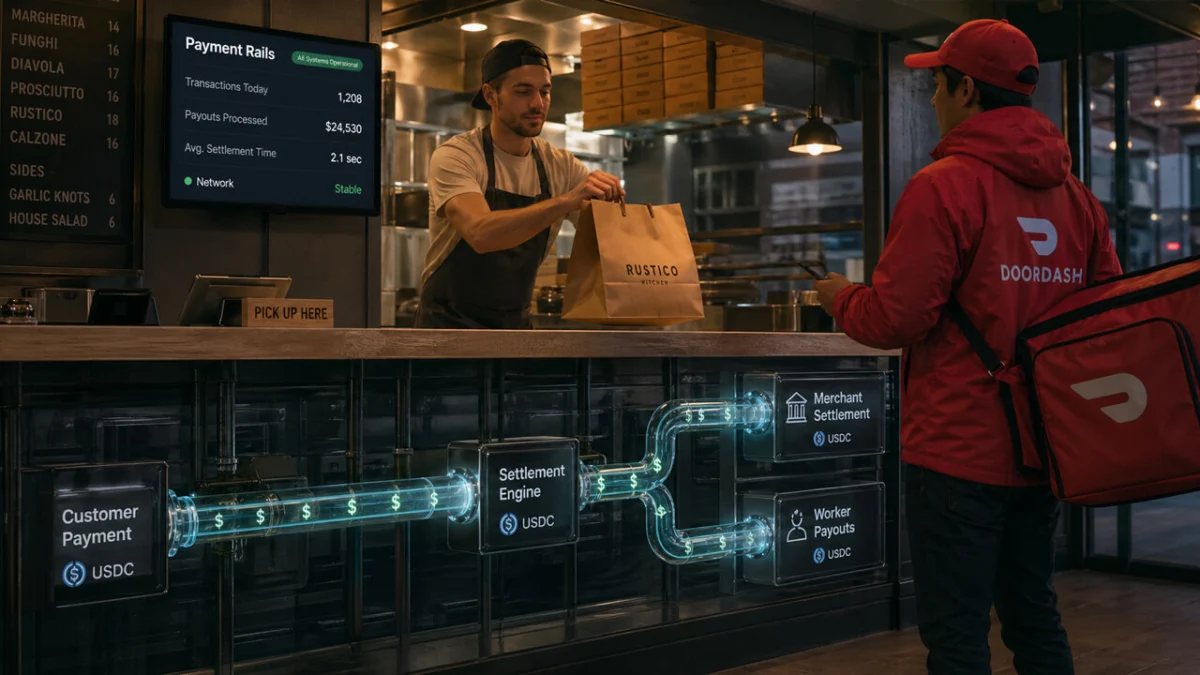
DoorDash has officially entered into a strategic partnership with Tempo, a Layer 1 blockchain network backed by Stripe and Paradigm, to integrate stablecoin-powered payouts into its vast delivery marketplace. This initiative marks a significant milestone in the evolution of digital assets, shifting the narrative from speculative trading toward functional, industrial-scale utility. By leveraging stablecoin rails, DoorDash aims to resolve long-standing inefficiencies in its financial operations, which currently span more than 40 countries and involve a complex web of transactions between customers, merchants, and independent contractors known as Dashers. The integration is designed to address the "last mile" of financial settlement, ensuring that earnings are processed with greater speed, lower costs, and higher reliability than traditional banking systems currently allow.
The move comes at a time when major financial institutions and technology platforms are increasingly viewing stablecoins not merely as a bridge to the cryptocurrency market, but as a superior alternative to legacy payment infrastructure. DoorDash co-founder Andy Fang highlighted the practical necessity of this shift, noting that the primary appeal of stablecoins lies in their ability to make payouts faster and more affordable. In a high-velocity marketplace like DoorDash, where orders are placed and fulfilled within minutes, the underlying movement of money has historically remained tethered to fragmented regional banking rails, restrictive settlement windows, and varying jurisdictional delays that can extend for several days.
The Chronology of Integration and the Rise of Tempo
The foundation for this partnership was laid in late 2023 when Stripe and the venture capital firm Paradigm introduced Tempo. Designed specifically as a payments-focused blockchain, Tempo was engineered to handle the high throughput and sub-second finality required for enterprise-scale commerce. Unlike general-purpose blockchains that may suffer from congestion or volatile transaction fees, Tempo was built with stablecoin-native fees and a partner ecosystem that includes some of the world’s largest tech and financial entities.
The timeline of this development reveals a calculated effort by Stripe to re-establish its dominance in the crypto-financial space after having famously discontinued Bitcoin support in 2018 due to volatility and slow confirmation times. In the years following, Stripe shifted its focus toward stablecoins, recognizing their potential to mimic the stability of the US dollar while utilizing the efficiency of distributed ledger technology. By the time DoorDash joined the Tempo ecosystem, the network had already secured interest from a formidable list of partners, including Shopify, OpenAI, Revolut, Visa, and Deutsche Bank.
For DoorDash, the integration represents a natural progression in its operational strategy. Over the last two years, the company has faced increasing pressure to support its workforce amidst rising global inflation and fuel costs. In early 2024, DoorDash introduced various relief measures for Dashers in the United States and Canada, but these were largely temporary subsidies. The transition to stablecoin-based payouts offers a more structural solution to the financial pressures faced by gig workers by reducing the "float" time—the period during which earned money is locked in the banking system before becoming usable cash.
Addressing the Settlement Friction in Global Marketplaces
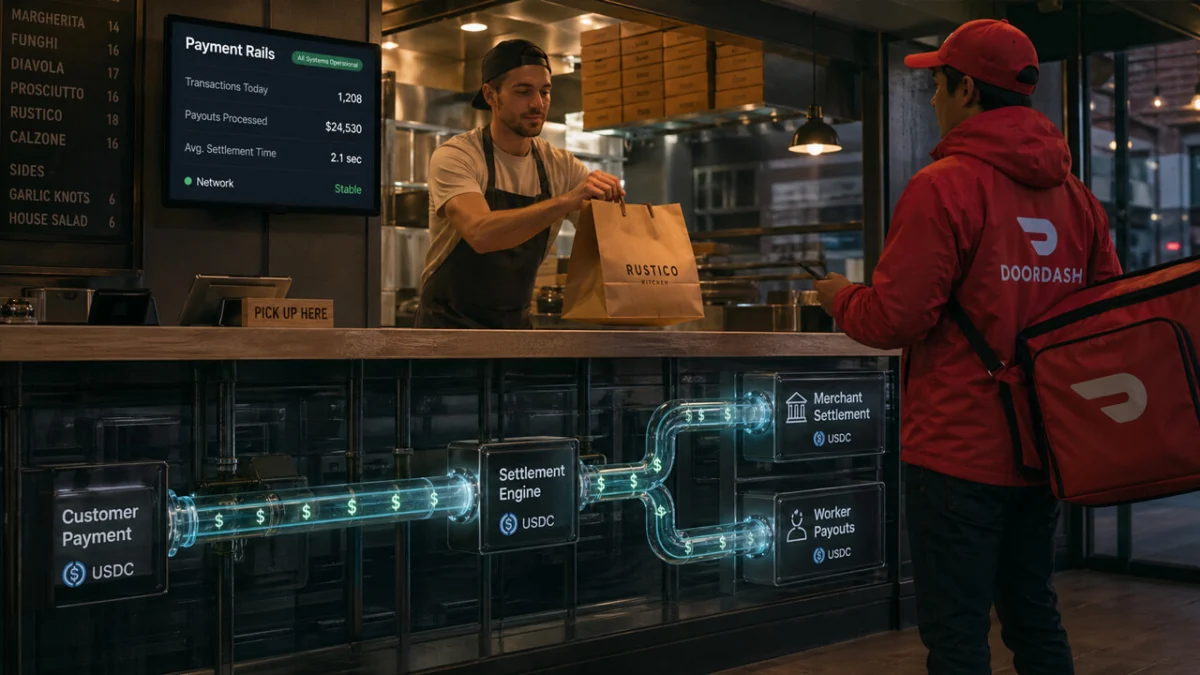
The operational complexity of DoorDash’s business model makes it an ideal testing ground for stablecoin utility. In any given transaction, money moves in multiple directions: the customer pays at the point of checkout; the merchant awaits settlement for the goods provided; and the Dasher requires a payout for the delivery service. In a traditional setup, these flows are governed by banking cutoffs and intermediary fees. For a company operating in 40+ countries, this necessitates maintaining numerous local banking relationships and navigating the friction of foreign exchange (FX) markets.
Stablecoins, which are typically pegged 1:1 to a fiat currency like the US dollar, bypass many of these intermediaries. By using the Tempo blockchain, DoorDash can theoretically consolidate its payout processes onto a single, unified rail. This reduces the need for regional settlement windows, allowing the company to move money 24/7, including weekends and holidays when traditional banks are closed.
The impact of this friction is most acutely felt by merchants and Dashers. Small-scale merchants often operate on thin margins and require consistent cash flow to manage payroll, inventory, and short-term liquidity. A delay of two to three days in receiving funds can significantly disrupt their operations. Similarly, Dashers—many of whom utilize DoorDash as a primary or essential secondary source of income—often require immediate access to their earnings to cover daily expenses like fuel. By shortening the settlement cycle from days to minutes, DoorDash is effectively providing its partners with better control over their working capital.
Supporting Data: The Growing Scale of Stablecoin Utility
The DoorDash announcement is supported by broader market trends that indicate a massive surge in stablecoin adoption for non-speculative purposes. According to recent data, stablecoin transaction volume reached a staggering $28 trillion in the first quarter of 2024 alone. While a significant portion of this volume—approximately 76%—was attributed to automated bots and high-frequency trading within the crypto ecosystem, the remaining 24% represents trillions of dollars in organic value transfer.
The efficiency gains of stablecoins are quantifiable. Traditional cross-border payments often incur fees ranging from 1% to 3% when factoring in intermediary bank charges and FX spreads. In contrast, transactions on optimized Layer 1 networks like Tempo can be executed for a fraction of a cent. For a platform like DoorDash, which processes billions of dollars in gross order value annually, even a marginal reduction in transaction costs translates into millions of dollars in saved operational expenses.
Furthermore, the stability of the assets involved is a critical factor for enterprise adoption. Unlike Bitcoin or Ethereum, stablecoins like USDC (Circle) or USDT (Tether) provide the predictability required for accounting and compliance. DoorDash’s move signals that the "infrastructure phase" of crypto is now reaching maturity, where the technology is robust enough to handle the volume and regulatory scrutiny of a publicly traded S&P 500 company.
Official Responses and Strategic Implications
While DoorDash has not yet released a full technical whitepaper detailing the specific percentage of its treasury that will move through these new rails, the sentiment from leadership is clear. Andy Fang’s endorsement of stablecoins as a tool for "faster and more affordable" payouts reflects a pragmatic approach to innovation. This is echoed by Stripe’s recent series of technical explainers, which argue that businesses today care less about the philosophical merits of decentralization and more about reducing delays and expanding their global reach.
Industry analysts suggest that the involvement of Coastal Bank and ARQ alongside DoorDash and Stripe indicates a "hybrid" approach to the rollout. This model likely involves a combination of blockchain-based ledgering and traditional fiat on-and-off ramps. By partnering with regulated banks, DoorDash ensures that its stablecoin payouts remain compliant with Anti-Money Laundering (AML) and Know Your Customer (KYC) regulations, which have historically been a major hurdle for corporate crypto adoption.
The reaction from the broader fintech community has been one of cautious optimism. Competitors in the delivery and gig economy sectors, such as Uber and Instacart, are reportedly monitoring the DoorDash-Tempo partnership closely. If DoorDash successfully demonstrates that stablecoin payouts improve retention rates among Dashers or lower the cost of merchant acquisition, it could trigger a "domino effect" across the entire platform economy.
Broader Impact: The Invisible Integration of Crypto
The most profound implication of DoorDash’s move is the potential for crypto to achieve mainstream success through "invisible" infrastructure. For the average Dasher or merchant, the underlying technology—whether it is a SWIFT message or a blockchain transaction—is irrelevant. What matters is the utility: does the money arrive faster? Is the fee lower?
By embedding stablecoins into the backend of its marketplace, DoorDash is introducing millions of users to the benefits of blockchain without requiring them to understand the complexities of digital wallets, private keys, or gas fees. This "abstraction" of the technology is increasingly seen as the only viable path to mass adoption. In this scenario, the next great consumer story for crypto is not a new app or a viral token, but the quiet redesign of the financial plumbing that supports global commerce.
As stablecoins continue to expand their role as the transactional layer of the internet, the divide between different types of digital assets becomes clearer. While Bitcoin may maintain its position as a "digital gold" or a macro hedge, stablecoins are positioning themselves as the "working money" of the digital age. DoorDash’s integration with Tempo is a definitive step toward a future where the friction of moving money is no longer a bottleneck for economic growth, but a solved problem of the past. In the coming years, the success of this initiative will be measured not by the hype it generates, but by the efficiency it brings to the millions of participants in the DoorDash ecosystem.