admin
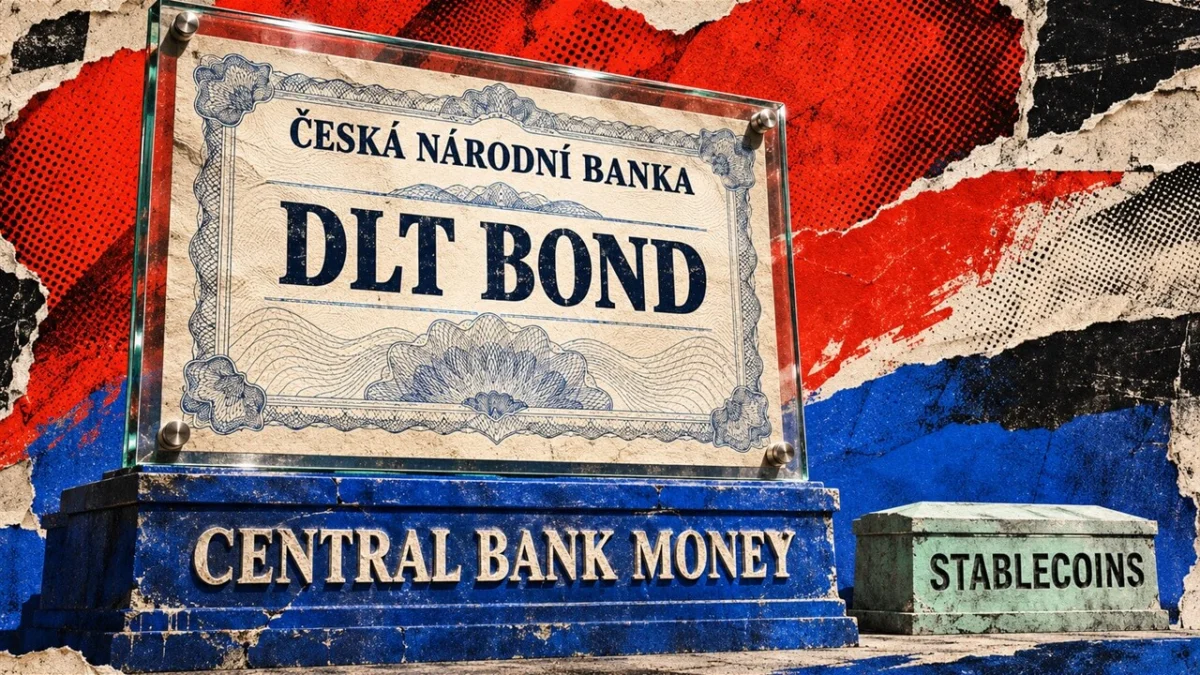
Prague, Czech Republic – Czech National Bank (CNB) Governor Aleš Michl has articulated a clear preference for utilizing central bank money to anchor the settlement of tokenized securities. This strategic positioning, revealed on November 10, 2026, could significantly reshape the landscape for institutional payment balances, particularly impacting the demand for stablecoins within the burgeoning digital asset ecosystem. The CNB’s recent successful completion of small-scale bond and repo tests using distributed ledger technology (DLT) underscores this forward-looking initiative.
The core of Governor Michl’s vision hinges on the premise that if eligible financial institutions can conduct settlements using a readily available central bank money infrastructure, the necessity for private stablecoins to facilitate these transactions diminishes. While the precise cash instrument employed in the CNB’s pilot program remains undisclosed, the implications for stablecoin issuers are substantial and warrant close examination. The ultimate competitive advantage for private stablecoin issuers will be intrinsically linked to the identity of the payment asset supplier and the extent to which traditional fixed-income instruments, such as bonds, migrate onto distributed ledgers.
A Small-Scale Bond Test with Ambitious Market Goals
The Czech National Bank officially announced the conclusion of its DLT-based bond and repo transactions on November 10, 2026. These tests, conducted throughout October and November of the same year, encompassed transfers, purchases, sales against payment, and repurchase agreements. According to the central bank’s report, the settlement process was remarkably swift, achieving near-instantaneous finality. However, the scale of these initial transactions was modest, with volumes only reaching the tens of thousands of Czech koruna.
In a pivotal speech delivered on November 10, Governor Michl provided further details, identifying Česká spořitelna, a prominent commercial bank, as the counterparty in these transactions. He disclosed that each bond’s nominal value was set at CZK 10,000, and crucially, that the process of testing interest payments had also been successfully completed. These DLT bonds were issued and managed on the infrastructure provided by the Central Securities Depository (CSD) in Prague. The network is designed to be accessible only to authorized financial institutions, with transaction records strictly visible to the involved counterparties, thereby maintaining a degree of privacy and security.
Governor Michl’s overarching ambition extends far beyond the scope of these initial tests. His stated goal is to foster a more robust and liquid market for koruna-denominated assets, making them as easily tradable as established sovereign debt instruments like German Bunds. This is a market-level aspiration that transcends the immediate findings of a small-scale pilot program.
This pronounced preference for settlement in central bank money is also situated within a broader context of the CNB’s willingness to explore and experiment with emerging financial technologies. This exploratory spirit was evident a year prior, when the CNB Lab, the bank’s innovation hub, initiated tests involving Bitcoin, a prominent dollar-denominated stablecoin, and a tokenized deposit. These earlier experiments demonstrated the CNB’s commitment to understanding the potential of various digital assets and technologies.
A Look at the Settlement Mechanism
The operational mechanics of the Central Securities Depository’s DLT infrastructure, as outlined in its general transfer guidance, describe a scenario where a buyer settles a transaction by debiting their cash account. The successful receipt of these funds by the seller’s bank then triggers the transfer of securities and the generation of a payment order to the seller. The final crediting of the seller’s account is contingent upon several factors, including the efficiency of the receiving bank, its capacity to support instant payment systems, and the precise timing of the transfer.
A presentation delivered by Michal Vodrážka, Director of Payments Regulation at the CNB, on November 5, 2026, offered a crucial insight: settlement in central bank money on a DLT platform was not yet available at that time. This statement, made just five days before the announcement of the bond test, did not explicitly clarify whether the cash settlement arrangement for the subsequent tests had evolved. Furthermore, Mr. Vodrážka’s presentation also reiterated that the CNB’s Board had not made any decision regarding the issuance of a retail central bank digital currency (CBDC) for the Czech Republic.
The mere act of tokenizing a bond and placing it on a shared ledger does not inherently dictate the source of the funds used for its purchase. This brings into sharp focus the critical question of who supplies the payment asset.
The Eurosystem’s Pontes Initiative: An Alternative Framework
In parallel to the CNB’s domestic explorations, the Eurosystem has been actively developing its own infrastructure for the digital asset space. On September 21, 2026, the Eurosystem launched Pontes, a project designed to facilitate the settlement of wholesale tokenized asset transactions using central bank money. An initial cohort of market participants and DLT operators had successfully completed their onboarding processes, with plans for further institutional integration underway.
Pontes serves as a crucial bridge, connecting market-based DLT platforms with the Eurosystem’s established TARGET Services. The availability and scope of Pontes are progressively expanding. In a speech delivered on October 29, 2026, the European Central Bank (ECB) outlined its strategic roadmap, which includes significantly extending operating hours by mid-2027 and achieving round-the-clock, year-round availability by 2028.
The existence and expansion of initiatives like Pontes offer a clear alternative to stablecoin reliance. Where an eligible buyer possesses access to a connected central bank settlement infrastructure, the purchase of tokenized securities can be executed without the intermediation of a private settlement token, such as a stablecoin.
The implications for the stablecoin market are profound. As central bank settlement infrastructures become more accessible and demonstrably usable for tokenized asset transactions, the prospective market for stablecoin balances used in such payments is likely to contract. This could lead to a recalibration of demand for privately issued digital currencies within the wholesale financial markets.
While the Czech National Bank’s network currently imposes restrictions on institutional access, the Pontes initiative is taking a phased approach to service expansion. The critical next step in evaluating the viability of Governor Michl’s vision will be to observe how central bank money is made accessible for these DLT-based trades, the specific institutions that will be granted access, and the operational hours during which these settlements can occur.
Should a more expansive tokenized koruna market emerge, anchored by publicly provided settlement money, it is plausible that a greater volume of securities activity could materialize without a corresponding increase in the need for private settlement tokens. This shift would represent a significant development in the ongoing evolution of digital finance, with central banks playing a more direct role in the settlement of tokenized assets.
Broader Implications and Analysis
The CNB’s exploration into DLT-based settlements, coupled with Governor Michl’s clear preference for central bank money, aligns with a global trend among central banks to understand and potentially integrate digital currencies and distributed ledger technology into their operational frameworks. The successful completion of these tests, even at a small scale, provides valuable empirical data for the CNB as it considers its long-term strategy.
The potential displacement of stablecoins in wholesale settlements is a significant consideration. Stablecoins have emerged as a crucial lubricant for the digital asset market, providing a bridge between traditional finance and the crypto ecosystem. Their ability to offer dollar-like stability at a low cost has made them attractive for various use cases, including collateral for decentralized finance (DeFi) protocols and as a medium of exchange. However, the inherent risks associated with private stablecoin issuers, including regulatory uncertainty, operational resilience, and the potential for de-pegging events, have been a persistent concern for financial regulators.
By advocating for central bank money as the preferred settlement asset, the CNB seeks to mitigate these risks and enhance the overall stability and integrity of the financial system. If successful, this approach could lead to a more robust and secure market for tokenized securities, fostering greater investor confidence.
The comparison between the CNB’s approach and the Eurosystem’s Pontes initiative is instructive. Both are exploring the use of central bank money for DLT settlements, but their immediate contexts and rollout strategies differ. The Eurosystem’s broader reach and more extensive testing across multiple jurisdictions suggest a more comprehensive, albeit gradual, integration of DLT into wholesale payment systems. The CNB’s initiative, while smaller in scale, offers a focused perspective on how a national central bank can leverage DLT for its own currency and domestic market.
The key takeaway from these developments is the strategic importance of the settlement layer. As financial markets become increasingly digitized, the choice of settlement asset and the infrastructure used will have profound implications for market efficiency, risk management, and the competitive dynamics between public and private payment providers. The CNB’s stance signals a clear intention to maintain a central role for the national currency and its issuer in the digital future of finance. The coming years will be critical in observing how these pilot programs translate into broader market adoption and how the balance of power between central bank money and private digital currencies evolves. The successful integration of central bank money into tokenized securities settlement could represent a significant step towards a more resilient and integrated digital financial infrastructure.