admin
admin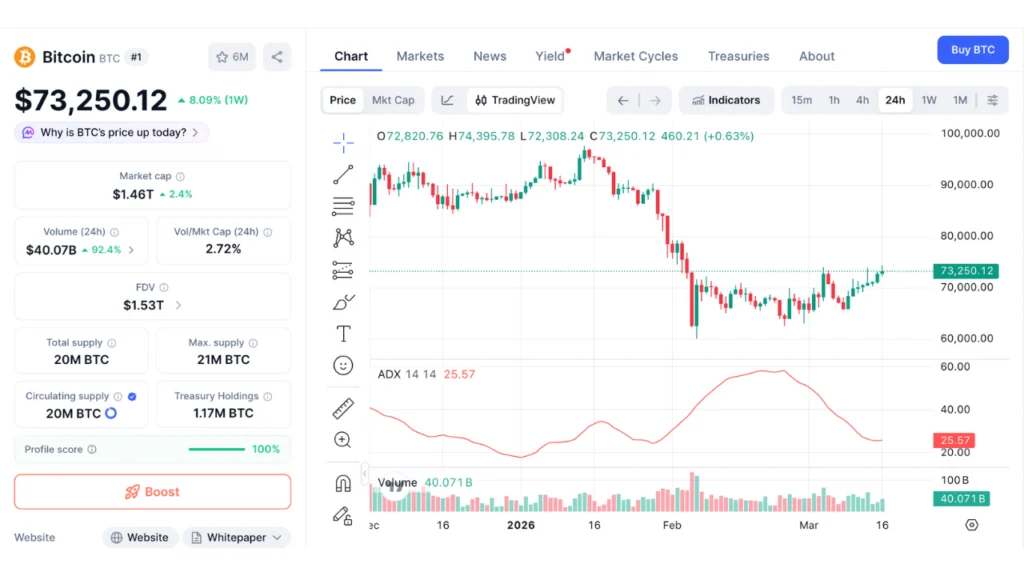
The global cryptocurrency market finds itself in an unprecedented state of prolonged negative sentiment, a period marked by deep investor pessimism not witnessed in years. Yet, in a remarkable display of resilience that has captivated analysts and investors alike, Bitcoin, the world’s leading digital asset, has largely weathered this storm, maintaining its valuation above the crucial $75,000 threshold and recently showing renewed upward momentum towards $76,000. This stark divergence between market psychology and price action is prompting a re-evaluation of current market dynamics and Bitcoin’s evolving role within the broader financial landscape.
The Chilling Grip of Extreme Fear
As of early March 2026, the Crypto Fear and Greed Index, a widely recognized barometer of investor sentiment in the digital asset space, has plunged to levels indicative of "Extreme Fear" for an astonishing 38 consecutive days. This extended period marks the longest such streak since the catastrophic collapse of the Terra and Luna ecosystem in May 2022, a watershed moment that sent shockwaves through the nascent industry. The index, which aggregates various metrics including volatility, market momentum, social media sentiment, dominance, and Google Trends data, typically scores between 0 (Extreme Fear) and 100 (Extreme Greed). A reading below 25 signifies "Extreme Fear," indicating widespread caution and reluctance among investors to enter or expand their positions. During this recent stretch, the index dipped as low as 8, underscoring the profound level of apprehension pervading the market.
Market analyst Quinten Francois highlighted the gravity of this sustained fear, drawing direct parallels to the post-Terra-Luna crisis. That event, triggered by the de-pegging of the algorithmic stablecoin TerraUSD (UST) and the subsequent hyperinflation of its sister token LUNA, led to a multi-billion dollar wipeout and a cascade of failures across major crypto firms like Three Arrows Capital and Celsius, ultimately culminating in the FTX exchange collapse. However, while the sentiment today mirrors the despair of 2022, the underlying market conditions and the nature of the current downturn present a distinctly different narrative.
Macroeconomic Pressures vs. Intrinsic Crypto Failures
The 2022 market downturn was primarily an internecine crisis, born from structural vulnerabilities and over-leveraged entities within the crypto ecosystem itself. The contagion spread rapidly, eroding investor confidence from within. In stark contrast, the prevailing caution and "risk-off" environment observed in early 2026 appear to be largely influenced by external, macroeconomic, and geopolitical forces rather than inherent flaws within the blockchain or cryptocurrency architecture.

Several significant global developments have contributed to this cautious climate:
- Persistent Inflationary Pressures: Despite efforts by central banks, stubbornly high inflation rates in major economies continue to erode purchasing power, prompting investors to seek less volatile assets.
- Aggressive Monetary Tightening: Central banks, notably the U.S. Federal Reserve, have maintained a hawkish stance, with ongoing interest rate hikes or the threat of future increases aimed at curbing inflation. This tight monetary policy generally reduces liquidity in financial markets, making riskier assets less attractive.
- Geopolitical Instability: Lingering conflicts in Eastern Europe and heightened tensions in other global hotspots contribute to overall market uncertainty, pushing investors towards traditional safe-haven assets.
- Slowing Global Economic Growth: Concerns about a potential global economic slowdown or recession further dampen investor appetite for speculative assets like cryptocurrencies.
These external pressures have fostered a broader "risk-off" sentiment, compelling investors to de-risk their portfolios and await greater clarity in the global economic and political landscape. This distinction is crucial, as it suggests the current challenges are not unique to crypto but rather a reflection of wider financial market anxieties.
Bitcoin’s Unyielding Performance Amidst Pessimism
Despite the overwhelming negativity captured by the Fear and Greed Index, Bitcoin’s price trajectory has exhibited remarkable resilience. After briefly retreating towards the $60,000 region earlier in the year, the flagship cryptocurrency staged a robust recovery, stabilizing around the $73,000 – $74,000 mark and recently pushing towards $76,000. This upward momentum was particularly highlighted by a rare streak of eight consecutive "green" daily candles, a sequence of gains not witnessed since late 2020, during the nascent stages of that bull run.
This sustained price stability, even as retail sentiment remains suppressed, suggests a strong underlying demand. In previous market cycles, such a pronounced divergence between sentiment indicators and price performance has frequently coincided with "accumulation phases." During these periods, long-term investors, often referred to as "smart money," strategically build their positions at what they perceive to be favorable prices, while short-term traders and retail investors, driven by fear, remain hesitant or exit the market. This pattern underscores a potential shift in market participation, with conviction buyers stepping in despite the prevailing bearish mood.
The Institutional Pillar: Sustained ETF Inflows
A primary catalyst for Bitcoin’s recent recovery and sustained price action has been the renewed influx of capital into spot Bitcoin and Ethereum Exchange-Traded Funds (ETFs). Following their landmark approval in early 2024, these investment vehicles have rapidly become a cornerstone of institutional demand for digital assets. According to recent market data, spot Bitcoin ETFs recorded five consecutive days of net inflows, accumulating approximately $767 million in fresh capital during the latest trading week. Simultaneously, Ethereum ETFs also experienced a resurgence of investor interest, attracting roughly $160 million.

These institutional flows through regulated ETF products have emerged as one of the most significant demand sources for the digital asset market. Unlike individual retail traders, institutional investors typically operate with longer time horizons, adhere to stricter risk management frameworks, and are less susceptible to short-term volatility or emotional sentiment indicators. Their sustained participation, even during periods of widespread fear, provides a crucial stabilizing effect on the market, signaling a growing acceptance and integration of digital assets into mainstream finance. The continuous growth in Assets Under Management (AUM) for major ETF players like BlackRock’s IBIT and Fidelity’s FBTC further solidifies this trend, indicating deep-pocketed investors are actively allocating capital, viewing current prices as potential entry points rather than signals for capitulation.
Derivatives Market Dynamics: Fueling the Rally Through Short Squeezes
Further amplifying Bitcoin’s recent upward trajectory has been a significant wave of liquidations across derivatives markets. Over a recent 24-hour period, more than $350 million worth of leveraged positions were reportedly liquidated. A substantial majority of these liquidations originated from traders holding "short" positions, essentially betting on a continued decline in prices.
As Bitcoin’s price began its ascent, these short positions became unprofitable. To mitigate further losses, traders were compelled to close their positions, which necessitated buying back Bitcoin in the spot market. This phenomenon, widely known as a "short squeeze," can rapidly accelerate upward price movements by creating a sudden surge in buying pressure, adding momentum beyond initial market demand. The cascading effect of forced closures creates a feedback loop, pushing prices higher and triggering more liquidations, thus fueling a sharper rally. This dynamic underscores the interconnectedness of spot and derivatives markets and how speculative positioning can dramatically influence price action, especially during periods of high volatility.
Strategic Accumulation by Corporate Giants
Beyond ETF inflows, institutional demand has been underscored by speculation surrounding potential new Bitcoin purchases from prominent corporate holders. Michael Saylor, the executive chairman of MicroStrategy and one of the most vocal corporate advocates for Bitcoin, recently posted a cryptic message on social media, hinting at another significant acquisition. While no official announcement has been made, market analysts are speculating that MicroStrategy may have accumulated an additional 30,000 to 40,000 BTC during the recent market dip.
If confirmed, such a substantial purchase would represent another resounding vote of confidence from a leading institutional player, reinforcing Bitcoin’s status as a treasury reserve asset. MicroStrategy has famously adopted a strategy of accumulating Bitcoin, often during market corrections, viewing it as a superior long-term store of value compared to traditional fiat currencies. Historically, large-scale accumulation by institutional entities during periods of market fear has played a pivotal role in shaping the long-term trajectory of the Bitcoin market, often preceding sustained upward trends as supply is absorbed by strong hands.

On-Chain Metrics: A Mixed Signal Landscape
While price action and institutional flows paint a picture of resilience, on-chain data presents a more nuanced view of market health. According to blockchain analytics platform Santiment, network activity for both Bitcoin and Ethereum experienced a significant surge earlier in the year, between mid-January and early February. During this period:
- Bitcoin active addresses climbed above 13 million.
- Ethereum active addresses surpassed 18 million.
- The total number of new addresses created on both networks increased substantially.
- The overall transaction volume also saw a notable uptick.
Rising active address counts and new address creations typically signal stronger organic demand, increased network usage, and broader adoption. However, this heightened activity has since cooled. Bitcoin active addresses have slipped back towards 12 million, while Ethereum’s have declined to approximately 15.5 million. This deceleration suggests that some retail investors and short-term participants may be stepping back temporarily as the market enters a consolidation phase, perhaps waiting for clearer directional signals or an improvement in the macroeconomic outlook before re-engaging. The mixed signals from on-chain data highlight the ongoing tug-of-war between strong institutional interest and cautious retail participation.
Navigating Key Technical Levels
Despite the recent recovery, market analysts caution that Bitcoin still faces several important technical hurdles. The $75,000 to $75,500 range is widely considered a critical support zone. Sustaining prices above this level would reinforce the narrative that the recent correction was merely a temporary reset within a broader bull cycle, rather than the onset of a deeper bearish trend.
On the upside, resistance levels around $74,000 to $76,000 remain significant. A decisive breakout and sustained hold above $75,000, particularly if accompanied by increased trading volume, could potentially pave the way for a push towards the psychological $80,000 mark, according to several market experts. However, some analysts prudently caution that the recent rally might still represent a technical rebound, a bounce from oversold conditions, rather than the unequivocal commencement of a sustained bull market. For a stronger, more enduring long-term uptrend to solidify, the market will likely require a confluence of factors: continued robust ETF inflows, a renewed surge in organic network activity, and a discernible improvement in global macroeconomic conditions, including easing inflation and a more accommodative stance from central banks.
Historical Echoes: The Power of Extreme Fear

Throughout Bitcoin’s relatively short but volatile history, periods of "extreme fear" have frequently appeared, often marking phases where markets are attempting to find a bottom. In numerous past cycles, prolonged pessimism and capitulation have ultimately been followed by strong, often rapid, price recoveries. This recurring pattern reflects the deeply psychological nature of financial markets. When sentiment becomes overwhelmingly negative, a significant portion of potential sellers may have already exited their positions, leading to "seller exhaustion." As selling pressure naturally fades, prices can stabilize and gradually begin to move higher as new buyers, often those with a longer-term perspective, cautiously re-enter the market.
While sentiment indicators alone cannot serve as infallible predictors of future price movements, they offer invaluable insight into the collective emotional state of investors. The current environment – characterized by a record-setting duration of extreme fear, consistent institutional inflows, and surprisingly resilient price levels – bears a striking resemblance to previous accumulation phases observed in past Bitcoin cycles. These periods, though uncomfortable for many, have historically proven to be opportune moments for patient investors.
The Road Ahead: Catalysts and Outlook
For the time being, the cryptocurrency market appears to be navigating a transitional stage. Investors remain largely cautious, buffeted by ongoing macroeconomic uncertainty, geopolitical tensions, and shifting expectations for global monetary policy. Yet, the undeniable resilience of Bitcoin’s price and the steady return of institutional capital suggest that the broader market structure, particularly for leading assets, remains fundamentally intact.
Whether the current rally evolves into a new, sustained bull phase or if the market settles into a prolonged period of consolidation will likely depend on the emergence of the next major catalyst. This could range from a definitive pivot in central bank monetary policy, a de-escalation of global conflicts, significant regulatory clarity, or groundbreaking technological advancements within the crypto space. For now, however, the compelling contrast between 38 consecutive days of extreme fear and Bitcoin’s steadfast hold above $75,000 underscores a familiar and often paradoxical theme in crypto markets: sentiment frequently reaches its nadir just before the prevailing narrative begins its inevitable shift. The market stands at a fascinating juncture, poised for its next significant move.