admin
admin
The impending liquidation of altcoins by the bankrupt cryptocurrency lender Celsius Network is poised to exert significant downward pressure on the broader digital asset market, according to a detailed report by blockchain analytics firm Kaiko. The firm’s analysis, released on July 10, highlights that Celsius’s strategic move to convert its substantial altcoin holdings into Bitcoin (BTC) and Ethereum (ETH) could trigger a ripple effect of price declines, particularly impacting the liquidity and value of the altcoins being offloaded.
Background: The Fall of Celsius
Celsius Network, once a titan in the decentralized finance (DeFi) lending space, filed for Chapter 11 bankruptcy protection in July 2022. The company’s collapse followed a severe liquidity crisis, exacerbated by the broader market downturn and significant exposure to troubled crypto projects. At its peak, Celsius managed billions of dollars in customer assets, offering attractive interest rates on deposits. However, its aggressive investment strategies and opaque risk management practices ultimately led to its undoing, leaving a trail of stranded assets and disillusioned customers. The subsequent legal proceedings and bankruptcy proceedings have been protracted, with the court-sanctioned plan to liquidate remaining assets representing a critical juncture in the company’s dissolution.
Kaiko’s Analysis: A Deep Dive into Liquidity Concerns
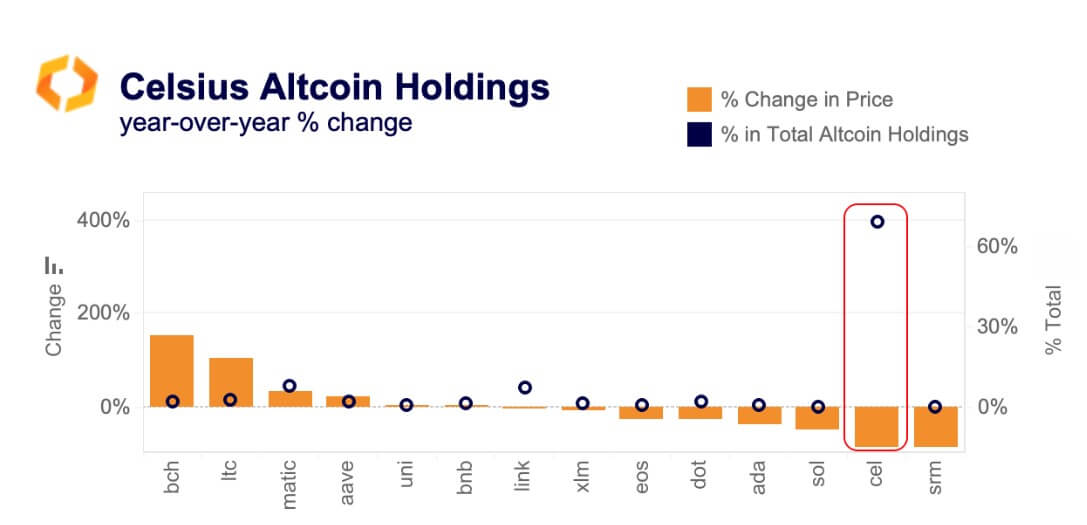
Kaiko’s research delves into the state of Celsius’s altcoin portfolio, revealing a stark picture of diminished liquidity across most of the digital assets held by the bankrupt lender. Over the past year, the liquidity of the majority of these altcoins has seen substantial declines, with some experiencing drops ranging from a concerning 6% to an alarming 84%.
This erosion of liquidity means that any significant selling pressure, such as that anticipated from Celsius’s liquidation, could lead to amplified price volatility and substantial slippage. Slippage occurs when the price at which a trade is executed differs from the price expected when the order was placed, a common issue in markets with thin liquidity.
The aggregated market depth for Celsius’s altcoin holdings has contracted by approximately 40% since the beginning of 2022, standing at around $90 million in early July. Market depth is a crucial metric that indicates the number of buy and sell orders at various price levels in an order book. A decline in market depth signifies fewer participants willing to trade at certain prices, making it harder to execute large orders without significantly impacting the market price.
Specific Altcoin Performance and Liquidity Shifts
Kaiko’s analysis identified a few altcoins that have experienced more pronounced changes in their liquidity situations over the past year. Notably, Litecoin (LTC), Bitcoin Cash (BCH), Polygon (MATIC), and Aave (AAVE) have shown distinct liquidity dynamics.
In a positive development for some of these assets, both Bitcoin Cash and Litecoin witnessed a surge in their liquidity following the June enablement of support by EDX Markets. EDX Markets is a cryptocurrency exchange backed by prominent traditional financial institutions, including Fidelity, Charles Schwab, and Citadel Securities. The involvement of these established players in a crypto exchange aims to bring a more regulated and institutional-friendly approach to digital asset trading, which can, in turn, boost liquidity for listed assets. However, the overall trend for most of Celsius’s altcoin holdings has been one of decline.
The Challenge of Large-Scale Liquidation
The sheer volume of altcoins held by Celsius presents a significant challenge for the company’s liquidation process. With total altcoin holdings exceeding $90 million, Kaiko asserts that it will be "difficult for the company to liquidate without incurring high price slippage." This warning underscores the potential for substantial market disruption.
Furthermore, the distribution of this altcoin market depth is heavily skewed towards offshore exchanges. Kaiko’s report indicates that over 60% of altcoin market depth is concentrated on Binance and other offshore trading platforms. In contrast, only about 30% of the liquidity resides on U.S. exchanges. This geographical concentration of liquidity has implications for how Celsius’s sell-off will be managed and where the price impact will be most acutely felt. Offshore exchanges often have higher trading volumes and deeper liquidity pools for many altcoins, but they also operate under different regulatory frameworks.
The CEL Token: A Liquidity Black Hole
Perhaps the most striking finding in Kaiko’s analysis pertains to the liquidity of Celsius’s native token, CEL. The report reveals that there is "virtually no liquidity for CEL as measured by market depth." The market depth for CEL has collapsed to a mere $30,000, with the limited trading activity concentrated primarily on exchanges like OKX and Bybit.
CEL is the proprietary token of Celsius Network, and it constituted nearly 65% of the bankrupt firm’s total altcoin holdings at the time of the report. The near-complete absence of liquidity for such a significant portion of Celsius’s assets poses an extreme challenge for its liquidation. Selling such a large quantity of CEL into a market with minimal depth would almost certainly result in catastrophic price drops, potentially rendering the token almost worthless.
Since Celsius filed for bankruptcy, the interest in its native token has waned considerably. The CEL token’s value has plummeted from its peak of over $8 in 2021 to under $1, reflecting the diminished confidence and utility associated with the company’s ongoing financial distress. The collapse in liquidity further compounds the difficulty of offloading these holdings in a way that minimizes losses for creditors.
Implications for the Crypto Market
The impending liquidation by Celsius carries several critical implications for the wider cryptocurrency market:
- Increased Downward Pressure on Altcoins: The most direct impact will be on the specific altcoins that Celsius intends to liquidate. As the company offloads these assets, the increased supply in the market will naturally exert downward pressure on their prices. This could trigger a domino effect, potentially leading to further selling as other holders panic or are forced to liquidate their positions.
- Broader Market Sentiment: While the primary impact may be on altcoins, significant price drops in a substantial number of digital assets can negatively affect overall market sentiment. A widespread decline in the value of cryptocurrencies can erode investor confidence, potentially leading to a broader sell-off across the market, including in more established assets like Bitcoin and Ethereum.
- Liquidity Crunch in Specific Markets: The concentration of liquidity on certain exchanges, particularly offshore ones, means that Celsius’s liquidation could exacerbate liquidity issues in those specific trading environments. This could make it harder for all market participants to execute trades efficiently and at predictable prices.
- Regulatory Scrutiny: The fallout from Celsius’s bankruptcy and its liquidation plans may attract further regulatory attention. The handling of customer assets, the transparency of liquidation processes, and the impact on market stability are all areas that regulators will likely scrutinize closely.
- Testing Market Resilience: The crypto market has experienced numerous cycles of boom and bust, but the scale of Celsius’s holdings and the challenges in liquidating them represent a significant test of the market’s resilience. The ability of the market to absorb such a large sell-off without triggering a systemic crisis will be closely watched.
The Path Forward: Court Approval and Execution
Celsius’s plan to convert altcoins into Bitcoin and Ethereum has already received court approval, clearing a significant hurdle in the bankruptcy proceedings. The company’s legal team has been working to finalize a reorganization plan, which typically involves distributing remaining assets to creditors. The liquidation of altcoins is a crucial step in this process, aimed at consolidating holdings into more liquid and widely traded cryptocurrencies before distributing them.
However, the practical execution of this plan will be complex. The limited liquidity for many of Celsius’s altcoin holdings, especially the CEL token, suggests that the liquidation process could be protracted and potentially messy. The company may need to employ strategies such as gradual selling over an extended period or engaging with institutional buyers to mitigate the immediate price impact.
Conclusion: A Lingering Shadow Over the Crypto Landscape
The prospect of Celsius liquidating its altcoin holdings casts a long shadow over the current cryptocurrency market. Kaiko’s comprehensive analysis underscores the significant liquidity challenges and the potential for considerable price pressure, particularly on less liquid altcoins. As the bankruptcy proceedings continue, the market will be watching closely to see how these vast holdings are offloaded and what impact this will have on the already volatile digital asset landscape. The situation serves as a stark reminder of the risks inherent in the crypto industry and the interconnectedness of its various players and assets. The successful navigation of this liquidation could pave the way for a more stable environment for creditors, but the immediate future may see increased volatility as these assets find new hands.