

 admin
admin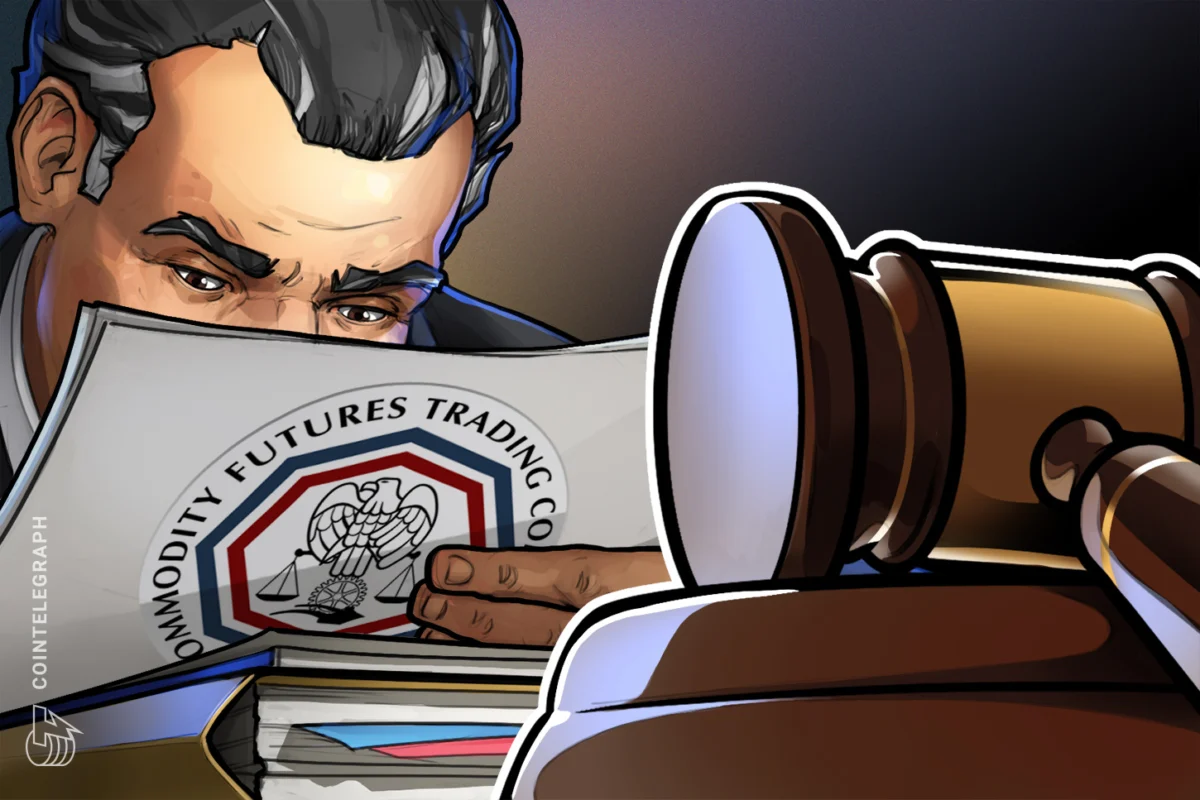
Blockchain.com, a prominent entity in the cryptocurrency ecosystem, has reportedly submitted comprehensive applications to the U.S. Commodity Futures Trading Commission (CFTC) to secure regulatory approval for offering both prediction market contracts and a suite of crypto derivatives. This strategic move, initially reported by CNBC on a recent Friday, signifies a significant effort by the company to expand its operational footprint within the highly regulated American financial landscape, targeting both retail and institutional investors.
The applications seek two critical licenses from the CFTC: a Designated Contract Market (DCM) status and a Futures Commission Merchant (FCM) registration. Should these applications be approved, the DCM license would empower Blockchain.com to establish and operate its own regulated futures exchange for "event contracts," commonly known as prediction markets. Simultaneously, the FCM license would authorize the company to act as a broker for various derivatives contracts, facilitating trading activities for its clientele. This dual approach underscores Blockchain.com’s ambition to become a comprehensive platform for advanced financial products in the digital asset domain, subject to stringent federal oversight.
Understanding the Regulatory Landscape for Digital Assets and Derivatives
The pursuit of DCM and FCM licenses places Blockchain.com squarely within the federal regulatory framework governed by the CFTC. The CFTC’s mandate primarily involves overseeing the U.S. derivatives markets, which include futures, options, and swaps. Its jurisdiction extends to ensuring market integrity, preventing manipulation, and protecting market participants. For digital assets, the CFTC has historically asserted jurisdiction over cryptocurrencies that it deems commodities, such as Bitcoin and Ethereum, when they are traded in derivatives form.
A DCM operates much like a traditional exchange, providing a marketplace for futures and options contracts. It must adhere to core principles related to contract design, trading procedures, financial integrity, and dispute resolution. An FCM, on the other hand, acts as an intermediary, soliciting or accepting orders for futures and options contracts and accepting money or other assets to margin, guarantee, or secure such contracts. FCMs are subject to strict capital requirements, segregation of customer funds, and robust risk management practices designed to safeguard customer assets. Obtaining both licenses would grant Blockchain.com the infrastructure to not only list and trade these products but also to onboard and service customers directly under federal supervision.
The Evolution and Contention of Prediction Markets
Prediction markets, or "event contracts," allow participants to bet on the outcome of future events, ranging from political elections and economic indicators to sports results and scientific breakthroughs. The underlying premise is that aggregating diverse opinions through market mechanisms can provide more accurate forecasts than traditional polling or expert analysis. For instance, a contract predicting the outcome of an election might trade between $0 and $1, with the price reflecting the perceived probability of that outcome. If the event occurs, the contract settles at $1; otherwise, it settles at $0.
Blockchain.com’s interest in offering its own prediction market stems from a prior announcement in July regarding a planned partnership with Polymarket, a decentralized prediction market platform. While that collaboration aimed to integrate Polymarket’s offerings into Blockchain.com’s app, a direct CFTC license would enable the company to develop and host its proprietary marketplace, potentially offering a more streamlined and integrated experience for its users within a federally regulated environment.
However, prediction markets have long faced a contentious legal and regulatory environment in the United States. The central debate revolves around whether they constitute legitimate financial instruments for information aggregation or fall under the purview of illegal gambling. Several state-level authorities have initiated legal actions against prediction market platforms like Kalshi and Polymarket, alleging violations of state laws pertaining to betting, particularly concerning sports and elections.
A significant development in this ongoing legal tussle occurred last month when New Jersey officials filed a petition with the U.S. Supreme Court. The petition urged the highest court to intervene in their case against Kalshi, seeking clarity on the jurisdictional boundaries between federal and state regulators concerning prediction markets. The outcome of such a Supreme Court review could set a precedent, potentially resolving the long-standing disputes and providing much-needed regulatory certainty for the burgeoning industry. This federal-state conflict highlights the complex legal landscape Blockchain.com is attempting to navigate by seeking direct federal approval.
The Expanding Horizon of Crypto Derivatives
Beyond prediction markets, Blockchain.com’s application also covers crypto derivatives. The market for crypto derivatives has witnessed explosive growth in recent years, often surpassing the volume of spot crypto trading on many platforms. These financial instruments, which derive their value from an underlying cryptocurrency, include futures, options, and perpetual swaps. They allow traders to speculate on price movements, hedge against volatility, and manage risk without directly owning the underlying digital asset.
While a significant portion of crypto derivatives trading occurs on offshore, unregulated, or lightly regulated platforms, the demand for regulated offerings in the U.S. has been steadily increasing. Institutional investors, in particular, often require the legal clarity and investor protections afforded by regulated exchanges before committing significant capital. Blockchain.com’s move to offer these products under CFTC oversight aims to tap into this demand, providing a compliant pathway for both retail and institutional participants to engage with advanced crypto trading strategies.
Blockchain.com’s Strategic Trajectory and Market Context
Blockchain.com has long been a significant player in the crypto space, initially gaining prominence for its popular cryptocurrency wallet and blockchain explorer services. Its reported foray into prediction markets and derivatives, coupled with the pursuit of stringent U.S. regulatory licenses, signals a clear strategic pivot towards becoming a more diversified financial services provider within the digital asset economy. This move aligns with a broader industry trend where established crypto firms are seeking to institutionalize their offerings and attract a wider, more traditional investor base by embracing regulatory compliance.
The company was also reportedly considering an initial public offering (IPO) with an ambitious valuation of up to $6 billion, aiming to raise $500 million. While details on the IPO timeline or status remain fluid, securing significant regulatory licenses could bolster its appeal to public investors, demonstrating a commitment to operational integrity and long-term sustainability in a rapidly maturing market. The Polymarket partnership, though potentially superseded by a proprietary offering, also illustrated Blockchain.com’s early recognition of the growing interest in prediction markets.
CFTC Chair Michael Selig’s Assertive Stance on Crypto Regulation
The timing of Blockchain.com’s applications coincides with an assertive push by CFTC Chair Michael Selig to advance cryptocurrency regulation through rulemaking rather than waiting for congressional legislation. This week, Selig publicly justified the agency’s proactive approach, frequently invoking the catastrophic downfall of the FTX exchange as a cautionary tale.
The collapse of FTX in November 2022 sent shockwaves through the global financial system. The crypto exchange, once valued in the tens of billions, filed for bankruptcy amid allegations of fraud and mismanagement, leading to criminal charges against many of its executives, including former CEO Sam Bankman-Fried. The debacle resulted in billions of dollars in customer losses and severely eroded trust in the nascent crypto industry.
In a Wednesday interview with Fox Business, Chair Selig articulated that the proposed rules, which would apply to companies registering as licensed crypto businesses, are designed to introduce "safeguards to crypto spot markets." He explicitly linked these proposed protections to the lessons learned from FTX’s implosion. Reinforcing his position, Selig posted on social media on Friday, stating that the agency’s rules would directly prevent "theft of customer funds as we saw with FTX." His consistent referencing of FTX underscores the regulatory urgency driving the CFTC’s current initiatives.
Chair Selig currently serves as the sole commissioner and chair of the CFTC, with no nominations for the four vacant seats at the agency announced by the White House as of Friday. Despite the lack of a full commission, Selig has maintained an active and vocal stance on digital asset regulation. He has repeatedly stated his intention to enact President Donald Trump’s crypto agenda, which generally favored a more hands-on regulatory approach, and has also firmly asserted the CFTC’s exclusive jurisdiction over prediction markets, directly clashing with state-level claims. This firm conviction from the CFTC’s leadership suggests that Blockchain.com’s applications will likely be reviewed under an administration keen on asserting federal authority in this complex domain.
The Broader Implications for the Digital Asset Ecosystem
Blockchain.com’s pursuit of CFTC licenses carries significant implications for the broader digital asset ecosystem in the United States.
1. Regulatory Clarity and Investor Confidence: If approved, these licenses would provide a clear, federally regulated pathway for engaging with prediction markets and crypto derivatives. This clarity is crucial for attracting more mainstream institutional investors who often shy away from unregulated markets due to compliance concerns and perceived risks. Enhanced investor protection, a primary goal of the CFTC, could also rebuild trust shaken by past industry failures like FTX.
2. Competition and Innovation: The entry of a major player like Blockchain.com into regulated prediction markets could spur innovation and competition. It might encourage other firms to seek similar licenses, leading to a more robust and diverse offering of compliant digital asset products. For prediction markets specifically, federal oversight might help legitimize the sector, moving it further away from the "gambling" stigma.
3. Jurisdictional Precedent: The CFTC’s decision on Blockchain.com’s applications, particularly concerning prediction markets, could influence the ongoing federal-state jurisdictional debate. A federal approval might strengthen the argument for the CFTC’s exclusive oversight, potentially impacting the Supreme Court’s deliberations in the Kalshi case and similar disputes.
4. Market Maturation: The move signifies a further maturation of the cryptocurrency market. As more established firms seek and obtain traditional financial licenses, the distinction between "crypto finance" and "traditional finance" blurs. This integration is essential for the long-term sustainability and mainstream adoption of digital assets.
5. Operational Challenges: Operating under DCM and FCM licenses comes with substantial operational burdens. Blockchain.com would need to implement robust compliance frameworks, advanced risk management systems, stringent cybersecurity protocols, and adhere to capital requirements, market surveillance, and reporting obligations. These requirements are costly and complex but are necessary for ensuring market integrity and investor protection.
In conclusion, Blockchain.com’s ambitious bid for dual CFTC licenses marks a pivotal moment for the company and the wider digital asset industry. It underscores a strategic commitment to operating within the established U.S. regulatory framework, potentially unlocking new avenues for growth and legitimizing innovative financial products like prediction markets and crypto derivatives. However, the path ahead is fraught with regulatory complexities, ongoing legal battles, and the challenging task of meeting the rigorous standards set by a vigilant CFTC, particularly under a leadership determined to prevent future catastrophic failures akin to FTX. The outcomes of these applications will undoubtedly shape the future trajectory of digital asset offerings in the highly scrutinized American market.







