Dwi Wanna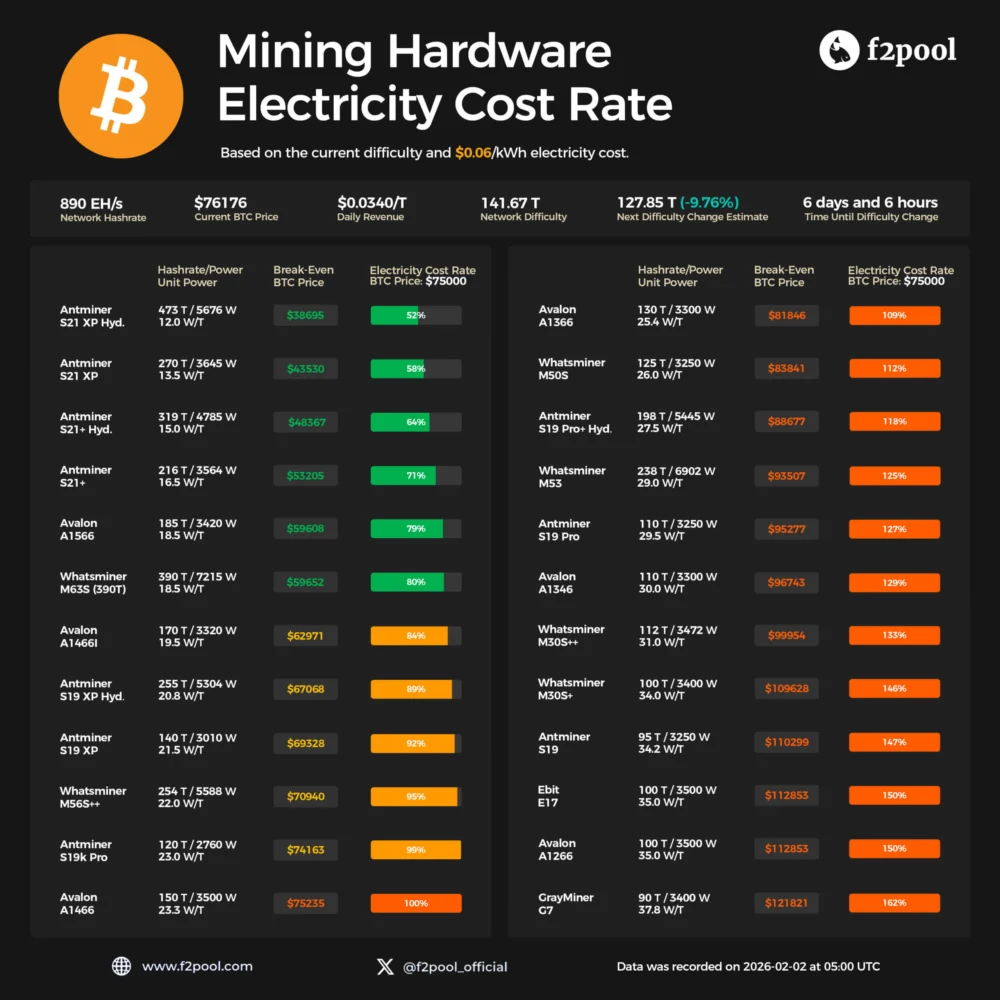
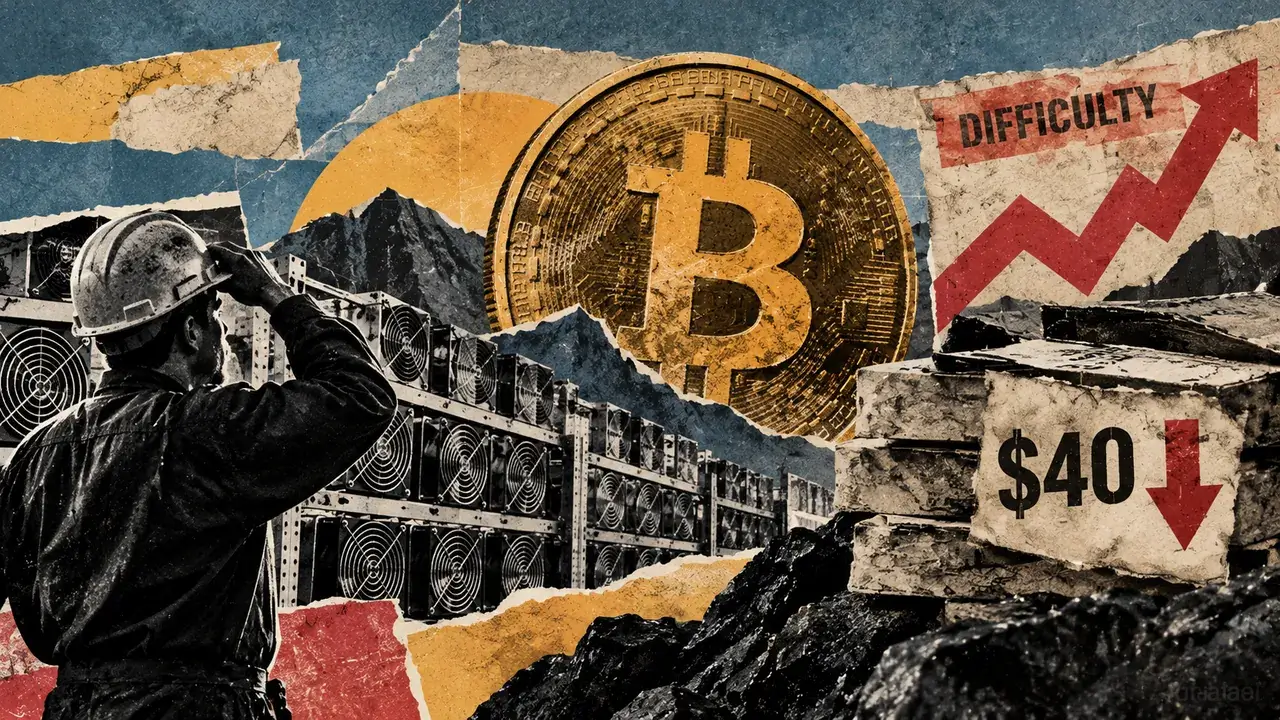
This price depreciation has not occurred in a vacuum. It has collided with a period of historically high network difficulty and rising global energy costs, creating an environment where even the most efficient operators are struggling to maintain profitability. The current state of the market has been described by analytics firm CryptoQuant as a period where miners are "extremely underpaid," with the firm’s profit-and-loss sustainability index dropping to 21—the lowest level observed since late 2024. This fiscal strain is manifesting in the physical world as a massive "hashrate drawdown," with total computing power on the network declining by roughly 12% since November. This represents the most significant contraction in network security since the 2021 Chinese ban on mining activities, effectively rolling back the network’s computational strength to levels not seen since September 2025.
The Mathematical Reality of Miner Capitulation
The security of the Bitcoin network is predicated on a game-theoretic incentive structure. Miners provide computational power (hashrate) to secure the ledger in exchange for a block subsidy and transaction fees. This "security budget" must remain high enough to incentivize honest participation and make the cost of a 51% attack prohibitively expensive. When Bitcoin’s price exceeded $120,000, the high value of the block reward allowed for significant operational inefficiencies. However, as the price has settled below the $80,000 threshold, the margin for error has effectively evaporated.
Recent data from the mining pool f2pool provides a stark illustration of this revenue compression. As of early February, the estimated daily revenue for miners has fallen to approximately $0.034 per terahash (TH) for those paying an average electricity rate of $0.06 per kilowatt-hour (kWh). To provide historical context, the Luxor Technology Hashrate Index recorded a "hashprice"—the expected value of 1 petahash per second (PH/s) of hashing power per day—near $39 just months prior. This figure has now plummeted toward an all-time low of $35.
When these macro-economic figures are applied to specific hardware, the crisis becomes even clearer. For the most advanced hardware on the market, such as Bitmain’s Antminer S21 XP Hydro, electricity costs now consume approximately 52% of total revenue. For mid-generation rigs like the Antminer S19 XP or Avalon A1466i, electricity costs represent 92% to 100% of revenue. For older, less efficient models—including the Avalon A1366 and the Whatsminer M50S series—operational costs range from 109% to 162% of revenue. In practical terms, a vast majority of the global mining fleet is currently operating at a net loss, even before accounting for payroll, debt servicing, and facility maintenance.

A Chronology of the 2025-2026 Market Shift
The current crisis is the culmination of a series of events that began in late 2024. Understanding the timeline of this shift is essential for grasping why this period of capitulation differs from previous "crypto winters."
- October 2025: Bitcoin reaches a record high of $126,000. Mining profitability surges, leading to massive investments in new hardware and expanded facilities. Network hashrate hits all-time highs as miners race to capture the inflated block reward.
- November 2025: The market begins a sharp correction. As prices slide, the network difficulty—which adjusts roughly every two weeks—remains high due to the lagging effect of newly installed hardware.
- December 2025 – January 2026: Energy prices in key mining hubs, particularly in the United States and Northern Europe, experience seasonal spikes. Miners who did not lock in long-term fixed-rate power contracts begin to see their margins turn negative.
- February 2026: Revenue hits a historic low of $0.034/TH. Large-scale operators begin the process of "unplugging" inefficient machines. Simultaneously, several publicly traded mining firms announce the conversion of their facilities into Artificial Intelligence (AI) data centers.
The Great Infrastructure Pivot: AI as the New Power Sovereign
Unlike previous cycles where miners would simply wait for a price recovery or the next difficulty adjustment, the 2026 capitulation is defined by the emergence of a high-value alternative for the industry’s most valuable asset: energized land. The infrastructure required for Bitcoin mining—high-voltage power connections, industrial cooling systems, and physical security—is almost identical to what is needed for hyperscale AI compute clusters.
This has led to what analysts are calling the "Great Pivot." AI infrastructure providers, backed by the immense capital of "Big Tech" and semiconductor giants like Nvidia, are increasingly viewing distressed Bitcoin mining sites as prime real estate. The financial incentives for this transition are staggering. For instance, CoreWeave, a firm that evolved from a mining operation into a specialized AI cloud provider, recently secured a $2 billion equity investment from Nvidia. In 2025, the company made headlines with a multibillion-dollar offer to acquire Core Scientific, specifically targeting the miner’s power contracts and site locations.
Publicly traded miners are following suit to protect shareholder value. Canadian firm Hut 8 recently finalized a 15-year, 245-megawatt lease for an AI data center at its River Bend campus. The deal is valued at approximately $7 billion, providing the company with stable, long-term cash flows that are entirely decoupled from the volatility of the Bitcoin market. For these companies, the decision is a rational one: they are swapping the cyclical and currently unprofitable business of mining for the high-margin, high-demand business of AI hosting.
Analyzing the Long-Term Erosion of Network Security
The permanent reallocation of mining infrastructure to AI has profound implications for the Bitcoin network’s security model. Jeff Feng, co-founder of Sei Labs, has noted that this is the most significant miner capitulation since the 2021 China ban, but with a critical difference. In 2021, the hashrate eventually returned as machines were relocated. In the current scenario, once a 245 MW site is converted to AI and "re-racked" with GPUs under a 15-year lease, that power is effectively lost to the Bitcoin network forever.

This trend creates several risks:
- Reduction in Marginal Attack Cost: A sustained decline in hashrate lowers the barrier to entry for a malicious actor. If the total "honest" hashrate remains suppressed, the cost to rent or build enough capacity to disrupt the network decreases.
- Centralization of Block Production: As older and mid-tier operators exit the market, only the most capitalized firms with access to the cheapest power remain. This narrows the base of stakeholders, potentially centralizing control over which transactions are included in blocks.
- Security Budget Fragility: The "extremely underpaid" status of miners serves as a forward indicator. If the network cannot provide a competitive return on capital compared to AI, the "security budget" will continue to shrink, making the network less robust over time.
Strategic Responses and the Future of the Mining Industry
As the industry adjusts to this new reality, several paths for Bitcoin’s evolution are emerging. The most immediate outcome is likely a period of "quiet consolidation." As difficulty resets downward, the remaining efficient operators will capture a larger share of the rewards, potentially stabilizing the network at a lower, but still formidable, hashrate.
However, the long-term solution may require a fundamental shift in how the network is funded. If the block subsidy (the "digital gold" issuance) is no longer sufficient to compete with AI economics, the network may have to transition to a fee-driven security model faster than originally anticipated. This would necessitate a greater volume of high-value transactions on the base layer, potentially driving more retail activity to Layer 2 solutions like the Lightning Network while the main chain becomes a settlement layer for large-scale institutional transfers.
There is also the possibility of institutional intervention. As Bitcoin becomes a staple of global financial portfolios through spot ETFs, the institutions managing these assets—such as BlackRock and Fidelity—have a vested interest in the network’s security. In the future, we may see "industry-funded" incentives or specialized transaction classes that carry higher fees specifically designed to bolster the mining ecosystem.
Ultimately, the f2pool dashboard and the recent surge in AI conversions provide a real-time look at a global negotiation for energy. The Bitcoin network is currently paying approximately 3.5 cents per terahash per day for its security. Whether the global energy market continues to accept this rate, or demands the higher premiums offered by the AI revolution, will determine the structural integrity of the world’s largest decentralized network in the years to come. The transition from "Bitcoin mining" to "high-performance computing" is no longer a theoretical pivot; it is a permanent alteration of the digital and physical landscape.