Dwi Wanna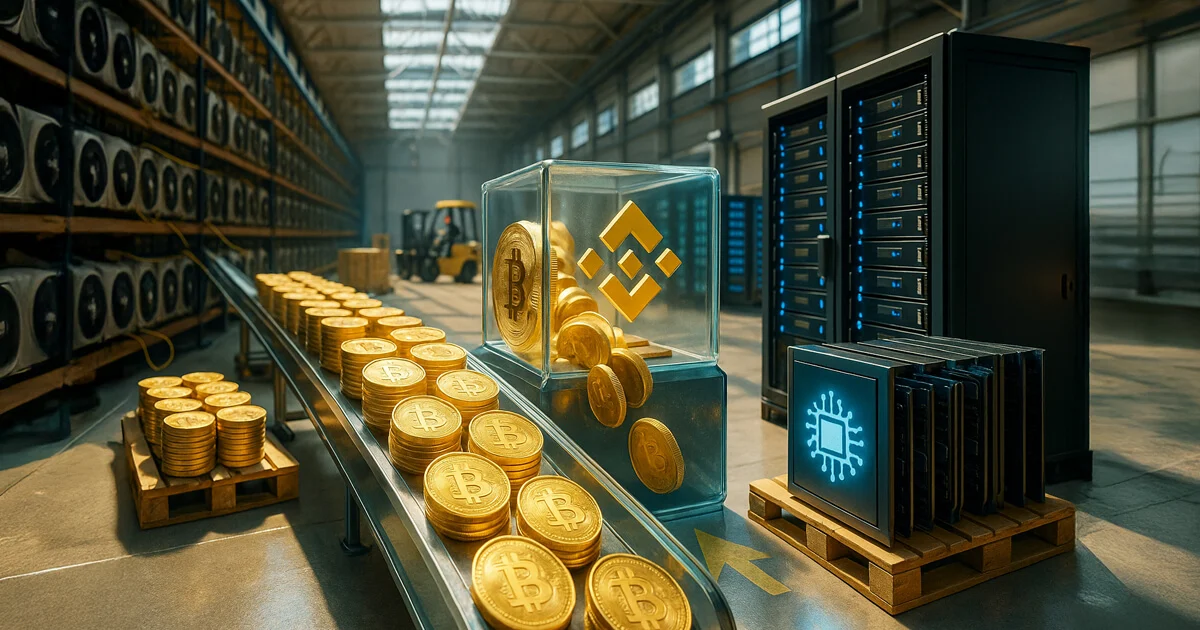
The Bitcoin mining sector is currently navigating one of its most precarious financial periods in recent history, as a combination of declining profitability and high operational costs forces major players to liquidate their holdings. Following a broader market rout that wiped $19 billion from the cryptocurrency’s total capitalization, data indicates that mining entities have begun offloading significant quantities of Bitcoin onto centralized exchanges. This movement is widely interpreted by market analysts as a precursor to sustained sell pressure, marking a departure from the accumulation strategy that characterized much of the first half of 2024.
According to on-chain analytics provided by CryptoQuant, mining wallets transferred approximately 51,000 BTC—valued at more than $5.6 billion—to Binance between October 9 and October 15. The most significant spike occurred on October 11, when over 14,000 BTC moved to the exchange in a single 24-hour window, representing the largest daily miner deposit since July. These figures suggest that the "breathing room" for operators has narrowed significantly, as the cost of securing the network increasingly outweighs the rewards generated by the current block subsidy.
The Economic Drivers of Miner Capitulation
The surge in exchange inflows is rarely an isolated event; it is typically a reactive measure to deteriorating fundamental conditions. For the majority of 2024, Bitcoin miners acted as net accumulators, holding onto their rewards in anticipation of a post-halving price surge. However, the April 2024 halving event, which reduced the block reward from 6.25 BTC to 3.125 BTC, has placed a permanent strain on the industry’s revenue model.
When miners move assets to exchanges, it generally signals one of three intentions: direct liquidation to cover operational expenses (OPEX), the use of Bitcoin as collateral for derivatives or financing, or a strategic reallocation of assets for regulatory compliance. In the current climate, analysts believe the primary driver is the need for liquidity. As profit margins shrink, even the most efficient mining firms must sell their reserves to maintain cash flow, upgrade hardware, or service debt.

The concept of "hashprice"—a metric representing the expected value of 1 TH/s of hashing power per day—has become the industry’s most concerning indicator. According to data from the Hashrate Index, hashprice recently plummeted to approximately $45, its lowest level since the immediate aftermath of the April halving. This decline reflects a "perfect storm" of stagnant Bitcoin prices, rising network difficulty, and a significant drop in transaction fee revenue.
A Chronology of Network Difficulty and Revenue Decline
The current crisis is the culmination of several months of escalating competition within the Bitcoin network. As institutional interest in Bitcoin grew following the approval of spot ETFs in the United States, the network’s hashrate climbed to record highs, driven by the deployment of next-generation ASIC (Application-Specific Integrated Circuit) hardware.
In September 2024, Bitcoin mining difficulty—a self-adjusting mechanism that ensures blocks are found roughly every ten minutes—peaked at an all-time high of over 150 trillion. This peak followed seven consecutive positive adjustments, meaning that miners had to expend more computational energy than ever before to earn the same amount of Bitcoin. While the most recent adjustment at block 919,296 saw a modest decrease of 2.73%, the relief has been insufficient to offset the broader trend of declining rewards.
The lack of transaction fee support has further exacerbated the situation. Historically, periods of high network activity—often driven by innovations like Ordinals or Runes—provided a secondary revenue stream for miners. However, in 2025, the average fee per block has hovered around 0.036 BTC. This is the lowest fee-to-reward ratio observed in over a decade. Analysts like Jaran Mellerud have pointed out the inherent danger in this trend, noting that as block subsidies continue to halve every four years, transaction fees must eventually become the primary source of income to sustain the network’s multi-billion-dollar security budget.
Industry Reactions and Analyst Perspectives
The shift in miner behavior has drawn commentary from various corners of the blockchain research community. ArabChain, a prominent on-chain researcher, noted that the massive transfers to Binance suggest a transition from long-term holding to active risk management. "Large transfers from miner wallets typically indicate either direct liquidation or preparations for collateralized borrowing," the researcher explained. "In some cases, these deposits are technical reallocations for regulatory or operational reasons, but the timing alongside a market rout suggests a defensive posture."

Similarly, Nico Smid, founder of Digital Mining Solutions, highlighted the competitive nature of the current landscape. He noted that the industry is moving toward a "survival of the fittest" phase, where only those with access to the cheapest electricity and the most efficient hardware can remain solvent. The "zero-sum" nature of mining means that every new player entering the market with more efficient machines effectively reduces the payout for every other participant.
The AI Pivot: A Strategic Lifeline
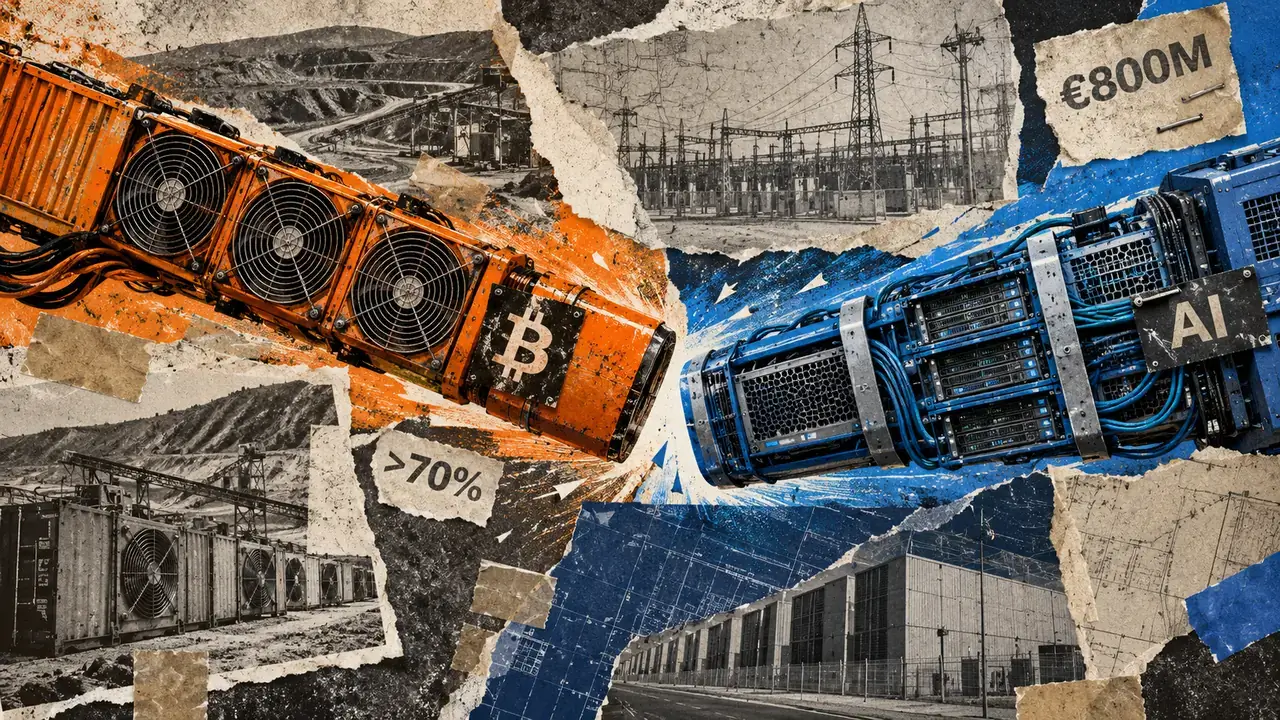
In response to the diminishing returns of pure Bitcoin mining, a significant structural shift is occurring within the industry. Large-scale mining firms are increasingly repurposing their infrastructure to support Artificial Intelligence (AI) and High-Performance Computing (HPC) workloads. This pivot leverages the existing assets of mining operations: high-capacity power interconnections, advanced cooling systems, and robust physical security.
The economic incentive for this transition is stark. According to a report from Hashlabs, a 1-megawatt (MW) mining site utilizing highly efficient hardware (20 J/TH) generates approximately $896,000 in annual revenue, assuming a Bitcoin price of $100,000. In contrast, that same 1-MW capacity, when leased to AI clients for compute-heavy tasks, can generate up to $1.46 million per year. Unlike the volatile nature of Bitcoin mining, AI hosting often involves long-term, stable contracts that provide predictable cash flow.
Core Scientific, one of the largest publicly traded mining companies, has been a pioneer in this space. After emerging from bankruptcy, the company secured multi-billion-dollar deals to host GPUs for AI firms, effectively diversifying its revenue streams. This trend suggests that the future of "Bitcoin mining" may actually be a hybrid model where blockchain security is just one component of a broader data-center economy.
Long-Term Implications for the Bitcoin Network
The transformation of mining facilities into AI-crypto hybrid centers carries profound implications for Bitcoin’s long-term security model. Bitcoin’s security is fundamentally tied to its hashrate; the more computational power dedicated to the network, the more expensive it is for a malicious actor to execute a 51% attack.

If a significant portion of the global hashrate begins to prioritize AI workloads over Bitcoin mining whenever the latter becomes less profitable, the network could see greater volatility in its hashrate. Furthermore, this trend could lead to further centralization. Small-scale miners do not have the capital or the infrastructure required to pivot to AI, meaning the mining landscape may soon be dominated exclusively by massive, diversified corporations capable of weatherizing their balance sheets through HPC contracts.
In the immediate term, the market must absorb the 51,000 BTC recently moved to exchanges. Historically, sustained inflows of this magnitude have preceded periods of price consolidation or further capitulation. However, if the price of Bitcoin remains stagnant while difficulty remains high, the "miner purge" may continue, potentially leading to a more streamlined but more corporate-heavy mining sector.
The current situation underscores a critical juncture for the world’s largest cryptocurrency. As the industry matures, the traditional image of the Bitcoin miner as a pure-play crypto enthusiast is being replaced by the reality of the industrial data-center operator—one who must balance the decentralized ideals of the blockchain with the cold, hard mathematics of energy efficiency and diversified revenue. Whether Bitcoin’s transaction fee market can eventually grow to replace the dwindling block rewards remains the most significant unanswered question for the network’s second decade of existence.