Dwi Wanna
The foundational architecture of the Bitcoin market is undergoing a fundamental transformation as institutional capital and global macroeconomic liquidity begin to supersede the asset’s historically dominant four-year halving cycle. For over a decade, the programmatic reduction of Bitcoin’s supply issuance—occurring every 210,000 blocks—served as the primary North Star for price discovery and investor sentiment. However, a growing body of evidence and expert analysis suggests that the influence of this internal clock is waning, replaced by the broader rhythms of traditional finance and the global credit cycle.
On September 3, prominent Bitcoin analyst Willy Woo posited that the cryptocurrency may be transitioning toward a six-to-eight-year rhythm. This shift, according to Woo, is tied more closely to the short-term debt cycles of traditional finance than to the quadrennial supply shocks that have defined Bitcoin’s history since its inception in 2009. While the halving remains a critical technical milestone, its relative impact on market price action is being diluted by the sheer scale of capital now flowing through institutional channels, including exchange-traded products (ETPs), corporate treasuries, and sovereign-level investments.
The Diminishing Marginal Impact of the Halving
To understand why the four-year cycle may be fading, it is necessary to examine the mathematical reality of Bitcoin’s issuance. The most recent halving in April 2024 reduced the block reward from 6.25 BTC to 3.125 BTC. This adjustment brought the annual new issuance to approximately 164,250 BTC, representing a mere 0.82% of the current circulating supply. Looking forward to the 2028 halving, the annual issuance will drop further to roughly 82,125 BTC, or approximately 0.41% of the projected supply base.
While these supply shocks were once massive enough to trigger parabolic price runs, the "supply-side" story is becoming a smaller part of the overall equation. In the early cycles, such as 2012 and 2016, the reduction in new coins entering the market represented a significant percentage of the total liquidity. Today, the Bitcoin market is much deeper and more liquid. The daily trading volume on global exchanges often exceeds tens of billions of dollars, making the daily production of roughly 450 BTC (post-2024 halving) a secondary factor compared to the massive inflows and outflows from institutional holders.
The Rise of Institutional Dominance: A Statistical Breakdown
The shift in market dynamics is most visible in the concentration of Bitcoin holdings among institutional players. According to data from Bitcoin Treasuries, there are now 100 public companies that hold more than 1.2 million BTC collectively. When combined with Bitcoin exchange-traded products, which control more than 1.5 million coins, the total institutional footprint exceeds 2.7 million BTC.
This combined "institutional stock" is more than 16 times the amount of new Bitcoin that miners currently produce in an entire year. By the time the 2028 halving occurs, this gap is expected to widen significantly. The disparity highlights a critical shift: the market is no longer driven by the "new supply" entering the system from miners, but rather by the "re-allocation of existing supply" by large-scale financial entities.
Institutional capital does not operate on a four-year programmatic clock; it operates on the basis of portfolio rebalancing, risk-adjusted returns, and, most importantly, global liquidity conditions. When central banks expand the money supply or lower interest rates, institutional capital flows into "risk-on" assets like Bitcoin. Conversely, when credit tightens, these same entities pull back. This creates a price rhythm that aligns with the 6-to-8-year macro-debt cycle rather than the 4-year halving schedule.
Evolution of the Cycle: A Timeline of Market Maturity
The transition from a retail-driven, supply-centric market to an institutional-driven, macro-centric market has occurred over several distinct phases:
- The Genesis Phase (2009–2012): Bitcoin was largely a proof-of-concept. Price discovery was driven by a small group of enthusiasts, and the first halving in 2012 had a massive psychological and supply-side impact because the asset lacked any significant liquidity.
- The Retail Expansion Phase (2013–2017): The 2016 halving preceded the 2017 bull run, which was characterized by the rise of initial coin offerings (ICOs) and massive retail participation. During this era, the four-year cycle theory became a self-fulfilling prophecy as investors front-ran the expected supply shock.
- The Institutional Entry Phase (2018–2021): The 2020 halving coincided with the COVID-19 pandemic and the subsequent explosion in global M2 money supply. This period saw the entry of MicroStrategy, Tesla, and legendary macro investors like Paul Tudor Jones. The cycle was still four years, but the drivers were beginning to shift toward macro-liquidity.
- The ETF and Macro Era (2022–Present): The approval of Spot Bitcoin ETFs in the United States in early 2024 marked the final integration of Bitcoin into the global financial system. Bitcoin is now treated as a legitimate asset class within traditional portfolios, making it sensitive to the same economic indicators as the S&P 500 or gold.
Expert Perspectives: Is the Old Framework Dead?
While Willy Woo’s thesis of a 6-to-8-year cycle is gaining traction, the broader analytical community remains divided on whether the four-year cycle is completely obsolete or simply evolving.
In a June report, Galaxy Research noted that while the four-year cycle remains visible, its "amplitude" is compressing. In other words, the peaks are becoming less extreme and the troughs less deep. This "dampening" effect is a classic sign of asset maturity. As an asset’s market capitalization grows, it requires exponentially more capital to move the price by the same percentage, naturally smoothing out the volatility of previous cycles.
Similarly, a midyear review by 21Shares described the pattern as "evolving rather than broken." The report suggested that while the halving still provides a "floor" for miner profitability and a psychological milestone for the community, it is no longer the sole catalyst for bull markets.
Fidelity Digital Assets has also contributed to this discourse, arguing that Bitcoin’s larger market capitalization and broader institutional base are fundamentally changing its behavior. Fidelity’s research suggests that as Bitcoin becomes a staple in diversified portfolios, its volatility will continue to decrease, making the explosive "boom-and-bust" periods of the early 2010s a thing of the past.
The Miner Factor: From Pure Crypto Proxies to Infrastructure Hubs
The shift in Bitcoin’s cycle also has profound implications for the mining industry. Historically, miners were the primary sellers in the market, liquidating their rewards to cover operational costs. This made their behavior a key component of price action. However, as the block reward shrinks, miners are being forced to diversify their revenue streams.
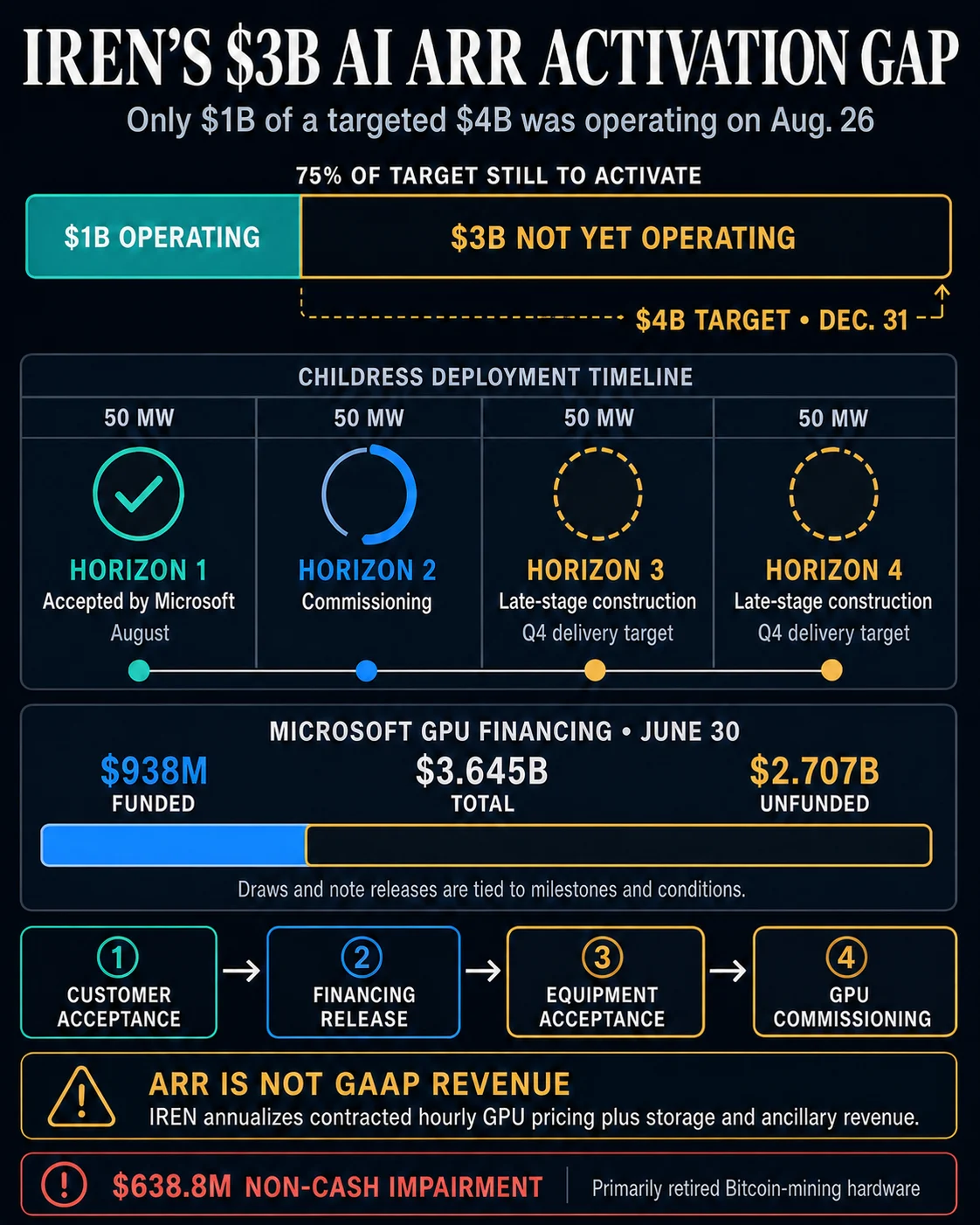
Many public mining companies are now rebranding themselves as high-performance computing (HPC) hubs, leveraging their energy infrastructure to support artificial intelligence (AI) and data processing. This diversification means that miners are no longer "pure-play" Bitcoin proxies. Their survival—and their impact on the market—is increasingly tied to their ability to manage energy costs and secure diversified revenue, rather than just the price of Bitcoin following a halving event.
Broader Impact and Future Implications
The decoupling of Bitcoin from a strict four-year schedule suggests a future where the asset acts as a high-velocity macro hedge. If Bitcoin’s price is increasingly dictated by global liquidity (M2 supply), then its primary role in a portfolio is to protect against the debasement of fiat currencies.
For investors, this shift means that monitoring the Federal Reserve’s interest rate decisions, global debt-to-GDP ratios, and the health of the banking sector may become more important than counting down the days to the next halving. The "halving clock" is being replaced by the "liquidity clock."
Furthermore, the institutionalization of Bitcoin could lead to longer, more sustained periods of growth. If the cycle has indeed extended to 6-to-8 years, the market may avoid the "crypto winters" of the past, which saw 80% to 90% drawdowns. Instead, the market may experience more traditional "corrections" within a long-term secular bull market.
Conclusion
The measurable change in Bitcoin’s market structure is already well underway. Annual miner issuance is shrinking toward a negligible fraction of the circulating supply, while millions of BTC are being locked away in institutional vaults and regulated investment products. While the halving will always be a part of Bitcoin’s code and its "digital gold" narrative, its power as a market driver is being eclipsed by the massive tides of global finance.
As Bitcoin matures, the next major market turn may depend less on the programmatic scarcity of the asset and more on the same credit and liquidity forces that shape the global economy. The era of the four-year cycle may be ending, but it is giving way to an era of institutional permanence and macro-economic relevance. For the first time in its history, Bitcoin is not just a peripheral experiment—it is a central player in the global financial landscape, moving in lockstep with the world’s most powerful capital flows.