admin
admin
Demand for US spot Bitcoin exchange-traded funds (ETFs) has surged dramatically over the past week, recording a consistent streak of daily inflows. This accelerated interest coincides directly with the widely publicized Coldcard hardware wallet exploit, a timing that has prompted significant speculation across the cryptocurrency industry regarding a potential reconsideration of self-custody practices by some investors. The incident has cast a renewed spotlight on the inherent risks associated with managing one’s own digital assets versus entrusting them to regulated institutional providers.
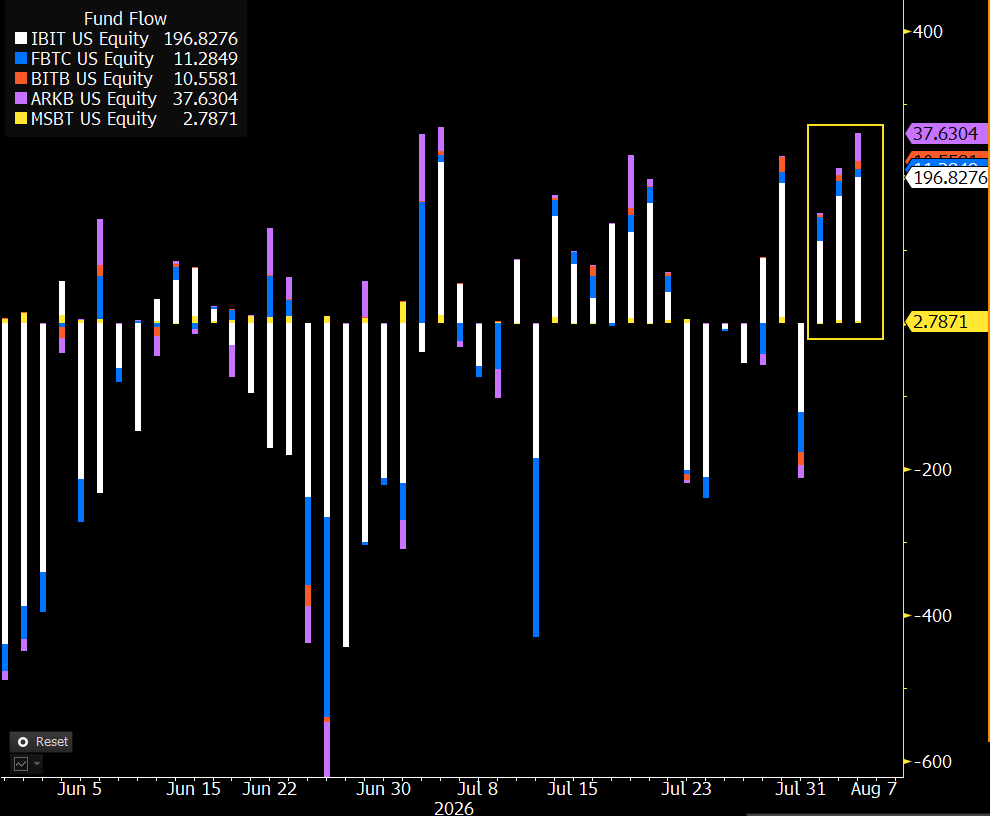
Since the exploit came to light over the weekend, several prominent spot Bitcoin ETFs have experienced robust capital inflows. According to insights from Bloomberg senior ETF analyst Eric Balchunas, BlackRock’s iShares Bitcoin Trust (IBIT), Fidelity Wise Origin Bitcoin Fund (FBTC), Bitwise Bitcoin ETF (BITB), ARK 21Shares Bitcoin ETF (ARKB), and the Defiance Daily Target 2X Long MSTR ETF (MSBT) have collectively registered inflows every single trading day. This sustained momentum has resulted in a cumulative influx of approximately $620 million into these investment vehicles, a figure consistent with recent market observations and financial reporting.
The Coldcard Exploit: A Breach in Trust
The catalyst for this renewed debate and potential shift in investor sentiment is the Coldcard exploit, an incident that saw more than $116 million worth of Bitcoin illicitly drained from over 5,200 distinct wallet addresses. Coldcard, manufactured by Coinkite, is renowned within the cryptocurrency community for its robust security features, often lauded as one of the most secure hardware wallets available. Its design prioritizes air-gapped operations, meaning it typically does not directly connect to the internet, aiming to minimize attack vectors. This reputation made the breach particularly alarming, shaking the confidence of even the most security-conscious Bitcoin holders. Blockchain intelligence firm TRM Labs, which specializes in tracking illicit financial flows, confirmed the extensive nature of the exploit, underscoring the sophistication and scale of the attack.
While the exact technical details of how the exploit was executed are still under thorough investigation by security experts and Coinkite, initial analyses suggest a complex vulnerability, possibly involving a supply chain attack, a sophisticated firmware flaw, or a highly targeted software exploit that bypassed Coldcard’s multi-layered security protocols. The sheer volume of assets compromised and the number of affected addresses highlight the critical importance of continuous vigilance and robust auditing in the hardware wallet ecosystem. For many, the Coldcard represented the pinnacle of self-custody security, and its breach signals a new frontier in the ongoing arms race between digital asset holders and malicious actors.
Connecting the Dots: Speculation on Investor Behavior

Eric Balchunas, commenting on the synchronous timing of the Coldcard exploit and the surge in ETF inflows, articulated the speculative nature of the connection. "I’m not saying it’s connected, we just don’t know," Balchunas stated in a post on X (formerly Twitter). However, he quickly added a crucial observation: "[Although] long-term I can’t imagine there aren’t some who migrate over." This sentiment encapsulates the prevailing market hypothesis: that the high-profile security breach of a leading hardware wallet could prompt a segment of investors, particularly those with significant holdings or less technical proficiency, to re-evaluate the complexities and risks of self-custody.
The immediate aftermath of such a large-scale exploit often leads to a flight to perceived safety. For many investors, regulated spot Bitcoin ETFs offer an attractive alternative. These funds allow individuals to gain exposure to Bitcoin’s price movements without directly holding the underlying asset. Instead, the Bitcoin is held by institutional custodians, such as Coinbase Custody, which are typically subject to stringent regulatory oversight, robust security infrastructure, and often, significant insurance policies. This arrangement offloads the technical burden and security responsibilities from the individual investor, potentially appealing to those unnerved by the Coldcard incident.
The Perennial Debate: Self-Custody vs. Institutional Custody
The Coldcard hack has forcefully reignited a foundational debate within the cryptocurrency space: the trade-offs between self-custody and institutional custody. The ethos of Bitcoin, encapsulated in the mantra "not your keys, not your coin," champions self-custody as the ultimate form of financial sovereignty. It grants users complete control over their digital assets, removing reliance on third-party intermediaries and offering unparalleled censorship resistance. However, this freedom comes with significant responsibilities and inherent risks.
- Self-Custody Challenges: Managing private keys, securing hardware wallets, understanding seed phrases, and protecting against phishing attacks or sophisticated exploits like the Coldcard incident require a high degree of technical understanding and meticulous operational security. Errors, loss of seed phrases, or vulnerabilities in even the most advanced hardware can lead to irreversible loss of funds. The recent Coldcard exploit starkly illustrates that even "cold storage," traditionally considered the most secure method, is not entirely impervious to attack, especially as cyber threats evolve in sophistication.
- Institutional Custody Advantages: Spot Bitcoin ETFs offer a different paradigm. Investors purchase shares in a fund that holds Bitcoin on their behalf. The custody of the actual Bitcoin is managed by specialized, regulated entities. These custodians invest heavily in multi-signature wallets, cold storage solutions, penetration testing, and employ teams of cybersecurity experts. Furthermore, they operate within a regulatory framework designed to protect investors, offering a layer of assurance that is absent in individual self-custody. The convenience and familiarity of trading ETFs through traditional brokerage accounts also appeal to a broader investor base, including those accustomed to conventional financial instruments.
Industry Reactions and Broader Implications
The incident drew commentary from prominent figures within the crypto industry, including Binance co-founder Changpeng "CZ" Zhao. CZ weighed in on the custody debate, provocatively suggesting that storing crypto on centralized exchanges (CEXs) might now be "statistically safer" than self-custody. He based this argument on data from analyst Willy Woo, which indicates that cumulative Bitcoin losses from self-custody incidents have surpassed those from exchange hacks.
"Hack data is easier to collect on the CEX side, usually major news. It is harder on the self-custody side, where hacks, lost coins, etc are often not reported," CZ noted. This highlights a critical data asymmetry: while major exchange hacks are extensively reported and quantified, individual losses due to user error, lost keys, or unreported personal exploits are far more difficult to track, potentially understating the true scale of self-custody risks. While CZ’s statement sparked debate, given Binance’s history with regulatory scrutiny and past security incidents, it nonetheless underscores the evolving risk landscape and the different forms of security and risk management prevalent in the crypto ecosystem.
Beyond the immediate market reactions, the Coldcard exploit serves as a stark reminder of the relentless innovation in cybercrime. On Monday, Bitcoin swap service Boltz suspended its non-custodial bridge, explicitly citing a steady rise in AI-assisted exploits. Boltz’s team reported that these advanced threats were enabling attackers to identify and exploit vulnerabilities at a pace faster than the firm could patch them. This incident, occurring concurrently with the Coldcard breach, paints a concerning picture of an accelerating cyber threat landscape, where artificial intelligence is increasingly leveraged by malicious actors to enhance the speed, scale, and sophistication of their attacks.
The Role of AI in Evolving Cyber Threats
The emergence of AI in cyberattacks represents a significant paradigm shift. AI algorithms can rapidly scan for vulnerabilities, generate sophisticated phishing campaigns, craft highly convincing social engineering tactics, and even automate parts of the exploitation process. This capability significantly lowers the barrier to entry for attackers and increases the efficiency of their operations. For hardware wallets and self-custody solutions, which rely heavily on robust cryptography and careful user interaction, AI-driven attacks could pose unprecedented challenges. They might target subtle firmware flaws, exploit human psychology through hyper-personalized scams, or even attempt to break cryptographic primitives through advanced computational methods (though the latter is currently theoretical for strong encryption).
This escalating threat environment necessitates a re-evaluation of security protocols across the entire digital asset spectrum. For hardware wallet manufacturers, it means investing more heavily in continuous security audits, bug bounties, and advanced threat intelligence. For users, it emphasizes the importance of understanding not just how to use their wallets, but also the broader threat landscape, and adopting multi-layered security practices.
Looking Ahead: Implications for the Crypto Ecosystem
The Coldcard exploit and the subsequent surge in ETF inflows are likely to have several long-term implications for the cryptocurrency market:
- Increased Scrutiny on Self-Custody Tools: The incident will undoubtedly lead to greater scrutiny and demand for enhanced transparency and verifiable security audits for all hardware and software wallets. Manufacturers may face pressure to offer more user-friendly security features and better educational resources.
- Bolstered Appeal of Regulated Products: For a segment of investors, especially institutions and those prioritizing ease of use and regulatory compliance, spot Bitcoin ETFs will become an even more attractive option. This could accelerate the mainstream adoption of Bitcoin as an investment asset, distinct from its use as a sovereign digital currency.
- Innovation in Hybrid Solutions: The debate might also spur innovation in hybrid custody solutions, combining elements of self-custody with institutional-grade security. This could involve multi-signature setups where one key is held by the user and another by a trusted third party, or more sophisticated smart contract-based custody solutions.
- Heightened Focus on Cybersecurity Education: The growing sophistication of attacks underscores the critical need for comprehensive cybersecurity education for all crypto users. Understanding common attack vectors, practicing good digital hygiene, and staying informed about new threats will become even more vital.
- Regulatory Attention: Regulators might also take note, potentially exploring guidelines or standards for hardware wallet security, or further emphasizing the importance of robust custody practices for institutional digital asset service providers.
Ultimately, the Coldcard exploit serves as a powerful reminder that the digital asset landscape is constantly evolving, with new opportunities and new risks emerging regularly. While the promise of self-sovereignty through self-custody remains a core tenet of the crypto movement, the practical realities of securing significant digital wealth in an increasingly hostile cyber environment are pushing some investors towards regulated, institutional alternatives. The ongoing dialogue and the observed shift in capital flows highlight a maturing market grappling with the complexities of security, convenience, and control in the digital age.