admin
admin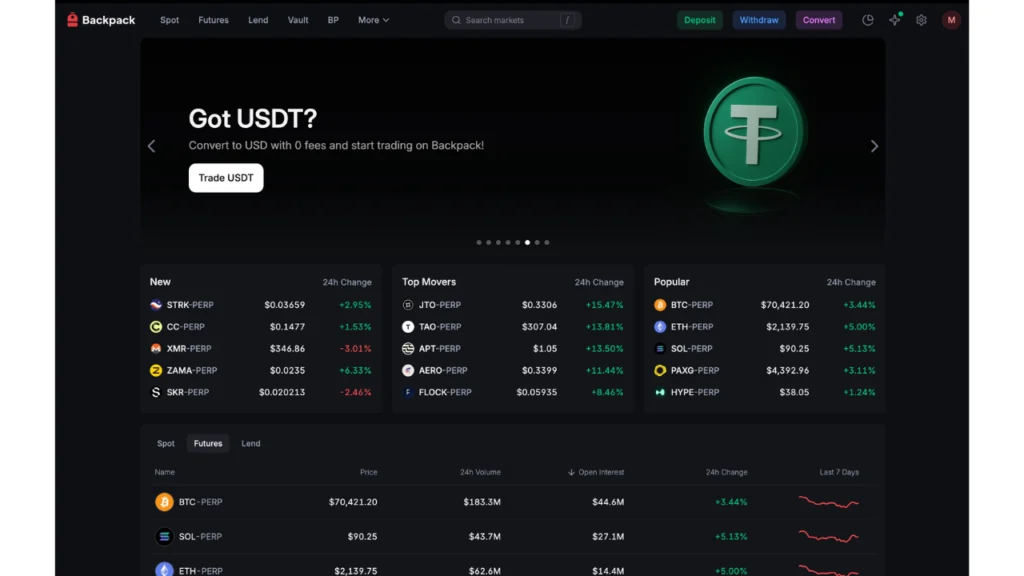
Backpack, the ambitious crypto financial ecosystem, officially launched its native $BP token on March 23, 2026, introducing one of the most unconventional and potentially transformative token models in the burgeoning digital asset space. Far exceeding the scope of a typical utility token, $BP is meticulously engineered to intertwine user participation with long-term company ownership, effectively blending the dynamic incentives inherent to Web3 with the established frameworks of traditional financial markets. This strategic move positions Backpack not merely as a cryptocurrency exchange, but as a trailblazer aiming to redefine the nexus between decentralized technology and regulated financial infrastructure, setting the stage for a potential public offering in the United States. The launch has garnered significant attention from market participants, analysts, and regulators alike, eager to observe the efficacy of this novel approach.
Backpack’s Foundational Vision: A Regulated Bridge to Traditional Finance
At its core, Backpack is a crypto financial ecosystem built with the explicit, long-term vision of evolving into a globally regulated financial infrastructure company capable of executing a public listing in the United States. This ambition fundamentally differentiates Backpack from many of its crypto-native counterparts, which often prioritize decentralization or regulatory arbitrage. Instead, Backpack has embarked on a "compliance-first" strategy, meticulously navigating complex regulatory landscapes to secure licenses in key jurisdictions.
A cornerstone of this strategy was the acquisition of FTX EU in 2024. This strategic move not only allowed Backpack to inherit an existing operational entity but, more importantly, provided a pathway to securing a MiFID II license from the Cyprus Securities and Exchange Commission (CySEC), a critical regulatory credential within the European Union. Prior to this, Backpack had already secured licenses in Dubai through the Virtual Assets Regulatory Authority (VARA), demonstrating its commitment to operating within stringent regulatory parameters across diverse global markets. This dual regulatory positioning in two significant financial hubs underscores Backpack’s intent to build a legitimate, institution-grade platform rather than merely a crypto trading venue.
This deliberate and often arduous path towards regulatory compliance is central to Backpack’s long-term aspirations. By proactively embracing established financial regulations, the company aims to foster trust, attract institutional capital, and lay a robust foundation for its eventual goal of an Initial Public Offering (IPO), an unprecedented move for a crypto-native entity of its kind. The ecosystem itself is underpinned by three tightly integrated products: Backpack Exchange, Backpack Wallet, and the innovative Mad Lads NFT collection, each designed to contribute to a cohesive and user-centric experience within this regulated framework.
The Backpack Exchange: A Hub for Regulated Digital Asset Trading
Launched in February 2024, Backpack Exchange rapidly distinguished itself as a centralized exchange (CEX) catering to both spot and perpetual futures trading across a growing array of major digital assets, including Bitcoin (BTC), Ethereum (ETH), Solana (SOL), and Sui (SUI). Despite what the company has described as a "challenging macro environment" for the broader crypto market in early 2026, the platform has achieved remarkable traction, surpassing an impressive $400 billion in cumulative trading volume. This figure not only signifies rapid user adoption but also highlights the platform’s robust infrastructure and ability to facilitate substantial liquidity, even amidst market uncertainties.
The exchange’s operational ethos is built upon institutional-grade security, ensuring the protection of user assets through advanced cryptographic measures, multi-factor authentication, and stringent internal controls. Its deep liquidity is a result of strategic partnerships with major market makers and a sophisticated matching engine capable of processing high volumes of trades efficiently. The integration with other Backpack products, particularly the Backpack Wallet, creates a remarkably seamless user experience, allowing for direct transfers, staking opportunities, and community engagement without needing to navigate disparate platforms. This holistic approach aims to reduce friction for both novice and experienced traders, enhancing overall platform utility and stickiness. The multi-jurisdictional licensing further bolsters its appeal to institutional clients seeking compliant avenues for digital asset exposure.

Backpack Wallet: The Seamless Web3 Gateway
Complementing the exchange is the Backpack Wallet, a non-custodial, multi-chain Web3 wallet accessible across mobile devices and browser extensions. Unlike many standalone wallets, Backpack Wallet is meticulously designed as an integral component of the unified Backpack ecosystem. It supports a broad spectrum of leading blockchains, including Solana, Ethereum, Bitcoin, Sui, and Monad, providing users with a versatile tool for managing their diverse digital asset portfolios.
The wallet’s unique selling proposition lies in its deep integration, which extends beyond mere asset storage. It acts as a central hub for interacting with the entire Backpack ecosystem:
- Direct Exchange Integration: Facilitating instant and secure asset transfers to and from the Backpack Exchange, streamlining the trading process.
- Airdrop Eligibility and Claiming: Serving as the primary conduit for users to qualify for and claim $BP token airdrops, directly linking wallet activity to ecosystem rewards.
- xNFT Support: Leveraging Backpack’s proprietary xNFT technology, the wallet transforms NFTs from static collectibles into dynamic, interactive applications and experiences, fostering greater utility and engagement within the Web3 space.
- Staking and Governance: Providing a secure interface for users to stake their $BP tokens, earn rewards, and participate in future governance decisions.
This level of integration significantly lowers the barrier to entry for new users venturing into Web3, offering an intuitive and guided experience. Simultaneously, it provides advanced functionality and a comprehensive suite of tools for experienced participants, solidifying its role as a versatile and indispensable component of the Backpack ecosystem.
Mad Lads NFT Collection: Community, Utility, and Identity
The Mad Lads NFT collection stands as a flagship digital asset on the Solana blockchain, comprising 9,000 distinctive main characters (Lads) and 1,000 secondary characters (Lassies). While many NFT projects focus predominantly on artistic collectibles or speculative value, Mad Lads plays a crucial and strategic role within the broader Backpack ecosystem, embodying the project’s commitment to community and utility.
Unlike conventional NFTs, Mad Lads leverages Backpack’s innovative xNFT (executable NFT) technology. This proprietary framework allows NFTs to function not just as digital art but as executable applications directly within the Backpack Wallet. This groundbreaking approach transforms static images into dynamic, interactive experiences, unlocking new levels of utility and engagement for holders.
- Enhanced Ecosystem Access: Mad Lads holders are often granted early access to new features, beta programs, and exclusive community events within the Backpack ecosystem.
- Airdrop Multipliers and Priority: Ownership of Mad Lads NFTs typically confers advantages in airdrop allocations, including multipliers or priority access, directly incentivizing community loyalty and participation.
- Governance Influence: As the ecosystem matures, Mad Lads holders are expected to play a role in governance, providing input on the direction and development of Backpack through token-gated forums and voting mechanisms.
- Identity and Brand Affinity: Beyond utility, Mad Lads have cultivated a strong community and brand identity, fostering a sense of belonging among Backpack users and aligning their digital identity with the platform’s innovative spirit.
This tight integration between NFTs and platform utility reflects Backpack’s overarching strategy of constructing a cohesive, interconnected ecosystem where every component reinforces the others, rather than operating as isolated products. It demonstrates a forward-thinking approach to leveraging digital collectibles to drive real-world utility and community engagement within a financial platform.
Leadership and Strategic Investment: A Synergy of Expertise
The driving force behind Backpack is a formidable leadership team that brings together a unique blend of expertise from both cutting-edge crypto-native projects and established traditional financial institutions. This diverse background provides Backpack with a strategic advantage, allowing it to bridge the gap between two often-disparate worlds. Team members boast impressive pedigrees, having previously contributed to industry giants such as Apple, Coinbase, Jump, Meta, Stripe, and Credit Suisse.

Key figures at the helm include:
- Armani Ferrante: The CEO of Coral, the core development team behind Backpack and the xNFT standard, Ferrante is a prominent figure in the Solana ecosystem, known for his technical vision and leadership in developing foundational Web3 infrastructure.
- Can Sun: Serving as the President and General Counsel, Sun brings invaluable experience from his previous role as General Counsel at FTX. His deep understanding of the intricate regulatory landscape surrounding digital assets is pivotal to Backpack’s "compliance-first" strategy, particularly in navigating international licensing and establishing robust legal frameworks.
To date, Backpack has successfully raised $37 million across various funding rounds, attracting significant investment from prominent venture capital firms and strategic partners who recognize the project’s ambitious vision. Moreover, the company is reportedly seeking an additional $50 million at a valuation that could push it to a staggering $1 billion, potentially achieving "unicorn status." This robust financial backing and strong investor confidence underscore the market’s belief in Backpack’s potential to execute its vision and disrupt both the crypto and traditional finance sectors. The blend of seasoned technologists, legal experts, and financial strategists positions Backpack to confidently navigate the complexities of building a globally regulated, publicly tradable crypto enterprise.
The $BP Tokenomics: A Community-First Design with Unprecedented Equity Alignment
The $BP token’s launch introduces a highly distinctive tokenomics model that fundamentally diverges from typical cryptocurrency exchange tokens. Designed with a community-first philosophy, $BP aims to align user incentives with long-term company ownership, setting a new standard for how value is distributed and governance is exercised within a Web3 ecosystem.
Token Overview:
- Total Supply: Capped at 10,000,000,000 (10 billion) BP tokens. This fixed supply provides scarcity and predictability.
- Initial Circulating Supply: Approximately 1,000,000,000 (1 billion) BP tokens at launch, representing 10% of the total supply. This controlled initial release aims to manage market volatility and ensure a gradual distribution.
- Market Cap Target: Prediction markets and early analyst projections suggest a fully diluted valuation (FDV) between $3 billion and $5 billion. This places $BP in a competitive position relative to other established exchange tokens, reflecting confidence in its underlying utility and innovative model.
Allocation and Unlock Structure:
Backpack has implemented a unique three-phase token distribution model that prioritizes active users and community members over internal stakeholders, a stark contrast to many traditional crypto launches.
- Phase 1 (Initial Airdrop): A substantial portion, approximately 250 million BP tokens, representing 2.5% of the total supply, was distributed via airdrop to early users, traders on the Backpack Exchange, and holders of the Mad Lads NFT collection. This initial distribution rewards early adopters and fosters immediate community engagement.
- Phase 2 (Community Rewards & Ecosystem Development): A significant allocation is reserved for ongoing community rewards, liquidity incentives, and ecosystem development initiatives. These tokens will be released gradually over time, tied to specific milestones and performance metrics, ensuring sustained engagement and growth.
- Phase 3 (Strategic Reserves & Future Growth): The remaining tokens are held in a strategic reserve, earmarked for future growth, partnerships, and potential institutional adoption, with transparent vesting schedules to prevent market shocks.
Crucially, and perhaps most remarkably, no tokens were allocated to founders, team members, or investors at launch. This bold decision marks a sharp departure from typical exchange token launches, where early contributors and investors often receive large, front-loaded allocations. By prioritizing a fair, community-centric distribution, Backpack aims to cultivate genuine decentralization of ownership and foster a loyal, invested user base from day one. This innovative approach underscores Backpack’s commitment to its Web3 ethos while building a bridge to traditional finance.
Token Utility: Bridging Users and Ownership Through Equity Conversion
The most distinctive and revolutionary feature of the $BP token lies in its multifaceted utility design, which transcends the typical functions of standard exchange tokens. It is engineered to create a direct link between active participation in the Web3 ecosystem and tangible ownership in the underlying company.

Core Utilities:
- Staking for Rewards: Holders can stake their $BP tokens within the ecosystem to earn yield, often in the form of additional $BP tokens or a share of platform fees. This mechanism incentivizes long-term holding and participation in network security.
- Fee Discounts: Staking $BP tokens or holding a certain amount provides users with reduced trading fees on the Backpack Exchange, making trading more cost-effective for active participants.
- Governance Participation: As the ecosystem evolves, $BP token holders are expected to gain governance rights, allowing them to vote on key proposals, protocol upgrades, and strategic decisions, thereby shaping the future direction of the Backpack platform.
- Exclusive Access and Benefits: Holding $BP tokens may unlock access to exclusive features, higher-tier rewards, early access to new products, or participation in special events within the Backpack ecosystem.
The Equity Conversion Mechanism: A Game-Changer
The most groundbreaking aspect of $BP’s utility is the explicit provision for up to 20% of Backpack’s total equity to be allocated to qualified token holders. This unprecedented mechanism effectively transforms $BP into a hybrid asset, combining the dynamic utility and decentralized nature of a crypto token with the tangible ownership rights traditionally associated with shares in a private company.
The specifics of this equity conversion mechanism are designed to align the long-term success of the company with the interests of its token holders. While the exact legal and operational framework for conversion will be defined as Backpack moves closer to a potential IPO, the core principle is clear: active participants and loyal token holders will have a pathway to become direct shareholders in the regulated entity. This model positions Backpack as a pioneer in linking crypto tokens directly to traditional capital markets, potentially creating a new paradigm for how Web3 projects can achieve institutional legitimacy and offer real-world value to their communities. It aims to solve the perennial challenge of bridging the "value gap" between a decentralized token’s utility and the centralized company’s equity value, offering a compelling proposition for long-term investors and dedicated users.
Airdrop Dynamics and Community Feedback
The launch of $BP tokens commenced with an airdrop of approximately 250 million tokens to early users and NFT holders, a common strategy to bootstrap token distribution and reward initial community engagement. However, as is often the case with large-scale airdrops in the crypto space, the distribution process generated a mix of reactions within the community.
To ensure fairness and prevent Sybil attacks – where malicious actors create numerous fake accounts to unfairly claim a disproportionate share of tokens – Backpack implemented strict anti-Sybil measures. These included:
- KYC Requirements: Verification of identity for all participating accounts to ensure genuine users.
- Minimum Trading Volume Thresholds: Requiring users to have executed a certain amount of trading volume on the Backpack Exchange.
- Wallet Activity Metrics: Evaluating the activity and engagement levels of connected Backpack Wallets.
- Mad Lads NFT Ownership: Providing bonus allocations or priority to holders of the flagship NFT collection, recognizing their integral role in the ecosystem.
While these stringent measures were crucial for protecting the integrity of the airdrop and rewarding legitimate users, some community members reported challenges and expressed dissatisfaction.
- False Positives: A number of genuine users reported being incorrectly flagged by the anti-Sybil filters, leading to reduced or denied allocations.
- Lack of Transparency: Some users felt there was insufficient clarity on the exact criteria for eligibility or the methodology behind the anti-Sybil detection, leading to frustration and confusion.
- Technical Glitches: Isolated incidents of technical issues during the claiming process were also reported, although these were generally resolved swiftly.
These reactions highlight a recurring challenge in the execution of large-scale crypto airdrops: striking the delicate balance between robust anti-fraud measures and ensuring a smooth, transparent, and satisfying experience for the entire user base. Backpack’s team acknowledged the feedback and worked to address reported issues, emphasizing their commitment to continuous improvement in community engagement and distribution mechanisms. The incident serves as a valuable case study for the broader industry on the complexities of fair token distribution.

Market Expectations and Valuation Outlook
Early market sentiment surrounding the $BP token appears cautiously optimistic, reflecting both the innovative nature of its tokenomics and the solid foundation of the Backpack ecosystem. Prediction markets and preliminary analyst reports have begun to establish valuation benchmarks:
- Fully Diluted Valuation (FDV) Projections: Early estimates from prediction markets suggest a potential fully diluted valuation for $BP ranging from $3 billion to $5 billion. This places it in a competitive tier, indicating that the market recognizes the long-term potential of Backpack’s regulated, equity-linked model. For context, established exchange tokens like Binance Coin (BNB) have significantly higher valuations, but $BP’s unique hybrid model suggests a different trajectory.
- Initial Trading Price Expectations: While official listing prices were not set pre-launch, initial over-the-counter (OTC) trades and pre-market indicators hinted at a strong debut, reflecting demand from early investors and community members.
These projections align with Backpack’s previous funding valuation, which stood at approximately $120 million in 2024, demonstrating substantial growth in perceived value. The market appears to view $BP as an asset grounded in fundamental utility and a clear pathway to traditional finance integration, rather than purely speculative hype.
However, the broader crypto market conditions in early 2026 present a nuanced backdrop. Bitcoin, the industry bellwether, has been hovering around the $70,000 mark, signaling a mature but somewhat constrained liquidity environment compared to previous bull runs. This macro-level uncertainty could influence the short-to-medium term performance of new token launches, including $BP. Despite this, Backpack’s strategic positioning at the intersection of Web3 and TradFi, coupled with its "compliance-first" approach, might provide a degree of resilience against generalized market volatility, attracting investors seeking stability and long-term value. The successful execution of its equity conversion mechanism will be a critical factor in realizing its full valuation potential.
Conclusion: A New Paradigm for Web3 Value Distribution
Backpack is not merely launching another cryptocurrency token; it is embarking on a bold experiment to forge a new economic model for digital asset platforms. By prioritizing genuine community ownership, meticulously tying token supply to real-world operational milestones, and introducing a groundbreaking equity conversion mechanism, the project is fundamentally redefining what an exchange token can represent and achieve.
This hybrid model, which thoughtfully integrates Web3 incentives with the established principles of traditional financial markets, has the potential to set an unprecedented standard for value distribution within the crypto industry. If Backpack successfully navigates the complex regulatory pathways, executes its equity conversion framework, and sustains its impressive growth trajectory, it could indeed emerge as a blueprint for future crypto projects seeking institutional legitimacy and traditional public market exits. In this vision, users are not just transient participants or speculative traders; they are genuine stakeholders, directly invested in the long-term success and prosperity of the platform.
The $BP token launch represents a pivotal moment in the ongoing convergence of decentralized technology and conventional finance. As Backpack continues to evolve, its progress will be closely watched by innovators, investors, and regulators worldwide, offering crucial insights into the future of digital asset ownership and the potential for crypto enterprises to achieve mainstream recognition and adoption.