admin
admin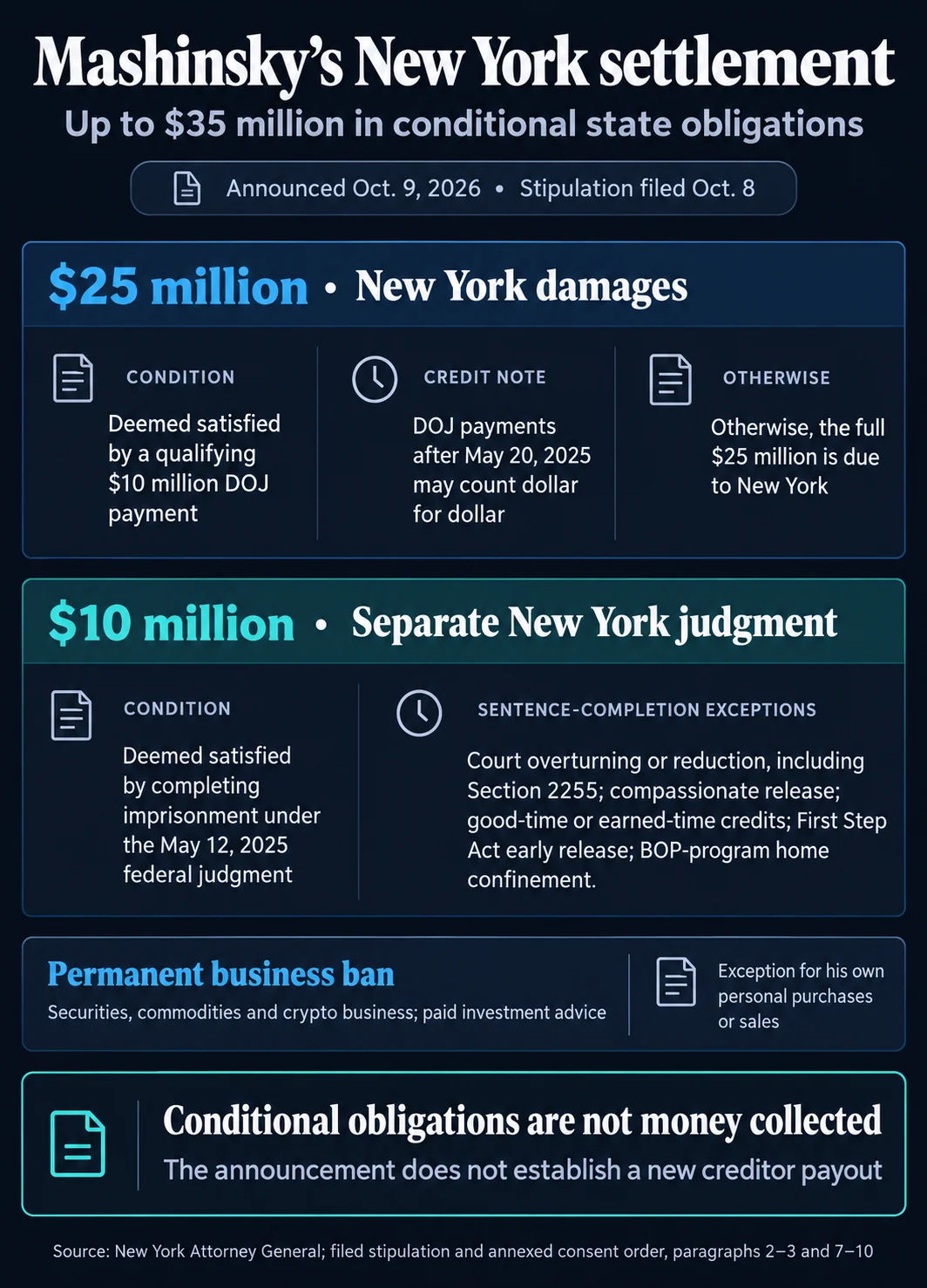
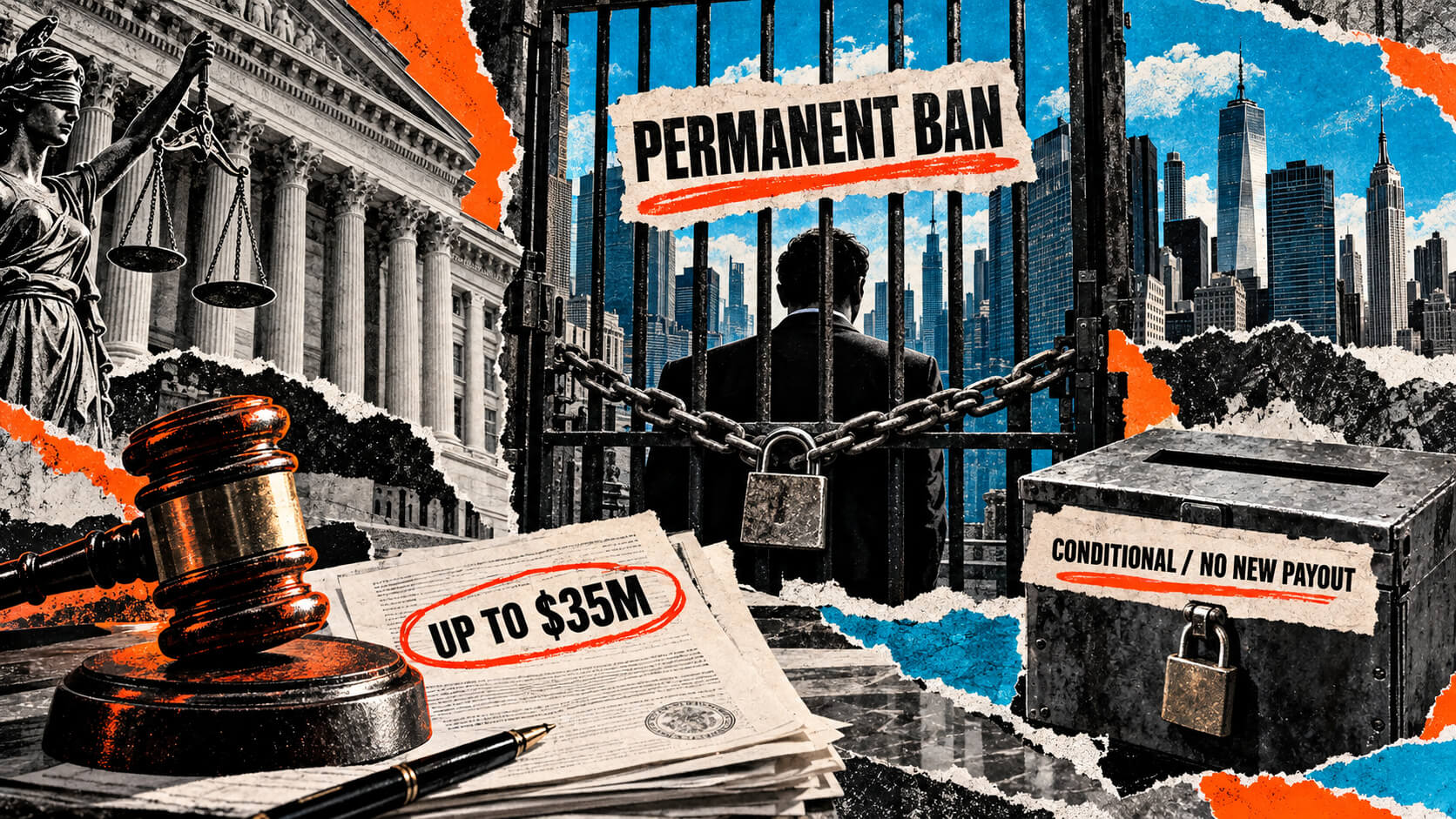
Celsius founder Alex Mashinsky has agreed to a permanent ban from the securities, commodities, and cryptocurrency industries as part of a settlement with New York authorities, announced on October 9th. This agreement, which also imposes conditional payment obligations totaling up to $35 million, does not create any new payouts for Celsius creditors. The settlement resolves a civil lawsuit filed by New York in January 2023 and runs parallel to a federal criminal case in which Mashinsky is currently serving a 12-year prison sentence.
Background: The Rise and Fall of Celsius Network
Celsius Network, once a prominent player in the decentralized finance (DeFi) landscape, offered users high-yield interest on their cryptocurrency deposits. Founded by Alex Mashinsky, the platform attracted billions of dollars in assets by promising attractive returns, often significantly higher than traditional financial institutions. However, the company’s aggressive growth strategy and complex investment practices began to unravel, particularly as the cryptocurrency market experienced significant downturns starting in 2022.
The company’s financial woes became public knowledge when it froze withdrawals for its customers in June 2022, citing "extreme market conditions." This move sent shockwaves through the crypto community and led to widespread panic among Celsius users who suddenly found their funds inaccessible. Investigations by regulatory bodies, including the Securities and Exchange Commission (SEC) and the Commodity Futures Trading Commission (CFTC), as well as state authorities like New York’s Attorney General, followed. These investigations focused on allegations of fraud, misleading statements to investors, and the commingling of customer funds.
Mashinsky himself became a central figure in these allegations. Prosecutors and regulators accused him of deliberately misleading investors about the safety of their deposits and the financial health of Celsius. Specifically, he was alleged to have misrepresented the company’s regulatory compliance and profited from selling Celsius’s native token, CEL, while simultaneously assuring customers of the token’s value and the company’s stability.
The New York Settlement: Key Terms and Conditional Payments
The settlement reached with New York State Attorney General Letitia James’ office brings a significant chapter of the legal proceedings against Mashinsky to a close. The agreement outlines a multi-faceted resolution that addresses both financial penalties and professional sanctions.
The $35 Million in Conditional Obligations Explained:
The headline figure of $35 million in conditional payments is structured into two distinct components:
-
$25 Million in Damages to New York: This portion of the settlement is designed to compensate New York for the alleged harm caused by Mashinsky’s actions. Crucially, this $25 million obligation is considered satisfied by a qualifying $10 million payment made by Mashinsky to the U.S. Department of Justice (DOJ) under the terms of his federal forfeiture order. The consent order specifies that any DOJ payments made after May 20, 2025, can be counted dollar-for-dollar towards this $10 million requirement. If Mashinsky fails to make this specified payment to the DOJ, New York’s Attorney General is entitled to the full $25 million.
-
$10 Million Monetary Judgment to New York: A separate $10 million monetary judgment is also stipulated. This judgment is deemed satisfied upon the completion of Mashinsky’s federal prison sentence, as entered by the court on May 12, 2025. However, this condition includes several express exceptions. These exceptions are designed to account for potential modifications to his federal sentence. They explicitly cover scenarios such as a sentence being overturned or reduced by a court, including through legal challenges like a Section 2255 motion. Other exceptions include provisions for compassionate release, good-time credits, earned-time credits, early release under the First Step Act, or confinement at home through a Bureau of Prisons program.
It is important to note that these conditional payments are distinct from any potential recovery for Celsius creditors. The announcement explicitly states that these obligations do not establish a new payout mechanism for those who lost funds when Celsius collapsed.
Permanent Industry Ban: A Sweeping Sanction
Beyond the financial penalties, the most impactful element of the New York settlement is the permanent ban imposed on Alex Mashinsky from participating in the securities, commodities, and cryptocurrency industries. This ban is comprehensive, prohibiting him from holding various roles within these sectors. Specifically, Mashinsky is barred from acting as a broker, investment adviser, manager, officer, or consultant. The prohibition also extends to distributing investment advice for compensation or any economic benefit.
This industry-wide exclusion aims to prevent Mashinsky from engaging in similar activities that led to the downfall of Celsius and the alleged defrauding of investors. The terms of the ban are designed to be far-reaching, encompassing a broad spectrum of financial and advisory roles.
However, the settlement includes a notable exception: it permits Mashinsky to engage in his own personal purchases and sales of assets. This carve-out allows him to manage his personal portfolio, while simultaneously barring him from any professional capacity within regulated financial markets.
Admissions and Legal Context
As part of the settlement, Mashinsky has formally admitted to misleading investors. These admissions include specific claims that he misrepresented Celsius’s regulatory standing and his own sales of the company’s native token, CEL. These admissions are significant as they provide a legal basis for the sanctions imposed by the state of New York.
The New York settlement adds another layer to the existing legal challenges Mashinsky faces. He was sentenced on May 8, 2025, to 12 years in federal prison for fraud-related charges. The federal court also ordered a forfeiture of $48.4 million, reflecting the alleged ill-gotten gains from his fraudulent activities.

Implications for Creditors and the Crypto Industry
The New York settlement, while significant in its sanctions against Mashinsky, offers little direct financial relief to the creditors of Celsius. The bankruptcy proceedings of Celsius are ongoing, and the distribution of assets to creditors is a complex and lengthy process governed by separate legal frameworks. The Attorney General’s office has indicated that Celsius has already distributed over $3.4 billion to creditors as of August 2026, a testament to the ongoing efforts to recover assets within the bankruptcy estate. The conditional payments outlined in the Mashinsky settlement are between the state and Mashinsky himself, not directly from his assets to Celsius customers.
The permanent ban on Mashinsky from the crypto industry serves as a strong message to other executives in the digital asset space. It underscores the increased scrutiny and regulatory oversight that the sector is facing. The settlement reinforces the notion that individuals found to have engaged in fraudulent or misleading practices will face severe professional consequences, in addition to financial penalties and potential imprisonment.
From a broader perspective, the resolution of the New York civil case, alongside the federal criminal conviction, brings a degree of closure to a significant chapter of regulatory action against a prominent figure in the crypto collapse. It highlights the challenges faced by regulators in protecting investors in rapidly evolving financial markets and the potential for substantial penalties when misconduct is proven.
A Chronology of Key Events:
- June 2022: Celsius Network freezes customer withdrawals, citing "extreme market conditions."
- July 2022: Celsius files for Chapter 11 bankruptcy protection.
- January 2023: New York files a civil lawsuit against Alex Mashinsky, alleging fraud and misleading investors.
- March 2023: Alex Mashinsky is arrested and faces federal charges related to fraud.
- May 8, 2025: Alex Mashinsky is sentenced to 12 years in federal prison for fraud.
- May 12, 2025: Federal forfeiture order of $48.4 million is entered against Mashinsky.
- October 9, 2026: Alex Mashinsky agrees to a settlement with New York authorities, including a permanent industry ban and up to $35 million in conditional payments.
Broader Impact and Future Outlook
The outcome of the Celsius case, and specifically the settlement with Alex Mashinsky, has significant implications for the broader cryptocurrency industry. It signals a maturing regulatory environment where executives are held accountable for their actions. The emphasis on investor protection is likely to intensify, potentially leading to more stringent compliance requirements for crypto platforms.
For investors, these legal resolutions serve as a stark reminder of the risks inherent in the cryptocurrency market. While DeFi offers innovative financial opportunities, it also requires due diligence and an understanding of the regulatory landscape, which is still under development. The distinction between regulated financial markets and the often-unregulated aspects of the crypto world remains a critical point of consideration for both consumers and industry participants.
The New York settlement, while closing a specific legal front, does not erase the financial losses experienced by Celsius customers. The ongoing bankruptcy proceedings will continue to be the primary avenue for any recovery by creditors. However, the permanent ban imposed on Mashinsky represents a definitive step in preventing him from further involvement in the financial sector, offering a measure of justice for those who were allegedly harmed by his leadership. The case serves as a case study in the intersection of innovative finance, regulatory enforcement, and corporate accountability in the digital age.