Dwi Wanna
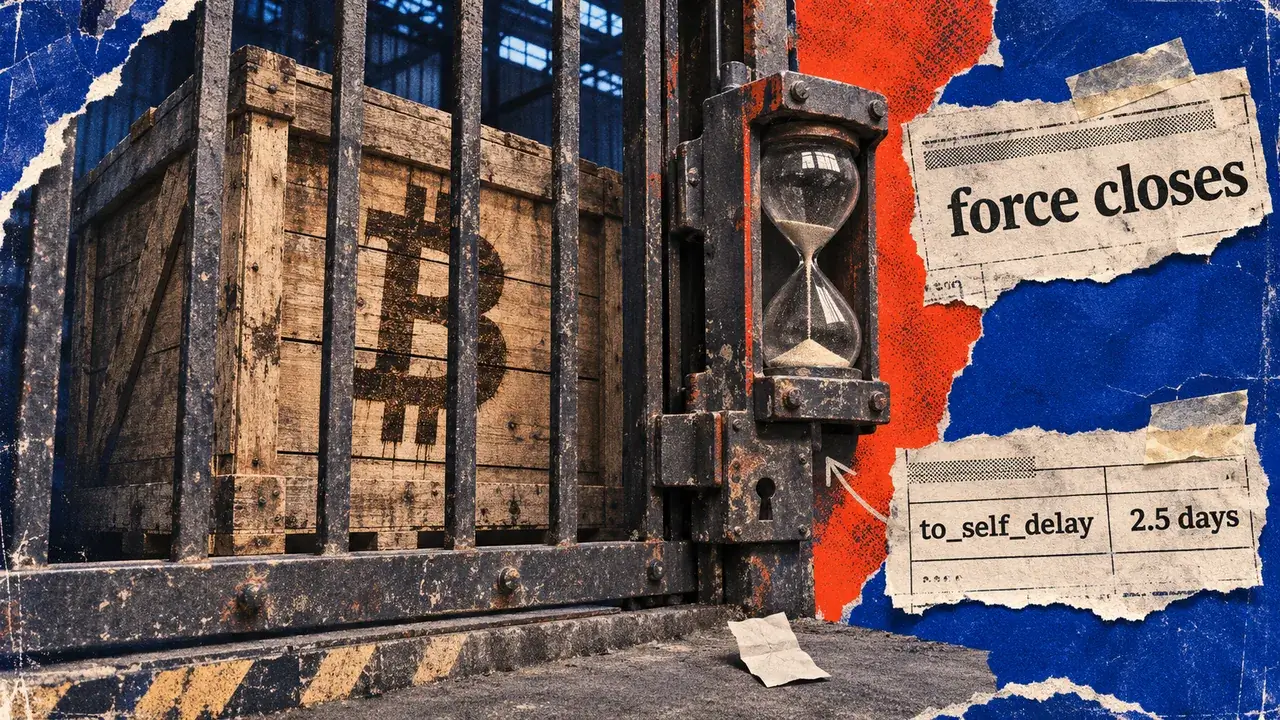
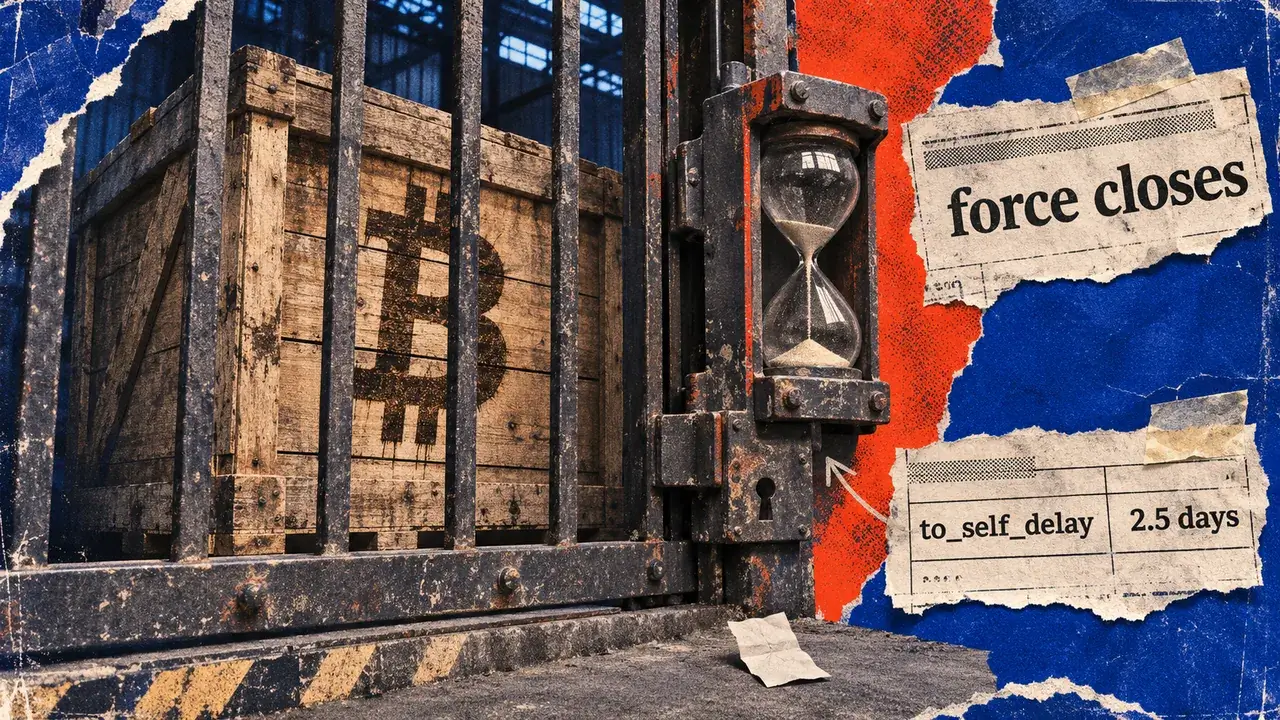
The efficiency of the Bitcoin Lightning Network is often measured by its speed and low transaction costs during active use, but a recent comprehensive study has highlighted a significant friction point: the process of closing a channel unilaterally. According to a preprint released on November 12, 2026, by Saurabh Kumar of Bitcoin Data Labs, while the technical fees for a "force-close" remain relatively low, the time capital remains locked can pose a substantial hurdle for liquidity management. In a sample of public channels analyzed throughout 2026, the median cost for a forced closure was 925 satoshis when accounting for both parties involved. However, the party initiating the closure faced a median waiting period of 2.5 days before their funds became accessible for further use.
This study, which spans nearly nine years of Lightning Network history, provides a granular look at how the network handles exits when cooperation between peers breaks down. The data suggests that while the network has become more cost-effective in terms of raw sats, the structural delays inherent in the protocol’s security model remain a constant factor that node operators must account for in their economic modeling.
The Mechanics of Channel Closures
To understand the findings, it is necessary to distinguish between the two primary ways a Lightning channel concludes. A cooperative close occurs when both parties agree on the final balance and sign a single transaction that settles the funds on the Bitcoin mainnet. This is the "happy path," and the study found it to be significantly cheaper, with a median cost of only 197 satoshis in 2026.
In contrast, a unilateral or "force-close" occurs when one party is offline or refuses to cooperate. In this scenario, the initiating party (the broadcaster) must publish the last agreed-upon state of the channel to the Bitcoin blockchain. Because this state is provided by only one party, the Lightning protocol introduces a security delay known as to_self_delay, defined in the BOLT 3 specification. This delay is a critical safeguard; it provides a window of time during which the non-broadcasting peer can inspect the transaction. If the broadcaster attempts to cheat by publishing an old, revoked state where they had more money, the peer can use a "penalty transaction" to claim the entire channel balance.
The 2.5-day median wait identified in the 2026 cohort represents this security window. While the funds are technically "on-chain" once the commitment transaction is confirmed, they are held in a script-locked output that the broadcaster cannot "sweep" into their general wallet until the time-lock expires.
Chronology of the Lightning Network Study (2018–2026)
The research conducted by Bitcoin Data Labs is one of the most extensive longitudinal studies of Lightning Network exits to date. The dataset comprises 973,581 total channel closures recorded between January 2018 and October 31, 2026.
- 2018–2021: The Early Adoption Phase: During the early years of the network, force-closes were relatively more frequent as a percentage of total closes, often due to software instability and less sophisticated node management tools. The median wait time across the entire study period was 1.7 days, suggesting that early configurations often favored shorter security windows.
- 2022–2025: Professionalization and Tooling: As the network grew, the emergence of "anchor outputs" and improved fee-bumping mechanisms like Child-Pays-For-Parent (CPFP) allowed for more reliable closures during periods of mempool congestion.
- 2026: The Current State: The detailed 2026 cohort analyzed 14,435 public force-closes through October 4. This period showed a marked increase in the median wait time to 2.5 days. This shift likely reflects a trend toward more conservative security settings by node operators, who are opting for longer
to_self_delayvalues to protect against potential "fee-pinning" attacks or prolonged periods of high on-chain fees that might prevent them from responding to a fraudulent close.
Comparative Data: Fees vs. Time
The study highlights a stark disparity between the costs of cooperative and forced exits. In 2026, the ratio between force-close and cooperative-close medians was 4.7 to one. While 925 satoshis is a negligible amount in fiat terms at current valuations, the "cost" of a force-close is not merely the transaction fee paid to miners.
The true economic impact is better understood through the "break-even annual return" metric developed by Kumar. This calculation determines the rate of return a node operator would need to earn on their capital to make the waiting period’s opportunity cost equal to the transaction fees paid.
In 2026, this break-even rate was 1.2%. This is a significant decrease from the historical median of 16.7% observed over the full 2018–2026 period. The drop suggests that as on-chain fees have stabilized or become more efficiently managed through batching and zero-fee commitment designs, the "time-cost" of locked liquidity has become the dominant factor for operators. In a low-fee environment, the 2.5-day wait is a much larger burden relative to the fee than it was in years where transaction costs were high and volatile.
Technical Nuances: BOLT 3 and Zero-Fee Designs
The report delves into the complexities of how modern Lightning transactions are structured. Under the BOLT 3 specification, many newer channels utilize a zero-fee commitment design. In this model, the commitment transaction itself carries no fee, making it unattractive to miners on its own.
To get the transaction confirmed, the broadcaster must attach a "child" transaction (a sweep or an anchor output spend) that pays a high enough fee to cover both itself and the "parent" commitment transaction. This CPFP mechanism allows operators to adjust fees in real-time based on current market conditions, rather than being stuck with a fee estimated weeks or months prior when the channel was first opened.
However, the study clarifies that this technical flexibility does not bypass the protocol-mandated waiting period. Even if an operator pays a premium to have their commitment transaction confirmed in the very next block, the to_self_delay clock only starts ticking after that confirmation. The findings emphasize that "paying the settlement fee does not remove the broadcaster’s contractual wait."
Implications for Node Operators and Liquidity Providers
For businesses and "routing nodes" that provide liquidity to the network, these findings have practical implications for risk management. Liquidity is the lifeblood of the Lightning Network; if a significant portion of a node’s capital is tied up in settling channels, that node’s ability to route payments and earn fees is diminished.
- Liquidity Buffers: Large-scale operators must maintain higher buffers of "idle" capital to compensate for the fact that a portion of their local balance may be inaccessible for several days at any given time.
- Peer Selection: The data underscores the importance of peering with reliable, high-uptime nodes. A cooperative peer allows for an instant and cheap exit (197 sats), whereas a vanished peer triggers the 2.5-day, 925-sat force-close process.
- Dynamic Fee Management: The use of anchor outputs and CPFP is no longer optional for professional nodes. The ability to navigate the 2026 fee environment requires sophisticated automated management of "pending-payment resolution" (HTLCs) and fee-bumping.
Limitations of the Study
While the Bitcoin Data Labs report is comprehensive, it does acknowledge several boundaries. The study focuses on public channels, as private (unannounced) channels do not appear in the network’s gossip protocol, making their closure patterns harder to track. Furthermore, the analysis excludes "splices"—a newer feature that allows users to resize channels without closing them—which may change how users manage liquidity in the future.
The researchers also noted that confirmed on-chain records cannot show "failed" attempts at fee-bumping or transactions that were replaced via Replace-By-Fee (RBF) before they were mined. Consequently, the reported costs represent the final successful transactions, not necessarily the total capital expended in failed attempts during periods of extreme network congestion.
Future Outlook: Taproot and PTLCs
Looking forward, the evolution of the Bitcoin protocol may offer some relief, though not necessarily a reduction in wait times. The integration of "simple-taproot" channels is expected to make force-closes appear identical to regular spends on-chain, potentially improving privacy and slightly reducing the data footprint (and thus the fee) of an exit.
However, the fundamental requirement for a challenge period—the wait—is likely to remain a cornerstone of Lightning’s security as long as it relies on a penalty-based or "justice" mechanism. Proposals for "Eltoo," a different update mechanism that would replace penalties with a more streamlined settlement process, could eventually change this landscape, but such changes would require a soft fork of the Bitcoin protocol.
For now, the message for the industry is clear: the Lightning Network provides unparalleled speed for active transactions, but the "exit gate" remains a bottleneck. Operators must view the 2.5-day delay not as a bug, but as a cost of doing business in a trustless, decentralized environment. As the network continues to mature, the ability to balance the low cost of a force-close against the long-term lock-up of capital will be a defining skill for the next generation of Bitcoin infrastructure providers.