admin
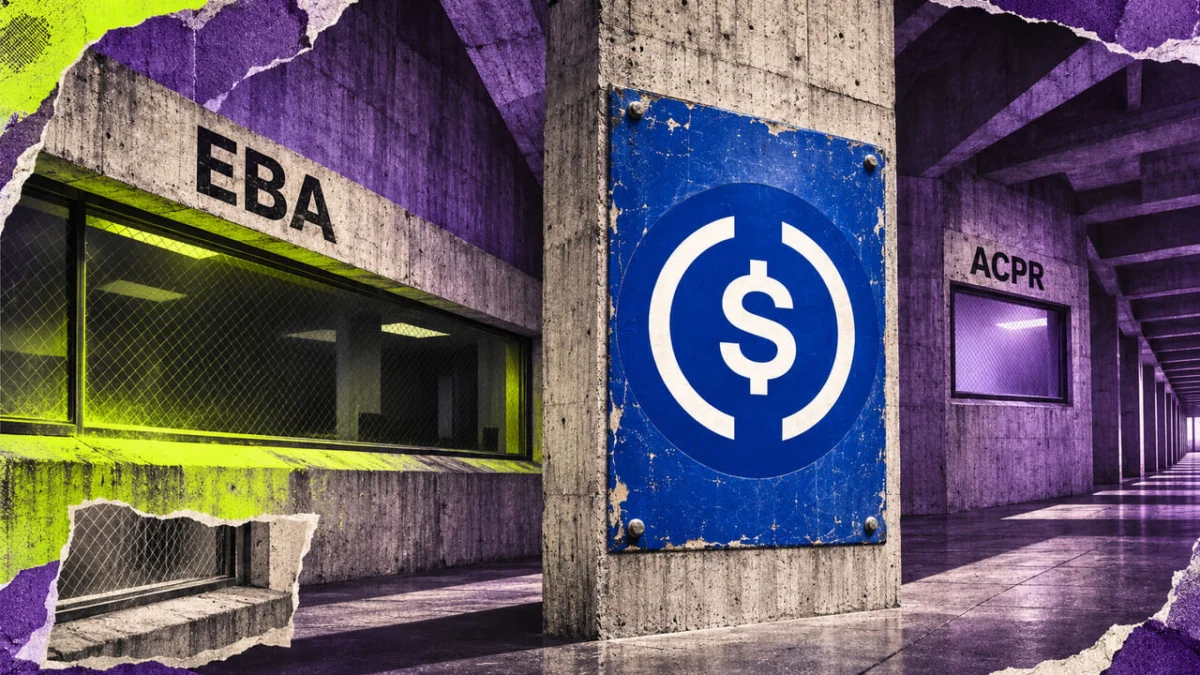
November 12 marks a significant shift in the regulatory landscape for Circle’s euro-denominated USD Coin (USDC), as oversight of its financial safeguards officially transfers to the European Banking Authority (EBA). This development, detailed in Circle’s latest quarterly filing, places EU-issued USDC under a dual supervisory framework, with the EBA now responsible for the token’s reserves, liquidity, and recovery planning, while France’s Autorité de Contrôle Prudentiel et de Résolution (ACPR) retains crucial governance responsibilities. This move, stemming from the EBA’s classification of EU-issued USDC as a "significant e-money token" under the Markets in Crypto-Assets Regulation (MiCA), could herald increased capital, liquidity, and compliance requirements for Circle’s European operations.
The implications of this regulatory pivot are far-reaching, potentially reshaping the operational and financial demands placed upon Circle. As the first e-money token to receive such a designation, EU-issued USDC is now subject to a more stringent and specialized level of scrutiny. While Circle is currently evaluating the precise impact of these new obligations, the disclosure hints at the possibility of higher capital reserves being held within the European Union, enhanced liquidity management protocols, and an overall increase in compliance costs. The company has not yet provided specific figures for these potential financial commitments, leaving the exact scale of the impact as a subject of ongoing assessment.
A Detailed Look at the Supervisory Split
The newly established supervisory arrangement specifically applies to USDC issued by Circle Internet Financial Europe SAS, operating under the name Circle France. Under the terms of the agreement, the EBA’s direct supervisory remit encompasses several critical areas of financial safeguarding. These include the issuer’s own funds, commonly referred to as regulatory capital, which ensures the financial solvency of the entity. Furthermore, the EBA will now oversee the management and composition of reserve assets, which are crucial for maintaining the stablecoin’s peg. Liquidity requirements, dictating the readily available funds to meet redemption demands, also fall under the EBA’s purview. Crucially, the regulator will also be responsible for approving and monitoring recovery and redemption plans, outlining how Circle would manage potential crises and facilitate customer withdrawals.
In parallel, the ACPR, France’s prudential supervision and resolution authority, continues to play a vital role in the governance of Circle’s European operations. Its responsibilities include overseeing matters of governance, ensuring that qualifying holdings of the company are in line with regulatory expectations, and conducting fit-and-proper assessments for key personnel. The ACPR also retains oversight of outsourcing arrangements, ensuring that Circle’s reliance on third-party service providers does not compromise its regulatory compliance or operational stability. Furthermore, the French regulator remains vigilant regarding potential conflicts of interest within the organization. This division means that Circle Europe SAS is now subject to a dual layer of oversight: the EBA’s specialized financial safeguarding supervision and the ACPR’s comprehensive national governance and prudential oversight.
Chronology of Regulatory Milestones
The path to this dual supervision began with the EBA’s formal classification of EU-issued USDC as a significant e-money token. This pivotal decision was made on October 14, a date that set the stage for the subsequent operational handover. The classification itself under MiCA signifies that the token is deemed to have a substantial impact on the market and consumer protection, warranting a higher degree of regulatory attention. Following this classification, the groundwork was laid for the practical implementation of the supervisory split.
The planned handover, which was anticipated since October, culminated in the November 12 effective date. This date formalized the division of supervisory responsibilities, ensuring a clear delineation of duties between the EBA and the ACPR. The timeline underscores a proactive approach by both Circle and the regulators to implement the new framework efficiently, aiming to minimize disruption while maximizing regulatory compliance and investor confidence. This structured approach to regulatory integration is a testament to the evolving nature of stablecoin oversight within the European Union.
Supporting Data and Regulatory Frameworks
The Markets in Crypto-Assets Regulation (MiCA) is a landmark piece of legislation within the European Union, designed to provide a comprehensive regulatory framework for crypto-assets. Implemented to foster innovation while safeguarding investors and financial stability, MiCA categorizes various types of crypto-assets and assigns supervisory responsibilities accordingly. The classification of EU-issued USDC as a "significant e-money token" places it under specific, more rigorous provisions of MiCA. This designation is typically reserved for tokens that exhibit characteristics of electronic money and are issued in significant volumes or by entities with a substantial market presence.
According to industry data, USDC has consistently ranked among the top stablecoins globally by market capitalization, often holding the second or third position behind Tether (USDT). As of recent reports, USDC’s market capitalization hovers around $69 billion, with a significant portion of its reserves held in U.S. Treasuries and cash. The EBA’s increased oversight of these reserves and liquidity is therefore a critical factor in maintaining the stability and trustworthiness of the token for its European users. The memorandum of understanding (MoU) between the EBA and the New York State Department of Financial Services (NYDFS) further highlights the cross-border nature of stablecoin regulation and the need for international cooperation. The NYDFS is a key regulator for Circle’s U.S. operations, and this MoU facilitates information sharing and coordinated supervisory efforts, crucial for a global asset like USDC.
Official Responses and Statements
While Circle has been transparent about the regulatory shift in its quarterly filings, the company has also emphasized its commitment to regulatory compliance and the security of its users. In its disclosure, Circle stated, "The significant-token classification may bring increased regulatory capital, reserve, liquidity and other prudential requirements under MiCA. These could require additional capital or liquidity in the EU, raise compliance costs or adversely affect its business and financial results." This statement indicates a proactive acknowledgment of potential operational adjustments and financial implications.
The EBA, in its capacity as the primary European financial supervisor, has consistently signaled its intent to bring stablecoins, particularly those deemed significant, under robust regulatory oversight. While specific public comments on the EU-issued USDC designation might be limited due to ongoing supervisory processes, the EBA’s mandate under MiCA is clear: to ensure the safety and soundness of financial markets and protect consumers. The establishment of MoUs with international regulators, such as the one with the NYDFS, further demonstrates a commitment to a globally coordinated approach to stablecoin supervision, recognizing that these digital assets operate beyond national borders.
Broader Impact and Implications for the Stablecoin Market
The EBA’s supervision of EU-issued USDC’s financial safeguards represents a significant step forward in the maturation of the stablecoin market within the European Union. For users of USDC, this increased regulatory scrutiny is likely to be viewed positively, as it enhances the assurance of the token’s stability and the issuer’s financial robustness. The potential for higher capital and liquidity requirements, while posing operational challenges for Circle, ultimately serves to bolster the resilience of the stablecoin ecosystem. This can help mitigate risks associated with runs on stablecoins or issues related to reserve management, thereby fostering greater trust among investors and financial institutions.
The precedent set by EU-issued USDC’s classification as a significant e-money token under MiCA will likely influence how other stablecoin issuers operating within the EU are regulated. It signals a clear direction for regulatory expectations and could prompt other issuers to re-evaluate their own operational frameworks and reserve management strategies to align with MiCA’s stringent requirements. This proactive regulatory stance is crucial for the long-term viability and adoption of stablecoins as a legitimate and secure component of the digital finance landscape.
Furthermore, the EBA’s memorandum of understanding with the NYDFS underscores the growing recognition of the need for cross-border regulatory cooperation. As stablecoins become increasingly integrated into global financial systems, effective communication and collaboration between regulatory bodies in different jurisdictions are paramount. This collaborative approach helps prevent regulatory arbitrage, ensures consistent application of standards, and ultimately contributes to a more stable and secure global financial environment. While the precise financial impact on Circle remains under evaluation, the move signifies a clear commitment to robust regulatory oversight, a necessary condition for the continued growth and acceptance of stablecoins. The long-term implications point towards a more regulated and secure future for digital currencies, with entities like Circle navigating this evolving landscape with increased transparency and accountability.