admin
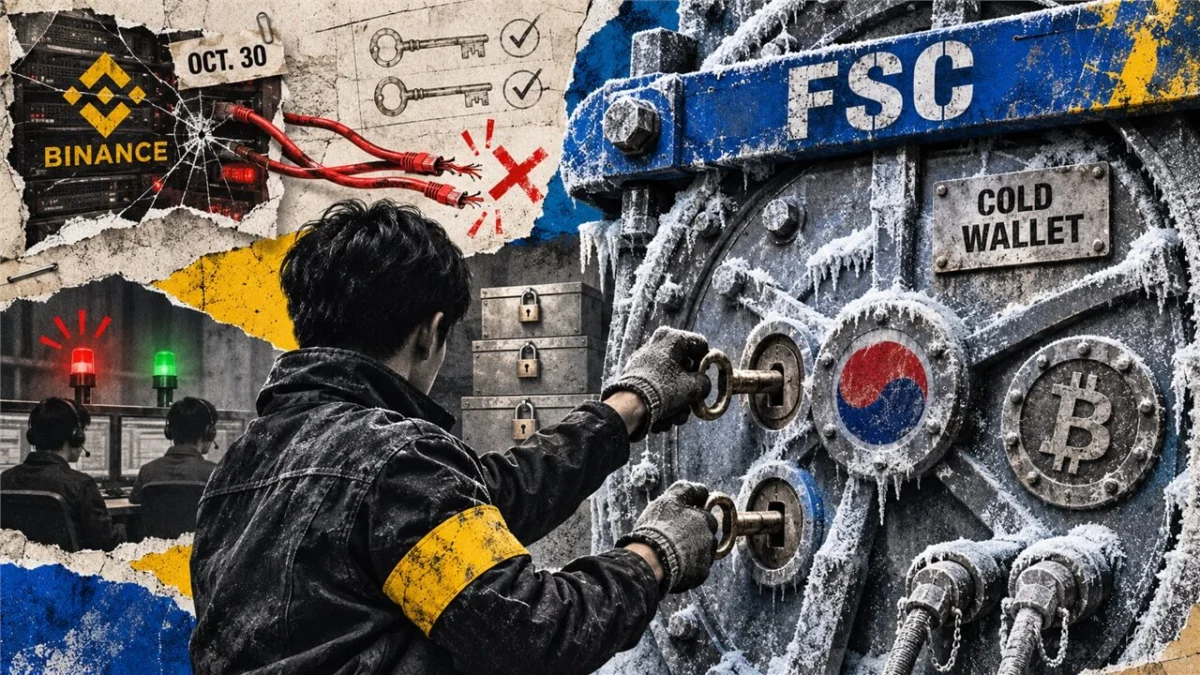
South Korea’s Financial Services Commission (FSC) has mandated a significant overhaul of digital asset custody practices for domestic cryptocurrency exchanges, demanding a larger proportion of customer funds be secured in offline cold wallets and that response mechanisms to suspicious activities be substantially fortified. This decisive action comes in the wake of a significant security breach impacting Binance, one of the world’s largest cryptocurrency exchanges, underscoring a heightened awareness of the vulnerabilities inherent in the digital asset ecosystem. The FSC’s directive, issued following an emergency meeting on November 2nd and clarified on November 3rd, aims to bolster the resilience of South Korea’s virtual asset market against increasingly sophisticated cyber threats.
Escalating Security Demands in the Wake of the Binance Breach
The directive from the FSC is a direct response to the security incident that affected Binance on October 30th. While specific details of the Binance hack remain under investigation and have not been fully disclosed by the exchange, the implications for the broader crypto market have been profound, prompting regulators worldwide to re-evaluate their oversight frameworks. In South Korea, the FSC’s immediate call to action involved a high-level meeting that convened key stakeholders, including representatives from the Financial Supervisory Service, the Financial Security Institute, a prominent crypto industry association, and several major virtual asset businesses operating within the country.
The FSC’s requests are multi-faceted, addressing critical aspects of cryptocurrency exchange operations:
- Increased Cold Wallet Holdings: Exchanges are being urged to significantly raise the percentage of customer assets stored in cold wallets, which are hardware wallets kept offline, thereby making them immune to online attacks. This measure is designed to create a stronger financial buffer against potential hacks.
- Enhanced Transaction Monitoring: Continuous and rigorous monitoring of all deposits and withdrawals is now a paramount requirement. This includes implementing more sophisticated systems to detect and flag any unusual or potentially fraudulent transaction patterns in real-time.
- Strengthened Incident Response Capabilities: Exchanges must bolster their operational capacity by securing additional response staff dedicated to handling security incidents. This ensures a more agile and effective reaction when suspicious activities are detected.
- Prompt Reporting and Information Sharing: A crucial element of the new directive is the mandate for immediate reporting and sharing of any abnormal access attempts or security threats. This collaborative approach aims to create a collective defense mechanism across the industry, allowing for quicker identification and mitigation of widespread risks.
- Building Additional Reserves: Beyond the physical security of assets, exchanges are also directed to build additional financial reserves. These reserves are intended to cover potential liabilities arising from security incidents, ensuring that customer assets can be recovered or compensated for in the event of a successful breach.
A Framework for Enhanced Custody and Control
The FSC’s recent directives build upon an existing custody framework that was formally adopted in July 2024, with the legal framework taking effect on July 19th of the same year. This earlier regulation already stipulated that exchanges must keep at least 80% of customer cryptocurrency assets in cold storage. This 80% ratio is not a newly announced threshold but a reaffirmation and potential tightening of existing standards, particularly in light of the heightened threat landscape.
The valuation method used to determine this 80% ratio is also noteworthy. It is based on a defined economic value, calculated by multiplying the quantity of each type of cryptocurrency held by its average Korean Won conversion value over the preceding year. This method provides a standardized and objective basis for assessing the value of digital assets and, consequently, the required proportion to be held offline. Furthermore, this valuation standard serves as a benchmark for insurance policies, mutual aid coverage, and the aforementioned reserves necessary to meet liabilities stemming from incidents such as hacks and system failures.
The scope of the FSC’s review has also been broadened to encompass the systems and permissions governing the movement of digital assets. This includes a thorough examination of controls over access to computer systems, the approval and signing arrangements for wallet withdrawals, and the management of administrator privileges. By scrutinizing these operational aspects, the FSC aims to plug potential vulnerabilities at every stage of asset management, from initial storage to transaction execution.
Chronology of Recent Regulatory Scrutiny
The intensified regulatory focus on cryptocurrency exchange security in South Korea has a discernible timeline:
- July 19, 2024: The foundational custody framework requiring exchanges to hold at least 80% of customer assets in cold wallets officially takes effect.
- Late October 2024: On October 28th, South Korean regulators initiate on-site inspections of cryptocurrency exchanges, prompted by reports from Bithumb indicating signs of a potential employee data leak. This event signals a proactive stance by regulators to identify and address internal security risks.
- October 30, 2024: A significant security breach occurs at Binance, one of the world’s largest cryptocurrency exchanges. The precise nature and scale of the hack are not fully detailed publicly at the time of the FSC’s directives.
- November 2, 2024: In direct response to the Binance incident and the preceding concerns, the FSC convenes an emergency meeting with industry stakeholders. The primary agenda is to assess the current security posture of domestic exchanges and to formulate immediate measures to mitigate risks.
- November 3, 2024: The FSC issues a formal clarification of its directives, reiterating the requests made during the November 2nd meeting and providing further details on the expected enhancements in security protocols and operational readiness.
Industry Reactions and Broader Implications
While the official statements from the FSC are clear, the practical implementation and the specific strategies adopted by each exchange will be closely watched. Industry associations have historically played a role in facilitating communication and compliance between regulators and exchanges. It can be inferred that these associations are now actively engaged in disseminating the FSC’s requirements and guiding their members toward robust implementation.
The heightened regulatory scrutiny in South Korea is not an isolated event. Globally, governments and financial authorities are grappling with the rapid evolution of the cryptocurrency market and the persistent threat of cybercrime. The FSC’s actions reflect a broader trend of increased regulatory oversight aimed at protecting investors, maintaining financial stability, and fostering public trust in digital assets.
The implications of these enhanced security mandates are significant for several reasons:
- Investor Confidence: By mandating stronger security measures, South Korea aims to reassure its citizens about the safety of their digital assets, potentially fostering greater adoption and investment in the long term.
- Operational Costs: Implementing and maintaining advanced security systems, along with hiring and training additional response staff, will likely lead to increased operational costs for exchanges. These costs may eventually be passed on to consumers through trading fees.
- Market Competitiveness: Exchanges that can effectively demonstrate a superior security infrastructure may gain a competitive advantage in the South Korean market.
- Regulatory Precedent: The FSC’s comprehensive approach could serve as a model or influence regulatory actions in other jurisdictions, especially those that may have faced similar security challenges or are looking to strengthen their own digital asset oversight.
The FSC’s directive on strengthening cold wallet security, enhancing transaction monitoring, and bolstering incident response capabilities represents a significant step forward in South Korea’s efforts to safeguard its burgeoning cryptocurrency market. The response to the Binance hack has served as a catalyst, accelerating the implementation of more stringent security protocols and emphasizing the critical importance of a proactive and robust regulatory framework in the ever-evolving digital asset landscape. The success of these measures will hinge on the diligent execution by exchanges and the continued vigilance of regulatory bodies in adapting to new threats.