admin
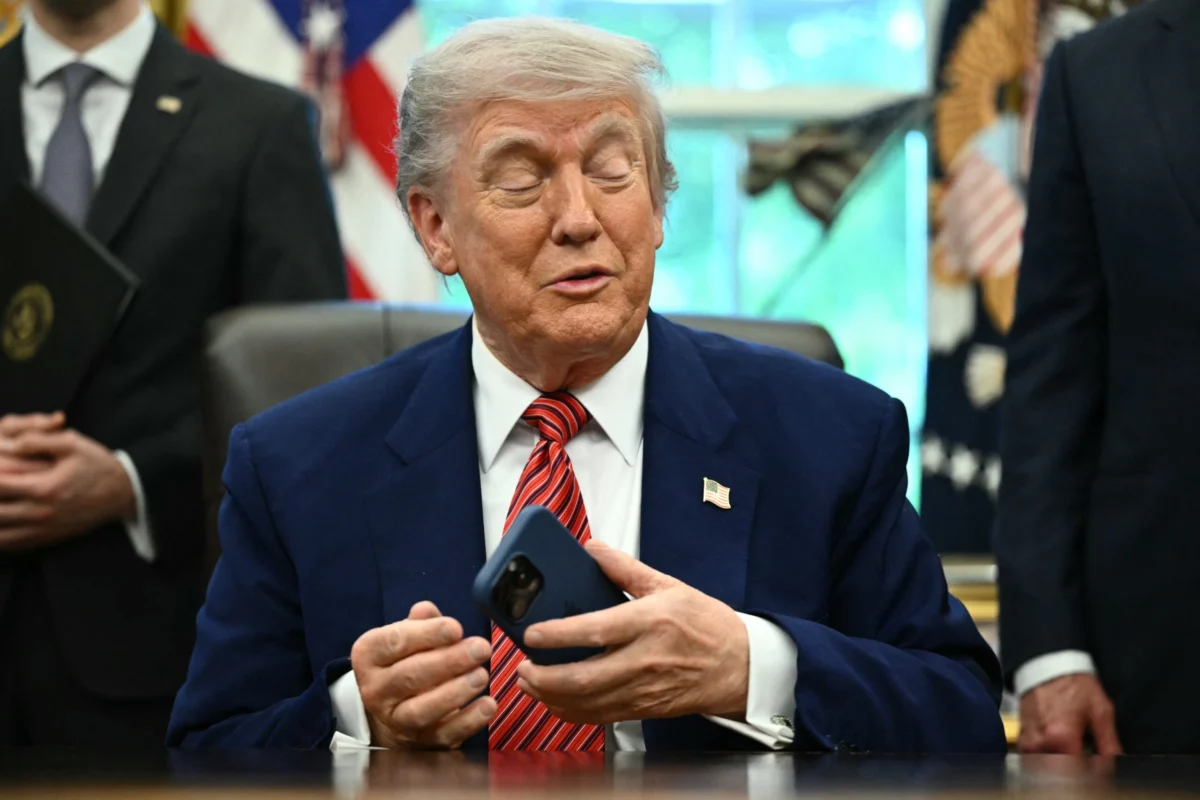
In a financial event that has sent shockwaves through both the digital asset markets and the political landscape, nearly one million individual investors have seen their holdings in the $TRUMP memecoin evaporate, resulting in a staggering collective loss of $3.8 billion. According to a comprehensive data analysis released by the cryptocurrency analytics firm Nansen, the collapse of the token represents one of the most significant wealth-destruction events in the history of the "PolitiFi" (political finance) sector. The report, which scrutinized transactions across multiple blockchains, indicates that as of late June 2026, approximately 988,905 unique digital wallets were in a net-loss position regarding the $TRUMP token. This figure suggests that roughly two out of every three individuals who purchased the asset since its inception have failed to realize a profit, with many losing the entirety of their initial capital.
The $TRUMP token, which rose to prominence following its high-profile launch in early 2025, was trading at a mere $1.69 as of Sunday. This valuation represents a precipitous 98% decline from its all-time high of $75.35. The rapid devaluation of the asset has drawn intense scrutiny toward the intersection of executive power, personal financial interests, and the largely unregulated world of digital meme assets. While retail investors have borne the brunt of the market downturn, recent financial disclosures indicate that President Donald Trump himself has realized substantial gains from his involvement in the cryptocurrency sector, specifically through the licensing and promotion of tokens bearing his name.
The Nansen Analysis and Market Mechanics
The data provided by Nansen offers a transparent, blockchain-based look at the distribution of losses among the token’s holder base. Because blockchain ledgers are public, analysts can track the "cost basis" of various wallets—the price at which they acquired tokens—versus the current market price. The findings reveal a "top-heavy" market structure where early adopters and those close to the project’s inner circle were able to exit their positions during the peak of the hype, while retail investors, many of whom entered the market during the President’s 2025 inauguration period, were left holding assets as the price cratered.
Market analysts attribute the $TRUMP token’s volatility to its lack of underlying utility, a common characteristic of "memecoins." Unlike established cryptocurrencies like Bitcoin, which is often viewed as a store of value, or Ethereum, which serves as a decentralized computing platform, the $TRUMP token’s value was driven almost exclusively by social sentiment, political developments, and the perceived endorsement of the President. When the initial fervor of the new administration began to stabilize and the "hype cycle" moved toward other ventures, the liquidity supporting the $TRUMP token price dried up, leading to a "cascading sell-off" that wiped out billions in paper wealth.
A Chronology of the $TRUMP Token and Presidential Crypto Ventures
The trajectory of the $TRUMP memecoin is inextricably linked to the political calendar of 2025 and 2026. The token was officially announced in January 2025, just three days before Donald Trump’s second inauguration. The timing was calculated to capitalize on the massive media attention surrounding the transition of power. At the time, the President-elect framed the venture as part of a broader mission to liberate the American economy from traditional financial gatekeepers.
This was not the President’s first foray into the digital asset space. Prior to the launch of the $TRUMP memecoin, he co-founded World Liberty Financial, a decentralized finance (DeFi) startup, alongside his sons, Donald Trump Jr. and Eric Trump. The venture launched its own governance token, $WLFI, which was marketed as a way for the "average American" to participate in high-yield lending and borrowing protocols. However, much like the $TRUMP memecoin, the $WLFI token has seen its value decline significantly since its launch, struggling to maintain user engagement amid a broader cooling of the DeFi market.
Throughout 2025, as the administration took shape, the $TRUMP token became a proxy for the President’s popularity. Every legislative victory or successful rally was met with a "pump" in the token’s price. By the time the token reached its peak of $75.35, the market capitalization of the project rivaled that of mid-sized publicly traded companies. However, the subsequent "dump" was equally dramatic. By early 2026, as the novelty wore off and the administration faced the typical pressures of governance, the token began a steady descent, culminating in the current $1.69 price point.
Presidential Financial Disclosures and Personal Gains
While the retail investor base suffered, the President’s personal financial situation regarding cryptocurrency has been highly lucrative. In a recent mandatory financial disclosure, it was revealed that President Trump earned approximately $1.4 billion from the cryptocurrency industry over the past year. Of that total, nearly $636 million—roughly 45%—was attributed directly to the $TRUMP memecoin.
These earnings primarily stem from licensing fees, promotional agreements, and the liquidation of tokens that were allocated to the President or his associated entities at the project’s inception. The disclosure has sparked a debate among ethics experts regarding the propriety of a sitting president profiting so significantly from a highly volatile asset that is largely owned by his political supporters. Critics argue that the President’s promotion of the token created a "moral hazard," where supporters felt a sense of loyalty to buy an asset that the President was personally profiting from, even as its market fundamentals remained non-existent.

Proponents, however, argue that the President is simply participating in the modern digital economy. They point out that all financial dealings were disclosed in accordance with federal law and that investors in the cryptocurrency market are well aware of the risks associated with memecoins.
The Regulatory Shift Under the Trump Administration
The collapse of the $TRUMP token occurs against a backdrop of significant regulatory shifts within the United States. Under the current administration, the Securities and Exchange Commission (SEC) has undergone a radical transformation in its approach to digital assets. In a move that surprised many legal scholars, the SEC recently announced that it would not classify memecoins as securities. This designation is crucial, as it exempts these tokens from the rigorous disclosure and registration requirements that govern stocks and bonds.
The SEC’s new stance is part of a broader "hands-off" policy toward the crypto industry. Since 2025, the commission has dropped a series of high-profile lawsuits against major crypto players, including a notable case against the Winklevoss twins and their Gemini exchange. This regulatory environment was a cornerstone of the President’s campaign promise to make the United States the "crypto capital of the world."
A White House spokesperson, responding to the New York Times report on the $3.8 billion loss, defended the administration’s record. "President Trump has successfully deregulated a stifled industry, allowing for unprecedented innovation and American leadership in the blockchain space," the spokesperson stated. "While market fluctuations are a reality of any free-market system, the President’s policies have ensured that the United States remains the global hub for digital finance."
Broader Implications for the Crypto Market and Political Ethics
The scale of the $TRUMP token collapse raises fundamental questions about the future of PolitiFi and the protections afforded to retail investors. Financial analysts suggest that the "Trump Trade" in crypto may have reached a point of exhaustion. The $3.8 billion loss represents a significant withdrawal of liquidity from the retail sector, potentially dampening enthusiasm for future political tokens.
Furthermore, the event highlights the growing divide between "institutional" crypto and "retail" memecoins. While institutional interest in Bitcoin and Ethereum continues to grow through regulated products like ETFs, the memecoin market remains a "Wild West" where social media influence and celebrity endorsements dictate value. The $TRUMP token’s trajectory serves as a cautionary tale for those who view digital assets as a guaranteed path to wealth based on political affiliation.
From an ethical standpoint, the situation remains unprecedented. Never before has a sitting U.S. President been so directly tied to the performance of a specific, volatile financial instrument. As the 2026 midterm elections approach, the financial losses of nearly a million citizens—many of whom likely comprise the President’s core constituency—could become a significant political liability.
Conclusion and Future Outlook
As the dust settles on the $TRUMP token’s 98% decline, the digital asset landscape continues to evolve. The $3.8 billion in losses serves as a stark reminder of the risks inherent in assets that lack fundamental value or utility. While the administration continues to promote the U.S. as a crypto-friendly jurisdiction, the human cost of this specific market experiment is becoming increasingly clear.
For the 988,905 account holders who find themselves in the red, there are few avenues for recourse. Given the SEC’s refusal to regulate memecoins as securities, these investors are unlikely to find protection under traditional investor-protection laws. The $TRUMP memecoin saga stands as a landmark moment in the history of finance, marking the point where the worlds of high-stakes politics and speculative digital assets collided, leaving a trail of significant personal profit for those at the top and historic losses for those at the bottom.